






































Save more with order consolidation

Merge multiple orders into one shipment to cut shipping costs, reduce packaging waste, and deliver a seamless experience without changing your workflows.
Order consolidation API

Connected to the platforms that power your business

  • Paypal logo
  • DHL logo
  • Bigcommerce logo
  • FedEx logo
  • Walmart
  • Etsy logo
  • Amazon logo
  • Squarespace logo
  • WIX logo
  • Shopify Logo
  • Ebay logo
  • USPS logo
  • Salesforce logo
  • UPS logo
  • Intuit logo
  • Woo Commerce logo
  • TikTok logo

Fewer boxes. Better customer experience.

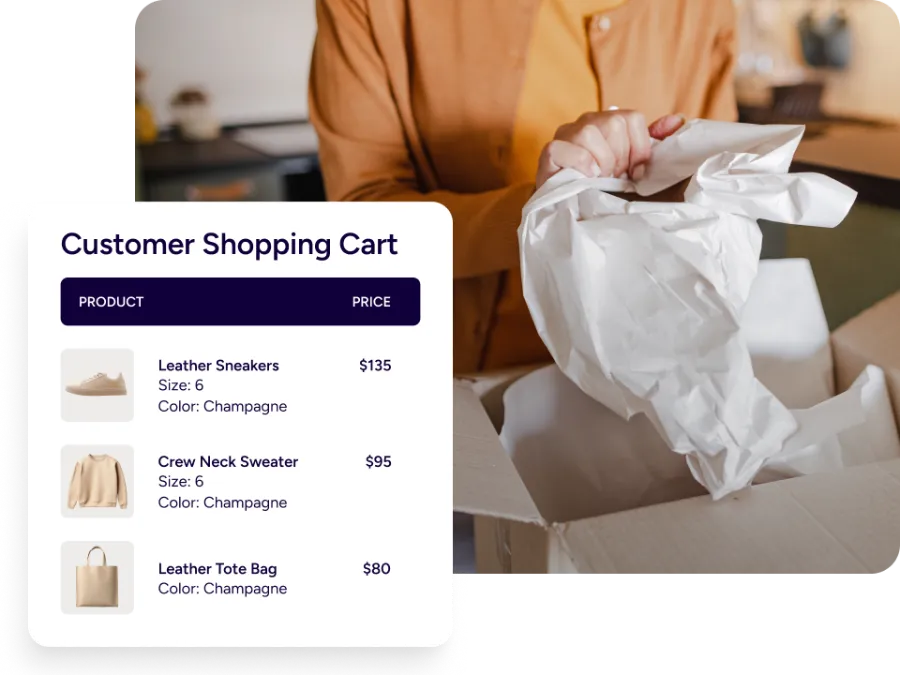
Consolidate orders headed to the same address into one shipment to protect margins and simplify fulfillment from checkout to doorstep.

Cut shipping costs without cutting service

Combine orders by customer or address so you ship fewer packages and avoid unnecessary surcharges. Reduce dimensional weight exposure, lower carrier fees, and protect costs.

Make deliveries easier to track

Give customers one shipment and one tracking experience for compatible orders in the same box or truck—reducing confusion and “Where is the rest of my order?” contacts.

Simplify fulfillment operations

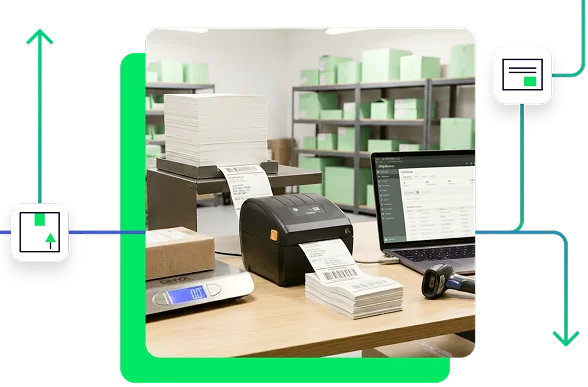
Avoid manual errors. ShipStation API automates the logic within your existing OMS, creating a consistent, repeatable workflow across teams and fulfillment locations.

Savings you can see on every label

We’ve helped over 1 million businesses cut the cost of printing shipping labels.
Google 4.9 rating 67 reviews
Capterra 4.6 rating 897 reviews
G2 4.3 rating 531 reviews

Order consolidation features built for real-world fulfillment

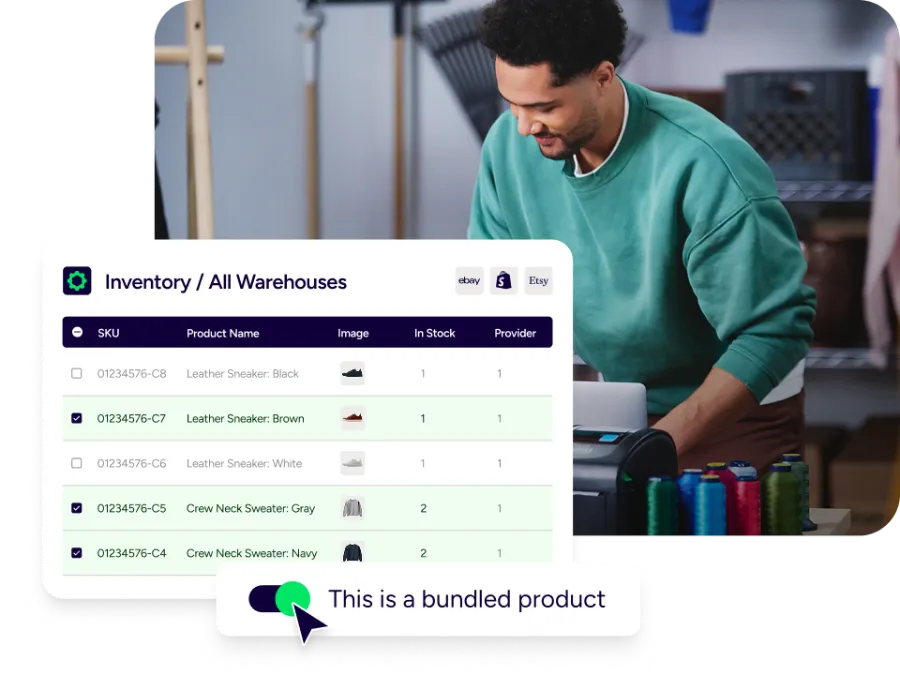
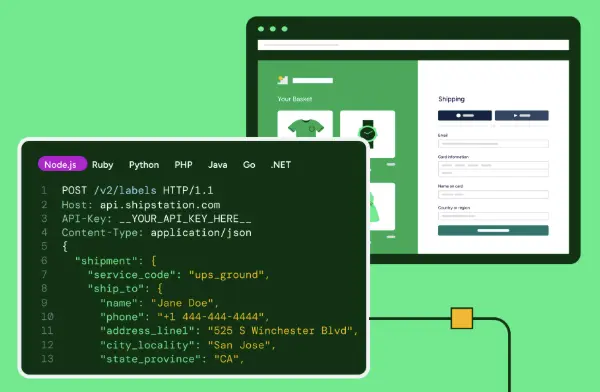
Use ShipStation APIs to consolidate parcel and LTL freight shipments based on rules you define in your order management system. Programmatically group eligible order items into a single shipment while maintaining control over delivery promises and service levels.

Combine multiple orders into one shipment

Programmatically group eligible sales orders that share a customer or destination. Your system evaluates address, timing, inventory availability, fulfillment location, and service levels—then creates consolidated shipments via the ShipStation API when it improves efficiency, or keeps orders separate when speed or inventory requires it.

Extend consolidation to LTL freight

Not every heavy or multi-package shipment needs freight. Volume-based parcel pricing can combine package weights to lower costs while keeping shipments in the parcel network. But when size and weight limits, dimensional pricing, or surcharges drive up costs—or multiple packages make more sense on a pallet—LTL can be the smarter option.
Explore the advantages of parcel and LTL shipping with ShipStation and learn how having both shipping modes gives your business more flexibility.

Define flexible consolidation rules

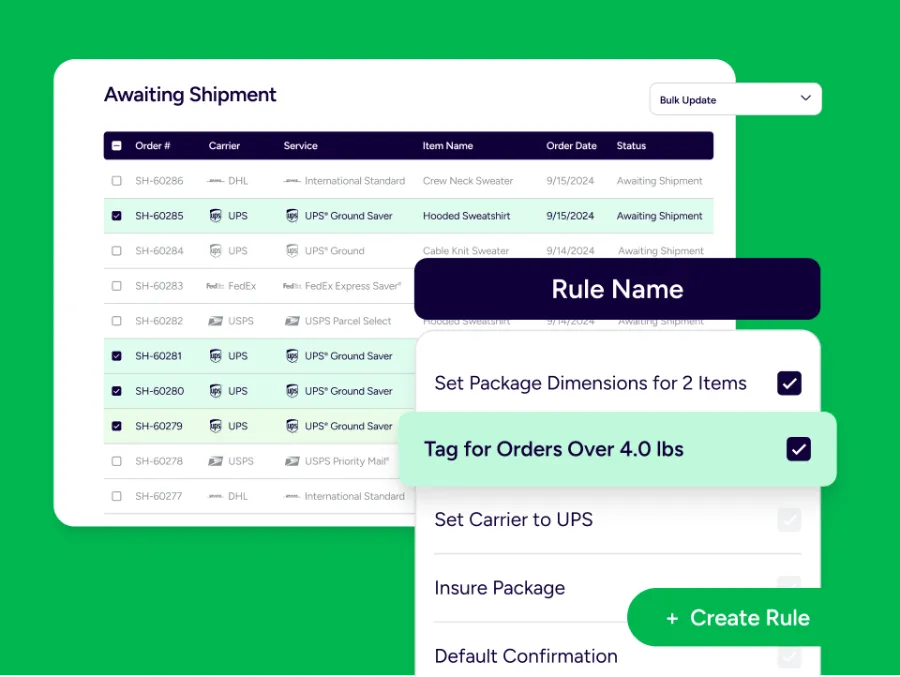
Configure consolidation logic within your existing systems—such as time windows, order value thresholds, product exclusions, service levels, and warehouse eligibility. Once your business rules are set in your OMS, ShipStation APIs execute those decisions in real time as shipments are created.

Save money, stay sustainable

Fewer boxes mean fewer labels, cartons, pickups, and surcharges. Order consolidation can lower dimensional weight exposure, reduce carrier spend, and support sustainability goals—improving cost control while minimizing packaging waste across your fulfillment network.

Keep orders moving together across locations

Operating multiple warehouses or managing 3PLs? ShipStation evaluates inventory location, cutoff times, routing logic, and SLA requirements before consolidating—helping you avoid unnecessary split shipments while maintaining inventory accuracy and protecting delivery promises.

Centralize orders before consolidation begins

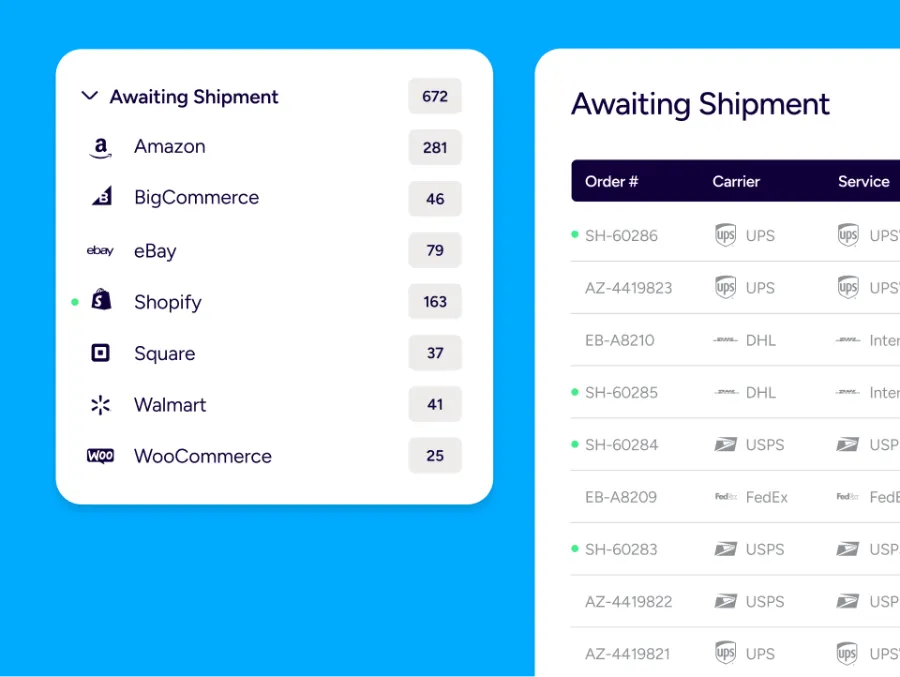
Unify order data from multiple carts, marketplaces, and systems into a single stream before items are grouped together—so every shipment is evaluated consistently across channels, inventory locations, and service levels. One source of truth. Smarter grouping decisions.

RELATED CONTENT

Helpful Shipping Resources

Browse additional articles, guides, and insights related to shipping and fulfillment. These resources provide practical advice and best practices to support your day-to-day operations.

Save on shipping icon
The Cheapest Way to Ship Packages

Finding the cheapest way to ship a package doesn’t mean sacrificing quality. Affordable shipping rates are available to anyone that knows where to look.

Shipping rate calculator
Calculate Shipping Costs and Start Saving Now

Whether you’re shipping a single order or managing high-volume ecommerce fulfillment, ShipStation’s shipping cost calculator helps you get fast, reliable quotes from top carriers so you can save time and money with every label.

Freight Optimization: How to Build a Smarter LTL Shipping Strategy

Learn how freight optimization helps reduce shipping costs, improve LTL efficiency, strengthen carrier strategy, and build a smarter supply chain.

Ready to get started?

ShipStation API removes the complexities of shipping. Scale your business with our industry-leading API, comprehensive documentation, and vast carrier network.

Order Consolidation FAQs

An order consolidation API identifies multiple orders going to the same customer or address and combines them into a single shipment. Instead of processing each order separately, your system creates one bundled delivery—reducing cost and simplifying fulfillment.

By reducing the number of labels, cartons, and pickups per customer. Fewer packages typically mean fewer surcharges, lower dimensional weight exposure, and reduced overall carrier spend.

Not when configured correctly. ShipStation applies your timing and service rules before consolidating. Orders are only grouped when they can ship together without missing delivery commitments or cutoff times.

The API evaluates inventory availability before merging orders. If items are split across locations or unavailable within your defined window, consolidation will not occur. This protects inventory integrity and prevents downstream fulfillment issues.