






























Small BusinessesStart small, think big. Elevate your small-business shipping today.
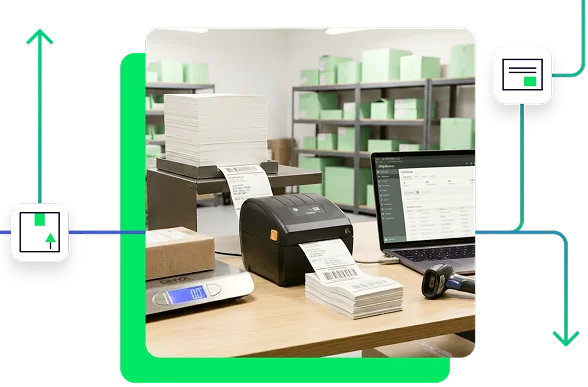
Start Shipping in MinutesStart shipping instantly with a simple setup. Buy and print labels in minutes with no training needed and no unnecessary steps.
Automate and ScaleSave time with rules that batch, route, and print labels automatically so your shipping keeps up as orders grow.
Save on Every ShipmentAccess exclusive 80% – 90% discounts from every major carrier and cut costs on every label, no matter where you ship.
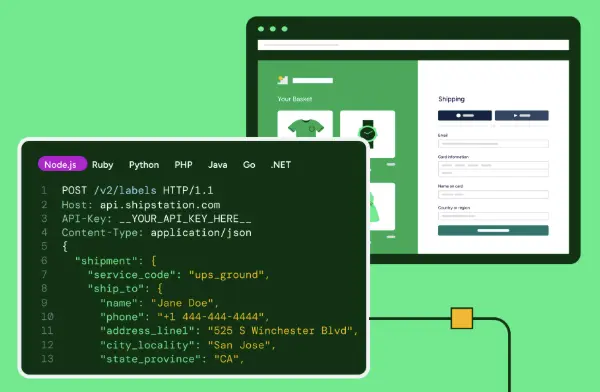
Connect and CustomizePlug into hundreds of stores, marketplaces, and carriers, or extend ShipStation with custom API integrations built for your business.
Manage Everything in One PlaceManage shipping, inventory, warehouse, tracking, and returns for all your stores and marketplaces in one simple platform.
Simplify ReturnsManage returns in one platform with prepaid labels and self-serve features that keep the process fast and frustration-free.
Get Up and Running QuicklyOur implementation team guides you through a step-by-step process to help you streamline workflows and keep costs minimized.
Mid-size and GrowingShip smarter, grow faster. Scale your fulfillment with ease.
Save on Shipping as you ScaleAutomate rate shopping across 200+ carriers, bring your own carrier accounts, and unlock deep volume discounts that grow with you.
Smarter Shipping IntelligenceTurn shipping into your competitive advantage with intelligence that improves with every order.
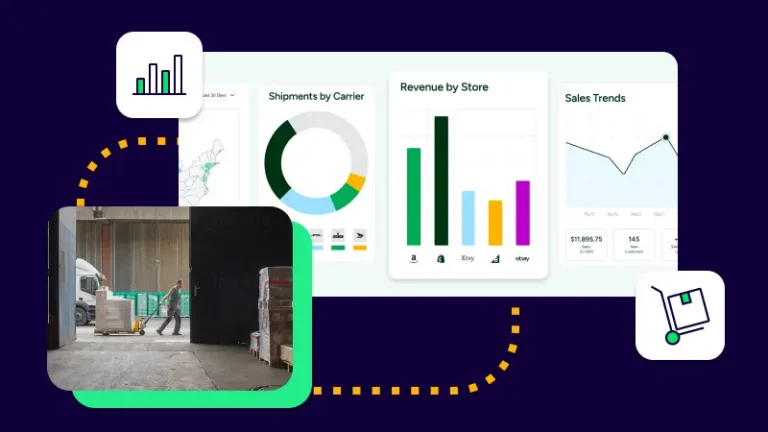
Centralize Omnichannel FulfillmentManage orders, shipping, inventory, warehouse operations, tracking, returns, and analytics across online stores and marketplaces with one platform.
Automate Order ManagementCombine AI intelligence with rule-based workflows to speed up fulfillment, streamline operations, and eliminate bottlenecks
Scale With our APIsExtend your setup using our developer-friendly API for custom automated workflows and insights.
Start with Guided OnboardingOur experts walk you through setup, training, and workflows so your team feels confident and ready to ship quickly.
EnterpriseGlobal scale, local precision. Master shipping at every level.
Lower Shipping Costs at Global ScaleReduce global shipping expenses with real-time rate shopping and discounted carrier rates, helping your enterprise control costs and ship efficiently at scale.
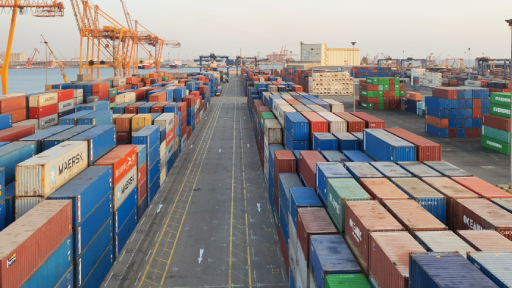
International Shipping Made SimpleEasily manage customs forms, duties, taxes, and tracking while accessing global carrier options from one platform built for cross-border shipping.
Fulfillment APIsCustomize workflows at scale with APIs for consolidating orders across channels, comparing shipping rates, validating addresses, tracking, analytics, and more.
Multi-Location FulfillmentManage inventory, orders, and shipping across multiple warehouses and stores with one platform built for multi-location fulfillment.
Advanced Shipping IntelligenceTurn shipping into your competitive advantage with intelligence that improves with every order.
Dedicated Guidance and SupportCount on 24x7 support plus dedicated onboarding guidance so your enterprise shipping runs reliably from day one and beyond.
How Guardian Sports Used Automated Returns to Scale After Going Viral with the NFL
After the NFL adopted their concussion-reducing Guardian Cap, this Atlanta-based sports safety company saw orders explode to 400 per day—and the team’s manual processes couldn’t keep up.
Your all-in-one shop for hardware, labels, and packaging.
Get 20% off high-quality supplies through 5/12. From pro-grade printers and scales to starter kits, polymailers, boxes, tape, and more, find everything you need to grow your business.
The conclusion is clear: AI is already influencing demand, competition, and delivery performance—and retailers that fail to adapt risk being excluded from AI-led shopping journeys altogether.
Parcel and LTL freight aren't competing shipping modes. They solve different problems. This guide breaks down parcel vs. LTL, including what each mode actually means, why growing businesses end up needing both, and the signs it's time to add LTL freight into your shipping strategy.
Every shipment has one job: get to the customer. It doesn’t matter how it gets there—whatever mode gets the job done is the right one. Most business owners aren’t trying to become shipping experts. They just want shipping to work because a shipment that doesn’t reach the customer isn’t just a logistics problem; it’s a broken promise.
For many businesses, “shipping” once meant choosing a carrier and printing a label. But as customer expectations rise, product catalogs expand, and fulfillment becomes more complex, shipping has become about choosing the right mode of transportation for each order.
A box and label suffice for merchants selling small consumer goods—electronics, apparel, cosmetics, pet supplies, sporting equipment, and toys—until the shipment outgrows the box. For businesses selling furniture, appliances, industrial equipment, or other bulky or fragile products, that point often comes much sooner, sometimes from the first sale. For others, it arrives later, as the business grows from direct-to-consumer into wholesale or retail accounts. In both cases, freight—the movement of larger, heavier, or palletized shipments by truck, rail, air, or ocean—becomes part of how the business ships.
The shipment determines the mode, not the business shipping it
As products, order sizes, and fulfillment needs evolve, many businesses reach the point where parcel alone is no longer the most practical or cost-effective option.
A retailer might ship hundreds of small parcels every day, then send a pallet to a wholesale customer, expedite a replacement by courier, or move inventory between warehouses. Each shipment has different requirements, and forcing them through the same shipping network often leads to higher costs, slower deliveries, or unnecessary complexity.
For many businesses, the shift happens gradually. An oversized order, a wholesale customer, or rising shipping costs may seem like isolated exceptions, but together they reveal a pattern: one shipping mode is no longer enough.
Businesses that recognize that pattern early are better positioned to adapt. Rather than treating parcel and freight as separate operations, they use each where it makes the most sense. That’s the idea behind multimodal shipping: combining multiple transportation modes to move products more efficiently, control costs, and meet customer expectations.
The basics: Parcel, freight, LTL, and FTL in plain English
Before diving into more details, it helps to know what these terms actually mean.

Parcel
Parcel is what most people picture when they think “shipping”: individual boxes with labels handled by carriers like UPS, FedEx, or USPS. Parcel generally covers shipments of 150 pounds or less that fit standard carrier size limits.
Freight
Freight is the umbrella term for items that are too large or too heavy to ship as a parcel, typically 150 pounds or more. Instead of individual boxes moving through a shipping network, freight shipments move on pallets, fill space in a trailer, or occupy a full truckload.
LTL (less than truckload)
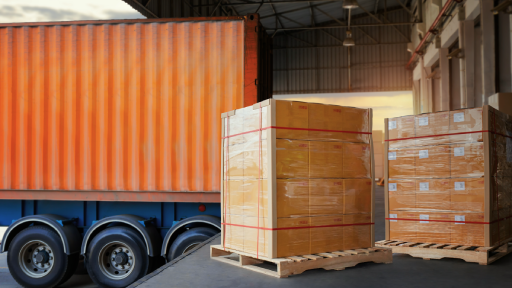
LTL is a freight service for shipments generally between 150 and 15,000 pounds that don’t need an entire truck to themselves. Your pallet shares the trailer with other businesses’ freight headed in the same direction, and you pay only for the space your shipment actually takes up.
FTL (full truckload)
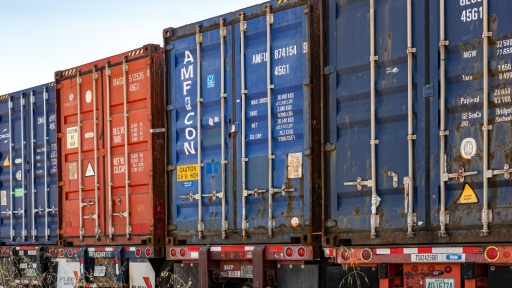
FTL is a freight service for shipments large enough to fill an entire trailer—generally 15,000 pounds or more, though sometimes it’s about space rather than weight. Your freight travels alone from pickup to delivery, with no other shipments sharing the trailer, which usually means faster transit and less handling.
Why choose LTL over parcel
Once a shipment starts pushing against parcel’s limits, LTL usually wins for one of a few reasons:
The product is too large or heavy: Once shipments exceed about 150 pounds or become palletized, parcel carriers become less practical and more expensive. LTL is specifically designed for freight of this size. Building materials, landscaping equipment, a pallet of auto parts, and glass or stone products are simply too big and bulky for standard carrier dimensions or fragile enough that palletized handling matters more than speed.
To save money: Shipping multiple heavy boxes individually can cost significantly more than combining them onto one pallet and shipping LTL. LTL lets multiple shippers share trailer space, spreading transportation costs. LTL is usually best for shipments comprised of multiple boxes to a single customer, dense or heavy products, and recurring B2B shipments.
You need freight services that parcel can’t provide: LTL carriers offer services that parcel carriers generally don’t, including: liftgate delivery, appointment scheduling, inside delivery, limited-access delivery (schools, churches, job sites), and freight classification and pallet handling.
Your business is growing: Many companies outgrow parcel before they’re ready for full truckload. LTL fills that gap, making it ideal for wholesale orders, retail replenishment, manufacturing shipments, and multi-pallet deliveries.
Parcel
LTL
FTL
Best for
Small packages
Palletized freight
Full trailer loads
Typical weight
Up to 150 lbs.
150–15,000 lbs.
15,000+ lbs. (or dedicated trailer)
Shipment size
Boxes
1–6 pallets
10–26 pallets or trailer-exclusive freight
Transit
Fast, frequent
Scheduled freight network
Direct from pickup to delivery
Cost
Lowest for small shipments
Most economical for medium shipments
Best value for large or dedicated shipments
Shared trailer?
N/A
✔ Yes
✖ No
Crossing from parcel into LTL
As businesses evolve, their shipments change, usually for one of four reasons: the product, the customer, the order, or the economics.
Some products change what’s needed without any change in customer or order size. A restaurant supplier can ship napkins, small wares, and coffee bags via parcel, but add a commercial oven to the same order, and parcel is off the table.
Other times, the product doesn’t change, but the customer does: for one customer, one candle is a parcel. The same candle brand landing a wholesale account becomes a pallet.
Order size works the same way—one yoga mat is a parcel, two hundred for a gym chain’s grand opening is freight.
Sometimes nothing changes but the economics: dimensional weight pricing, surcharges, and damage risk can make freight the cheaper, safer option anyway.
Often it’s more than one trigger at once, which is why growing businesses rarely switch permanently. They just add freight as another option and choose the mode that best fits the shipment.
Parcel and LTL aren’t competing solutions—they solve different problems. Parcel wins on speed and simplicity. LTL wins once a shipment is big enough that fewer stops and less handling matter more than next-day delivery. Palletizing multiple boxes often costs less than stacking parcel surcharges, and protects the product better, since a pallet moves as one unit instead of through a dozen sorting facilities.
Parcel doesn’t disappear. Most businesses run both, choosing a mode per shipment instead of committing to one.
Beyond LTL: Full truckload and specialty freight
It’s common to need parcel, LTL, and one or two specialty modes in the same week, especially as the product mix and customer base change.
Once a shipment is large enough to fill an entire trailer, full-truckload (FTL) takes over. It’s dedicated truck space, fewer touchpoints, and faster transit, since nothing gets combined with anyone else’s freight.
And some shipments don’t fit neatly into parcel, LTL, or FTL. That’s specialty freight: oversized loads, heavy machinery, temperature-controlled freight, hazmat, white-glove delivery for fragile or high-value items, and trade show shipments with a hard setup deadline. Most SMBs will never touch the extreme end of that list, but plenty run into oversized freight, temperature control, or white-glove delivery the first time they sell something too big or too delicate for a standard box.
Expanding products, customers, and sales channels naturally create a wider variety of shipments, and those shipments rarely fit into a single transportation model.
Checklist: Is it time to think beyond parcel shipping?
You may benefit from adding LTL shipping if:
Where does your business land?
Check every box that applies to your business.
0 of 12 checked
0–3Parcel shipping is likely still the best fit for most of your shipments.
4–7Your shipping profile is evolving. It may be time to evaluate when LTL makes more sense than parcel.
8+Your business is likely shipping freight that could benefit from an LTL strategy.
The real goal isn't parcel or freight—it's delivering
Every business is trying to do the same thing: get products to customers reliably, regardless of the mode it takes.
As products, customers, and order sizes evolve, the shipments you send will evolve too. The companies that adapt most successfully are those that recognize when a shipment has changed and choose the mode that best fits it.
That's what modern shipping looks like. Parcel, LTL, FTL, and specialty freight aren't competing strategies. They're tools. The more options a business has available, the easier it becomes to balance cost, speed, and service—one shipment at a time.