 Back
Back








































Fulfillment Guide
Shipping as a Growth Lever
Lessons from the operators doing it right
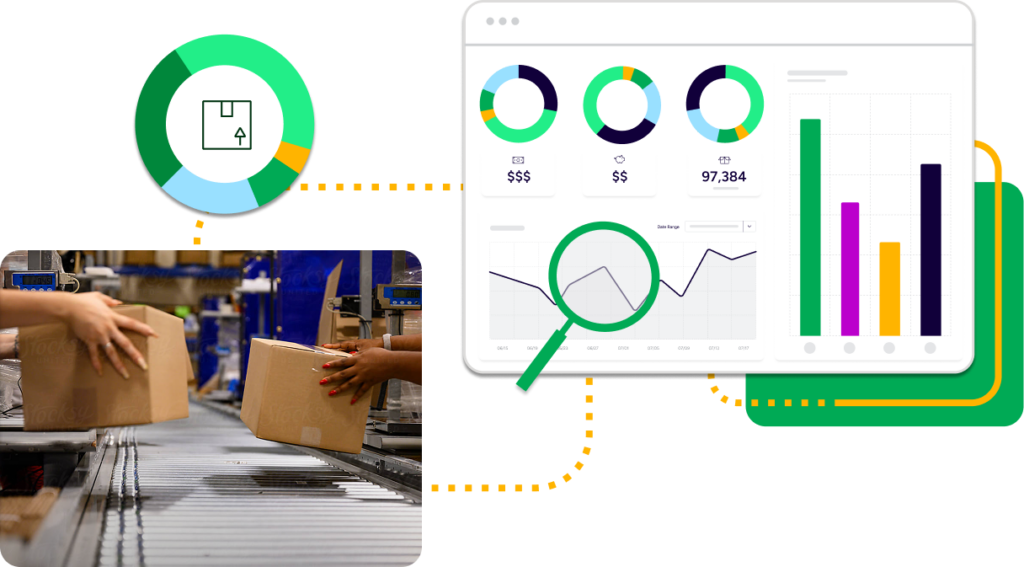
A playbook for turning shipping into growth—reframe, fix, scale, and feel the payoff.
Delivery used to be the last thing anyone talked about. Now it’s the first thing your customers judge.
This guide pulls together on-the-record insight from operators, analysts, and logistics leaders who are rethinking what shipping means for ecommerce—people who run carrier networks processing millions of parcels, mid-market brands scaling past their first hires, and founders who’ve lived through every version of “it broke, and we had to fix it live.”
Four themes shape the chapters ahead: reframe how you think about shipping, fix the process before you automate it, scale without breaking, and feel the payoff when customers notice the difference. Every chapter ends with something you can use today, not just a lesson.
Cost still matters; pricing it on purpose is what’s changed
For years, most operators have run shipping the same way: minimize the line item, negotiate a better rate, and move on. That math made sense when customers didn’t expect much else. It doesn’t anymore.

“There are so many heads of logistics that still view shipping as a cost center: ‘This number for this route needs to be this number. Don’t talk to me about anything else.’ Fifteen to 20 years ago, that made a lot of sense. It doesn’t now.”
Here’s why that mindset is outdated: delivery cost is the single biggest factor shaping how customers feel about the whole delivery experience.
Free shipping isn’t the only lever left to pull, either. At the same live debate, Watson argued that most consumers are willing to pay more for delivery on their own terms. Free shipping, he said, isn’t the only thing that converts anymore.
ShipStation Global data shows exactly where that willingness to pay sits: a $5 to $9 sweet spot for premium delivery. But most retailers aren’t actually pricing inside it.
Getting that price right takes more than picking one number and sticking with it. The same report found that willingness to pay for delivery isn’t flat: it shifts by market, order value, and urgency. A customer buying a last-minute gift will pay more than one restocking something they order every month. Price by customer context instead of charging everyone the same flat fee.
The competitive bar is higher than you think
“Amazon is a direct competitor in package delivery,” Watson said. “Amazon delivers something like seven billion packages a year. Everybody should acknowledge that Amazon’s a competitor.”
Reframing the mindset is step one. Getting the operation to actually deliver on it is step two, and that starts with a hard look at what’s still being done by hand.
Automation can’t fix a process problem
Automation can fix lots of things, but not everything. Watson has spent years advising ecommerce operators on their shipping stack, and he has a warning for anyone about to buy new software before fixing what’s underneath: “You can’t automate a snowflake. Automation could save a lot of time and money, but the problem isn’t always a technology problem—it’s sometimes a business-will problem. If your process isn’t well defined and your data isn’t sound, automation just means a lot more mistakes than you had before.”
Daniel Oh, who leads business development at the ERP provider Acumatica, sees the same failure pattern from the systems side.
“This is where organizations pay a massive hidden tax on growth,” he said. “When your ERP and shipping platform operate in data silos, you’re forcing your warehouse staff to act as human middleware—manually reconciling data, duplicating entries.”
The result: one manual typo or one misplaced number can cause a misshipment or a broken financial ledger.
The same breakdown shows up in visibility

“Sometimes the first thing that breaks isn’t actually shipping. It’s trust in the data. As brands scale, carriers, warehouses, and sales channels all start looking at different systems and getting different answers.”
Dan Caldwell of Klaviyo sees the human side of the same problem: the logistics and marketing teams often aren’t even talking.
“The customers doing this successfully are the ones where those two people are very close, and their tools are speaking to each other,” he said.
Bethany DeAngelo, who works on ShipStation Global’s carrier strategy team, sums up why fixing the process has to come first.

“Technology always fails when you don’t have clean and scalable processes. When there’s too much ambiguity or too many human decision points, you can’t scale your operation. Adding new technology won’t fix a broken process—it’ll actually exacerbate it.”
The finding:
Once the process is clean, scale stops being scary.
“What you want is a single source of truth, a fully connected system—and then everything becomes a math problem,” said Daniel Oh.
That’s exactly how the operators in the next chapter treat it.
Automation that scales with you

Ned Woodward runs logistics and fulfillment at Spiceology, one of the fastest-growing spice brands in the country. When COVID hit, the business flipped overnight from bulk food-service orders to a flood of small direct-to-consumer ones. The manual label-printing setup couldn’t keep up. Moving onto a connected system cut order-processing time in half.
“We haven’t had to hire seasonal staff to handle a 30 to 40% increase in direct-to-consumer volume through the holiday push,” Woodward said.

Maïré BAVARDAY-ROSA has onboarded ecommerce brands of every size at ecomspaces, and she’s seen the same gap almost every time: brands that grow their sales long before they build any real shipping automation to support it.
“99% of the brands that we onboard do not have this system in place,” she said.
One founder she worked with in Florida now processes 3,000 orders a day without adding headcount, once the systems were in place. Her advice to anyone still waiting: “The longer you wait, the harder it’s going to be, and it’s going to slow your growth.”
Woodward builds in one more safeguard as he keeps automating: he tests every new rule in a sandbox before it touches a live order, so a bad rule fails quietly instead of on 200 real orders at once.
Carriers and borders get complicated fast
Scale creates a second kind of complexity: carriers and borders. Mohammed Baloch of GlobalPost calls the result a “Frankenstein carrier portfolio”—a carrier for local deliveries, a carrier for international, a carrier for overnight, until you’re managing individual reps and integrations and getting bad economics on your rate because your volume is spread too thin.
James Marley of Swap Commerce has watched the compliance side of that same mess get more urgent, as de minimis exemptions that cross-border brands built their pricing models around have started disappearing.

“De minimis isn’t just a tax rule. It’s an entire operational architecture that brands have built their cross-border model around, and that architecture is now gone. For brands that haven’t adapted, the duty risk now lands with the consumer at the door. That’s not a logistics failure. It’s a brand failure.”
He’s seen brands trip over a subtler version of the same risk, too: using a marketing-friendly product description as the customs description. Call a white sweater “ivory” on the customs form, and a customs officer can read that as an attempt to ship actual elephant ivory. Holds at the border, fines, and delays follow.
AI rewards the operators who did the work first
Layer AI on top of all this, and the same rule holds: it helps the operators who’ve already done the process work, and it punishes the ones who haven’t.
Darin Lynch, founder of the ecommerce agency Irish Titan, argues mid-market brands actually have the advantage here: “AI is at its best when it does blue-collar work for white-collar workers. Mid-market is the Goldilocks of AI opportunity. They can workshop, they can sandbox.”
Every fix in this chapter is invisible to the customer, but it doesn’t stay invisible for long. Run the follow-the-parcel audit, Watson says, and “problems like conversion and retention start making a lot more sense.” That’s where the real payoff shows up.
Delivery is part of your brand voice
Customers don’t separate your marketing from your operations.
“The tone of your website should match the journey in terms of delivery updates, packaging, and customer service,” said Chris Forbes, founder of Cheeky Panda. “If you’re warm and authentic in your advertising but robotic when something goes wrong, customers notice immediately.”
Sham Aziz of thecxway frames checkout as a trust transaction, not just a purchase.

“Delivery is no longer a cost. It’s an experience. They’re handing over not just their money as part of an order, but a bit of trust—and they want to see that trust come back in the other direction.”
Jessica Webb has one specific, easy fix that brands routinely skip: delaying the shipping notification until the package is actually moving.
“Don’t send the notification to your customer until that item has actually entered the mail stream,” she said. “That way, when a customer gets that notification, they immediately see movement on that item and get excited for that package to actually be delivered.”
Delivery speed, cost, and reliability now get evaluated earlier in the shopper journey, right alongside product and price, not just at checkout.
Real operators, real proof
None of this is theoretical. Brian Bianchetti runs People’s Choice Beef Jerky, a 100-year-old family business that can’t compete with Amazon on speed, so he competes on something else.

“Our standard shipping is going to be slower than what you’re going to get on Amazon. But what you are going to get is human customer service. You’re going to get surprise-and-delight experiences in your package—a handwritten note, an extra bag of jerky as a thank you.”
Sarah Gulfraz, whose UK fulfillment operation Peacock Supplies now ships for more than 40 ecommerce brands, has built her entire customer-trust strategy around visibility.
“They can see within a day that it’s been dispatched from our side. They can follow the entire journey, and within two, three days, it’s there,” she said. “That gives us an edge over dropshippers, for instance, where it’s dispatched from their warehouse, and then two weeks later, it just mightily turns up at your doorstep.”
And Steven Turner of Workwear Giant sums up the whole chapter in one mantra: “We make the customer’s problems go away. That’s it. When we fail at that, that’s when things go wrong. But pretty much 99% of the time, we succeed.”
Putting it all together
None of this works as a one-time project. The operators in this guide didn’t fix shipping once. They built the habit of treating it as a growth lever rather than a line item, over and over as they scaled.
Four moves, in order:
- Reframe. Decide shipping is part of your brand promise, not separate from it. Make one quick pricing or policy fix this week.
- Fix the foundation. Run the follow-the-parcel audit before you automate anything else.
- Scale it. Sandbox first, diversify your carriers, and get compliance ahead of volume.
- Feel the payoff. Audit your post-purchase voice so customers feel the same brand all the way to the doorstep.
Shipping stopped being the back office a long time ago. The businesses in this guide are proof that the ones who noticed first are the ones pulling ahead.
You don’t have to tackle all four moves alone. ShipStation gives you one platform to manage your carriers and automate the manual steps this guide keeps surfacing. It’s also how you run the audits above with real data instead of guesswork. Start with the follow-the-parcel audit, see what it finds. Then, let ShipStation help you fix it.
About the voices in this guide
Rick Watson, Founder, RMW Commerce Consulting / Watson Weekly · Daniel Oh, VP of Business Development, Acumatica · Patrick Koehler, Founder & CEO, KD Global USA · Dan Caldwell, Team Lead, Technology Partnerships, Klaviyo · Bethany D’Angelo, VP of Product & Delivery, ShipStation Global · Ned Woodward, Director of Logistics & Fulfillment, Spiceology · Maïré BAVARDAY-ROSA, Founder, ecomSpaces · Mohammed Baloch, Senior Director of Mergers & Acquisitions, GlobalPost · James Marley, VP of Cross-Border, SwapCommerce · Darin Lynch, Founder & CEO, Irish Titan · Chris Forbes, Founder, Cheeky Panda · Sham Aziz, Founder, thecxway · Jessica Webb, Senior Director of Product Management, ShipStation Global · Brian Bianchetti, CEO, People’s Choice Beef Jerky · Sarah Gulfraz, Ecommerce & Logistics Director, Peacock Supplies · Steven Turner, Business Development Director, Workwear Giant