Back
Back










































 Carriers & Rates


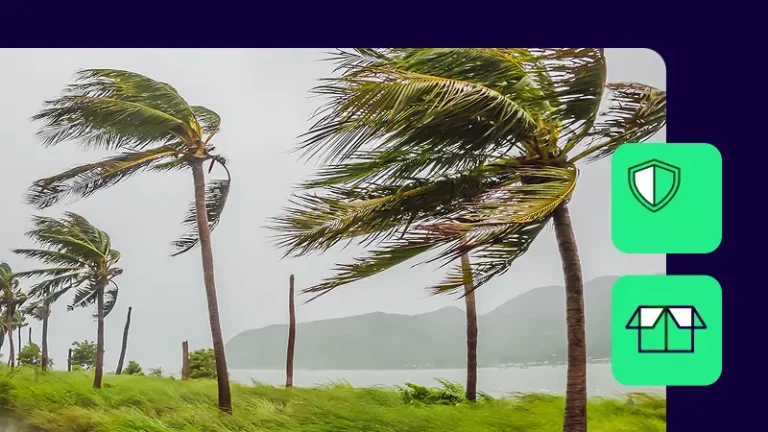
Hurricane season runs June through November, and for ecommerce businesses shipping to the Gulf Coast, the Southeast, or anywhere along the Atlantic Seaboard, it’s worth knowing what to expect—and how your carriers are prepared.
According to NOAA’s May 2026 seasonal outlook, forecasters are predicting a below-normal Atlantic hurricane season—with eight to 14 named storms, three to six hurricanes, and one to three major hurricanes (Category 3 or higher). A developing El Niño pattern is expected to suppress tropical activity this year. But as forecasters are quick to note, a below-normal season doesn’t mean a low-risk one. It only takes one storm making landfall to make a season impactful.
Two of ShipStation’s carrier partners—DHL Express and GlobalPost—shared how they approach hurricane preparedness, communicate disruptions, and support merchants through recovery. Here’s what they had to say.
Preparation typically begins six to eight weeks before the official start of hurricane season. DHL’s planning focuses on employee safety, communication protocols, facility preparedness, and protecting critical equipment. Teams also review contingency plans to minimize potential service disruptions—things like securing backup fuel supplies, staging generators, and identifying alternative operating procedures if facilities or transportation routes are impacted. All stations receive DHL Express’s Hurricane Planning and Response safety brief, and weather alerts are issued to affected locations as storms develop.
GlobalPost starts planning well before hurricane season, reviewing routes, updating contingency plans, and coordinating with suppliers and facilities. Their flexible network and supplier relationships allow them to adjust routes proactively to keep packages moving and minimize delays.
GlobalPost maintains a dedicated GlobalPost Service Updates page that serves as a comprehensive hub—not just for hurricane-related alerts, but for global shipping updates including international customs delays, regional weather events, and geopolitical disruptions worldwide. In addition to this public resource, GlobalPost provides proactive email notifications and real-time tracking milestones to keep merchants and customers aligned.
When severe weather affects operations, service alerts are posted on DHL’s website and updated as conditions evolve. Commercial and customer service teams also proactively reach out to customers with updates on impacted areas, expected delays, and estimated recovery timelines.
When a storm is forecast several days in advance, merchants are encouraged to monitor conditions in destination regions before shipping. Options may include rerouting shipments to alternate locations, scheduling a hold for pickup, or requesting that shipments be temporarily held until delivery routes reopen.
Because GlobalPost sits at the intersection of various transit points, they can often divert high volumes to alternate processing centers outside a storm’s path. Their supplier network and flexible routing options help keep packages moving safely and minimize interruptions.
Packages in affected facilities are secured until it’s safe to resume processing. Where possible, GlobalPost uses its network to reroute shipments around the disruption to reduce delays and keep deliveries on track.
When a storm is expected to impact a region, DHL closely monitors conditions and may adjust operations in advance. Shipments already in transit may be temporarily held at secure facilities until it’s safe to resume movement. Customers may also request rerouting or a delivery hold until affected areas become accessible again.
Hurricanes are generally considered force majeure events, as outlined in DHL’s Terms and Conditions. Service disruptions caused directly by extreme weather may not be eligible for standard claims coverage—something merchants should factor into their pre-season planning.
Merchants can file a claim through the GlobalPost website. Their team works to investigate and resolve claims quickly, providing transparency throughout the process.
GlobalPost recommends using the Service Updates page as your hub for global shipping trends and regional alerts. They also advise against relying on a single service or gateway for high-volume shipments to hurricane-prone areas, leveraging services with added insurance, building in additional transit time during peak storm periods, verifying address accuracy, and preparing standardized customer communications so you can quickly set expectations.
DHL recommends monitoring destination regions for potential weather impacts, building in additional transit buffer time, and considering shipment value protection for higher-value goods. Advance planning and flexibility can help maintain continuity when severe weather affects transportation networks.
Recovery timelines depend on the severity of the storm and the extent of infrastructure damage. For lower-intensity storms, service may resume as quickly as the following day. More severe events may require several days to a week as teams assess facility conditions and restore transportation routes. Employee safety is the top priority—facilities are inspected and road conditions evaluated before couriers return to service.
Recovery depends on the severity of the storm, but GlobalPost’s teams and suppliers work around the clock to resume operations safely. As conditions improve, they restore service by monitoring local infrastructure, supplier availability, and transportation networks in real time.
Yes. GlobalPost has enhanced its tracking systems, strengthened contingency protocols, and invested in partnerships with suppliers to better support shippers during hurricane season. This includes linking to destination final-mile carrier tracking numbers for most shipments to enable more complete visibility. They’re also working toward offering predictive delivery insights, with ongoing enhancements focused on speed, transparency, and resilience during disruptions.
Yes. DHL has implemented its Quick Connect system and pre-positioned mobile generators at key locations along the East Coast, Southeast, and Central U.S., enabling facilities to maintain operations during power outages. These efforts are complemented by ongoing investments in facility hardening and network flexibility.
Hurricane season doesn’t wait for you to be ready—but you can be. Review your carrier service options, add coverage for high-value shipments, build buffer time into your delivery estimates for coastal destinations, and know where to find service update information before a storm is ever named.ShipStation gives you access to multiple carriers in one platform, so you have options when you need them most. Start your free trial today or explore carrier options in ShipStation.