Back
Back



























































 Ecommerce Growth


At 500 orders a day, a little inefficiency hides well. You copy a tracking number here, pick a carrier there, and nobody notices.
At 5,000, those same small steps swallow the whole day.
Most sellers prep for peak by planning headcount. More hands, more shifts, more seasonal hires. It feels logical. It also stops working faster than you’d expect.
Manual work scales in a straight line: double the orders, double the clicks. Your team doesn’t scale that way. People get tired, new hires make mistakes, and every error costs more as volume climbs. Metal Garden Beds knows the feeling:
During peak season the order volume is simply too high to manage the old way. Without ShipStation I would probably have to bring in extra help just to get the labels printed correctly and keep shipments moving out the door.
You can’t hire your way out of a process that was never built for 10x.

It’s rarely anything dramatic. It’s the small, repetitive steps you stopped noticing years ago.
Four tasks tend to crack first. Re-entering weights and dimensions. Choosing a carrier order by order. Copying tracking numbers back to your store. Sending customer updates by hand. Each takes seconds. At 10x volume, seconds turn into shifts.
Nakie learned this the hard way:
We previously had to hire a full-time staff member to copy and paste tracking numbers into Shopify, which was a nightmare. Now this process is automated, saving time and reducing errors.
Cost breaks quietly, too. Carrier surcharges climb in November and December. If nobody compares rates on every order, you can lock in the wrong service at the wrong price. You won’t see the damage until the invoice lands.
This is where peak season shipping automation earns its keep.

You can see Black Friday coming. A viral moment, you can’t. Kyndra Bailey sells through TikTok, where demand can jump without warning:
Of all the channels, we benefit from the TikTok/ShipStation integration the most, simply because of the way TikTok orders can surge. It is literally like 100 orders in an hour. Unless you’ve had it happen to you, you really don’t even realize just how wild it would be.
Even planned peaks hit hard. Botham’s of Whitby goes from about 50 parcels a day to 350 in the run-up to Christmas—a 7x spike. Labels that took two minutes each by hand now take 30 seconds.
Peak season shipping automation works because it removes the decision, not just the click.
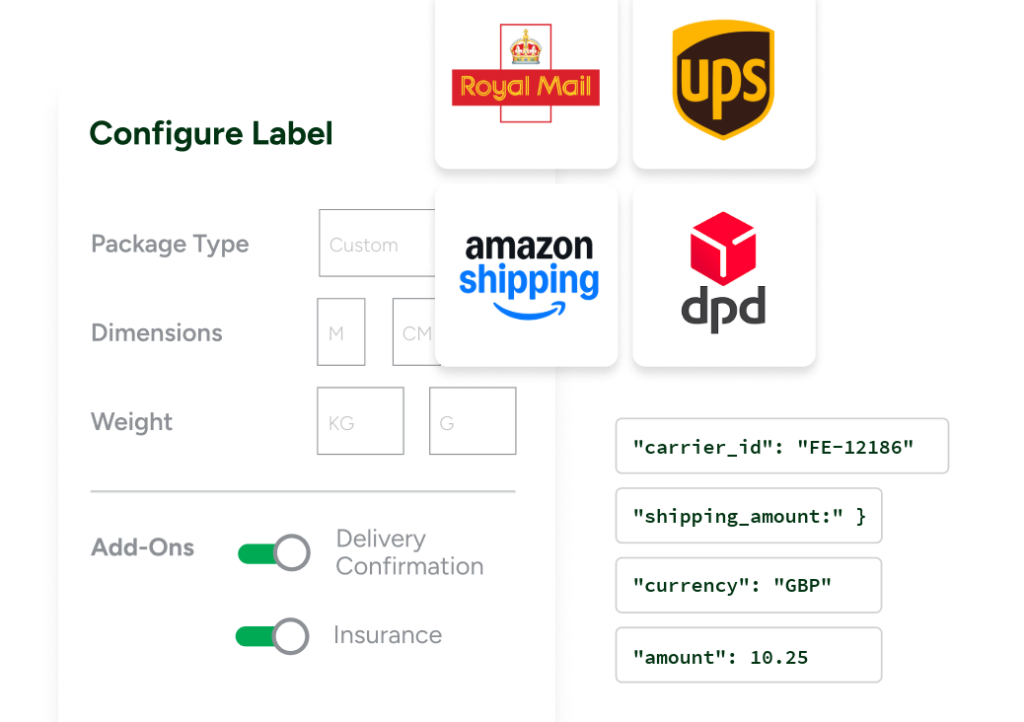
Automation Rules apply your logic to every order the moment it arrives. If an order matches your conditions, ShipStation assigns the carrier, picks the package, and adds the tag. Rate Shopper compares carriers on every order and picks the winner based on your criteria. SmartFill learns from your past shipments and fills in weight and dimensions, so no one retypes the same numbers all day.
The payoff shows up fast. Sellers with well-built Automation Rules process labels up to 15 times faster, with 40% fewer clicks per order.
Spiceology shows what that looks like in practice. The team used to rate-shop by hand across carriers, which ate roughly 12 hours a week before peak even started. When Black Friday tripled their volume, that meant two shifts and seasonal hires. With real-time rate shopping tied into their checkout, they met the surge without the extra shift:
During our peak holiday Black Friday sale, we could be shipping three times our normal daily volume. So, three times the output of a normal period. ShipStation’s able to help us meet that demand with no issues.
You don’t need a developer to get started, either. Peacock Supplies put it simply:
We use automation rules for everything. I think I get the most out of my money.

Some operations need more than rules inside a dashboard. They need shipping woven into the systems they already run.
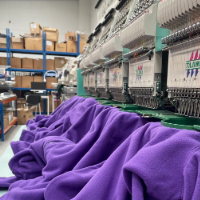
Rush Order Tees ships millions of custom apparel orders a year across more than 3,000 SKUs. Holiday demand and university “rush” seasons spike sharply, and adding headcount each time wasn’t sustainable. So they built directly on ShipStation API, connecting it to their production-routing system for batch label creation, multi-carrier rate optimization, and real-time status syncing.
The results: a 60% increase in peak shipping capacity, 30% fewer shipping errors, and an order-to-ship cycle that runs 25% faster. All without growing the team in step.
ShipStation API has allowed us to process massive spikes without operational strain. Batch automation and stable API throughput are essential to keeping up with demand.
That’s peak season shipping automation at the infrastructure level: the work scales, so the headcount doesn’t have to.
You don’t need to automate everything before peak. You need to find the step most likely to crack under 10x volume and fix that first.
Not sure where to start? Run through our peak season shipping checklist. It’s eight checks, each under an hour. Begin with your Automation Rules. A rule that was perfectly right in March can quietly misroute orders in November. Catch that now, not on your busiest morning.
Peak is coming whether your process is ready or not. Make your peak season shipping automation ready first. Start shipping with ShipStation today.