Back
Back



































 Shipping Basics


If you’re managing orders across multiple sales channels, toggling between UPS, your store, and your shipping workflow creates friction that adds up fast. Connecting your UPS account directly to ShipStation puts everything in one place—your rates, labels, tracking, and automation rules—so you spend less time switching tabs and more time getting orders out the door.
To connect your UPS® account to ShipStation, go to Carrier Settings, add your account details, and approve the secure sign-in on UPS. Once you connect your UPS account to ShipStation, your rates, UPS shipping labels, tracking, and fulfillment rules work from one platform. We’ll walk you through setup, negotiated rates, UPS Ground Saver, and what to check if your UPS account connection needs support.
You can add UPS in a few clicks. In the ShipStation platform, go to Account Settings, choose Shipping, then Carriers. Open your Carrier Accounts, click Add Carrier, choose UPS, enter your account nickname, account number, postal code, and country code, then finish authorization on UPS.
After that, your shipping management gets easier. You can compare UPS, USPS®, FedEx®, and DHL Express rates side by side, print labels in batches, and push tracking back to stores, shopping carts, and marketplaces such as Shopify, Amazon, eBay, Etsy, Walmart, BigCommerce, and WooCommerce.
First, confirm your negotiated rate settings. If you use your own UPS account, open carrier settings and make sure negotiated rates are enabled. If you reconnect an older account, reauthorization may be required because UPS uses a secure approval flow.
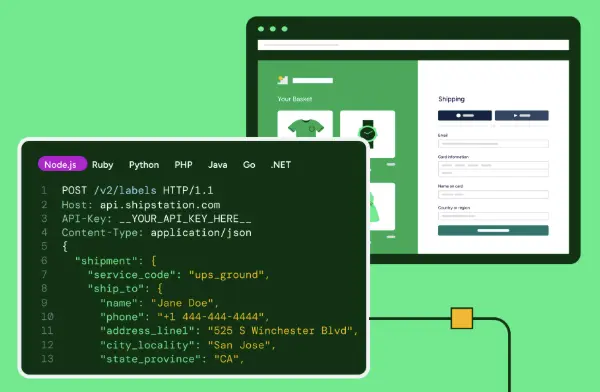
Next, put the connection to work. Use carrier accounts with automation rules, order management, warehouse management, inventory management, and branded delivery updates. If your team needs custom solutions, the ShipStation API provides developers with a way to integrate shipping data with other business systems. Our support team can also help if the experience stalls, and that’s usually faster than digging through a community forum in the US help center.
Yes. You can use UPS Ground Saver in ShipStation with UPS from ShipStation or with your own UPS account. You may need to accept updated terms before the service appears, then enable rates for additional services in your UPS carrier settings.
A few details matter. UPS Ground Saver is for shipments within the US, and packages must be dropped off with UPS, not USPS. Some shipments may move through the UPS network and reach final delivery through the local Post Office. For international delivery, choose another service. If you’re reviewing terms, privacy, cookie settings, or a Do Not Sell Personal Information request, handle those in your account settings, not in carrier setup.
When you connect your UPS account to ShipStation, you bring rates, labels, tracking, automation, and fulfillment into one clear workflow. That means less manual work and more control as you scale. Explore our customer stories, ask our team about integrations, or start a free trial and see how quickly your company can move from setup to shipment.