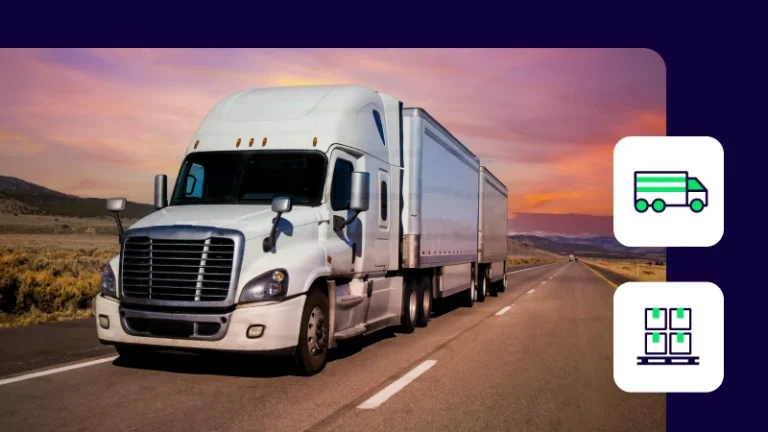
Shipping big packages can create big challenges for companies of all sizes. What starts as a simple parcel can quickly trigger oversized package fees or dimensional weight charges. Other shipments may be better suited for less-than-truckload (LTL) freight but knowing when to make the switch isn’t always obvious. Choosing between parcel vs. LTL freight isn’t about selecting your favorite or most-used mode. It’s about choosing the shipping method that’s right for each shipment. Many businesses rely on both, selecting the best option based on the shipment’s size, handling requirements, and destination.
Making the right choice doesn’t have to be complicated. A simple decision framework can help you evaluate each shipment and choose the transportation network that’s the best fit.
Hidden costs of choosing the wrong shipping mode for large packages
| Higher shipping costs |
Greater damage risk |
Lower efficiency |
Poor customer experience |
| Paying oversized fees, unnecessary freight charges, or using a shipping mode that doesn’t fit the shipment |
More handling can increase the risk of damaged products |
Extra handling, longer loading or receiving times, and unnecessary labor |
Delivery delays or missed expectations can affect customer satisfaction |
Why shipping decisions change
Shipping needs rarely stay the same. As products, packaging and order sizes change, the shipping method that once made sense may no longer be the best fit. Even a single oversized package or multi-carton shipment can shift the balance between parcel and LTL shipping.
That’s because parcel and LTL networks were designed for different types of shipments. Parcel carriers such as UPS, FedEx, and USPS move millions of individual packages through highly automated networks. LTL carriers are designed to move larger, heavier or palletized freight by combining shipments from multiple businesses into shared trailer space.
Neither shipping mode is inherently better. The goal is to choose the shipping mode that best fits the shipment based on its size, weight, packaging, destination, and delivery requirements. Choosing the right mode is just one piece of a larger freight optimization strategy.
Parcel vs. LTL: What’s the difference?
| Factor |
Parcel shipping |
LTL shipping |
| Typical shipment |
Individual cartons |
Palletized freight |
| Best for |
Individual packages within carrier limits |
Larger, heavier or consolidated freight |
| Pricing basis |
Weight and dimensional weight |
Freight class, density and weight |
| Delivery destination |
Residential and commercial |
Primarily commercial, though residential delivery is available |
| Handling |
Automated with multiple sorting touchpoints |
Fewer handling points after pickup |
| Tracking |
Individual package tracking |
Shipment-level tracking |
Understanding these differences makes it easier to recognize when a shipment belongs in the parcel network, when it’s a better fit for LTL, and when it’s worth comparing both before making a decision.
When parcel shipping makes sense
Parcel shipping is often the best choice when speed, convenience, and flexibility are the priority. Many large packages still move efficiently through parcel networks, making parcel a practical option for shipments that don’t benefit from palletization or freight handling.
Parcel shipping is often the right fit when your shipment:
- Typically weighs 150 pounds or less.
- Ships as a single carton or package.
- Requires fast or time-sensitive delivery.
- Is being delivered to a residence.
- Doesn’t require specialized freight services.
Keep in mind: A large package doesn’t automatically belong in the LTL network. Many oversized packages continue to move efficiently through parcel carriers.
When LTL freight makes sense
LTL shipping is often the better choice when shipments become too large for efficient parcel handling or when multiple cartons can be consolidated onto a pallet. Consolidating freight often improves handling while reducing shipping costs.
The 2026 Merchant Insights Report
How 868 merchants manage freight today, where it fragments, and the second workflow that never caught up.
LTL shipping is often the right fit when your shipment:
- Typically weighs more than 150 pounds.
- Ships on one or more pallets.
- Includes multiple large cartons going to the same destination.
- Exceeds parcel carrier size or weight limits.
- Requires liftgate, inside delivery or appointment delivery.
- Benefits from added stability during transit.
Keep in mind: Many shipments move to LTL before reaching 150 pounds because dimensions, packaging requirements and handling needs can be just as important as weight.
When to compare parcel and LTL
Some oversized parcel shipments clearly belong in one network. Others fall into a gray area where comparing parcel and LTL rates and solutions can uncover a more cost-effective option. That’s especially true as shipments grow larger or more complex.
Compare parcel and LTL shipping when your shipment:
- Typically weighs between 100 to 150 pounds.
- Is approaching parcel carrier size limits.
- Has high dimensional weight.
- Is oversized but relatively lightweight.
- Includes several cartons shipping to the same destination.
- Requires extra handling but may not need a pallet.
- Balances shipping cost and delivery speed equally.
Bottom line: Weight is only one piece of the puzzle. Dimensions, packaging, destination and handling requirements all influence the best shipping mode. Taking a few minutes to compare parcel and LTL options can help you choose the solution that delivers the best overall value.
Options for shipping large packages
Once you’ve decided whether parcel or LTL is the best fit, you’ll still have several shipping options to consider. Parcel carriers offer specialized services for heavy and multi-package shipments, while LTL carriers provide different ways to prepare freight for safe, efficient transportation. Understanding these options can help reduce costs, improve handling, and simplify delivery.
Parcel carrier services
| Service |
Carrier |
Best for |
| UPS Ground with Freight Pricing® |
UPS |
Multi-package shipments totaling 151–1,000 pounds that qualify for freight-style pricing while maintaining package-level tracking |
| UPS Hundredweight Service® |
UPS |
Multiple packages shipping to the same destination that qualify for shipment-level pricing instead of rating each package individually |
| FedEx Multiweight® |
FedEx |
Qualifying multi-piece shipments that may cost less when rated as a single shipment instead of individual packages |
| DHL Express Heavyweight |
DHL Express |
International shipments over 150 pounds that move under a single air waybill |
| USPS Ground Advantage |
USPS |
Large packages up to 70 pounds that remain within USPS size limits |
LTL freight options
| Shipping option |
How it works |
Best for |
| Single pallet |
Multiple cartons are consolidated onto one pallet and shipped under a single bill of lading |
Small wholesale orders, replenishment shipments and consolidated deliveries |
| Multiple pallets |
Freight is divided across two or more pallets within the same shipment |
Large orders and high-volume shipments |
| Floor-loaded freight |
Individual cartons are loaded directly into the trailer without pallets when permitted by the carrier |
Freight that can’t be palletized or certain short-haul shipments |
| Crated freight |
Products are enclosed in wooden crates for additional protection during transit |
Fragile, high-value, or industrial products |
| Stretch-wrapped or banded pallets |
Freight is secured to minimize shifting during loading and transportation |
Most palletized LTL shipments |
| Slip sheets |
Freight is loaded on reinforced slip sheets instead of pallets using specialized equipment |
High-volume shippers looking to reduce pallet costs and maximize trailer space |
Frequently asked questions about shipping large packages
What's the difference between parcel and LTL freight shipping?
Parcel shipping is designed for individual packages. LTL (less than truckload) shipping is designed for larger, heavier or palletized freight that doesn’t require a full truckload.
When should I choose LTL instead of parcel?
LTL is often the better choice when shipments exceed parcel size or weight limits, include multiple large cartons or require palletization or specialized delivery services.
Is 150 pounds the cutoff for LTL shipping?
No. Many businesses begin comparing parcel and LTL shipping around 150 pounds, but dimensions, packaging and carrier requirements are just as important as weight.
Can oversized packages still ship through parcel?
Yes. Many oversized packages remain within parcel carrier limits. The best choice depends on the shipment’s size, weight, destination and handling requirements.
What is dimensional weight?
Dimensional weight is a pricing method based on package size rather than actual weight. Large, lightweight packages often cost more because they occupy more space in a trailer.
How can I reduce shipping costs for large packages?
Compare parcel and LTL rates, consolidate shipments when practical and choose the shipping mode that best fits the shipment instead of relying on habit.
What services are available if my customer doesn't have a loading dock?
Many LTL carriers offer liftgate, inside delivery and residential delivery services to accommodate locations without loading docks or forklifts.
Choose parcel and freight with confidence
Choosing between parcel and LTL isn’t about following a rule or relying on the shipping method you’ve always used. It’s about evaluating each shipment and selecting the transportation network that’s the best fit. A few extra minutes spent comparing your options can help control shipping costs, improve shipping efficiency over time and avoid common shipping mistakes.
Working with a trusted shipping partner like ShipStation can make those decisions easier. With access to shipping expertise, businesses can better evaluate their options, choose the right transportation solution and build a shipping strategy that grows with their business.
Want to learn more? Log in or sign up for a free trial today.
 Back
Back
































































 Shipping Basics