Back
Back
































































The Apparel Retailer’s Guide to Shipping and Fulfillment
The Apparel Retailer’s Guide to Shipping and Fulfillment


In this guide
- 01 Introduction: The Apparel Shipping Reckoning
- 02 The New Customer Expectation Standard
- 03 The Operational Strain Behind Fulfillment
- 04 Returns Have Become a Strategic Challenge
- 05 The Technology Fragmentation Problem
- 06 Cost Pressure is Reshaping Decisions
- 07 Preparing for the Next Era of Apparel Ecommerce
- 08 Conclusion: Shipping and Fulfillment Have Become Strategic Growth Drivers
- 09 Key Takeaways
Introduction
The Apparel Shipping Reckoning
Rising customer expectations, operational complexity, and margin pressure are turning fulfillment into a competitive differentiator.

The apparel industry is not in a growth cycle. It’s in a restructuring cycle.
Apparel retailers are facing a convergence of rising customer expectations, operational complexity, pressure on shipping costs, and growing fulfillment demands.
When apparel retailers were asked to identify the challenges most likely to impact their business' performance in 2026, increasing online competition ranked first at 36%, followed by rising operational and fulfillment costs at 32% (ShipStation Ecommerce Delivery Benchmark Report, 2026).
What are the main challenges to your business performance in 2026?
Source: ShipStation Ecommerce Benchmark Report, 2026
These two pressures are connected. Competition compresses prices and margins. Higher operational costs erode what's left.
At the same time, consumers have fundamentally changed how they evaluate apparel. Brand names still matter, but consumers are becoming ruthlessly rational.
Value-conscious consumers are becoming choosier about what they buy and where they shop, prioritizing price, quality, and product relevance over brand equity. Apparel is moving from a brand-driven market to a value-driven market. Brands that cannot clearly justify their prices through product, experience, or both will quickly lose relevance.
What this means in practice is simple: It's no longer about riding demand. Winning in apparel shipping and fulfillment is about managing complexity, protecting margin, and executing better than competitors.
This guide is built for the founders, operations leaders, and ecommerce managers running apparel brands who know their shipping needs to get smarter—not incrementally better, but fundamentally different. We'll walk through the specific fulfillment challenges unique to apparel, the strategies that separate brands scaling smoothly from those stalling out, and the capabilities that make it all work.
In this market, the apparel brands that thrive won't necessarily be the most visible. They'll be the most disciplined—on pricing, fulfillment, returns, and customer experience.
What apparel retailers told us
To understand the fulfillment challenges facing apparel brands today, we surveyed 753 respondents in the apparel industry who ship and influence shipping decisions to evaluate current shipping behaviors, frustrations, technology adoption, and priorities. Many of the strategic recommendations throughout this guide are drawn from the survey data and findings.
When asked about their biggest shipping frustrations, three themes dominated.
Delivery delays and slow transit times ranked first, cited by 28% of respondents. High shipping costs and process inefficiency tied for second at 17% each.
What is your biggest frustration with your current shipping process?
Source: ShipStation Apparel Retailer Survey, 2026
Together, these three pain points account for more than half of all responses—and they reflect a clear pattern: apparel retailers are losing time and margin to largely operational problems.
The time burden is significant. More than half of apparel merchants spend between 2 and 10 hours each week on shipping and inventory management alone. Nearly one in four spend more than 10 hours.
Approximately how many hours per week does your team spend on shipping and inventory management?
Source: ShipStation Apparel Retailer Survey, 2026
For lean teams managing SKU complexity, multi-channel orders, and rising customer expectations simultaneously, that's operational overhead that compounds quickly.
Not only are tasks too time consuming, but they're overly complicated. From managing returns to multi-carrier rate shopping, apparel retailers cite a host of activities that seem more difficult than they should be.
Which of the following shipping activities feel harder than they need to be?
Source: ShipStation Apparel Retailer Survey, 2026
These aren't isolated complaints. They're structural. And they're the themes this guide is built around.
Chapter 1
The New Customer Expectaton Standard
Apparel shoppers now evaluate shipping speed, cost, tracking, and returns early in the buying journey, making fulfillment part of the customer experience itself.

Delivery has become the price of entry in apparel ecommerce. What was once considered a back-end operational function now plays a central role in how customers evaluate online retailers from the very beginning of the shopping journey.
Shipping speed, delivery cost, tracking visibility, and return flexibility are no longer secondary considerations—they directly influence whether customers complete a purchase and return.
Today's shoppers aren't just comparing products. They increasingly evaluate retailers based on:
Total delivered cost
36%
of consumers rank delivery cost as the most important part of the delivery experience, often evaluated before the product itself.
Source: ShipStation Ecommerce Delivery Benchmark Report, 2026
Delivery speed
50%+
of consumers expect a standard online order within two days, making fast delivery a baseline requirement rather than a differentiator.
Source: ShipStation Ecommerce Delivery Benchmark Report, 2026
Free shipping availability
91%
of consumers say free shipping influences their decisions, giving your shipping price a direct impact on whether a shopper buys or leaves.
Source: ShipStation Apparel Retailer Survey, 2026
Tracking visibility
40%
of customer service contacts are "Where is my order?" questions, making proactive tracking essential for both CX and support efficiency.
Source: Salesforce, What is WISMO, 2025
Return flexibility
19%
of apparel shoppers rank return flexibility as their top delivery priority, making returns policies as much a sales tool as an operations function.
Source: ShipStation Apparel Retailer Survey, 2026
Delivery convenience
69%
of consumers would switch to a retailer with more convenient delivery options, making flexibility a major differentiator.
Source: ShipStation Ecommerce Delivery Benchmark Report, 2026
This shift is happening earlier in the buying journey as well. A majority of consumers now evaluate delivery options before checkout, making shipping speed, cost, and convenience part of the purchase decision itself.
This is forcing apparel retailers to rethink fulfillment as a core part of the customer experience rather than simply a logistics function.
Fast, free, and reliable shipping is the new standard
The pressure is already clear across the industry.
According to our survey, 80% of apparel merchants believe customers now expect packages to arrive within two to three days. In fact, 75% of surveyed apparel retailers already deliver in two days or faster, highlighting how quickly speed expectations have become normalized across the industry.
At the same time, 70% say their customers expect free shipping, while 88% of retailers already offer free shipping on at least some orders to stay competitive.
70%
of apparel merchants say their customers expect free shipping.
Source: ShipStation Apparel Retailer Survey
What makes this especially challenging is that fast delivery is no longer viewed as a premium service. Customers increasingly see it as the baseline expectation. The same is true for shipping transparency. Nearly half of apparel merchants say customers now expect an easy way to track orders and monitor package locations throughout the delivery process.
For many apparel shoppers, predictability is becoming just as important as speed. Customers increasingly value accurate delivery expectations and reliable communication over simply receiving packages as quickly as possible.
A delivery that arrives exactly when promised often creates more trust than a faster shipment that feels inconsistent or unpredictable.
This reflects a broader shift in how consumers experience ecommerce. Customers no longer think about shopping, shipping, delivery, and returns as separate phases. Instead, they experience the entire process as one continuous journey. And very often, the fulfillment experience leaves the strongest impression of the brand itself.
What this means for retailers
Customers no longer separate the shopping experience from the delivery experience. Fast, affordable shipping is now part of the product itself, and retailers that cannot meet those expectations consistently risk losing customers before the order is even placed.
The post-purchase moment now belongs to the brand
Increasingly, retailers are also seeking ways to retain ownership of the post-purchase experience rather than handing it over entirely to carriers.
Branded tracking pages and shipping notifications give apparel brands another opportunity to engage customers during one of the highest-attention moments in the customer journey.
With shipping notifications consistently generating some of the highest open rates of any customer communication, the delivery experience is becoming an increasingly valuable brand touchpoint—not just an operational update.
Apparel fulfillment built for speed, accuracy, and brand loyalty
This also creates operational benefits internally. “Where is my order?” inquiries continue to represent a significant share of ecommerce customer service volume. Providing customers with proactive order updates and branded delivery communication can reduce support strain while improving the overall post-purchase experience.
That means delivery is doing more than moving products from the warehouse to the doorstep. It shapes customer trust, influences repeat purchase behavior, and directly impacts long-term loyalty.
A delayed shipment, expensive shipping fee, or frustrating return process can damage the customer relationship just as quickly as a poor product experience. For apparel retailers, this creates a new operational reality.
Fulfillment is no longer simply a cost center to manage as efficiently as possible. It has become a strategic part of the overall customer experience—and increasingly, a major factor in long-term growth and retention.
Chapter 2
The Operational Strain Behind Fulfillment
As order volume and SKU complexity grow, manual workflows and disconnected operations are making apparel fulfillment harder to scale efficiently.

The biggest challenge in ecommerce today isn’t generating demand—it’s keeping up with everything that happens after the order is placed. As customer demand around speed, visibility, and convenience continues to climb, fulfillment operations are becoming more time-consuming, complex, and harder to scale for apparel retailers.
Fulfillment complexity is increasing faster than teams can scale
The survey found that shipping and inventory management now take up a significant amount of operational time for many apparel businesses.
In fact, 62% of merchants spend between 2 and 10 hours each week on fulfillment-related activities such as printing shipping labels, order entry, carrier selection, and shipment management. Nearly one in four spend more than 10 hours every week on these tasks alone.
62%
of apparel merchants spend between 2 and 10 hours each week on fulfillment-related activities such as label printing, order entry, and carrier selection.
Source: ShipStation Apparel Retailer Survey
Even carrier selection remains highly manual for some apparel retailers. Fulfillment teams may spend 10–15 hours each week comparing shipping rates across carrier websites and systems—time that quickly compounds as order volume grows.
Small shipping inefficiencies compound quickly. Even minor differences in carrier selection costs can translate into tens of thousands of dollars (or more) in unnecessary annual shipping spend as volume increases.
At the same time, many retailers feel like their workflows are becoming increasingly difficult to manage.
17%
of apparel merchants say process inefficiencies and manual work are their biggest frustrations with their shipping process.
Source: ShipStation Apparel Retailer Survey
Together, these findings paint a clear picture: fulfillment operations are placing increasing pressure on ecommerce teams, especially as order volumes rise and customer expectations become harder to consistently meet.
While these processes may work at smaller scales, they become increasingly difficult to sustain as businesses grow.
Manual vs. automated: what the difference actually looks like
Leading apparel retailers are responding by automating fulfillment decisions that once required constant manual oversight.
Intelligent rate shopping, automated service selection, and workflow automation help reduce repetitive work while improving shipping efficiency. Instead of relying on fixed carrier preferences or manual label selection, modern fulfillment platforms can automatically identify the most cost-effective carrier and service level for each shipment.
Customer Story
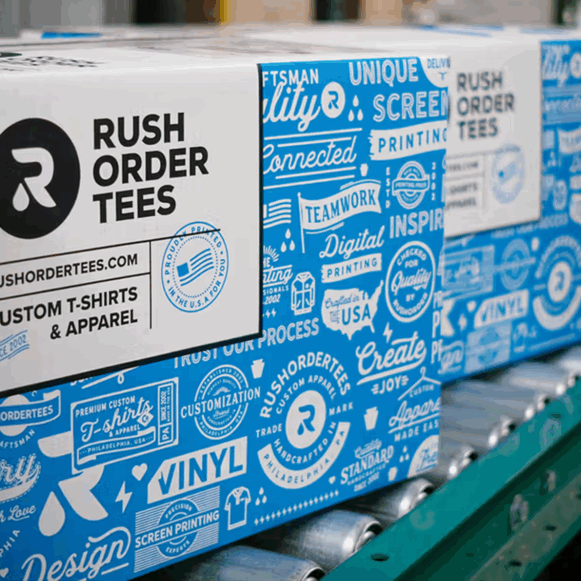
Rush Order Tees
Custom apparel company Rush Order Tees streamlined high-volume fulfillment through automation and centralized shipping workflows, saving 25+ labor hours per day in manual work.
For apparel brands shipping lightweight yet bulky products, packaging optimization is becoming increasingly important. Because carriers often price shipments based on dimensional weight, packaging choices directly affect fulfillment costs.
Automating packaging rules helps retailers reduce unnecessary shipping expenses while maintaining delivery speed and consistency.
The move toward operational automation is already accelerating across the industry. In fact, 92% of apparel retailers expect their investment in AI and automation to increase over the next 12–24 months, reflecting the urgency with which many brands are trying to reduce operational strain and improve scalability (ShipStation Ecommerce Delivery Benchmark Report, 2026).
92%
of apparel retailers expect their investment in AI and automation to increase over the next 12–24 months.
Source: ShipStation Ecommerce Delivery Benchmark Report, 2026
What this means for retailers
As fulfillment demands increase, operational inefficiencies become harder to absorb. Manual workflows that once worked for smaller order volumes can quickly slow down growth and strain lean teams.
Apparel assortment comes with hidden costs
One reason fulfillment becomes especially difficult in apparel ecommerce is the complexity of SKUs. Growth in apparel rarely scales cleanly because even small product variations quickly multiply operational demands.
A single item available in five colors and four sizes already creates 20 SKUs. Add a seasonal variation or bundled offer, and that number grows even faster. Every additional SKU introduces more inventory to track, more fulfillment decisions to make, more demand signals to interpret, and more opportunities for operational error.
Fulfillment workflows slow down, returns become harder to process, and customer service teams spend more time resolving shipping and inventory issues.

CUSTOMER STORY
Veiled Collection
By optimizing warehouse and fulfillment processes with smarter workflows, the clothing company maintained operational consistency and delivery efficiency as order volume increased and the business grew 200% YoY.
Over time, the systems and workflows that once supported growth can start to break under the weight of product variation and order volume. What may initially appear as isolated operational inefficiencies often become larger structural challenges that limit scalability across the business.
Operational efficiency is becoming a growth strategy
That challenge is reflected in how merchants feel about their operations as a whole. More than one-third of apparel retailers say improving their shipping operation feels harder than it should, while 26% say they spend too much time managing shipping and inventory workflows.
26%
of apparel merchants say they spend too much time managing shipping and inventory workflows.
Source: ShipStation Apparel Retailer Survey
As ecommerce continues to evolve, operational efficiency is becoming a competitive advantage in its own right. Retailers that simplify workflows, reduce manual work, and centralize fulfillment operations will be better positioned to scale without sacrificing speed, accuracy, or customer experience.
Chapter 3
Returns Have Become a Strategic Challenge
High return rates, reverse logistics costs, and rising customer expectations are turning returns into a major operational and financial challenge.

For retailers, returns have become much more than a customer service issue. They are now one of the most operationally complex and financially expensive parts of running an ecommerce business.
Returns are especially difficult in apparel ecommerce, one of the highest-return categories in retail. Industry research shows that 19% of all online purchases are returned, with apparel consistently ranking among the most return-heavy categories (Source: NRF 2025 Retail Returns Landscape).
19%
of online purchases are returned, with apparel consistently ranking among the most return-heavy categories.
Source: NRF 2025 Retail Returns Landscape
As online shopping continues to grow, so do customer expectations around flexible, convenient returns. Many retailers are struggling to keep up.
Inconsistent sizing across brands continues to fuel return volume. Many customers now order multiple sizes or variations of the same item, expecting to return some of the products. This “bracket shopping” behavior fundamentally changes the economics of fulfillment, inventory planning, and returns management.
Apparel returns are becoming a major cost center
ShipStation’s survey found that 64% of apparel merchants say processing a shipped return costs as much as, or more than, the original shipment. That means retailers are not only absorbing the cost of outbound fulfillment but are often paying just as much again to process products returning through the reverse logistics process.
64%
of apparel merchants say processing a shipped return costs as much as, or more than, the original shipment.
Source: ShipStation Apparel Retailer Survey
And returns aren’t simply expensive—they’re time-consuming.
Apparel merchants reported spending an average of six hours each week managing returns, with some businesses dedicating significantly more operational time to the process. For growing ecommerce teams already stretched thin, returns management can quickly become a major drain on both labor and operational capacity.
Not surprisingly, many merchants feel the process is harder than it should be. In fact, returns management ranked as the shipping activity most likely to be perceived as overly difficult, with 41% of apparel retailers identifying it as a major challenge.
41%
of apparel merchants, especially larger merchants, say that return management feels harder than it needs to be.
Source: ShipStation Apparel Retailer Survey
Larger businesses were even more likely to feel this pressure, suggesting that return complexity tends to increase alongside order volume and scale.
Returns operations are too disconnected
Part of the challenge comes from how fragmented returns workflows often are.
Many retailers still:
Manually approve return requests
Generate return labels through separate systems
Update inventory by hand
Coordinate customer communication across platforms
Manage returns without real-time visibility
To reduce this complexity, leading businesses are moving toward more centralized workflows that connect return management, inventory updates, customer communication, and shipping into a single operational process.
Faster inventory reintegration and real-time inventory synchronization across channels are becoming increasingly important as apparel brands expand simultaneously across marketplaces, storefronts, and social commerce platforms. Without accurate cross-channel inventory visibility, returns can lead to overselling and quickly damage customer trust.
The technology landscape around returns also reflects this fragmentation. No single returns management platform is used by more than 4% of survey respondents, highlighting how disconnected and inconsistent many returns operations still are.
What this means for retailers
Disconnected returns processes create hidden costs through manual work, delayed inventory updates, and poor customer experiences. Simplifying returns operations can improve both efficiency and retention.
The returns experience matters more than ever
At the same time, customer expectations around returns continue to rise. Shoppers want returns to feel fast, transparent, and low-friction. A complicated or slow return experience can damage customer trust just as quickly as a delayed delivery.
On top of that, returns represent one of the most sensitive moments in the customer relationship. In many cases, something has already gone wrong—the fit was off, expectations were missed, or the customer changed their mind. How retailers respond in that moment often determines whether the customer returns for another purchase or leaves entirely.
CUSTOMER STORY
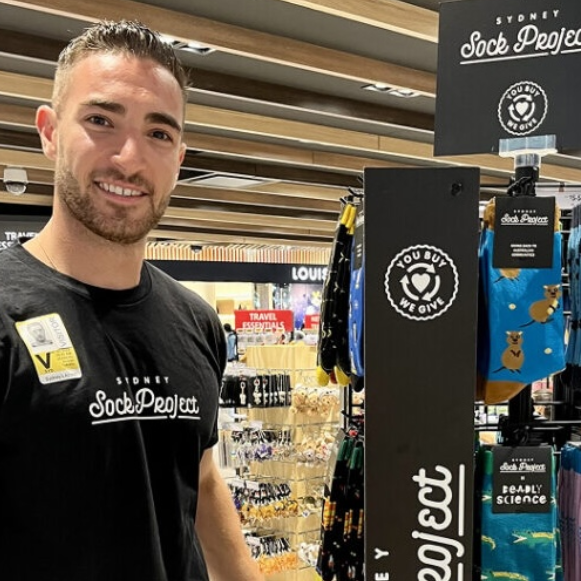
Sydney Sock Project
The fast-growing sock brand streamlined fulfillment and customer experience operations, saving 11,000 minutes annually by automating carrier rate shopping and strengthening post-purchase customer connections.
For apparel retailers, this creates a growing need to treat returns as a strategic part of the customer experience—not simply a necessary operational cost.
The stakes are high. Research shows that 71% of shoppers are less likely to purchase again after a poor returns experience, reinforcing the close tie between post-purchase operations and long-term customer retention (Source: NRF 2025 Retail Returns Landscape).
71%
of shoppers are less likely to purchase again after a poor returns experience.
Source: NRF 2025 Retail Returns Landscape
Retailers that simplify returns workflows, improve visibility, and reduce manual effort will be better positioned to protect margins while also building stronger long-term customer loyalty.
Chapter 4
The Technology Fragmentation Problem
Disconnected systems across shipping, inventory, returns, and marketplaces are limiting visibility and making apparel operations harder to manage.

As apparel ecommerce operations grow more complex, many retailers are discovering that the systems supporting their fulfillment workflows are becoming just as difficult to manage as the shipping process itself.
Instead of working on a single centralized platform, many merchants juggle multiple tools for shipping, inventory management, returns, tracking, marketplaces, and customer communication.
More software isn’t always helping
The survey found that apparel retailers most commonly use two separate tools for shipping and inventory management, whereas larger businesses are significantly more likely to rely on four or more systems simultaneously.
On the surface, adding more software may seem like a natural way to solve operational problems. But in practice, too many disconnected systems often create new inefficiencies rather than eliminating them.
The fragmentation across the shipping technology landscape is also striking. No single shipping and inventory management platform accounted for more than 10% of primary usage among respondents, while no single returns platform captured more than 4% market share. In other words, there is no clear “standard” operating system for apparel fulfillment.
Apparel fulfillment built for speed, accuracy, and brand loyalty
Many retailers are building their operations by piecing together multiple platforms that were never fully designed to work seamlessly together. Every disconnected system adds more work.
Operational strain shows up in very practical ways as systems become more disconnected:
Teams often manually transfer order and shipping data between systems, increasing the risk of delays and human error.
Inventory has to be reconciled across multiple sales channels and platforms, making accurate stock visibility harder to maintain.
Employees may switch between separate tools to manage returns, track updates, select carriers, and communicate with customers.
Reporting becomes fragmented when operational data lives across disconnected systems.
As businesses scale, adding more tools can introduce even more complexity instead of improving efficiency. These challenges become even more difficult in apparel ecommerce, where product variations across sizes, colors, bundles, and seasonal assortments can rapidly multiply SKU counts.
Over time, these inefficiencies compound. What starts as a manageable workaround for a smaller operation can quickly become a major bottleneck as order volume grows.
What this means for retailers
Adding more software does not always create more efficiency. As ecommerce operations scale, disconnected systems can create operational bottlenecks, limiting visibility and slowing fulfillment.
Connected operations are replacing fragmented workflows
Many apparel retailers are responding by consolidating fulfillment workflows into more centralized platforms that connect orders, inventory, carriers, tracking, and returns into a single operational system. This not only improves visibility across the business but also reduces the operational friction caused by constantly switching between disconnected tools.

CUSTOMER STORY
Xena Workwear
The footwear brand streamlined shipping and operations by consolidating fulfillment into a connected system with centralized visibility, reducing friction and supporting growth to 2,000 monthly orders.
Retailers are beginning to recognize this challenge. Nearly one-third of apparel merchants surveyed said they would prefer to use fewer shipping tools overall. At the same time, inventory management emerged as one of the most important functions for business success—and one of the hardest areas for merchants to manage effectively.
For many apparel brands, the goal is no longer simply adding more technology. It’s building a fulfillment operation where systems, data, and workflows work together cleanly enough to support speed, visibility, and long-term growth.
Chapter 5
Cost Pressure is Reshaping Decisions
Rising carrier costs, free shipping expectations, and operational inefficiencies are forcing apparel retailers to rethink fulfillment profitability.

For apparel retailers, shipping has become a constant balancing act. Customers expect fast delivery and free shipping, but behind the scenes, the costs tied to meeting those expectations continue to rise. As a result, many retailers are rethinking how they manage fulfillment—not just from an operational standpoint, but also from a financial one.
Fast shipping comes at a cost
According to ShipStation’s survey, 41% of apparel merchants say shipping costs are difficult to control, while 39% say free shipping hurts their margins even though customers now expect it.
41%
of apparel merchants say shipping costs are difficult to control.
Source: ShipStation Apparel Retailer Survey
39%
of apparel merchants say free shipping hurts their margins even though customers now expect it.
Source: ShipStation Apparel Retailer Survey
That tension sits at the center of modern ecommerce fulfillment. Retailers are being asked to deliver faster, absorb more shipping costs, and still protect profitability in an increasingly competitive market.
What this means for retailers
Reducing fulfillment costs is no longer just about finding cheaper shipping rates. Long-term profitability increasingly depends on operational efficiency and workflow optimization.
Retailers are facing cost pressure from multiple directions
And shipping costs are only part of the picture. Nearly one-third of merchants say tariffs negatively impacted their businesses over the past year, adding more pressure to already-tight operating margins. When combined with rising carrier rates, costly returns, and growing customer expectations, fulfillment has become one of the biggest financial strains for ecommerce businesses.
Retailers are balancing pressure from:
Rising carrier rates
Free shipping expectations
Tariffs and supply chain costs
Expensive returns
Labor inefficiencies
Competitive pricing pressure
Not surprisingly, cost now plays a major role in how merchants evaluate shipping technology. More than half of apparel retailers say cost is one of the most important factors when choosing a shipping and inventory management platform. At the same time, 48% say pricing changes are the top reason they would switch providers altogether.
The hidden costs cascade
But retailers are also realizing that the cheapest option is not always the most cost-effective one in the long run. Manual processes, disconnected tools, and inefficient workflows often create hidden costs through wasted labor, shipping mistakes, slower fulfillment times, and poor customer experiences.
Eventually, those operational inefficiencies can become just as expensive as higher carrier rates.
Shipping decisions are becoming more intelligent
That is why many apparel retailers are shifting their focus from simply reducing shipping costs to improving fulfillment efficiency overall.
Some ways they're doing this include:
Smarter carrier selection
Workflow automation
Centralized shipping operations
Better inventory visibility
Reduced manual work
Increasingly, retailers are turning to fulfillment platforms that automate shipping decisions in real time rather than relying on fixed carrier workflows. Automatic rate shopping helps ensure each shipment is matched with the most cost-effective carrier and service based on package dimensions, destination, delivery speed, and current carrier pricing.

CUSTOMER STORY
Selkirk
Selkirk improved shipping efficiency and operational flexibility by optimizing carrier selection and fulfillment workflows through single-API integrations, helping manage costs as demand of its sports apparel increased.
Carrier diversification is also becoming simpler and more strategic. Retailers relying too heavily on a single carrier can create operational risk during peak seasons, service disruptions, or pricing changes.Multi-carrier shipping strategies provide more flexibility while helping merchants optimize delivery speed, service reliability, and shipping costs across different order types and geographic regions.
At the same time, multi-carrier networks are becoming an important way for retailers to protect themselves from pricing volatility and operational disruption. Diversifying carrier options gives apparel brands more flexibility during seasonal surges, carrier delays, or regional service interruptions while helping maintain more consistent delivery performance.
In today’s ecommerce environment, controlling fulfillment costs is no longer just about spending less. It is about building operations that can scale efficiently without sacrificing speed, reliability, or customer trust.
Chapter 6
Preparing for the Next Era of Apparel Ecommerce
The next phase of apparel growth will depend on operational readiness, connected systems, and scalable fulfillment operations.

Despite the industry's operational challenges, many apparel retailers remain optimistic about the future. Ecommerce demand continues to grow, customer expectations continue to evolve, and brands are finding new opportunities to expand across channels and markets.
But growth in today’s environment also brings a new level of operational pressure. As order volumes increase, fulfillment operations need to become faster, more connected, and more scalable than ever before.
Growth will depend on operational readiness
According to the survey, nearly half of apparel merchants are confident their shipping volume will increase over the next six months. That optimism reflects continued momentum across ecommerce, but it also highlights an important reality: growth is becoming increasingly tied to operational readiness.
For many retailers, fulfillment is no longer just about keeping orders moving. It’s becoming a core part of how businesses scale efficiently while maintaining customer satisfaction. And as expectations around speed, visibility, and convenience continue to rise, operational weaknesses become harder to hide.
Inventory management is reaching a tipping point
That is especially true when it comes to inventory and order management. Apparel merchants consistently ranked order and inventory management among the most important drivers of business success—over 60% rated each as "extremely important," more than any other operational area we measured.
62%
of apparel merchants rated order and inventory management as "extremely important" drivers of business success.
Source: ShipStation Apparel Retailer Survey
At the same time, inventory management also stood out as one of the most difficult operational areas for retailers to manage effectively.
This gap between operational importance and operational difficulty is becoming one of the defining challenges of modern apparel ecommerce. Many retailers are trying to scale using systems and workflows that were built for smaller order volumes, fewer sales channels, and less demanding customer expectations.
Over time, those limitations can affect:
Shipping speed
Inventory accuracy
Delivery visibility
Customer satisfaction
Profitability
Team efficiency
Growth doesn’t create momentum—it creates chaos. The retailers best positioned for long-term growth are increasingly those investing in operational flexibility before problems become critical. That includes improving inventory visibility, simplifying workflows, reducing manual tasks, and building fulfillment systems that can adapt as the business expands.
What this means for retailers
Future ecommerce growth will depend as much on operational readiness as customer demand. Retailers that modernize fulfillment operations early will be better positioned to scale efficiently.
The intelligence layer behind modern fulfillment
As apparel fulfillment operations mature, many retailers are shifting from operational visibility toward operational intelligence. Modern fulfillment systems help teams understand not just what happened, but why it happened and what actions to take next. Carrier analytics, shipment cost reporting, and role-based dashboards are helping teams make faster, more informed decisions.
This shift toward data-driven fulfillment is already underway. According to ShipStation’s Apparel Retailer Survey, 43% of apparel retailers are already using AI to support inventory and fulfillment optimization, with adoption expected to continue growing as operational complexity increases.
Cross-border shipping adds new layers of risk
For retailers preparing to expand internationally, operational simplicity becomes even more important.
Apparel fulfillment built for speed, accuracy, and brand loyalty
Customs documentation, duties and tariffs, country-specific carrier networks, and local return expectations all add complexity. Modern fulfillment platforms help reduce that friction for apparel retailers by automating customs forms, optimizing international carrier selection, and centralizing cross-border shipping workflows.
The future belongs to simple, adaptable operations
At the same time, many merchants are looking for ways to simplify their operations across the board. Nearly one-third of apparel retailers surveyed said they would prefer to use fewer shipping tools, reflecting a growing desire for more centralized and connected workflows. As fulfillment becomes more complex, operational simplicity is vital.
The next era of apparel ecommerce will not be defined by product selection alone. Increasingly, it will be shaped by how efficiently retailers can deliver, manage, and support the full customer experience after purchase.
Brands that build adaptable, customer-focused fulfillment operations today will be better prepared for the demands of tomorrow’s ecommerce landscape.
Conclusion
Shipping and Fulfillment Have Become Strategic Growth Drivers
Fulfillment is no longer just operational—it has become a key lever of customer trust, efficiency, and long-term ecommerce growth.

The apparel ecommerce landscape is entering a new phase—one where fulfillment operations play a much larger role in business performance than they did just a few years ago. Customer expectations around speed, flexibility, and convenience continue to rise, while retailers face growing pressure to control costs, manage returns efficiently, and scale without adding complexity.
The tension this report surfaces is real: customers expect fast, affordable delivery, yet shipping costs remain difficult to control. Returns create operational strain. Fragmented systems make visibility harder to maintain. These aren't new problems—but they're compounding faster than most operations were built to handle.
Apparel fulfillment built for speed, accuracy, and brand loyalty
Operational simplicity will define the next generation of growth. Retailers that invest in connected systems and scalable fulfillment workflows will be better positioned to adapt as ecommerce evolves.
Fulfillment is becoming a competitive differentiator—not simply because customers notice when it works well, but because they notice immediately when it does not.
The retailers best prepared for what's ahead will be those that treat shipping and fulfillment as strategic parts of the business rather than cost centers—building the kind of reliable post-purchase experience that drives repeat purchases and long-term trust.
Key Takeaways
Throughout this guide, several themes consistently emerged.

The apparel ecommerce landscape is entering a new phase—one where fulfillment operations play a much larger role in business performance than they did just a few years ago. Customer expectations around speed, flexibility, and convenience continue to rise, while retailers face growing pressure to control costs, manage returns efficiently, and scale without adding complexity.
1
Delivery is now part of the apparel product experience.
Customers increasingly evaluate apparel brands based on shipping speed, tracking visibility, return flexibility, and total delivered cost, not just style, quality, or price.
2
The future of apparel fulfillment will be increasingly data-driven.
Automation, operational analytics, AI-powered optimization, and intelligent carrier selection are helping retailers make faster and more informed fulfillment decisions.
3
Returns are becoming a major operational and financial challenge for apparel retailers.
Reverse logistics directly impact margins, inventory visibility, labor efficiency, and customer loyalty.
4
Disconnected systems make apparel fulfillment harder to scale.
Managing shipping, inventory, returns, marketplaces, and customer communication across multiple tools creates visibility gaps and operational inefficiencies.
5
Shipping costs are becoming harder for apparel brands to absorb.
Rising carrier rates, free shipping expectations, dimensional pricing, and growing return volumes are putting pressure on margins.
6
Operational simplicity is becoming a competitive advantage in apparel ecommerce.
Retailers that centralize workflows, automate repetitive fulfillment tasks, and improve inventory visibility will be better positioned to scale efficiently.
Related Resources

The 6 Hidden Costs of Apparel Returns
See the 6 hidden costs—from lost inventory issues to policy abuse—that quietly drain your margins.

How to Manage 500+ Apparel SKU Variants
Discover how top apparel brands tame SKU complexity with smarter systems for inventory, fulfillment, and returns—so growth adds momentum, not chaos.
The Apparel Returns Playbook
Learn how leading apparel brands use smarter systems and strategies to manage returns, reduce loss, ease complexity, and retain revenue.
Apparel fulfillment built for speed, accuracy, and brand loyalty
Tools that power modern apparel fulfillment from checkout to doorstep