Back
Back






































 Technology & Integrations





Shipping costs can make or break a business, especially around peak season. All of a sudden the orders start piling in, carrier surcharges increase and consumer delivery expectations rise. If you’re not keeping a close eye on what you’re spending each week, and optimising for every shipment, your shipping costs can quietly erode your margins before you’re even aware there is a problem.
The good news is that there are ways to make fulfilment more affordable if you know what to look for. One of the easiest ways to keep shipping costs down is to have a multi-carrier strategy. That means you can easily compare rates across different carriers and choose the best rate to suit your purpose – whether that is optimising for cost, speed, or a balanced best-value mix; whatever works best for your business goals.
Using multiple carriers can offer better rates for different destinations, package sizes, and service levels. Knowing which carrier will be best suited for particular services, and setting specific rules to group these orders together, allows you to predictably see how each carrier is performing and gives you the confidence in knowing what you’re spending each week.
There are four different factors that determine what you pay on any given package:
Many ecommerce businesses make the mistake of focusing on weight alone, when in actual fact dimensional weight and zone (or location) often matter more than actual weight when determining the price of the shipping. Understanding how each factor is taken into consideration when determining shipping costs and which carrier provides the best service based on these requirements is critical to helping you keep costs down and optimising for efficiency.
Here we break down some of the most common shipping scenarios you may want to optimise for and how to select the right service best suited to your needs.
The challenge: Balancing the need for urgent delivery with the high costs typically associated with express shipping.
The strategy: If your main priority is fast delivery, look out for carriers that offer an ‘express,’ ‘priority’ or ‘next-day’ delivery option. The typical timeframe for express deliveries will be between 1-3 business days. Express deliveries will attract a higher cost than standard deliveries, so it’s important to factor these costs into your shipping strategy. For example, you might want to only offer express delivery for repeat customers, or customers who spend over a certain amount. Or, you might want to optimise based on location and only offer express shipping for metro-to-metro deliveries, as an example.
Key takeaway: Being strategic about how you use express services will ensure you meet the fast delivery your customers expect, while also protecting your overall margins.
Adopting a multi-carrier strategy enables you to compare rates side-by-side and select the option that best fits your requirements, allowing you to keep a tighter control over your shipping expenses. For example, if one carrier quotes $9.43 for a 1–2 day delivery and another offers $9.07 for a 2–3 day window, you can choose whether to prioritise speed or budget.
For the fastest delivery, consider national carriers that offer premium next-day services for metro regions, or specialised courier services for reliable interstate delivery.
The challenge: Keeping shipping expenses as low as possible to maintain both competitive pricing and healthy margins.
The strategy: If you want to optimise for cost, choose the carrier that offers the most economical rates across a wide range of services (for example: express, domestic, standard parcel). Check for rate fluctuations, and any hidden costs that may not be included in the original shipping cost – for example: do they add any surcharges on top of the cost (like for fuel for example) or charge adjustments if the parcel weight and size was calculated incorrectly?
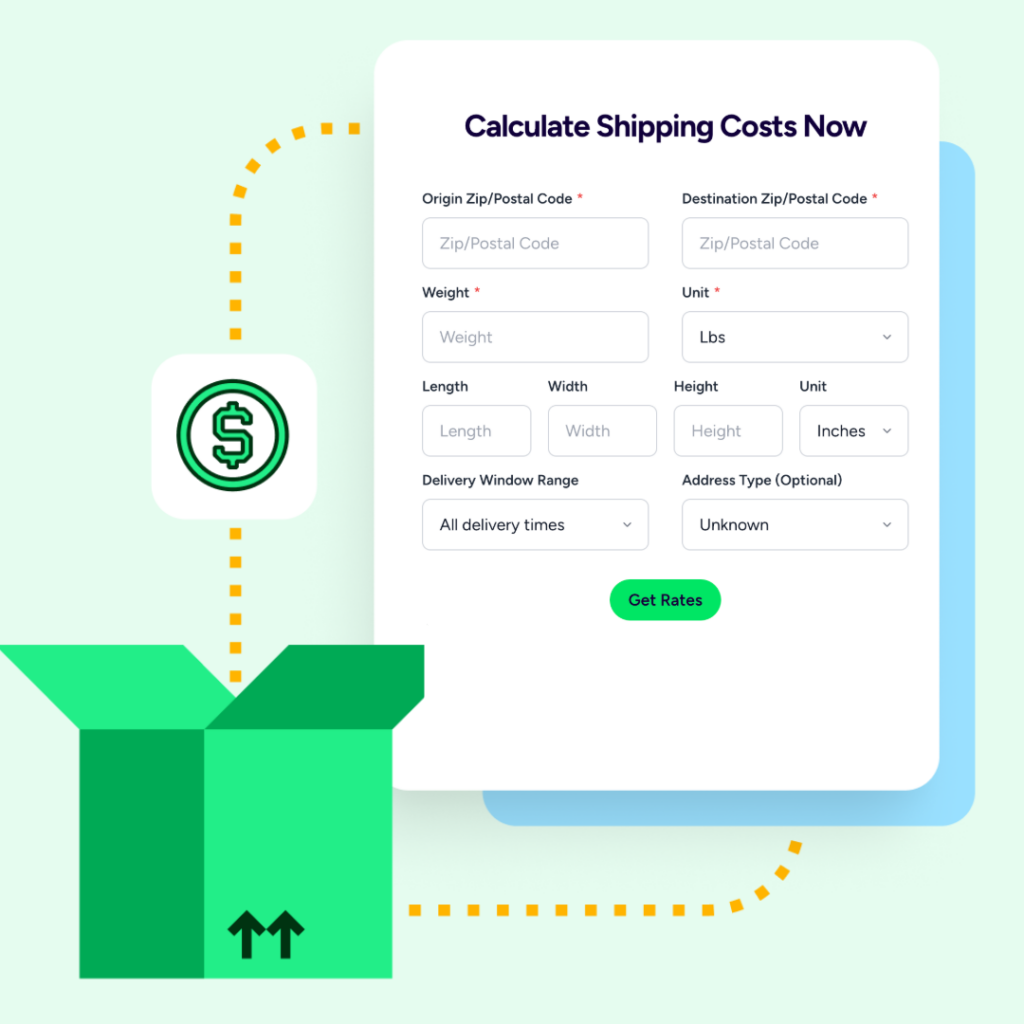
Key takeaway: Focusing on total shipping costs and factoring in any surcharges or adjustments, will help you to identify the most economical carriers for your volume. Using a tool such as ShipStation’s Rate Calculator will help you compare rates across multiple carriers to surface the best rates.
For low-cost shipping rates, consider major carriers known for economy services and those offering transparent, all-inclusive pricing models (for example, no added surcharges).
The challenge: Delivering to customers in areas where standard courier coverage may be limited or expensive.
The strategy: Not all carriers will deliver to regional or rural areas, so it’s important to check the zones they cover before selecting a rate. For example: Zone 1 is metropolitan areas only, Zone 2 covers country and regional areas, and Zone 3/4 covers remote and outlying areas. Different carriers will provide different ‘zone levels’ of coverage for specific parcel types, so it’s important to do your research to see which carrier will best service your needs.
Key takeaway: Matching your carrier selection to their specific zone strengths prevents delivery failures and excessive remote area surcharges.
Look for national carriers that maintain extensive networks covering metropolitan, regional, and remote zones. For heavy or bulky items, specialised freight carriers are often the most effective choice).
The challenge: Ensuring customers receive their orders on time and in good condition to build long-term trust.
The strategy: Service reliability can be very subjective as one ecommerce business’s experience with a carrier may be different to another, however there are a few strategies you can employ to optimise your shipping based on service level.
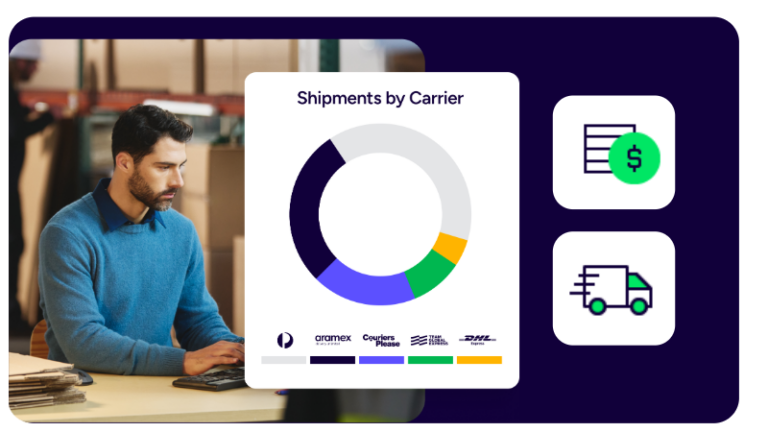
With ShipStation’s Analytics, you can check carrier performance, analyse how much you are spending each week with a certain carrier, what adjustments you are being charged and if they are meeting their SLAs. You can surface reports to check things like: on-time delivery rates, transit times, geographic patterns, volume distribution and average cost per shipment.
Patterns will help you identify where you’re spending your money and where potential savings could be made with a few tweaks, while also providing a consistent view on overall reliability and service delivery. Ultimately, the best carrier for reliability is the one that proves it with your own business data, not just general market reputation.
Key takeaway: Using real-time data turns a perception of carrier performance into actionable insights that help to improve your fulfilment and protect your bottom line.
The challenge: Managing the complexity of returns and exchanges without sacrificing customer experience.
The strategy: If you operate in an industry that has a high returns rate – for example fashion and apparel, choosing a carrier that specialises in returns handling may be a key consideration for you. Choosing the right service can help to keep costs down, while still delivering a high-quality experience that customers now expect.
Key considerations can include:
Key takeaway: Selecting carriers that specialise in returns provides the convenience that customers demand, speeds up inventory re-stock, and unlocks valuable savings on your returns labels.
For returns handling, consider dedicated returns solutions that offer a broad network of drop-off locations, such as parcel lockers or integrated retail drop-off points (PUDO networks).
Having a multi-carrier strategy is one of the simplest ways you can optimise your shipping and uncover real savings. Having the flexibility to compare and select different carriers and rates for specific use-cases protects your margins while ensuring you meet high customer delivery expectations.
Get started with a free trial of ShipStation today to save even more with discounted, pre-negotiation carrier rates, multi-carrier rate shopping, batch label printing, and automation that makes shipping easier and more cost-effective.