Back
Back
































































 Ecommerce Growth


Peak season in the UK isn’t a single weekend anymore. It’s a gauntlet that runs from Halloween through Black Friday, Super Saturday, and Boxing Day, straight into the January returns wave.
What makes it so demanding for UK sellers isn’t just the volume. It’s the complexity: a carrier landscape where the cheapest option isn’t always the most reliable one in the last week before Christmas; post-Brexit customs paperwork on every EU-bound parcel; customers who expect next-day delivery and live tracking as standard; and a returns wave that lands just as your team runs out of steam.
These pressures expose every inefficiency hiding in your operation.
The ecommerce sellers who get through peak in good shape make deliberate decisions about their shipping infrastructure months in advance. This checklist is designed to help UK sellers do exactly that.
Everyone knows the big ones. But UK peak now builds from October and doesn’t really taper off until the last returns are processed in late January. What many sellers underestimate is everything in between.
Halloween and Bonfire Night kick off the seasonal buying. Black Friday has stretched from a single day into a fortnight of deals, and Cyber Monday follows hot on its heels. Then comes the December gifting rush, Super Saturday (the last Saturday before Christmas), and the Boxing Day and New Year sales, which bring a fresh wave of orders just as the carriers are catching their breath.
Map it all out, and you’re not looking at a few big days. You’re looking at a sustained wave lasting three to four months, with overlapping peaks that compound one another.
A promotional calendar built around only one or two events isn’t a peak-season strategy. It’s wishful thinking.
Pull two to three years of order data and map it by week. Identify the spikes your team absorbed reactively. Note which SKUs and delivery regions drove them. That analysis tells you more about your actual risk profile than any industry calendar—and it’s the foundation for every other decision on this list.
Adding a second carrier account isn’t a strategy. It’s a routing challenge.
No single carrier dominates every route, service level, and order profile in the UK. From Royal Mail, Evri, and DPD to DHL, UPS, and Parcelforce, each has its own coverage, service options, and cut-off times. During peak, each also hits capacity limits at different times and in different places. The carrier that performs reliably in October may not be the right choice for every parcel in December.
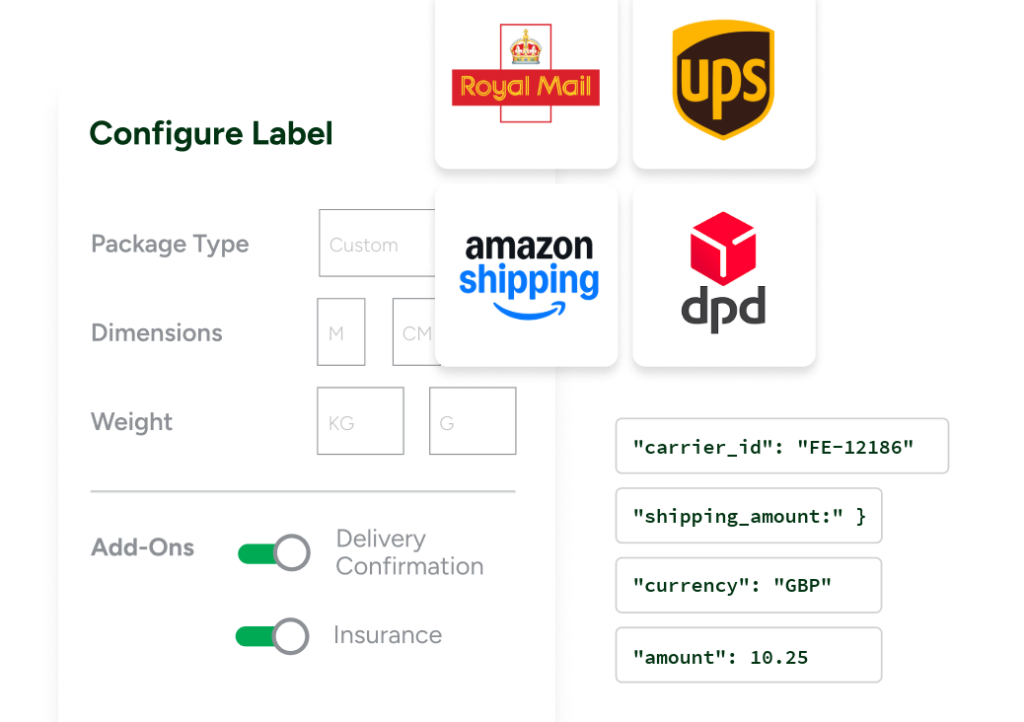
The key is to have your carrier mix set up, tested, and connected to your fulfilment system before peak. That includes routing rules that assign each shipment to the best-fit carrier for its weight, size, destination, and service level, not simply the cheapest or default option.
Multi-carrier rate shopping that compares live rates across connected carriers turns those decisions into an ongoing cost-optimisation tool.
Build your routing rules now, while you have time to test them. When a carrier approaches capacity in the second week of December, your system should already know who takes over.
Since Brexit, customs and compliance are part of shipping goods from Great Britain to the EU, and they can quickly become bottlenecks under peak volume. Gaps that are annoying in July can become business-threatening in December.
Exports require accurate commodity codes (based on the Harmonised System, or HS), correct declared values, and the appropriate customs documentation. If you’re exporting goods from Great Britain, you’ll also need a GB Economic Operators Registration and Identification (EORI) number. For consignments valued up to €150 shipped into the EU, the Import One-Stop Shop (IOSS) scheme simplifies Value Added Tax (VAT) collection, but only if you’ve registered and configured it correctly across your sales channels (European Commission’s Customs formalities for low value consignments).
EU rules for low-value goods have also changed. Since July 1, 2026, the EU has applied a temporary €3 customs duty per item to eligible low-value consignments with an intrinsic value of up to €150 imported from outside the EU. If you sell into Europe from the UK, now is the time to review your landed-cost calculations and customs configuration, not in November (European Commission’s new €3 customs duty for low-value imports). How duties are calculated is covered in the European Commission’s guidance on customs duties.
A single misconfigured line on a high-volume day can create a cascade of delays, held parcels, and customer complaints that are difficult to recover from.
Build and test these workflows well before peak. A compliance failure in November is a customer experience problem. The same failure in September is simply a configuration fix.
UK shoppers have been conditioned by the big retailers. Next-day delivery, choice of delivery day, and live tracking are baseline expectations, not perks.
Out-of-home delivery is also firmly mainstream. Parcel shops, lockers, and click-and-collect points, from Evri ParcelShops and DPD Pickup to InPost lockers, are a regular choice for shoppers who don’t want to miss a delivery. If your checkout offers a single generic delivery option, you’re leaving conversion on the table. And if home delivery windows are stretched in the run-up to Christmas, shoppers who can pick up on their own schedule will thank you for it.
Delivery expectations also vary by postcode. Customers in the Highlands and Islands, Northern Ireland, and other remote areas often face longer transit times and carrier surcharges. Be upfront about it at checkout rather than after the order is placed.
Then there’s the Christmas cut-off. Define realistic last-order dates for each delivery service before your peak campaigns go live. Those dates need to be consistent across your website, marketing emails, customer support responses, and fulfilment operation.
An extra day of cushion in your delivery estimate is much easier to manage than a wave of customer contacts asking where their gift is. Publish your cut-offs clearly and early. Customers appreciate the transparency.
Finally, think about what happens after the order is placed. Proactive shipping notifications at confirmation, dispatch, out for delivery, and delay stages cut “where is my order?” contacts at exactly the time your support team can least afford them.
At three to five times your normal daily volume, manual processes break. Every decision your team makes individually at 200 orders per day becomes a bottleneck at 1,000.
Automation doesn’t remove your team from fulfilment. It reduces repetitive decisions so they can focus on what requires judgement.
The highest-impact shipping automation rules to build before peak include:
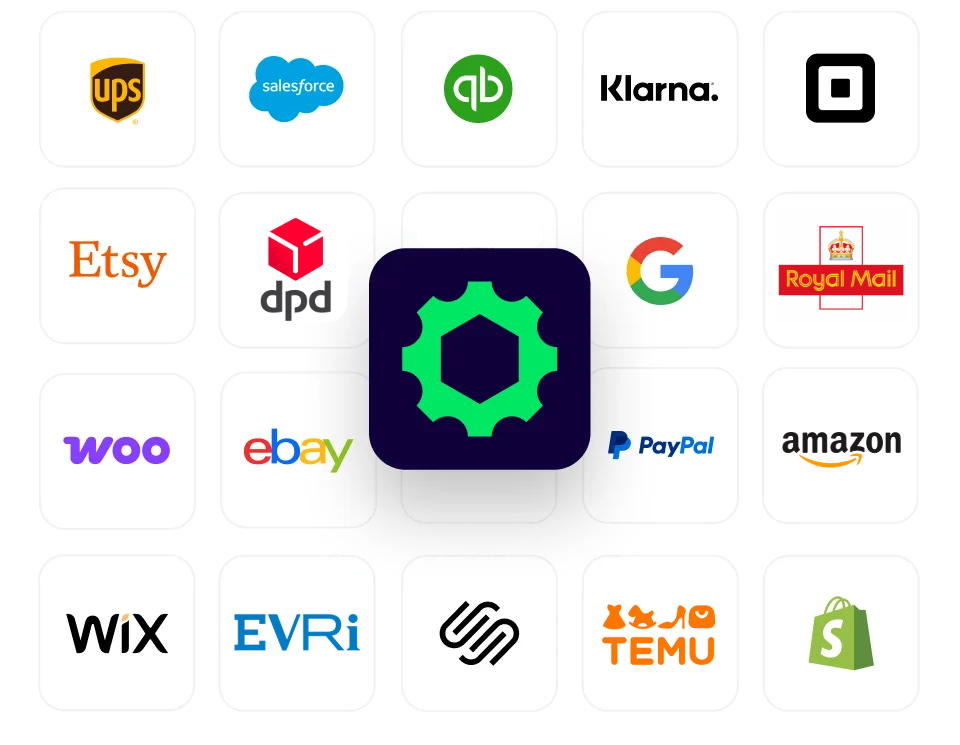
If you sell across Amazon, eBay, Etsy, TikTok Shop, and your own website, omnichannel automation matters even more. Each marketplace has its own dispatch deadlines and carrier requirements. When orders from all of them flow into a single queue, with consistent automation rules applied regardless of source, you remove the manual overhead of managing each platform separately and reduce the errors that come with it.
Peak campaigns and inventory-sync failures are a dangerous combination.
If you’re selling across Amazon UK, eBay, Etsy, OnBuy, and your own store, your available stock needs to update in real time across all of them. The moment one channel oversells, you create fulfilment problems that cascade into split orders, delayed shipments, customer contacts, and negative reviews. Marketplace seller metrics don’t forgive cancellations in December.
There’s also a subtler planning mistake worth calling out: most sellers build inventory plans around total expected volume. The smarter move is to plan by stock keeping unit (SKU) and campaign type.
A flash sale on three specific products requires very different inventory positioning than a sitewide Black Friday discount. If your top gifting SKUs overlap with your Black Friday deals, you’ll need to allocate buffer stock differently than a seller whose peak products are distinct.
Set buffer-stock thresholds by SKU and sales channel, not just total units on hand. That configuration can prevent the oversell cascades that make peak so painful to recover from.
Most peak-season communication advice focuses on customers. But the logistics-partner side is equally important—and often neglected.
Share your peak forecasts with carriers and third-party logistics (3PL) partners early: major campaign dates, expected volume by region, and any SKUs you expect to drive disproportionate volume. Your partners can pre-position capacity, schedule collections, and plan for overflow, but only if they know what’s coming. If you ship to the EU, loop in your customs partners too.
On the customer side, build your communication templates before you need them. Prepare shipping-delay notifications, customs-hold updates, and last-order-date reminders in a clear, friendly tone that fits your brand.
A delay notification with a plain-English explanation and a realistic revised delivery date manages expectations far better than silence, or a generic “your parcel is delayed” message.
UK shoppers have a minimum 14-day cancellation period for online purchases, starting when they receive the goods, plus a further 14 days to send them back (GOV.UK: Accepting returns and giving refunds). Many sellers choose to go further and extend their return windows over the holidays, when gifts may not be opened until weeks after purchase.
But the legal minimum isn’t the hard part. The operational wave is.
The January returns period is a second surge that arrives when your team is exhausted and margins are already under pressure. Sellers who handle it well build the infrastructure before the holiday buying window opens—not after it closes.
That means a self-service returns portal where customers can start a return without contacting support, keeping your queue manageable in January. It means Return Merchandise Authorisation (RMA) automation that links every return to the original order and tracks it through to resolution.
It also means presenting exchanges as the default option rather than burying them below the refund button. When the exchange path is easier, customers are more likely to choose it.
Printer-optional QR code drop-off returns remove another friction point, especially for customers handing parcels in at a local shop or locker.
An exchange is a retained customer. A refund closes the transaction. Build infrastructure that defaults towards keeping the relationship.
Every peak season has a moment when something breaks: a carrier announces capacity limits, a customs clearance delay backs up a key route, or a promotion drives three times the expected volume for a single SKU.
The sellers who recover quickly are the ones who planned for disruption, not just success.
One principle is worth applying here: the weeks immediately before peak are not the time to make significant changes to your shipping configuration, carrier mix, or fulfilment workflows. Changes that seem like improvements in testing can create unexpected failures at scale.
Lock in your operational setup well before the first major selling event, run your volume on that configuration, and only make changes during the surge if something is genuinely broken.
An exception playbook—defined in advance, not improvised under pressure—should answer a few key questions:
Having those answers documented and accessible to your team before peak starts can be the difference between a managed disruption and a chaotic one.
Real-time visibility during peak isn’t about watching order counts go up. It’s about catching the signals that predict problems before customers start asking about them.
Track exceptions such as failed deliveries, held parcels, and packages stuck in transit. They reveal where your fulfilment operation is under stress before your inbox does.
A spike in exceptions on a particular carrier or route is a signal to reroute new volume before the backlog builds. A stock level dropping below threshold on a high-velocity SKU is a signal to adjust promotions before you hit zero.
Most sellers review these metrics daily or weekly during normal operations. During peak, that cadence needs to compress to hourly or better.
The gap between a problem emerging and becoming visible to customers is where you have room to act. Keep that window open.
When you spot a signal, execute the prepared response: shift volume to a backup carrier, check that automation rules are applying correctly, or flag inventory for review before a stockout creates fulfilment failures.
Visibility without a response plan is just stress. Monitoring only becomes useful when it feeds into actions you’ve already decided on.
Peak season in the UK rewards preparation and punishes assumptions. It doesn’t create problems in your operation—it reveals them, louder, faster, and more expensively than normal volume ever does.
The carrier that worked fine in September may buckle in December. The manual process that was annoying in the summer becomes a bottleneck on Black Friday. The customs configuration you meant to revisit becomes a live problem on your highest-volume day.
The sellers who come out of Black Friday, Super Saturday, and the Boxing Day sales in good shape didn’t get lucky. They made deliberate decisions about their shipping infrastructure before the pressure arrived. They treated this checklist as a task list in October rather than a post-mortem in January.
If there are boxes above you can’t confidently tick, that’s the work to do now, before the gauntlet starts.
This checklist is a starting point. The work is in the details, and ShipStation can help. Its large carrier network, automation rules, inventory-sync tools, multi-carrier rate shopping, and returns capabilities give sellers the infrastructure to handle peak at scale.
Get started with a free trial of ShipStation to start preparing for peak season today.