Back
Back







































 Ecommerce Growth


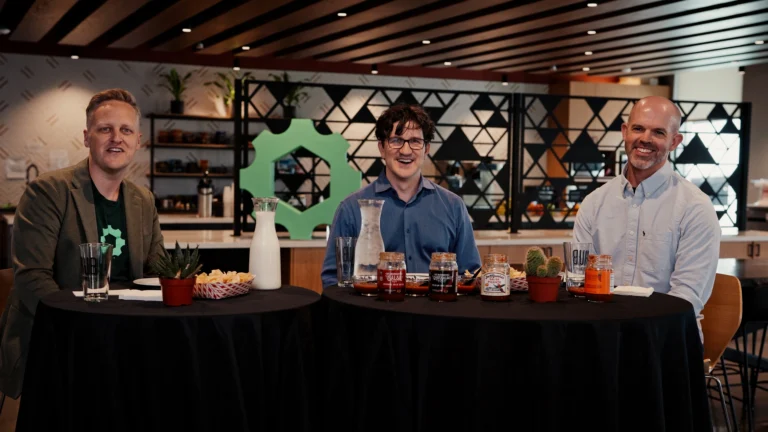
Rick Watson, founder of Watson Weekly, and Nate Skiver, founder of LPF Spend Management, sat down at Innovation Delivered 2026 for a salsa showdown—four rounds of escalating heat and questions most industry panels won’t ask.
Before the first question landed, Skiver’s eyes were already watering. He’d come prepared with milk in hand. The format was simple: pass the salsa, ask the question, get an answer.
What followed was some of the hottest commentary on ecommerce shipping trends we heard all day. Here’s what they said, and what it means.
Watson didn’t ease into this take.
“In 2026, the idea that you need free shipping only as a conversion lever is a little bit dated advice.”
Rick Watson, Founder, Watson Weekly
His point: most sellers already offer free shipping above a cart threshold. The question is whether offering it is doing the work you think it is.
Skiver pushed further. The more interesting question, he said, isn’t whether you offer free shipping—it’s what you offer alongside it.
“Customers who are really passionate about getting something when they want it will pay for it,” he explained.
ShipStation’s Benchmark Report, cited during the session, backs this up: shoppers will pay more for delivery that fits their timeline and preferences. That’s one of the clearer ecommerce shipping trends to come out of this year’s data.
The implication: your ecommerce shipping strategy may be optimizing the wrong variable. Removing cost at checkout matters, but giving customers meaningful delivery choices may matter more.
Skiver has watched carrier pricing for nearly 20 years. The trend line, he said, has been consistent: “The rate increases have just gone up and to the right the entire time…especially in the last 12 months with global conflict and the price of oil.”
His view on when it stops: “It’s not going to stop as long as customers keep paying the rate increases and surcharges.”
That’s a hard truth, but Watson’s follow-up reframed it around what operators can actually control.
“You can’t anticipate everything, but you have to build a solution with some flexibility and maybe even some redundancy,” he explained.

Watson said the sellers who come out ahead built ecommerce shipping strategies that don’t depend on everything going smoothly.
Chris Worley, VP of Product Marketing at ShipStation, put the pattern in perspective during the session: “We were here last year talking about tariffs. This year, it’s global conflicts creating additional fuel surcharges. It will be something else six months from now.”
An ecommerce shipping strategy with no flexibility is a vulnerability.
On single-channel risk, Watson’s answer was unambiguous.
He stated that you can’t be fully dependent on one site or one platform.
“You need wholesale if you’re going to get beyond a certain level—or retail partners,” Watson said. “All these things are needed to unlock the next phases of growth.”
He made a point that reframes the whole conversation: “Last I checked, 80% of retail is still in stores. Why are we ignoring the 1% of the 20% instead of focusing on the 80%?”
Concentrating your business in a single channel puts your margins and your operations at the mercy of decisions you don’t control. Watson and Skiver weren’t just making a growth observation—they were making a risk management one. Multichannel fulfillment is one of the ecommerce shipping trends more sellers are leaning into to de-risk their operations.
Skiver added that even sellers who’ve expanded into multiple channels often aren’t using them fully.
“There are retailers with stores, wholesale partnerships, and an online presence, but they’re not fully utilizing their stores to ship from or place inventory. That’s where they’re missing opportunities and lagging behind,” he continued.
As the salsa got hotter, so did the conversation.

Watson and Skiver moved from market-level observations to something more specific—a pattern Skiver said he still sees regularly, even among sellers who should know better.
He described it as “aimless head nodding.”
“A lot of retailers will pay lip service to delivery being an absolutely critical part of the customer experience. They’re super adamant about it. And then you go and order from them, and they can’t tell you when it’s going to get there.”
Nate Skiver, Founder, LPF Spend Management
Watson connected this to how shipping gets classified internally.
“There are so many heads of logistics who still view shipping as a cost center. Fifteen to twenty years ago, that made a lot of sense. It doesn’t now,” he said.
Some brands have flipped this equation entirely, treating delivery as a core part of the customer experience rather than a cost to minimize. Features that let shoppers consolidate orders, add items to a pending shipment, and control timing don’t just reduce cost—they grow basket size and build loyalty.
Brands that treat ecommerce shipping strategy as a customer experience question build a durable advantage. The ones still treating it as a cost center are falling further behind.
When asked what a brand could do tomorrow to immediately improve their shipping economics, the answers were specific—and neither required a long implementation.
Tighten your return policy. Watson’s response was direct: “You’d be surprised how many brands would like to do this but don’t. Do you need 90 days? Is 30 days enough? Are you ahead of your competition? That right there will save you money.”
Optimize your packaging. Skiver flagged dimensional surcharges as an overlooked cost lever. “Pretty much every carrier has surcharges related to dimensions for oversized packages, and that’s only increasing. Packaging optimization is an area where a lot of retailers still have a real opportunity.”
Both are decisions, not projects. They improve your shipping economics easily.
The ghost pepper round arrived, five times hotter than the previous salsa. But the heat wasn’t slowing down Watson and Skiver’s answers.
The last question pushed somewhere most industry conversations don’t go: What does the ecommerce and shipping industry know to be true without saying publicly?
Skiver went first, and didn’t hedge.
“It doesn’t look good out there for humans in the logistics world—I’ll say that for a fact. Everything is being automated. Facilities are getting bigger,” he said.

Robotic loading and unloading, drone delivery, RFID in production at scale—his point was that the pace of automation in logistics is moving faster than most public commentary admits.
Watson’s take on package delivery was equally pointed. The competitive landscape, he said, has shifted considerably—and the industry is still catching up to acknowledging it.
The brands and operators willing to act on these ecommerce shipping trends now are a step ahead.
Watch the full Salsa Showdown—and every session from Innovation Delivered 2026—on demand now.