Back
Back



































 Ecommerce Growth


Ask a hundred-year-old jerky company, a UK 3PL, and a seven-brand workwear business how they grew, and you’d expect three completely different answers. You’d be wrong.
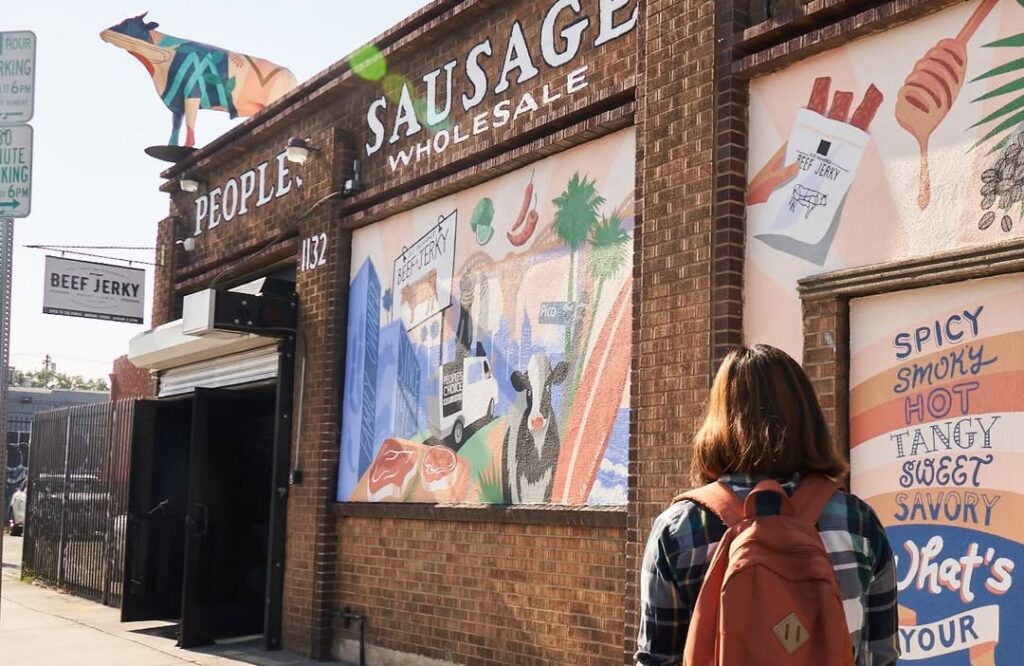
Brian Bianchetti is the fourth generation to run People’s Choice Beef Jerky, a family business nearing its hundredth year. Sarah Gulfraz is Ecommerce and Logistics Director at Peacock Fulfilment, which started as a UK party-and-gift company and grew into a 3PL serving more than 40 brands across the UK and internationally. Steven Turner is the Business Development Director at Workwear Giant, which now ships around 600 packages a week from a distribution center west of London.
None of them set out to solve the same problem. When moderator Travis Rimel, ShipStation Global’s Chief Product Officer, asked each of them to trace their growth story at Innovation Delivered’s customer panel, three unrelated journeys ended up in the same place.

For Bianchetti, the turning point came when a manufacturing business built on traditional retail discovered ecommerce and direct-to-consumer sales.
“It literally started with me printing labels in a 10-by-10 office,” he said. “That became a 100-square-foot shipping room, and then a 10,000-square-foot warehouse where we do all our shipping and fulfillment.”
Once volume passed a certain point, he realized the old approach wouldn’t hold: “It’s not as simple as printing a label and dropping it off at the local post office.”
Gulfraz hit the same wall from a completely different direction. Peacock was selling B2C and B2B at once, supplying independent stockists and large retailers while expanding across four or five marketplaces in its first year—now around 13.
“Stock management was a nightmare,” she said. “We had to raise orders and labels through each carrier portal separately.”
Turner’s version started even more literally on the ground.
“When we originally started, we had open cardboard boxes on the floor of our unit,” he said.
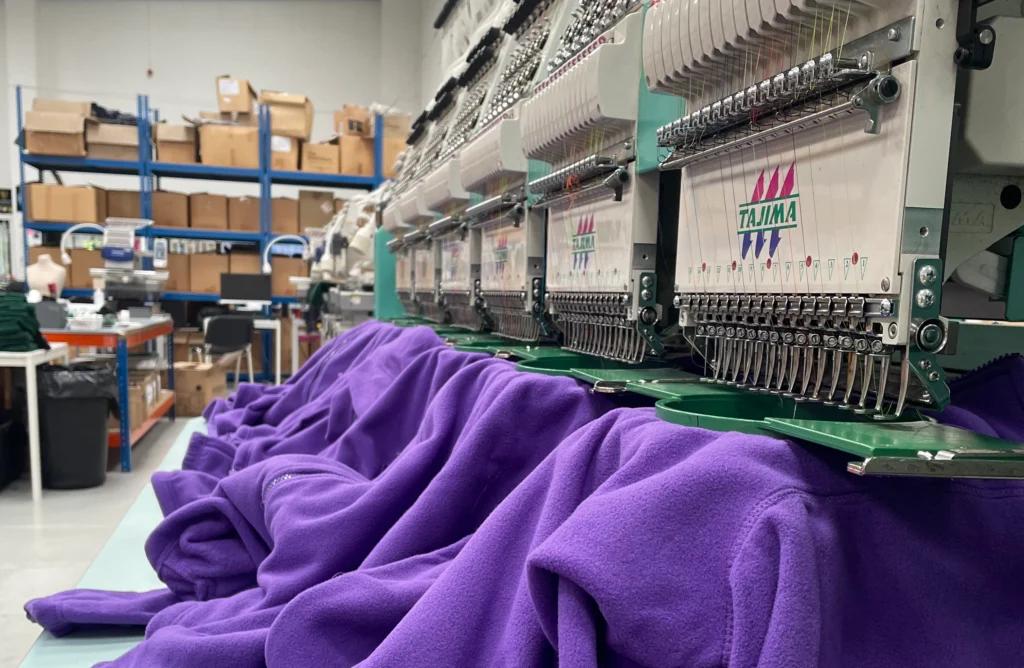
Then Workwear Giant launched in 2016 alongside the company’s original embroidery brand, and he was suddenly running two brands and two couriers through separate systems.
“It was a mess. We were spending all day, every day just trying to work out the best rates,” he said.
Three different businesses, one shared root cause: none of them had a single way to manage carriers, orders, and inventory. Growth was outrunning the systems meant to support it—and all three needed to scale shipping operations before they could scale anything else.
Ask each operator what actually changed their trajectory, and none of them point to hiring. They point to technology.
“What I think really unlocked exponential growth was the technology component, because technology lets you do more with less,” Bianchetti said. “Having a solution like ShipStation with built-in tools—automation rules, rate shopping, different functions built into the operation — allows one person to do even more.”
Gulfraz described the same shift in different language: a single hub.
“For us, what drove exponential growth was having a single hub where all our marketplaces, websites, and brands could feed into,” she said. “That meant no more overselling—we could keep a close eye on central stock levels and get orders out without underselling.”

That hub also let Peacock take on more marketplaces, more of its own brands, and more 3PL clients without rebuilding its operation each time.
“For us, ShipStation is essentially our entire warehouse management system,” Gulfraz said.
Turner’s team went from three couriers booked separately to seven brands running through one system, managed by a single person full time.
“It was just a game changer,” he said of finding ShipStation. “We’ve now got seven brands of our own, we use three couriers, I’ve got one person doing it full time, and it’s so much easier.”
In every case, the fix wasn’t a bigger team. It was a single system built to scale shipping operations as the business changed shape underneath it.

The payoff looked different for each operator.
For Bianchetti, it showed up in the numbers he could negotiate. Carrier diversification and real-time rate shopping let People’s Choice hold postage costs at the previous year’s levels “despite industry-wide rate increases.”
It also showed up in loyalty: giving customers choice over carrier, speed, and ship date “has unlocked more retention on the customer side,” he said.
For Gulfraz, the payoff was visibility that became a selling point in its own right. Peacock gives its 3PL clients complete visibility from pick to delivery—proof they’re hitting their service-level agreements.
“Our 3PL clients love the service so much compared to other centers they’ve worked with that they give us glowing recommendations and testimonials,” she said.
For Turner, the payoff was simpler: one place to look.
“When a customer calls and says, ‘Where’s my order?’—we go into ShipStation and can track everything from there,” he said. “It makes life a great deal easier for our customer service team.”
None of these three set out to build the same kind of business, and none of them scaled at the same speed. But ask what they’d tell someone earlier in the climb, and their answers converge again.
Bianchetti’s advice is patience: “Things will happen when they happen. Build a good foundation, and anything great will take time.”
Gulfraz’s is persistence: growth is “a lot of firefighting,” she said, “but if it means enough to you, you’ll make it a success.”
Turner’s is the most blunt of all—asked what he wishes he’d known before starting, he didn’t hesitate: “How tough it is.”
That’s the part a highlight reel usually leaves out. Before any of these three could scale shipping operations, they had to survive the unglamorous stretch where nothing was unified and everything was manual. The technology didn’t replace that hard work—it’s what let the hard work finally compound instead of repeating itself.
If you’re in that stretch right now, the lesson from all three is the same: get the foundation right before you try to outgrow it. See how ShipStation helps operators at every stage bring their shipping into one system.