Back
Back





































 Shipping & Fulfillment


Many retailers think about international expansion in phases. Launch domestically first, and move into neighboring markets later. Solve cross-border shipping challenges as the business grows.
But this model is wrong. It no longer reflects how people shop.
Customers discover brands globally from the start. Social commerce, larger marketplaces, and new channels have erased the borders that customers once noticed. But while buying globally feels simple for consumers, operating globally remains difficult for ecommerce retailers.
That gap is becoming one of the defining challenges in ecommerce.
The brands winning internationally are not necessarily the ones with the largest logistics budgets or the most warehouse space. They are the ones building delivery operations that feel invisible to the customer. Orders arrive predictably. Duties are clear. Tracking feels local. Problems are resolved before they become support tickets.
In other words, they make international commerce feel normal.
That requires connected delivery ecosystems built around visibility, coordination, and intelligent decision-making.
This article shares insights from expert-backed sessions on ecommerce delivery, AI, sustainability, logistics, and more at The Delivery Conference 2026. Watch all of the event sessions on demand.
Cross-border ecommerce sounds straightforward in theory. Sell products internationally. Add shipping options. Reach new customers.
In practice, international fulfillment introduces operational pressure across nearly every part of the business.
Inventory becomes harder to manage. Carrier performance varies by region. Customs requirements change constantly. Delivery promises become less predictable. Customer service teams handle more “Where is my order?” conversations. Costs become harder to control.
The real challenge is not shipping internationally. It is maintaining consistency while doing it.
Retailers are now expected to deliver experiences that feel local in markets with different regulations, infrastructure, taxes, and carrier networks.
And customers are quick to notice when that consistency breaks. Delivery quality has become a retention issue.
“71% of shoppers will not order again after a poor purchase experience. That very often comes down to the delivery experience,” said Conor Dunne, Worldwide Account Manager at FedEx, during the Delivery at Scale session.
“71% of shoppers will not order again after a poor purchase experience. That very often comes down to the delivery experience.”
Conor Dunne, Worldwide Account Manager at FedEx
What makes international delivery especially fragile is that customers typically experience failures at the very end of the journey:
These moments feel small operationally, but they shape how customers perceive the entire brand.
“Surprise changes at the door damage trust fast. So, asking customers to pay duties and taxes on delivery, often with inflated admin fees, leads to refused parcels, more WISMOs, lower repeat purchases, and ultimately a higher cost to serve for retailers,” said Beth Chapman, Managing Director at Starlinks, in the Commerce Without Borders session.
“Surprise changes at the door damage trust fast.”
Beth Chapman, Managing Director at Starlinks
This is where many international operations quietly lose profitability. Not through shipping costs alone, but through downstream friction:
Retailers often focus on the transportation side of international commerce while underestimating the customer experience side. But customers rarely separate the two.
For years, ecommerce businesses approached shipping as a vendor relationship. Pick a carrier. Negotiate rates. Print labels. Move packages.
This approach doesn’t work on a global scale.
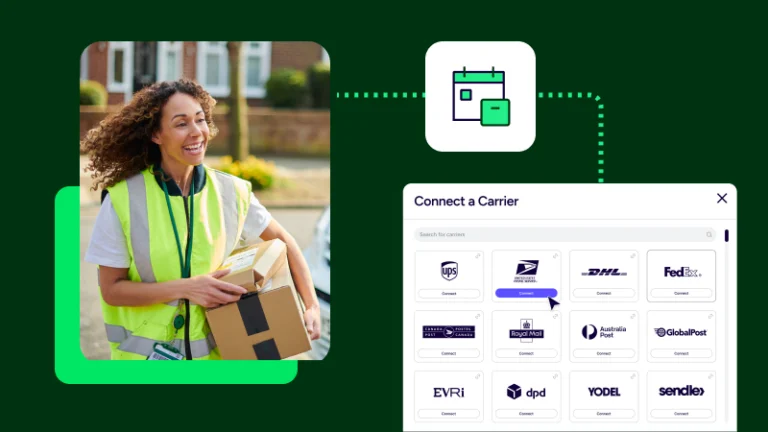
Modern ecommerce operations rely on interconnected networks of technology providers, carriers, marketplaces, fulfillment systems, automation tools, and data platforms that all work together in real time.
The shift happening now is less about adding more tools and more about connecting them intelligently. Retailers are moving away from fragmented fulfillment operations toward delivery ecosystems that centralize visibility and decision-making across the entire journey.
“All of the technology is there. Your decision is who you’ll hand the complexity over to, and if you trust their ability to do it,” said Cian Wright, Vice President of Market Development at Swap, in the Commerce Without Borders session.
“All of the technology is there. Your decision is who you’ll hand the complexity over to, and if you trust their ability to do it.”
Cian Wright, Vice President of Market Development at Swap
That distinction matters.
The infrastructure for global commerce already exists. The competitive advantage now comes from orchestration—how effectively retailers connect systems, automate decisions, analyze performance data, choose carriers, and coordinate partners across regions.
This is one reason leading ecommerce businesses increasingly turn to unified delivery intelligence rather than isolated shipping features. That broader operational visibility changes how retailers think about fulfillment entirely.
Shipping is no longer just a logistics workflow. It becomes a live operational system influencing:
And importantly, ecosystems help retailers optimize for total operational impact rather than just transportation costs.
“Cheaper isn’t always better. Retailers should look further than just the delivery cost, and try to take into account the entire cost of that delivery, what happens when it fails, and what happens to the cost of customer care and the handling of undeliverables when they come back in,” said Chapman.
A lower-cost carrier that experiences more failed deliveries or customer complaints often incurs higher overall costs. That broader view of fulfillment economics is becoming more important as ecommerce margins tighten around the world.
Connectivity alone is not enough anymore. Retailers also need systems capable of interpreting fulfillment data and acting on it quickly.
That is where intelligent delivery comes into play.
Historically, fulfillment decisions relied heavily on fixed logic:
That approach struggles with the complexity of modern ecommerce.
Intelligent delivery systems operate differently. They continuously evaluate changing operational conditions and adjust decisions dynamically using live data, automation, and predictive analytics.
This allows retailers to make better real-time decisions on carrier selection, order routing, inventory allocation, delivery estimates, risk management, and customer communication.
One of the biggest changes is the shift from reactive to preventive operations. Instead of discovering issues after customers complain, intelligent systems identify risk patterns earlier.
“For us, delivery intelligence is about using data and having visibility to spot issues early and act on them before customers feel the impact,” said Chapman.
“For us, delivery intelligence is about using data and having visibility to spot issues early and act on them before customers feel the impact”
Beth Chapman, Managing Director at Starlinks
That change fundamentally changes how retailers manage fulfillment.
A delayed parcel is no longer just a support issue. It becomes a preventable operational event. The same applies to carrier selection.
Rather than relying on fixed preferences, retailers increasingly use intelligent rate shopping systems that evaluate:
Cost-savings capabilities like Rate Shopper reflect this move toward automated fulfillment optimization, helping retailers compare carrier services in real time and automatically apply the best-fit shipping option based on business rules.
The outcome is not just cost reduction. It is operational adaptability. And adaptability is becoming one of the most important advantages in ecommerce logistics.
Despite all the technology powering modern fulfillment networks, customer expectations remain surprisingly simple.
Customers want:
They do not think about carrier connectivity, customs workflows, or regional fulfillment logic. They judge the experience based on whether the delivery feels trustworthy.
That is why localization still matters so much in global commerce.
Retailers expanding internationally must adapt fulfillment experiences to local customer expectations through:
When localization works well, cross-border shopping feels almost identical to buying domestically. That is the real goal of commerce without borders. Not eliminating complexity behind the scenes—but removing it from the customer experience.
International ecommerce will continue becoming more complicated. Regulations shift. Carrier networks evolve. Customer expectations rise. Operational pressure increases.
But retailers that use connected, intelligent delivery ecosystems and implement smarter international shipping strategies now will be positioned to adapt faster than competitors later.
They will enter new markets more confidently, resolve disruptions more efficiently, and consistently create delivery experiences customers can trust.
Because ultimately, global ecommerce is no longer just about selling internationally. It is about delivering internationally without making customers feel the complexity behind it.
Get started with a free trial of ShipStation to see how intelligent shipping software can help your business create seamless cross-border experiences that adapt to the future of global fulfillment.