Back






























































 Shipping Basics


Shipping to the US from the UK is harder to get right than it was a year ago. Every commercial parcel is now assessed for duty, several carriers have restricted or withdrawn their US services, and the postage price on the label is no longer the number that determines what a shipment really costs.
This guide covers what changed, which services UK sellers can use now, and how to work out your cheapest option.
The US used to allow goods worth under $800 to enter duty-free with minimal paperwork. That exemption, known as de minimis, is gone. It ended for goods from China and Hong Kong in May 2025, and for goods from every other country, including the UK, on 29 August 2025.
Since then, essentially every commercial parcel entering the US is assessed for duty regardless of its value and requires a full 10-digit US tariff classification. The change has survived a legal challenge—in August 2026, the US Court of International Trade rejected a case arguing that the withdrawal was unlawful—and separate legislation is set to end the exemption by statute, effective from July 2027.
Royal Mail briefly paused US shipments at the end of August 2025 to clear parcels already in the network, and postal operators across Germany, Denmark, Sweden, Italy, France, and Austria suspended most merchandise shipments to the US while they worked out how duty would be collected.
Things have settled since. But the cost structure hasn’t gone back.
Before the change, you could buy the cheapest tracked service, declare the contents, and the parcel would clear. The postage price was the cost.
Now there are four numbers, and the first one is the smallest.
The postage. What you pay your carrier to move the parcel.
The duty. Assessed on arrival based on what the goods are and where they were made. For most UK goods, the headline US tariff is currently 10%, but rates vary by product, and the US tariff picture has changed more than once this year. Check the rate for your specific goods before you rely on that figure.
The handling fee. Someone has to file the customs entry and remit the duty. Carriers charge for it, per parcel.
The refusal risk. This is the one sellers miss. If you ship without prepaying duty, your customer is asked for payment before they can receive their parcel. A meaningful share of them refuse it. Then you’ve paid postage out, paid return costs, lost the sale, and earned a bad review. A cheap label that arrives as an unexpected bill is not a cheap shipment.
That last point is why the choice that matters most isn’t which carrier — it’s whether you prepay.
DDU (Delivered Duties Unpaid), which some carriers call DAP (Delivered at Place), means the buyer settles duty and fees on arrival. Lower sticker price, worse outcome. Since de minimis ended, this now triggers a collection attempt on nearly every parcel.
DDP (Delivered Duties Paid) means you calculate and pay duty at the point of shipping. Higher sticker price, and the parcel arrives with nothing owing.
For US-bound parcels, DDP is the safer choice for most sellers. The parcel is cleared before it reaches your customer, so there’s no bill at the door and fewer refusals.
These are the US services available to UK ShipStation accounts as of this writing.
GlobalPost Plus Intl is the prepaid-duties (DDP) option available to every UK ShipStation account. It is part of the same group as ShipStation, so there’s no separate account or carrier agreement to set up. It appears automatically as an option for relevant international shipments, though you may need to enable GlobalPost in your carrier settings.
With DDP you pay duties and taxes upfront, the parcel is cleared through customs before it reaches your customer, and nothing is owed on delivery. You also get door-to-door tracking, including a final update when the parcel arrives. GlobalPost quotes 6 to 10 days on average to the US mainland.
GlobalPost’s other UK services, Economy International and Standard International, don’t cover the USA.
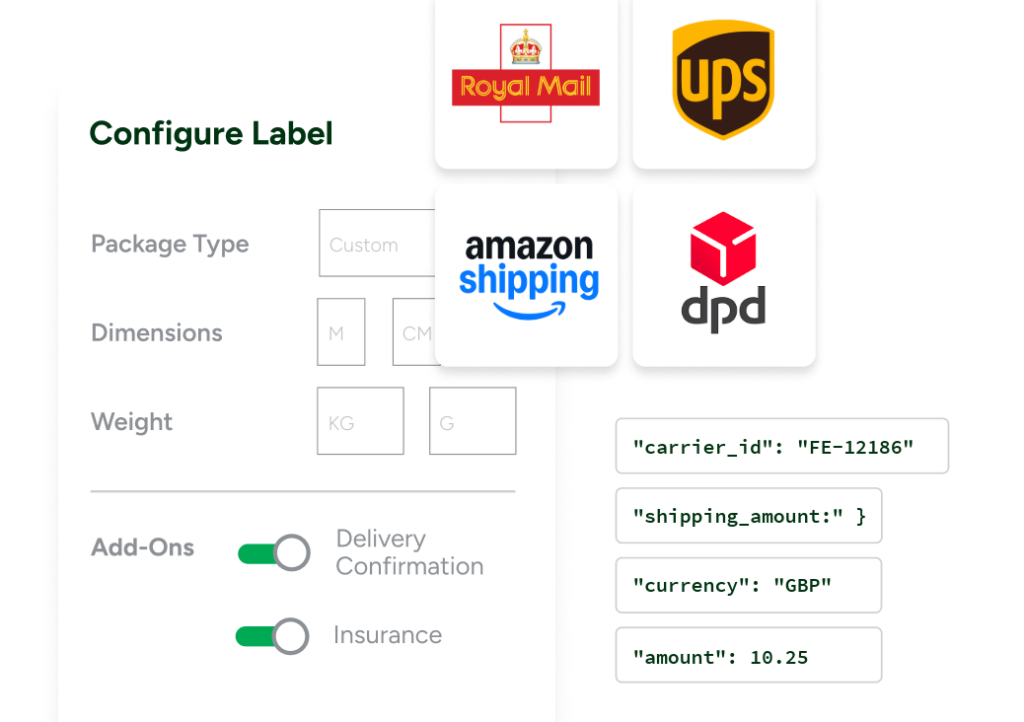
ShipStation users in the UK can access UPS Expedited, UPS Express, UPS Express Saver, and UPS Express Plus to the USA. These are DAP services, so your customer pays duty and taxes when the parcel arrives. That’s the refusal risk described above, so factor it in when you compare them with a DDP option.
DPD’s Air Classic is a drop-off service with a 4 to 7-day delivery time. It’s also a DAP service, so the same point about duty on delivery applies.
Some carriers are still shipping to the USA even though others have pulled back. If you have your own carrier account, speak to your account manager about what’s available to you for US shipments. ShipStation supports a long list of bring-your-own-account services, so you can connect the ones that work and compare them alongside the options above.
Royal Mail is one example. It has its own Postal Delivered Duties Paid (PDDP) service to the USA for parcels valued up to $2,500. You collect the duty from your customer at checkout, US Customs bills Royal Mail, and Royal Mail passes the duty on to you with a per-parcel handling fee. Royal Mail isn’t among the US services ShipStation lists for UK accounts, so check that your account and setup support it before you plan around it. If you compare it with other options, compare like-for-like services.
If you ship via the postal network rather than an express carrier, there are additional requirements that are worth knowing about.
The simplified flat-fee arrangement that covered postal parcels in the first months after the change ended on 28 February 2026, after which duty on postal items was charged as a percentage of value. From 24 July 2026, low-value postal shipments moved to a new US entry process requiring 10-digit tariff codes, a customs bond, and monthly duty reporting. A separate per-parcel handling fee for low-value postal items was scheduled to come in by 1 November 2026.
In practice, your carrier handles most of this. The reason to know about it is that it explains why postal pricing to the US has changed multiple times and may change again.
Price the whole shipment, not the label. For a representative order, get the postage, the duty for that product, and the handling fee, then compare totals across carriers.
Compare DDP against DDU. Putting a DDU price next to a DDP price will always make DDU look better and will always be misleading.
Get your tariff codes right. The US now requires full 10-digit classification. A wrong code means a wrong duty rate, and either a held parcel or an unexpected bill later.
Check your product’s actual duty rate rather than assuming a headline figure. Rates differ by goods and by country of manufacture, and if you sell a range, you may find some lines are worth shipping to the US, and others aren’t.
Re-check quarterly. This is not a set-and-forget calculation at the moment.
Compare rates with the ShipStation calculator →
Every US-bound parcel needs a customs declaration with an accurate goods description, value, country of manufacture, and tariff code. Vague descriptions cause held parcels — “gift”, “sample,” and “clothing” are the kind of thing that gets flagged.
You’ll also need an EORI number for exporting from the UK, and if you’re shipping DDP you need a way to calculate duty accurately at checkout rather than guessing.
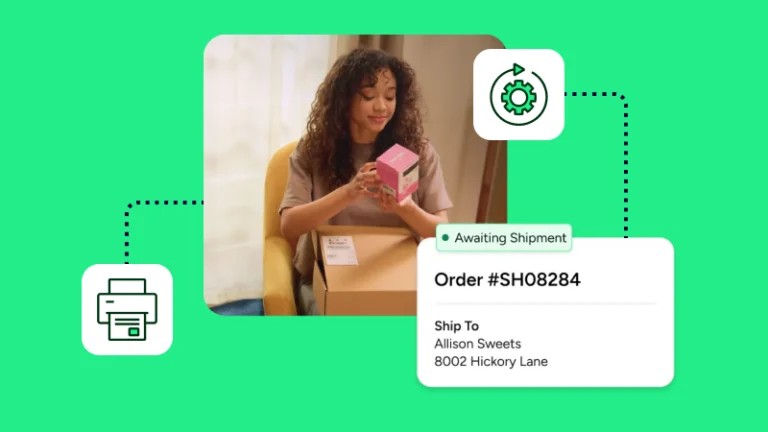
ShipStation shows the US services available to your UK account in one place: GlobalPost Plus Intl for prepaid duties, and UPS and DPD as DAP options. It generates customs documentation automatically and prints labels in batches. If you’d rather use your own negotiated carrier accounts, you can connect those, though UK accounts pay a per-shipment fee on labels created with your own accounts rather than the included ones, invoiced monthly and varying by plan.
Shipping from the UK to the USA with ShipStation →
Rates, duty, and carrier availability have all changed in the past year and may change again. Price the whole shipment, compare like-for-like, and re-check before each busy period. ShipStation shows every available US service for a parcel in one place.
Start a Free TrialIt depends on your parcel’s weight, what’s in it, and which service you choose, so there isn’t one answer that holds for everyone. Compare like for like: DDP services against DDP services, and DAP against DAP, because DAP leaves the duty bill with your customer. ShipStation’s rate comparison shows the available options for each parcel side by side.
Essentially, yes for commercial goods. The $800 exemption no longer applies to UK-origin shipments.
You can, but expect refusals. Since the change, buyers are asked for payment before delivery on nearly every parcel, and a refused parcel costs you the sale, the outbound postage, and the return postage.
For many sellers, yes, but the margin maths has changed, and it’s worth rerunning rather than assuming. Some product lines comfortably absorb the new costs, and others don’t.
Yes. The EU ended duty-free treatment for low-value parcels on 1 July 2026 and replaced it with a flat customs duty per item. That’s a temporary measure until a permanent system arrives, currently planned for 2028. The UK has announced it will remove its £135 customs duty relief by March 2029 at the latest. The relief stays in place for now, but it’s worth knowing about if you also import.
US legislation is set to end the de minimis exemption by statute as of July 2027, making the current suspension permanent law rather than an executive action. Nothing you need to do now, but it means this isn’t a temporary situation to wait out.