Back
Back

































































 Shipping


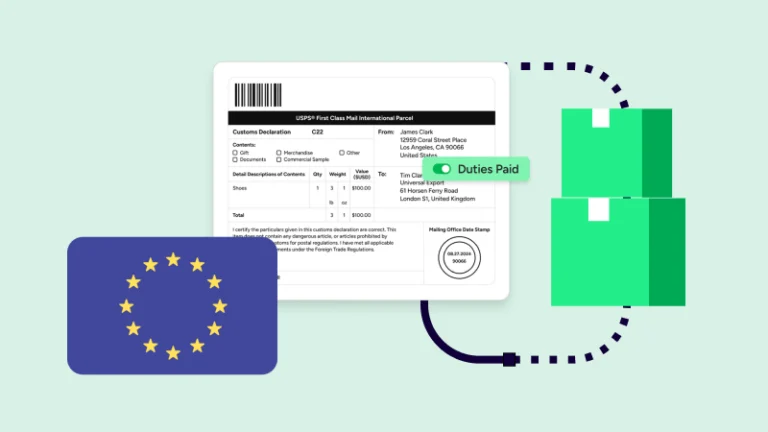
International customs declarations are getting more detailed. Carriers across the UK are moving away from simplified customs forms and standardising on the fuller CN23 declaration, which asks for the Harmonised System (HS) code for every item, not just a rough description. If you’ve been shipping lower-value parcels without paying much attention to HS codes, that’s changing.
This isn’t a brand-new global rule — HS codes of six digits or more have long been standard practice. But as carriers move everyone onto the more detailed CN23 form, the HS code field you could previously skim past becomes unavoidable. Whichever carrier you use, it’s worth getting your product records in order now rather than scrambling later — check with your carrier for their exact rollout timeline.
What is an HS code?
An HS code is a standardised number used by customs agencies worldwide to identify and classify goods, maintained by the World Customs Organisation (WCO) to keep duties, tariffs, and trade tracking consistent across countries.
For example: T-shirts (6109.10), coffee beans (0901.11), laptops (8471.30).
You can look up the right HS code for your products using a free HS code lookup tool, or check the code your supplier already uses on commercial invoices.
What happens if I don’t include it?
Your carrier won’t necessarily stop you creating a label without an HS code, but customs agencies in the destination country can hold, delay, or return your shipment. An item sent without a customs declaration, or with one that’s incomplete or incorrect, may be delayed, returned to sender, or have charges applied.
Without the HS code: parcels may be delayed or sent back; customs fees could be applied incorrectly; extra charges may be added; recipients may be asked to provide the missing information themselves; you may need to amend the paperwork after the parcel has already shipped.
Bottom line: skipping the HS code risks delivery delays, frustrated customers, and more manual admin for you.
How sellers are preparing
Sellers who ship internationally are getting ahead of this by using lookup tools to find accurate HS codes for their product range, updating product catalogues with the correct HS code for each SKU, training fulfilment teams to check HS codes are present before printing labels, and letting customers know in advance if customs delays are a possibility.
What to do if a parcel is held
If your shipment gets stuck in customs because of a missing or incorrect HS code: confirm with your carrier or the customs agency that the hold is HS-code related; look up the correct HS code for the item; submit a customs amendment, or pass the code to the recipient so they can provide it; then follow up with the carrier or customs office to get the parcel released. This manual process takes time, so it’s much easier to get it right before you ship.
How ShipStation helps
ShipStation makes it easier to stay compliant with HS code requirements: customs forms support HS code entry per line item, carrier integrations pass customs data through automatically, product records can store a default HS code against each SKU, and automation rules help apply customs data consistently across every order.
Start now to avoid delivery delays
Carriers are tightening customs declarations for international shipments. To avoid disruption: add accurate HS codes to your product records, configure customs documentation in ShipStation, and include the code on every international label, every time.