Back
Back
































































 Shipping & Fulfillment



James Marley of Swap Commerce didn’t come to Innovation Delivered to talk about one new rule. He came to talk about all of them—landing in different markets, on different timelines, with different paperwork, all at once. That’s the real story in cross-border ecommerce shipping right now. It isn’t one policy change. It’s the compounding effect of several, hitting brands that were never built to track them individually, let alone all together.

Every major market is tightening its treatment of low-value shipments right now, and none of them are moving on the same clock or with the same paperwork. That’s what makes cross-border ecommerce shipping so hard to plan around. Not one deadline, but a dozen jurisdictions rewriting the rules independently, at their own pace.
De minimis isn’t just a tax rule. It’s an entire operational architecture. Brands have built their entire cross-border model around de minimis—and their commercial offer architecture around it as well.
The problem was never one exemption changing. It’s that brands built pricing, checkout, and fulfillment logic on the assumption it wouldn’t.
“We’re beginning to see noises around this in other developing markets too,” Marley said.
It’s a reminder that whatever a brand has already adapted to, more change is already underway elsewhere.
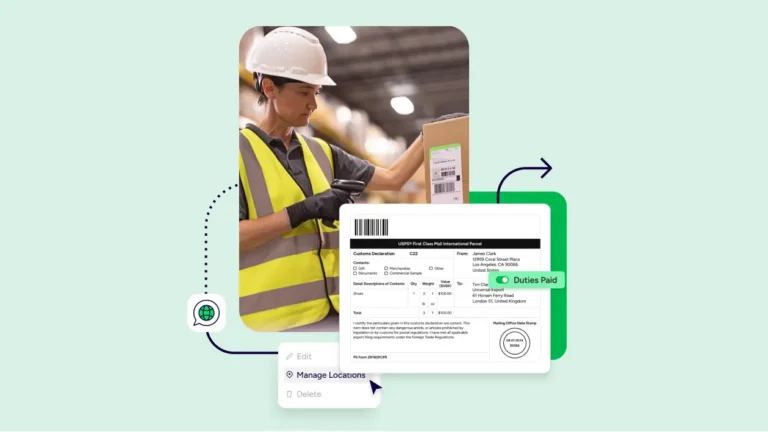
In Marley’s own compliance work, he’s watched what it takes to get a package across a border balloon. What used to be a couple of basic data points now runs to HS codes, certificates of origin, product certifications, and importer records.
“Governments are reacting slowly,” he said, “and if governments are reacting slowly, you can be certain carriers are going to be reacting slowly—they’re scrambling right now. And if they’re scrambling, you can imagine what is happening with merchants who are waiting for somebody else to sort all of this out for them.”
Waiting is the expensive move. Whatever the current requirement looks like, treat it as the floor, not the ceiling.
The practical failure point isn’t customs—it’s the customer’s front step. Brands still shipping DAP (Delivered at Place) are passing the duty bill to the consumer at delivery. Someone orders a product, waits for it, and answers the door to a driver asking for money that nobody mentioned at checkout.
That’s not a logistics failure—it’s a brand failure. Amazon has set the benchmark, and every surprise at delivery is a hit to lifetime value.
That’s the real cost of getting cross-border ecommerce shipping wrong. It’s not a fine or a delayed package. It’s a customer who doesn’t order again.
Marley made another point that’s easy to miss: most brands still think about international as an extension of domestic, not a separate discipline.
It’s called the World Wide Web, not the domestic wide web.
Brands building online stores optimize for the local market and treat everything else as an afterthought. Domestic routing logic asks which warehouse, which carrier, and what rate. International routing also has to ask about duties and taxes, whether a carrier is DDP-capable, and the landed cost for that specific market. Most routing setups aren’t built for that second layer, and brands find out the hard way, mid-scale, that their entire logic was designed for one country.
That gap shows up on the carrier side, too. Mohammed Baloch, General Manager of GlobalPost, has a name for what happens when brands patch together a cross-border strategy one market at a time.
We call it a Frankenstein carrier portfolio. They’ll have a carrier for local deliveries, a carrier for international, a carrier for overnight. And before you know it, you’re managing individual carrier reps and individual integrations. You’re spread so thin in terms of your volume that you’re not getting great economics on your rate.
None of these problems can be traced back to a single rule. They trace back to cross-border ecommerce shipping being treated as a side quest instead of its own operational discipline.
The panel’s advice holds up regardless of which regulation changes next. Calculate the landed cost at checkout, not at the border. Customers need to see the full price, including duties, before they buy. Audit the product catalog on a regular cadence, not once-and-done—accurate HS codes, certificates of origin, and product certifications are the foundation on which everything else depends. And choose carriers who function as compliance partners, not just the cheapest option—that means DDP (delivered duties paid) capability in core markets and clean documentation at scale.
The catalog work matters more than it sounds like it should. Marley’s favorite bad example: a brand using its sales copy as its customs description. Call something “ivory” instead of “white,” and a customs officer might flag it as an actual wildlife product.
“It really is that simple,” he said.
Cross-border failures cluster around three things: wrong or missing product data at checkout, incomplete customs documentation, and landed cost that remains invisible until the worst possible moment.
Bethany DeAngelo’s answers on the panel always came back to the same order of operations: process first, then data, then technology.
“Technology always fails when you don’t have clean and scalable processes,” the ShipStation Global VP of Product said.
Automation doesn’t fix a broken process. It just runs the broken process faster.
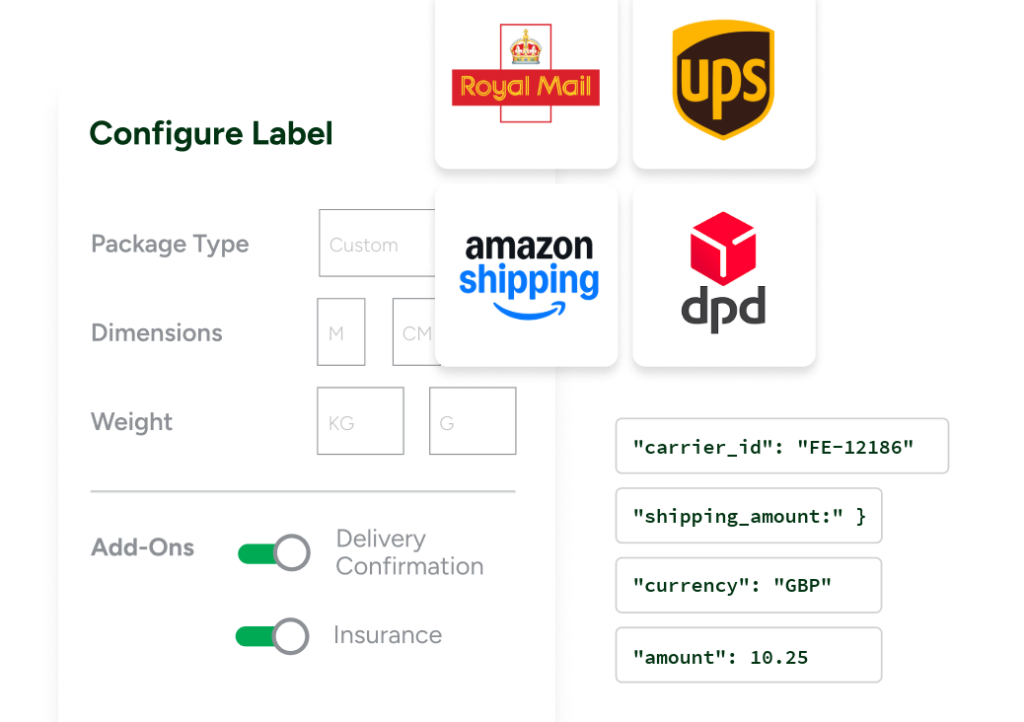
But once the data’s right, this is exactly the kind of decision that shouldn’t require a person to remember the current rule for every market. Which carrier can actually deliver DDP into a given country this month? Whose rate wins once duties are factored into landed cost? That’s not a strategy question anymore—it’s a lookup. And it’s the kind of lookup automation rules and rate shopping are built to handle: apply the right carrier and service level automatically, based on destination, customs data, and cost, instead of someone checking it manually per order, per market, every time something changes.

Baloch made the same point from the carrier side. Rather than building separate carrier relationships market by market, brands need one partner with an aggregated network. This partner can absorb the compliance shifts as they land—and then let automation carry the operational weight.
“That way,” he said, “you can leverage the automations of ShipStation Global and Swap Commerce and really scale your business when you go international.”
No single fix future-proofs cross-border ecommerce shipping, because no single rule is the whole problem. But brands with clean product data, checkout-level landed cost, and carrier logic that runs on rules rather than memory can absorb the next change without scrambling.
See how Rate Shopper and Automation Rules in ShipStation handle carrier selection and compliance logic automatically, so the next rule change doesn’t mean starting over.