Back

































 Platform Options


Compare ShipStation and ShipBob to understand how shipping software and outsourced fulfillment handle orders, carrier rates, inventory, and the customer experience. See where the two overlap, what each does best, and which approach fits your business.
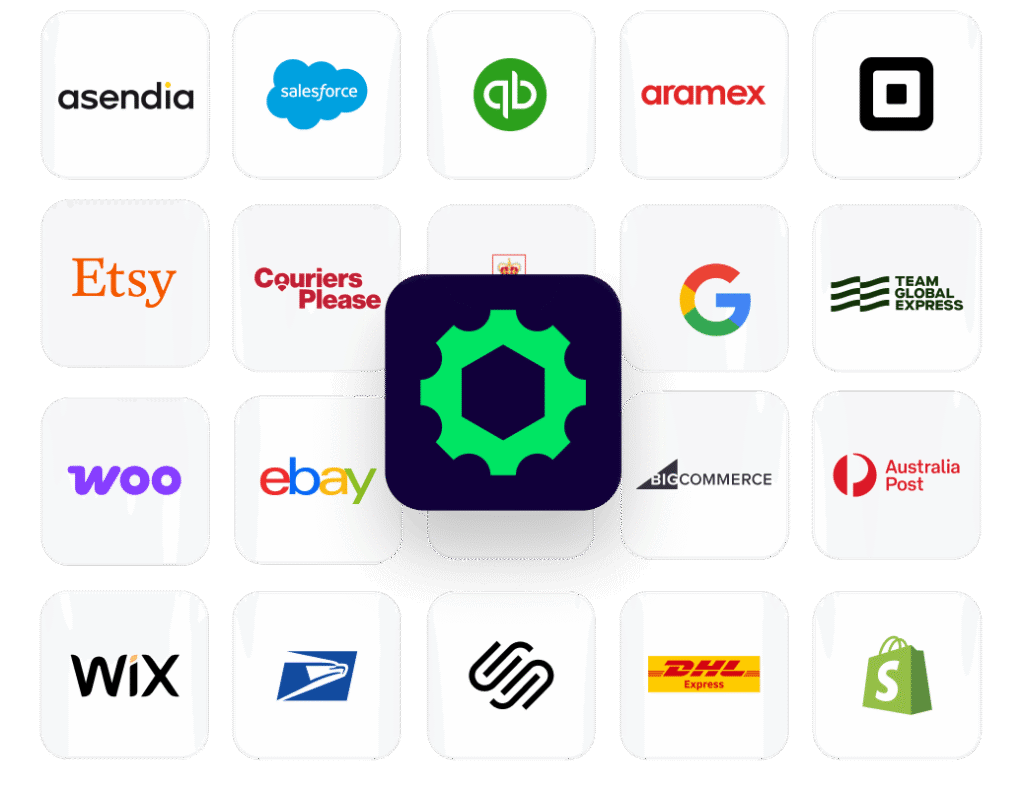
ShipStation is a shipping and fulfillment platform for businesses of all sizes. It brings orders from 200+ selling channels into one place, helping you compare carrier rates, automate shipping decisions, print labels in batches, and manage tracking and returns. You can use the software to ship from your own warehouse or coordinate shipping through a third-party logistics (3PL) provider.
ShipBob is a 3PL provider that handles fulfillment on your behalf. You send inventory to its fulfillment centers across the US, Canada, the UK, the EU, and Australia, and its team handles storage, picking, packing, and shipping.
The two serve different purposes, so this isn’t a feature-for-feature comparison. It’s about who manages fulfillment. Some brands prefer to keep operations in-house, others want to outsource the work, and some use a combination of both.
The key question is how much control you want over day-to-day shipping. Would you rather manage shipping decisions with software or hand off warehouse operations to a 3PL?
ShipStation is built for businesses that want to stay in control of fulfillment. Your team or your own 3PL handles the physical work, while ShipStation helps manage the shipping process. The platform imports orders, compares carrier rates, prints labels, and sends tracking updates. You retain control over carrier selection, packing workflows, and the handling of shipping exceptions.
ShipStation also reduces manual work as order volumes grow. Automation rules, batch label printing, and inventory syncing across sales channels help streamline fulfillment without requiring additional headcount.
ShipBob is a strong choice for businesses that want to outsource the physical work of fulfillment. If managing warehouse space, staffing, and packing is taking time away from other priorities, ShipBob handles storage, picking, packing, and shipping on your behalf.
Its fulfillment network also helps brands distribute inventory across multiple regions, including the US, Canada, the UK, the EU, and Australia. By positioning stock closer to customers, you can potentially reduce shipping distances and improve delivery times.
| Feature | ShipStation | ShipBob |
|---|---|---|
| Order management | ||
| Selling channel integrations | Yes200+ channels, including Amazon, Shopify, TikTok Shop, Walmart Marketplace, WooCommerce, and eBay | Yes20+ native, including Shopify, Amazon, Walmart, BigCommerce, WooCommerce, eBay, TikTok, plus middleware |
| Native marketplace order support | YesAmazon FBA and FBM, eBay, Etsy, and Walmart Marketplace orders in one queue | No |
| Carriers and rates | ||
| Multi-carrier label printing | YesUPS®, USPS®, FedEx®, DHL Express, GlobalPost™, Canada Post, Australia Post, Royal Mail, DPD, and more from one screen | N/AShipBob’s warehouse staff pick, pack, and label |
| Side-by-side rate comparison | Yes200+ carriers; live rates compared per shipment; the cheapest option highlights automatically | NoShipBob routes orders and buys shipping on its own carrier contracts |
| Platform-discounted carrier rates | YesDiscounted rates with UPS, USPS, FedEx, DHL Express, GlobalPost, and more | Yes |
| Bring your own carrier account | YesYour accounts and ShipStation’s discounted carrier rates, side-by-side | NoShipping is billed through ShipBob’s carrier contracts |
| LTL freight | YesBook, compare, and track LTL freight on the same platform as parcel | Yes |
| Fulfillment operations | ||
| How fulfillment works | Shipping software you runYour team or your 3PL picks, packs, and ships | Outsourced 3PLShipBob stores your inventory and ships your orders |
| Batch label printing | YesPrint 200 labels in one click; 4×6 thermal with no driver setup | N/AShipBob’s warehouse staff pick, pack, and label |
| Automation rules | YesAutomated rate shopping that chooses the cheapest, fastest, or best-value option for each shipment; Pick a carrier by weight, route by inventory or ZIP, tag on import, apply insurance thresholds, and more | PartialAutomatic routing to the nearest fulfillment center; no merchant-authored label rules |
| Multi-warehouse ship-from | YesRoute based on available inventory and closest to the destination ZIP; split an order across locations | PartialShipBob WMS for in-house sites; network orders ship from ShipBob centers |
| Inventory management | YesStock syncs across all channels in real time, with low-stock alerts by location, reorder assist for accurate forecasting and reordering stock, purchase orders, stock auditing, lot tracking, units of measure, scan-to-receive, and other features. | YesReal-time inventory across ShipBob’s network with replenishment workflows |
| Post-purchase and returns | ||
| Returns management | YesBranded, self-service portal; email a pre-paid return label in one click | YesQR return labels plus warehouse inspection and restocking |
| Branded tracking and notifications | YesBranded tracking pages, options for promotional graphics/image; shipped, in transit, and delivered updates | YesTrackBob branded tracking pages with time-stamped events |
| International customs forms | YesCN22 and CN23 auto-fill, with options for guaranteed duties and taxes upfront, HS code lookup | YesIn-country fulfillment across Canada, the UK, the EU, and Australia |
| Platform and support | ||
| Merchant mobile app | YesPrint labels from your phone at a pop-up or trade show | NoResponsive web dashboard; ShipBob’s mobile app is for warehouse staff |
| REST API and webhooks | YesCustom label generation plus webhooks for every shipment update | YesREST API with a sandbox; webhooks for orders, inventory, and returns |
| Onboarding and support | YesEmail and chat on Starter; phone, email, and chat on Standard and Premium, plus onboarding support for some plans | YesImplementation specialist and Merchant Success Manager; setup fee commonly reported |
| Pricing | ||
| Self-serve signup and free trial | Yes30-day trial, no credit card | NoTalk to sales for a quote |
| Pricing model | Month-to-month subscriptionCancel anytime, no contract | Custom quote, usage-basedReceiving, storage, pick and pack, shipping, and returns are billed separately |
ShipStation connects to 200+ selling channels, including Shopify, Amazon, eBay, Etsy, Walmart, WooCommerce, BigCommerce, and TikTok Shop, centralizing orders in one queue. Separate order and shipment records show sales-channel details alongside each shipment’s origin, service, package, weight, and status.
ShipBob offers 21+ native integrations and automatically routes orders to fulfillment centers, with real-time inventory visibility across its network.
ShipStation centralizes orders you fulfill; ShipBob manages order flow through its fulfillment network.
Carrier selection is one of the clearest differences between the two platforms. ShipStation lets you compare live rates from UPS®, USPS®, FedEx®, and DHL Express side by side, so you can choose the service that balances cost, speed, and delivery expectations for each order. You can connect your own UPS or FedEx accounts to retain your negotiated rates, use ShipStation’s discounted rates from UPS, USPS, FedEx, and DHL Express, or compare available options in the same interface.
ShipBob manages shipping through its own carrier contracts and bills shipping through its platform. That takes carrier selection off your plate, but gives you less control over comparing services and using your own carrier accounts.
For merchants focused on minimizing shipping costs, ShipStation offers greater flexibility.
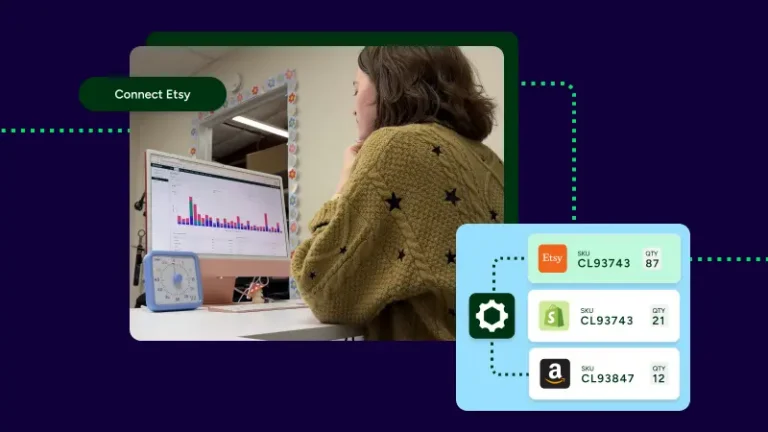
The day-to-day workflows look very different. ShipStation lets teams automate fulfillment with rules that assign services, tag orders, apply package presets, route by weight, and select warehouses by inventory and ZIP code. Batch printing produces up to 200 labels in one click, while ShipStation Connect simplifies setup for compatible printers, scales, and scanners. Inventory syncs across channels such as Amazon, Shopify, and eBay, with location-based low-stock alerts to help prevent overselling.
ShipBob handles fulfillment in its warehouses, eliminating the need to manage label printing or shipping automation for those orders. Its network manages routing, while inventory tools support real-time visibility and replenishment. ShipStation suits merchants who want control over fulfillment rules and exceptions; ShipBob suits those looking to outsource warehouse operations.
The platforms can also work together. ShipStation integrates with ShipBob, letting merchants outsource standard direct-to-consumer (DTC) fulfillment while managing wholesale, oversized, local delivery, subscription box, or secondary-warehouse shipments through ShipStation.
Both support post-purchase experiences differently. ShipStation offers branded tracking pages, proactive shipping and delivery notifications, and a self-service returns portal. Prepaid return labels can also be generated automatically when refunds are issued.
ShipBob provides TrackBob-branded tracking pages with time-stamped shipment events and QR return labels. Its warehouse team can inspect and restock returns, making it appealing to brands that want to outsource reverse logistics. ShipStation provides tools to manage returns; ShipBob can handle the physical work.
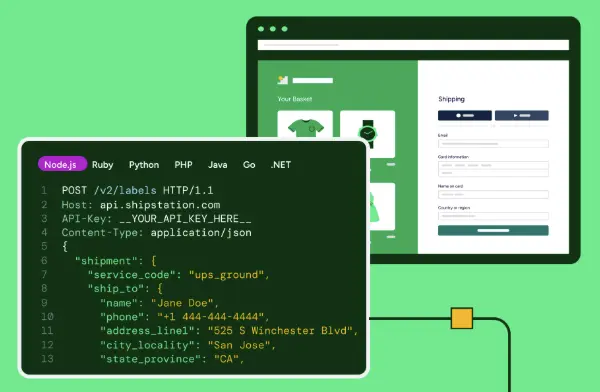
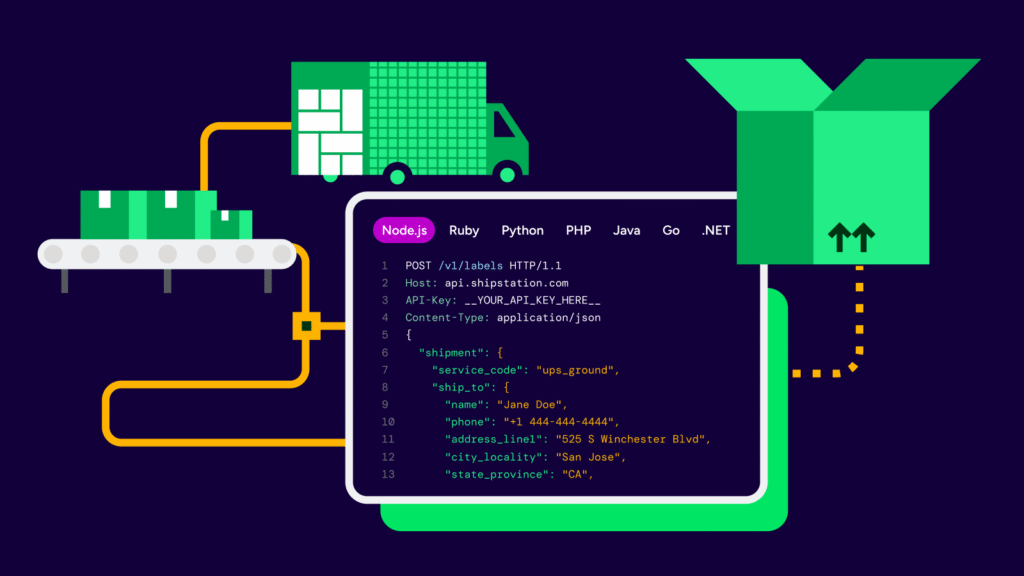
Both platforms offer REST APIs and webhooks for connecting shipping or fulfillment workflows with other systems. ShipStation supports custom label generation and webhook events for shipment updates. ShipBob provides API access, a sandbox environment, and webhooks covering orders, inventory, and returns.
ShipStation’s and ShipBob’s mobile capabilities reflect differing roles in fulfillment, too. ShipStation’s mobile app lets you print labels from your phone at a pop-up shop or trade show. It also powers mobile picking, scan-to-receive, stock audits, rate quotes, viewing order information, and lets you create scannable End of Day manifests.
ShipBob’s mobile app is designed for warehouse staff, while merchants manage their operations through a responsive web dashboard.
ShipStation charges a monthly software subscription fee in addition to shipping costs. It offers a free 30-day trial without a credit card, transparent subscription pricing, and the ability to cancel at any time.
ShipBob provides custom quotes and usage-based billing. Receiving, storage, picking and packing, shipping, and returns all contribute to costs, depending on order volume, inventory, and fulfillment needs.
Neither is automatically cheaper. ShipStation offers more predictable software costs, while ShipBob may be worthwhile when outsourced labor and warehouse space justify the expense. Compare ShipBob’s rate card or sample invoice against a typical month of orders, shipments, storage, and returns to evaluate total costs.
Choose ShipStation if you want to retain control of fulfillment. It’s a strong fit for teams that need carrier choice, customizable automation, batch label printing, and centralized order management across sales channels. You can scale shipping operations without relying on a 3PL to manage every order.
Choose ShipBob if you want to outsource storage, picking, packing, and shipping. It’s a better fit for brands looking to reduce hands-on warehouse work or distribute inventory across multiple regions.
If your operation combines both approaches, you don’t necessarily have to choose. Using ShipBob for standard DTC fulfillment and ShipStation for orders that need more direct control can give you the flexibility to match each workflow to your business needs.