
































Small BusinessesStart small, think big. Elevate your small-business shipping today.
Start Shipping in MinutesStart shipping instantly with a simple setup. Buy and print labels in minutes with no training needed and no unnecessary steps.
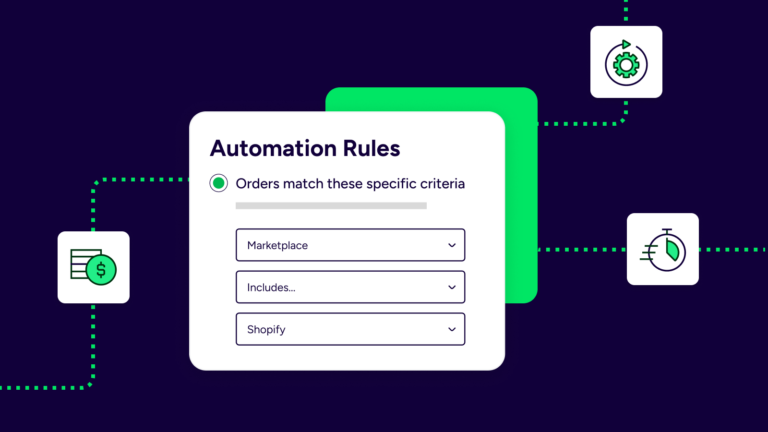
Automate and ScaleSave time with rules that batch, route, and print labels automatically so your shipping keeps up as orders grow.
Save on Every ShipmentAccess exclusive discounts from local and global carriers and cut costs on every label no matter where you ship.
Connect and CustomisePlug into hundreds of stores, marketplaces, and carriers, or extend ShipStation with custom API integrations built for your business.
Manage Everything in One PlaceManage shipping, inventory, warehouse, tracking, and returns for all your stores and marketplaces in one simple platform.
Simplify ReturnsManage returns in one platform with prepaid labels and self-serve features that keep the process fast and frustration-free.
Mid-size and GrowingShip smarter, grow faster. Scale your fulfilment with ease.
Save on Shipping as you ScaleAutomate rate shopping across 200+ carriers, bring your own carrier accounts, and unlock deep volume discounts that grow with you.
Smarter Shipping IntelligenceTurn shipping into your competitive advantage with intelligence that improves with every order.
Centralise Omnichannel FulfilmentManage orders, shipping, inventory, warehouse operations, tracking, returns, and analytics across online stores and marketplaces with one platform.
Automate Order ManagementCombine AI intelligence with rule-based workflows to speed up fulfilment, streamline operations, and eliminate bottlenecks.
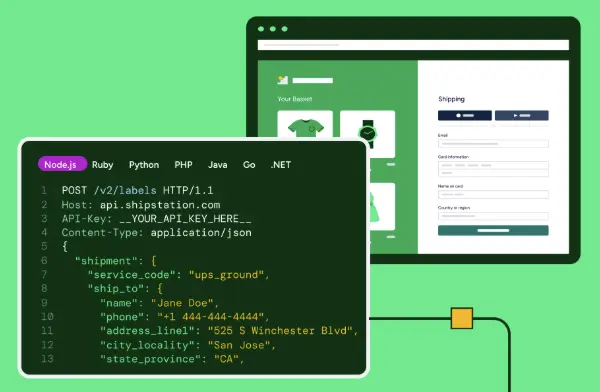
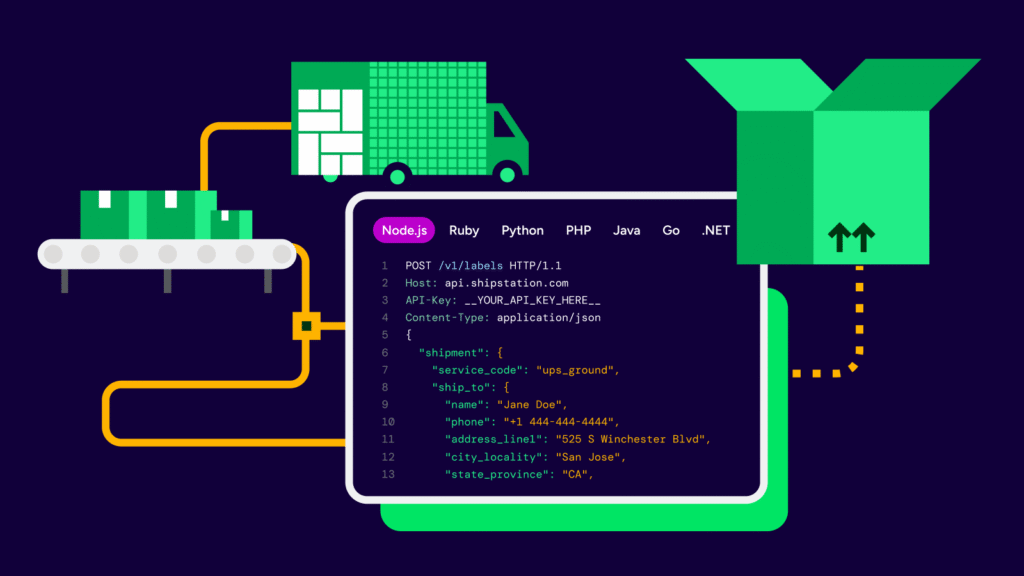
Scale with our APIsExtend your setup using our developer-friendly API for custom automated workflows and insights.
Start with Guided OnboardingOur experts walk you through setup, training, and workflows so your team feels confident and ready to ship quickly.
EnterpriseGlobal scale, local precision. Master shipping at every level.
Lower Shipping Costs at Global ScaleReduce global shipping expenses with real-time rate shopping and discounted carrier rates, helping your enterprise control costs and ship efficiently at scale.
International Shipping Made SimpleEasily manage customs forms, duties, taxes, and tracking while accessing global carrier options from one platform built for cross-border shipping.
Fulfilment APIsCustomise workflows at scale with APIs for consolidating orders across channels, comparing shipping rates, validating addresses, tracking, analytics, and more.
Multi-Location FulfilmentManage inventory, orders, and shipping across multiple warehouses and stores with one platform built for multi-location fulfilment.
Advanced Shipping IntelligenceTurn shipping into your competitive advantage with intelligence that improves with every order.
Dedicated Guidance and SupportCount on 24x7 support plus dedicated onboarding guidance so your enterprise shipping runs reliably from day one and beyond.
How Five Senses Doubled Order Volume without Increasing Headcount
This family-run education business went from chaotic manual order fulfilment processes that couldn’t scale to delivering more than 11,000 packages in a single month at 99% accuracy, without increasing headcount.
The conclusion is clear: AI is already influencing demand, competition, and delivery performance—and retailers that fail to adapt risk being excluded from AI-led shopping journeys altogether.
The Surprising Cost of Manual Order Fulfillment (and How to Automate Your Way Out)
Most ecommerce businesses know their shipping rates but have no idea what their fulfillment process actually costs. Manual order fulfillment carries three layers of hidden expense—time, money, and opportunity—that compound as order volume grows. Here's what you're really spending and ways to automate your way out of it.
Most ecommerce businesses can tell you exactly what they’re paying per shipping label. They know their carrier rates, fuel surcharges, and zone pricing. But ask what their fulfillment process costs—the labor, the errors, the decisions made thousands of times a week—and you’ll usually get a blank stare.
That’s because the most expensive part of shipping isn’t the postage or other obvious costs. It’s the hidden costs buried in the operational work between a customer clicking “buy” and a package leaving your warehouse.
Manual order fulfillment carries three layers of cost that most businesses never measure:
Time
Money
Opportunity
They’re not alone in feeling the pressure. Nearly one-third of retailers cite rising operational and fulfillment costs as the top challenge to business performance in 2026 (ShipStation’s Ecommerce Delivery Benchmark Report 2026).
of retailers cite rising operational and fulfillment costs as the main challenge to their business performance in 2026.
Ecommerce Delivery Benchmark Report 2026
And the uncomfortable truth is that each one increases as your order volume grows, meaning the businesses working hardest to scale are usually the ones suffering the most.
Fulfillment automation tackles all three layers. But the first step isn’t implementing it—it’s understanding exactly where your manual processes are eating into your margins. It’s almost certainly more than you think.
The time you’re losing on every shipment
Here’s a question most ecommerce fulfillment teams never ask: how many hours a week does your team spend just deciding how to ship orders?
Not picking or packing. Just the decisions—comparing carrier rates, choosing services, verifying addresses, configuring shipment details, and every other repetitive task. Teams routinely spend double-digit hours per week on rate comparison alone. That’s before anyone touches a box.
Then there’s the per-order processing time. Each order takes anywhere from three to seven minutes when every shipment requires someone to manually:
Weigh the package
Look up dimensions
Select a carrier
Choose a service level
Print a label
At low volume, that’s manageable. At 500 orders a day, it’s a full-time job for multiple people just to get packages out the door.
The problem compounds in a way that’s easy to miss. Manual fulfillment time scales linearly with order volume. Every new order requires the same amount of human attention as the last one. There’s no efficiency gained from doing it thousands of times. Your team may get faster with experience, but the process itself never speeds up. It just gets repeated.
And it’s not just the time your team spends on the task itself. It’s the productivity that suffers from context switching—bouncing between carrier websites, logging into separate platforms and channels, cross-referencing product weights or customs details, and every other little step that requires opening more tabs.
A process that technically takes three minutes per order quietly consumes double that time when you account for the mental overhead of switching between systems, double-checking information, and recovering from small mistakes caught mid-flow.
This is why growing businesses often feel like they’re running harder just to stay in place.
Overspending on one shipment at a time
The financial drag of manual fulfillment hides in plain sight because it’s distributed across thousands of small decisions rather than showing up as a single line item.
Consider carrier selection. Every shipment involves choices: which carrier, which service, which speed-to-cost tradeoff. When that decision is made manually, even small inefficiencies add up fast.
Overspending by just fifty cents per package might sound trivial. But at 1,000 shipments a week, that’s $26,000 a year. At 5,000 shipments a week, it’s $130,000. And that’s just one decision point on one part of the process.
The problem isn’t bad rates. It’s that no human can evaluate rate-vs-speed-vs-reliability tradeoffs thousands of times a day.
Defaulting to a specific carrier every time compounds the problem. General rate increases (GRIs), fuel surcharges, peak-season adjustments, and zone reclassifications mean that the best carrier for a given shipment shifts constantly.
A rate table that was optimized six months ago is silently costing you money today. Manual processes can’t keep up with that level of change because no one can realistically re-evaluate every option on every shipment in real time.
There’s an important distinction here that often gets overlooked: rate comparison and rate decisioning are not the same thing. Comparison gives you information, such as options ranked by price. Rate decisioning takes action. Based on cost, delivery speed, reliability, and your business rules, it selects the right carrier for each specific shipment.
Most manual processes stop at comparison, if they get there at all. Many don’t even make it that far, relying instead on a default carrier that may or may not still be the best choice. The difference between the two—and the financial impact of automating rate decisions—is significant, especially at volume.
Then there are the costs that result directly from manual errors:
Wrong addresses result in returned packages
Incorrect weights trigger carrier adjustments and surcharges
Misshipments require replacements and erode margins
Each one is a measurable expense and byproduct of asking humans to perform repetitive, detail-oriented work hundreds or thousands of times a day without mistakes.
These aren’t rare events, either.
When your team processes hundreds of orders under time pressure, even a 1-2% error rate generates dozens of costly corrections every week. A mistake doesn’t just mean a returned package. It means a reshipped package, a customer service interaction, and often a discount or refund to preserve the relationship.
The errors are individually small but collectively relentless, and they tend to spike during exactly the periods when you can least afford them—peak season, flash sales, product launches.
The work that’s not getting done
Manual fulfillment carries an opportunity cost that never shows up on a spreadsheet, but it might be the most consequential one.
Every hour your team spends comparing rates, printing labels one by one, and correcting address errors is an hour they’re not spending on:
Supplier negotiations
Customer experience improvements
New channel expansion
Product development
Manual fulfillment doesn’t just consume labor. It consumes attention. And attention is the one resource you can’t buy more of.
There’s also the “key person” risk that plagues manual operations. When fulfillment knowledge lives in people’s heads rather than in the system, you’re one sick day or one resignation away from a breakdown. Institutional knowledge is helpful, but it doesn’t transfer easily. Meanwhile, error rates climb and processing slows down while you’re training a new hire.
But the biggest opportunity cost is the ceiling that manual fulfillment puts on growth. When processing orders requires a proportional amount of human labor, your ability to scale is directly tied to your ability to hire, train, and retain warehouse staff.
That’s a fundamentally different—and far more constrained—operating model than one in which the system absorbs volume increases without additional headcount. For high-volume shippers, there are critical capabilities that make or break that shift.
Think about what that means during your most critical growth moments. A successful product launch, a viral social media post, a major marketplace promotion—these are the moments that should accelerate your business. But if your fulfillment operation can’t handle the volume spike without hiring and training new staff on the fly, those moments become crises rather than opportunities.
How fulfillment automation changes the equation
So how do you fix a problem that touches every order, every team member, and every dollar? This is where fulfillment automation comes in. Automation replaces the manual steps and routine decisions in your fulfillment workflow with rules and logic that execute them consistently, intelligently, and at scale.
Instead of a team member deciding which carrier to use, verifying an address, creating a label, or configuring a shipment hundreds of times a day, the system handles it instantly. The result is fewer touches per order, fewer errors, and a process that doesn’t get more expensive as volume grows.
Fortunately, automation doesn’t mean replacing everything you’ve built with something entirely new. It’s not an all-or-nothing overhaul. The most successful businesses approach it in layers, starting with the work that eats the most time and expanding toward the decisions that cost the most money.
Here’s what that looks like in practice.
Layer 1: Automate the tasks
This is where most businesses start, and it delivers immediate, visible relief.
Order importing and centralization
Instead of logging into each sales channel separately, orders from every store, marketplace, and platform automatically flow into a single queue. No manual refreshes, no copy-pasting between systems.
Batch label printing
Rather than processing shipments one by one, print labels in bulk for dozens or hundreds of orders at once. Filter by destination, service type, or priority and process entire batches in a few clicks.
Product defaults and autofill
Save weight, dimensions, preferred services, and customs details so details are applied automatically. Over time, the system learns from your shipping history and fills in details without any manual intervention.
Tracking updates and notifications
Once a label is created, tracking information automatically syncs back to your sales channels and customers. No copying and pasting tracking numbers into each platform, no manually triggering shipment confirmation emails.
These are the table-stakes automations. They free your team from the most repetitive, lowest-value work almost immediately. And because they’re the simplest to implement, they also build internal confidence that automation works, which makes the next layers easier to adopt.
CUSTOMER STORY
Metal Garden Beds
After automating order imports and batch label printing, the seasonal ecommerce brand cut per-order processing time from three minutes to twenty seconds and handled a 40% peak-season volume spike without adding staff.
This is where the real savings live, replacing human judgment in routine decisions with consistent, rule-based logic.
Carrier selection rules
Define criteria (order value, weight, destination, delivery speed) and let the system automatically select the right carrier and service. Every shipment gets an optimized decision, not a default one.
Real-time rate shopping
Instead of locking in a single carrier, evaluate rates from multiple carriers for each shipment when creating the label. Balance cost, speed, and reliability based on your priorities, not on whoever was cheapest six months ago.
Warehouse routing
Route orders, to the fulfillment location closest to the customer, or to the warehouse where the item is actually in stock. When items in the same order are in different locations, automatically split the shipment and assign each piece to the right facility.
Connect the shipping options customers see at checkout to the actual carrier services your warehouse uses. When a customer selects a delivery speed, the system automatically matches it to the right service and package type. No interpretation required, no room for mismatch.
Together, these automations turn carrier selection, routing, and compliance from daily judgment calls into background processes—freeing your team to focus on exceptions rather than routine.
CUSTOMER STORY
People's Choice Beef Jerky
By automating carrier selection across 500+ daily orders, a legacy jerky brand saved anywhere from $0.25 to several dollars per shipment—savings that compound daily and would be impossible to achieve through manual decision-making.
This is where the leaders are headed, and it’s the layer that separates fulfillment operations that execute from those that adapt.
Performance analytics
Track carrier performance by lane, delivery accuracy by region, and cost trends over time. Use that data to refine your automation rules and make smarter macro-level decisions.
Predictive insights
Move from reacting to shipping problems to predicting and preventing them. Estimated delivery dates become informed projections rather than rough guesses. Delay risks surface before customers notice.
Returns intelligence
Returns data contains signals most businesses ignore, such as product defect patterns, sizing issues, and carrier damage trends. When that data feeds back into your operations, returns shift from a pure cost center to an intelligence source that improves product and packaging choices and carrier selection.
Inventory-aware fulfillment
When inventory data and fulfillment logic operate as one system, you can forecast reorder points, prevent overselling across channels, and route orders based on real-time stock levels rather than static assignments.
Most fulfillment operations were built to execute shipments—not to learn from them. Layer 3 is where that changes. Analytics shifts from retrospective reporting to forward-looking guidance, making your operation smarter with every shipment.
The pattern across all three layers is the same: automation doesn’t remove people from the process. It removes decisions that don’t require people, so your team can focus on the ones that do.
It’s also worth noting that these layers build on each other. The data you generate in Layer 1 (order volume, product dimensions, shipping frequency) feeds the rules you create in Layer 2 (carrier selection, routing logic). And the patterns that emerge from Layer 2 inform the predictive insights in Layer 3. Each layer makes the next one more effective, which means the ROI of automation compounds over time rather than flattening out.
CUSTOMER STORY
CLEAN Cause
A mission-driven beverage brand used shipping analytics to discover a more cost-effective way to bundle products—a data insight that reshaped their marketing strategy, helped grow sales 311%, and reduced per-box shipping costs by 14%.
The cost of manual order fulfillment isn’t dramatic enough to trigger an alarm on any single day. It’s not a sudden expense or a visible crisis. It’s a slow, compounding drag—a few extra minutes per order, a few extra dollars per shipment, a few extra hours per week that could have gone toward growth.
But compounding works in both directions. The businesses automating their fulfillment today aren’t just saving time and money on this month’s shipments. They’re building operations that get more efficient with every order, every rule refinement, and every new data point—while manual operations stay flat or get more expensive.
There’s also a competitive dimension that’s easy to overlook.
Your customers don’t compare your shipping experience only to your direct competitors. They compare it to every other ecommerce brand they buy from, including ones that have already automated their fulfillment, optimized their carrier selection, and invested in branded post-purchase experiences.
The bar keeps rising, and manual processes make it harder to meet customer expectations that shoppers now take for granted.
The question isn’t whether manual fulfillment is costing you more than you think. It almost certainly is. The question is how long you’re willing to let it continue.
Ready to stop losing time and money to manual fulfillment? Start a free trial of ShipStation and see the difference automation makes.
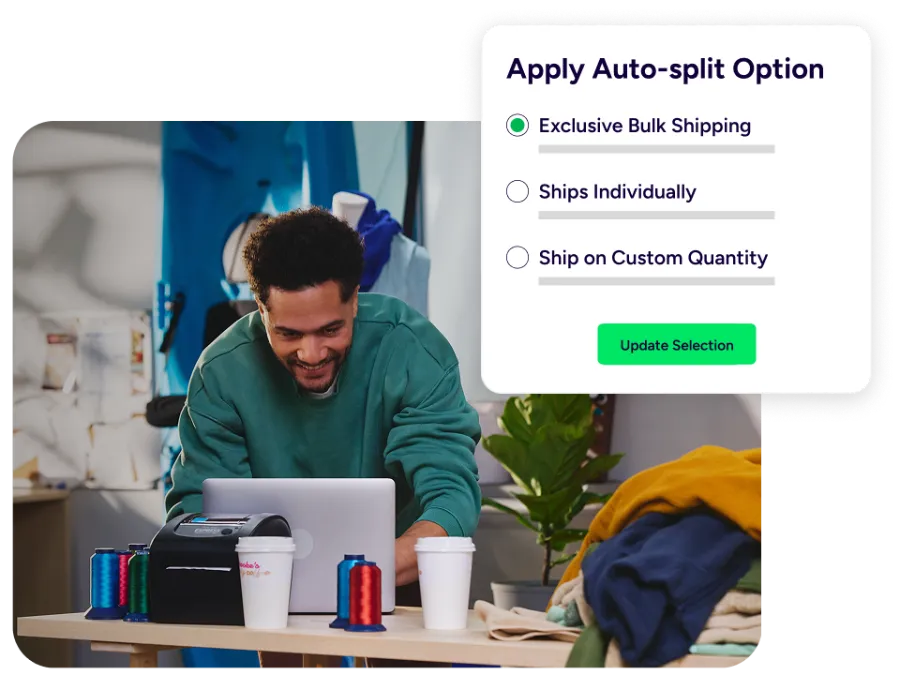
Automate Your Fulfillment
ShipStation helps ecommerce businesses eliminate the hidden costs of manual fulfillment with automation that scales.