Back
Back






























































 Shipping Basics


With the first games of FIFA World Cup 2026 starting on June 11, the buying window for sports merchandise is open—and for most fans, it’s nearly closed.
New ShipStation survey data from 500 UK and US merchandise buyers shows that more than 80% purchase at least two weeks before the event. In the UK, 45% shop one to three months in advance. In the US, a quarter of fans are in the active buying window right now. The customers you need to win are already searching, clicking, and checking out.
That’s a real opportunity. Here’s what’s standing between you and capturing it.
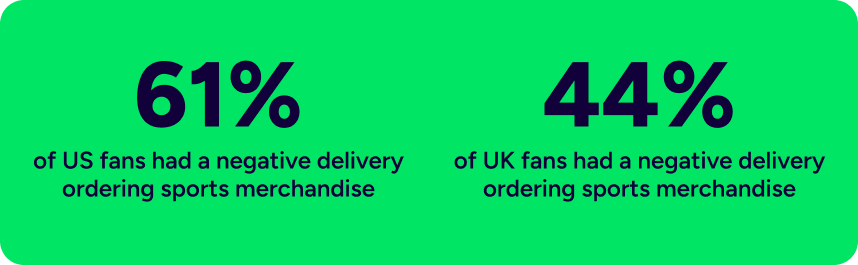
Nearly two-thirds of US fans (61%) have experienced a negative delivery when ordering sports merchandise. In the UK, the number is 44%. That’s not a fringe issue—it’s the mainstream experience for a significant portion of your potential customers.
Among US fans who faced a delivery issue, 42% said it significantly impacted their experience. That number matters. When a fan orders a jersey for a watch party, a kit for their kid, or a scarf to wear to the opener—a bad delivery doesn’t just lose a sale. It loses the customer.
The fear of a repeat negative experience is already shaping behavior. When asked about their biggest concerns ordering online, UK fans ranked late delivery first (43%), followed by receiving the wrong item (40%). US fans flagged the same concerns: late delivery, wrong items, and lost or stolen parcels.
These aren’t logistics anxieties. They’re trust deficits—sitting right between you and conversion.
Here’s where sports merchandise fulfillment data gets commercially interesting.
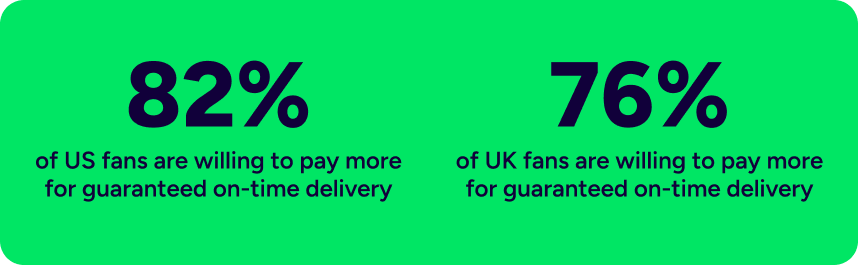
Despite their past experiences—or because of them—fans are willing to pay for reliability. In the US, 82% of merchandise buyers say they’d pay a premium for guaranteed on-time delivery. In the UK, it’s 76%. Nearly half of US fans say they’re very willing to pay more—not just open to it.
This is your customers telling you directly: certainty is worth more than price. Sports merchandise fulfillment isn’t a race to the cheapest shipping option. It’s a race to the most credible promise.
That changes how you should think about the checkout experience. Prominently communicating a delivery guarantee or tracked, reliable shipping isn’t just good UX—it’s a revenue lever. Customers who trust your delivery will convert. Those who don’t will find someone they do trust.
The stakes are significant. In the US, 64% of fans plan to spend $50 or more on merchandise this year, and nearly a third plan to spend $100 or more. In the UK, 52% plan to spend £50 or more.
For small and mid-sized merchants, that’s not just order value—it’s emotional investment on the customer’s side. A fan who spent $120 on a jersey and didn’t get it in time for the opener isn’t coming back for the quarterfinals.
Sports merchandise fulfillment at this point in the season isn’t about moving boxes. It’s about delivering on a moment. Fans have a date in mind, a match to watch, a person they’re buying for. Late, wrong, or lost isn’t a logistics problem. It’s a broken promise.
“We built our business on that emotional connection. This World Cup is driving a real surge in demand, and the expectations that come with it are just as high. ShipStation makes sure the logistics match the sentiment.”
Rob Armin, The Soccer Archive
The data points to four clear priorities for any merchant focused on sports merchandise fulfillment this World Cup season.
Ship tracked, always. Lost and stolen parcels are a top-three concern for both US and UK fans. If you’re not sending every order with tracking, you’re exposed—and leaving customers without the visibility they expect.
Set delivery expectations upfront. Late delivery is the top concern in the UK and second in the US. Be explicit at checkout: when will this arrive? If you can promise a specific date, say so. If you can’t, say that too. Customers would rather know than wonder.
Have a returns process that actually works. 40% of UK fans and 32% of US fans worry about receiving the wrong item. In a category with size variants, replica kits across multiple teams, and personalised orders, mistakes happen. A seamless exchange turns a frustrating moment into a retention opportunity.
Don’t wait for the last-minute surge. Most fans have already bought or are buying right now. The buyers who hold off until the final week before kickoff will expect faster options. Make sure your carrier mix can support urgent despatch—don’t get caught relying on one carrier at peak.
Bonus: A branded trackingexperience keeps your store front and center instead of handing that attention to the carrier. Pair it with a seamless branded self-serve returns portaland you’ve turned the post-purchase experience into a reason to come back—not just a problem to manage.
The World Cup comes around every four years. For merchants in the sports and apparel space, it’s one of the most concentrated commercial moments in the calendar—with a harder deadline than peak season and even less room for error.
Merchants who get sports merchandise fulfillment right this summer aren’t just capturing orders. They’re building customer relationships that carry into club season, the next international window, and the next tournament. Fans who receive their kit on time—tracked, correct, no drama—remember that. They come back.
ShipStation gives you the multi-carrier flexibility, real-time tracking, and automation tools to turn World Cup demand into a fulfillment win. Set up your shipping rules, connect your carriers, and make sure every order is ready to go before the whistle blows.
Start shipping with ShipStation today.