 Back
Back






























































Fulfillment Guide
Scaling Without Breaking
How to solve the biggest shipping and fulfillment problems every growing business faces
In this guide
AT A GLANCE
Where your operation starts to crack
INTRODUCTION
Building for growth before you need it
Most ecommerce businesses don't fail because demand disappears. They stall because their fulfillment operation can't keep up. Processes that once worked become the biggest obstacle to growth, and the very systems that helped the business succeed begin slowing it down.
Growth exposes every weakness in your fulfillment operation:
Shipping becomes the constraint instead of the engine.
Most sellers think scaling means doing more of what's already working—processing more orders with the same systems, carriers, and workflows. But growth changes the nature of the business. Teams spend less time improving operations and more time maintaining them. Operational blind spots make it harder to identify problems before they become expensive. Shipping shifts from a competitive advantage to a daily struggle, and growth that once felt exciting begins to feel overwhelming.
This guide walks through the eight most painful operational challenges that arise as order volume increases and explains how to solve each one. Whether you're shipping 50 orders a month or 50,000, your customers still expect fast, accurate, and reliable delivery. Left unaddressed, these challenges slow fulfillment, shrink margins, make the business harder to manage with every new order, and ultimately limit your ability to grow.
PROBLEM 1
Manual scaling: Growth starts out pacing your team
When you're shipping dozens of orders a month, manual fulfillment and shipping processes might suffice. You handle each one end-to-end by hand, from picking and packing to labeling and tracking. Nothing takes too much time because the volume is small.
But something shifts around 200–500 orders per month. The process becomes painful. Tasks that took minutes now take hours. You're repeating the same decisions over and over, and you start to ask if there's a better way to handle this.
The problem isn't the complexity of managing high volume. It's that every additional order requires the same manual decisions all over again. Growth stops being additive and becomes repetitive. You're doing manually what should be automated. And that repetition doesn't scale. It multiplies. One team member can probably handle a couple of dozen orders a day. But at 200 or more, you need four people doing the same work. That's just proportional expense, not growth.
Manual fulfillment becomes a time trap that multiplies with every order.
And there are hidden costs of manual fulfillment. Manual processes are inconsistent and unreliable. One person ships with FedEx, another uses UPS. One forgets to validate an address, and the package bounces. Another forgets to flag international orders for customs.These small inconsistencies turn into failed deliveries, refunds, and customer frustration. Your margins and customer loyalty take a hit.
One of the biggest mistakes growing businesses make is assuming these inefficiencies are simply the cost of growth. They're not. They're the result of processes that were designed for yesterday's order volume. What worked when you shipped a handful of packages each day becomes an operational liability as volume increases. Every manual click, copied tracking number, and repeated carrier decision adds friction that compounds with every new order.
More importantly, manual work creates linear growth. If doubling your order volume requires doubling the hours your team spends creating shipping labels, checking addresses, updating inventory, and comparing carriers, you've built an operation that scales people instead of performance.

Automation saves time, creates consistency, and breaks the cycle of more orders creating more work.
The goal isn't to eliminate humans from the process, but to introduce automation that frees them from repetitive tasks, allowing them to focus on exceptions, customer escalations, and operational improvements that propel the business forward.
Automation saves time, creates consistency, and breaks the cycle of more orders creating more work.
The solution:
Identify all repetitive fulfillment tasks and automate them wherever possible. Build workflows with shipping management software that allow orders to move through fulfillment with as little manual intervention as possible. Automate routine shipping decisions, eliminate repetitive clicks, and standardize the tasks your team performs every day. The less your operation depends on manual execution, the more prepared it is for growth.
CUSTOMER STORY
Peacock Supplies

Here are just a few of the most powerful functions shipping rules can handle automatically:
Every workflow you automate adds a little more efficiency, and those small gains compound dramatically as order volume grows. The result is an operation that can handle significantly high volume without requiring equivalent increases in time and effort.
What used to take around 3–7 minutes per shipment now takes closer to 15–20 seconds.
PROBLEM 2
Fragmented systems: Tools stop working together
At first, this patchwork approach feels manageable. But as more orders roll in, the work between those systems begins to outweigh the work happening inside them. Instead of streamlining operations, each new tool creates another connection for someone on your team to manage. Slowly and quietly, the effort required to juggle multiple systems outweighs the value they provide.
Limited delivery choices push customers away from your store.
Your team spends hours every week moving data between platforms. Copy an order from one system to another. Check shipment status in a third tool. Update inventory in a fourth. Nothing talks to anything else. It feels productive because everyone is busy, but it's administrative work that exists only because the tools aren't connected.

A centralized system transforms fulfillment from a collection of disjointed tasks into an intelligent operation.
Inefficiencies that result from fragmented systems are not always obvious, but they create risk and cascading costs:
CUSTOMER STORY
The Cheeky Panda

When your ecommerce platform, shipping software, inventory, carriers, and returns communicate automatically, data flows instead of people. Orders move through fulfillment across all your sales channels with minimal manual intervention. Automated inventory management keeps stock levels synchronized across every channel. Customer updates happen automatically. Every team works from the same information instead of maintaining competing versions of the truth.
The solution:
Consolidate to one platform that connects orders, carriers, inventory management, returns, and other parts of fulfillment into a single workflow. Create a single system of record in which information flows automatically rather than being manually transferred between disconnected systems.
You'll reduce room for error and give your team more time to focus on customers and growth, and build a fulfillment operation that's more accurate, more responsive, and far easier to scale.
Having a single source, web-based platform for all sales channels that also allows us to use a hub for picking/packing and light production has been critical for our operational growth.
PROBLEM 3
Cost creep: You're overpaying for every shipment
Shipping decisions generate expenses that most sellers don't pay close attention to. They pick a carrier and stick with it. Maybe they negotiate rates once. Or never. Then they set it and forget it. Shipping costs climb with each rate increase, and they never notice because the increases are gradual.
Sticking with a default carrier is not the only way per-shipment costs rise. Many sellers choose the cheapest carrier without measuring the total cost. You ship a 5-pound package via ground, which takes 5 days, when a 2-day service would have prevented a return and cost you 3x as much as the shipping savings. You're optimizing for the wrong metric.
There are also the issues that arise from leaning too heavily on a small number of carriers. One carrier gives you no leverage. If rates go up, you're stuck. Multiple carriers give you options to switch when rates rise, choose based on customer location, and negotiate better volume discounts because you have alternatives. Multi-carrier flexibility is what separates companies that control shipping costs from those that are controlled by them. The only way to know you're getting the best deal is to compare shipping prices across every carrier and service on every order, not once a year.
Sellers who understand this run a shipping rate comparison across carriers and services. It's a step in the right direction, but many still shop rates manually. The problem is that manual rate comparison isn't actually shipping work. It's administrative overhead. For each order, someone has to pull up carrier websites, enter package details, compare prices, and make a decision. That's precious time consumed by decision-making that moves no packages closer to customers. That's not productivity. That's a job that exists only because the process isn't automated.
Manual shipping rate comparison is way too time-intensive.
Yet, they still don't catch it when the best rate for one order stops being the best for the next. Package weight, destination, and delivery speed all shift the numbers. Rates and service options fluctuate constantly. A carrier decision, once made and left alone, quietly goes stale.
Manual decisions are inherently inconsistent:
The cost of a wrong choice builds silently. A seller choosing one carrier when another would have been $0.50 cheaper per shipment doesn't feel like much on one order. But across 2,000 orders per month, that's $1,000 in unnecessary spending. Across 10,000 orders, it's $5,000. You're making suboptimal carrier choices that yield preventable costs every month—money that could be reinvested in the business.
It gets worse. Every time a team member logs into a carrier portal to check rates, they're not fulfilling orders. And every time they make a decision without all the information, they're creating risk that a shipment arrives late, a customer returns an item, or a negative review is posted. These behind-the-scenes costs—returns, customer service tickets, attrition—accumulate quickly and are hard to spot. What looks like a small decision on one shipment becomes a systemic problem at scale.

The real cost isn't just the shipping rate itself. It's the operational overhead of making these decisions manually.
The businesses that escape this trap let systems handle rate decisions automatically, in real time, at scale. The impact is immediate. Hours reclaimed every week that your team can spend on actual fulfillment. Thousands of dollars in savings each quarter from optimized carrier selection. And delivery performance that becomes predictable because consistent logic replaces inconsistent human judgment.
The solution:
Automate rate shopping with a system that lets you compare shipping prices from every connected carrier in real time from every connected carrier and selects the right option based on your rules, balancing cost, delivery speed, and reliability. That means you see the cheapest, fastest, or best-value option pre-selected based on your shipping strategy.
The moment an order is imported, the system reviews the services connected to your account—whether discounted rates, negotiated contracts, or a mix of both—and surfaces the best option for each shipment without sacrificing the volume-based pricing you've already built.
Rules, Not Repetition
The rules adjust to different situations. Residential orders might be routed to USPS, commercial orders to UPS Ground, and international orders auto-select based on destination. Every decision happens in real time.
Beyond just finding the cheapest option, the system also accounts for carrier reliability, transit performance, and delivery speed. This is the difference between shipping rate comparison and rate decisioning. Comparison gives you information. Decisioning takes action on every shipment. The logic is the same for every order, every day, eliminating the inconsistency that haunts manual rate shopping.
The consistency also improves delivery performance. When your rate rules balance cost with reliability, you're protecting customer experience rather than just optimizing margins. The right carrier gets matched to the right shipment based on what that specific order actually needs.
CUSTOMER STORY
Veiled Collection
The freedom this creates extends beyond fulfillment. Your team reclaims the hours they used to spend in carrier portals. They shift from making rate decisions to managing exceptions and improving operations. They focus on actual fulfillment work instead of administrative overhead. Meanwhile, the system continuously evaluates rates as they change, catching savings opportunities your team would miss.
Carrier rates and services fluctuate, but changes are all captured automatically and factored into decisions in real time. Saving a small percentage on each shipment adds up when applied to thousands.
Those cost savings, which could be $0.25, could be several dollars, add up over the course of the year, and allow us to take and reinvest back into our business for continued growth.
PROBLEM 4
Operational visibility: You can't fix what you can't see
When you reach high-volume shipping levels, you're managing more than individual orders. You're managing an operation. And managing something you can't see is impossible.
Orders flow through multiple channels, and your team is busy. You're making decisions without complete information.
Meanwhile, problems go undetected until they become expensive:
Without visibility, you can't solve problems. You can't even find the root cause. So you guess. You add staff to fulfillment when the real problem is outdated carrier selection rules. You negotiate carrier rates when the real issue is that you're not using the right service for specific destinations. You invest in warehouse improvements when the slowdown is actually happening somewhere earlier in the order process. You're solving problems that don't exist while the real ones remain hidden.
These blind spots cost real money through missed opportunities, preventable returns, reshipping, customer service, and customer attrition.
Fragmented reporting makes this even worse. You may know your overall order volume and total shipping costs, but lack the granular visibility to understand what's happening across carriers, service levels, geographic zones, products, and channels. Even if you're pulling reports from multiple systems and manually stitching them together, underlying problems may have already affected hundreds of orders.
True visibility isn't just about reporting what already happened. It's about recognizing what's happening before it becomes a problem. Traditional reporting tells you what happened, while a smarter operation uses connected data to identify emerging patterns and risks.

These blind spots cost real money through missed opportunities, preventable returns, reshipping, customer service, and customer attrition.
Data gives your team the context to act before a small operational issue becomes a customer-facing problem. If a carrier's performance starts declining, you can catch it before late deliveries become a customer service problem. If exception rates rise for a particular product or destination, you can investigate whether the issue is carrier selection, packaging, or routing. If buying patterns change, you can adjust inventory and capacity before the next spike.
Every shipment generates dozens of data points. Multiply that across tens of thousands of monthly shipments, and you're generating millions of data points. The challenge isn't collecting the data. It's turning that raw information into insights that improve performance, reduce costs, and enhance the customer experience.
That's where operational visibility becomes a competitive advantage. With the right analytics, your team can:
Instead of asking "What happened?", you can ask "Why did it happen?" and, increasingly, "What's likely to go wrong?" and "What should we do about it?" Analytics shifts from retrospective reporting to forward-looking guidance, and enables you to act before a small operational issue becomes a customer-facing problem.
The solution:
Build operational visibility into your fulfillment process with dashboards, reporting, and analytics that show what's happening in real time.
The goal isn't to collect more data and build more complicated reports. It's to make important information unified, accessible, and actionable. The best analytics tools eliminate the need to build custom reports or manually cobble together data, while making it easy to role-specific insights with operations, finance, leadership, and other teams.
Track the metrics that matter most: How many orders ship on time? What's the actual error rate? Which carriers and services perform best? How is the cost per shipment trending? Which products have the highest return rates? Are certain destinations, channels, or products generating more exceptions?
CUSTOMER STORY
Stickers4Walls

Use the insights to establish a continuous improvement loop. Use those findings to create a continuous improvement loop. Identify where time is being wasted, prioritize the optimizations likely to have the biggest impact, and measure the results. As your operation grows, you can see how performance changes across orders, channels, products, carriers, and locations.
You'll end up with a fulfillment operation that can see itself clearly, identify problems earlier, make smarter decisions, and continue to improve as the business scales.
All of the shipment costs, all of the shipment weights, which carriers we’re using, what zones they’re going to—all of the things that I need in order to successfully negotiate rates with our carriers and understand where we have gaps in our shipping ecosystem lives within the reporting tools.
PROBLEM 5
Returns and retention: A return becomes a lost customer
Returns can be your biggest retention lever or your biggest drain on revenue and customer loyalty.
Sellers treat returns as a cost to minimize. Get the item back, process a refund, and move on. But that transactional approach misses what's really happening. A return is an important customer interaction. The customer has already purchased from you, so they trust your brand. Now, they're giving you an opportunity to either reinforce that trust or lose it.
You minimize a customer's frustration with a frictionless returns experience that includes:
A customer-friendly returns experience can turn a disappointing purchase into a positive interaction with your brand.
Customers who feel supported are more likely to trust you again, while those who feel ignored or annoyed have a reason to take their next purchase elsewhere.
The economics of exchanges make the opportunity even bigger. Exchanges keep the customer engaged with your brand, preserve the original sale, and often solve the customer's problem faster than waiting for a refund and placing a new order.
Returns can also tell you something your sales data can't. Every return provides insights into your products, packaging, customers, and fulfillment operations:
A spike in returns for a particular product, region, or channel reveals a problem before it becomes much larger.
That turns returns into more than a recovery process. They're a source of intelligence. The best operators use data from their returns management system to identify root causes, improve products and packaging, refine customer expectations, and prevent unnecessary returns.

Returns aren't a cost center. They're a retention opportunity.
A proactive, streamlined returns strategy treats every return as an opportunity to keep a customer, recover revenue, and learn from what went wrong.
The solution:
Communicate your return policy clearly before and after purchase. Give customers self-service options, prepaid and trackable labels, transparent timelines, real time shipment tracking, and automatic status updates. Keep the experience branded and consistent with the rest of the customer journey rather than handing customers off to a generic returns process.
Make exchanges a prominent, effortless path, not a difficult alternative to refunds. The goal isn't to make refunds more difficult but to make the best solution the easiest. Show customers alternative sizes, colors, or products. Make exchanges easy to initiate. Offer instant store credit or incentives when appropriate. Give customers real-time inventory visibility and, when possible, ship the replacement before the original item is received.
CUSTOMER STORY
ELK The Label
Then use the data generated by every return. Track return reasons, exchange rates, processing times, refund turnaround, customer satisfaction, and cost per return. Look for patterns by product, customer type, geography, and sales channel. Connect returns data with orders, inventory, shipping, and customer information, so your team can identify and act on problems.
When returns become easy for customers and intelligent for your business, you're no longer just processing returned products. You're protecting revenue, strengthening loyalty, and using every return to improve the next customer experience.
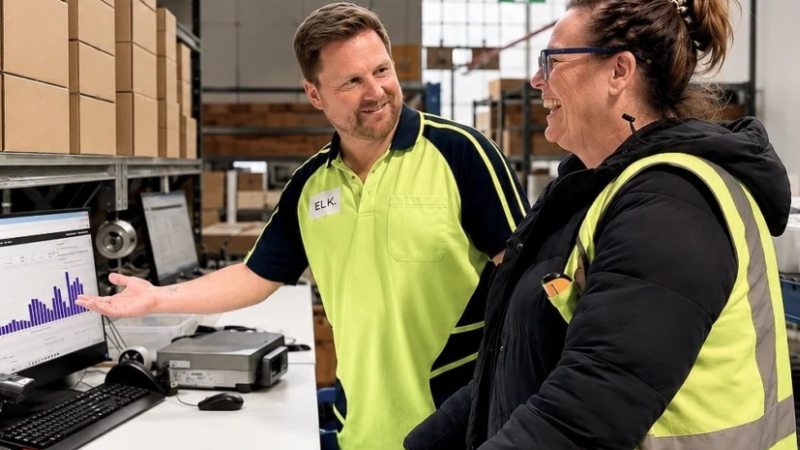
We have been able to convert refunds into exchanges. And keeping that money back into the business has been really important.
PROBLEM 6
Global expansion: International shipping becomes too complicated
Shipping across borders can feel impossible. You're faced with different carriers, customs requirements, compliance rules, taxes, duties, currencies, and unpredictable costs. Even when you know there's a larger market for your products, the operational complexity can make entering that market feel like taking on an entirely new business.
And the opportunity is getting harder to ignore. Customers no longer think about ecommerce in strictly domestic terms. Social commerce, marketplaces, and global digital channels allow them to discover brands worldwide from the start.
Buying internationally feels simple to the customer. Operating internationally is what's challenging.
Most sellers treat international shipping as completely separate from domestic fulfillment, so they either avoid it or expand without the infrastructure to support the experience. The result is missed revenue from new markets or a poor customer experience.
But international shipping isn't fundamentally different. It's the same challenge—getting a package from A to B—with more variables:
The fundamentals don't change. The infrastructure needs to become better at automatically handling those additional variables.
Many brands simply stretch their domestic shipping strategy across borders. Domestic routing might ask for which warehouse, carrier, and rate. International shipping brings another layer of questions: What duties and taxes apply? What's the landed cost? How do carrier prices compare once duties and taxes are included? Which carrier can deliver to the destination? Can it support Delivered Duties Paid (DDP)? What customs documentation is required?
And those requirements don't stay static. Regulations and customs requirements continue to change across markets, often on different timelines and with different paperwork. What worked for one market yesterday may not work tomorrow, making it increasingly difficult to manage cross-border fulfillment with manual processes or rules that rely on someone remembering current requirements.
Real companies. Real operational transformation.
The consequences of getting it wrong extend well beyond a delayed package. Unexpected duties, customs delays, missing tracking updates, confusing fees, and undeliverable packages can quickly turn into customer service issues, refunds, rejected shipments, and lost repeat purchases.
And the failure often happens at the customer's front door. When duties and taxes aren't clear at checkout, and a customer is asked to pay an unexpected bill upon delivery, it becomes a brand experience issue that makes a customer think twice about ordering again.
Customers don't separate the delivery experience from the brand experience, which is why international growth isn't simply about finding a carrier that will deliver to another country. It's about maintaining a consistent, predictable customer experience despite the complexity behind the scenes.
Customers want:
They don't care how many carriers, customs systems, or fulfillment platforms are involved. They just want international delivery to feel normal.
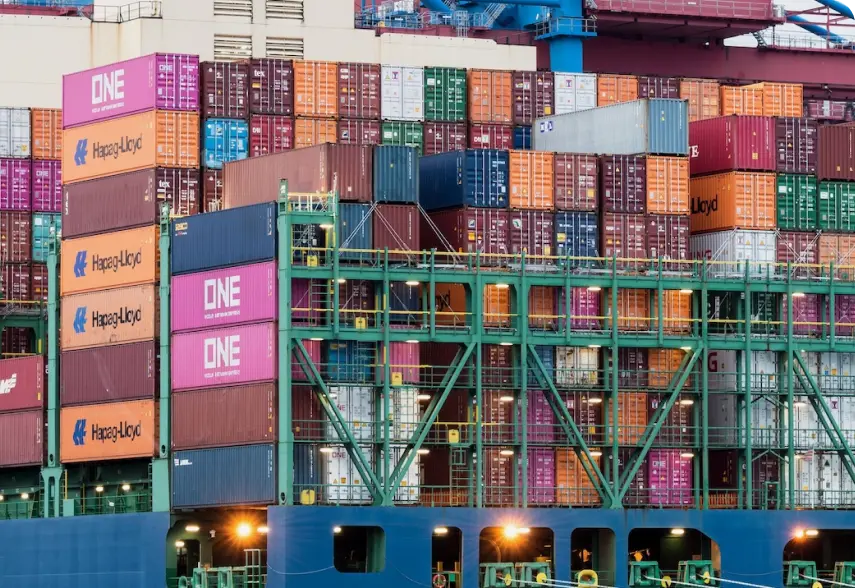
With the right infrastructure, global expansion becomes a clear, manageable path to growth—and international delivery can feel just as reliable to the customer as domestic delivery.
There's another challenge that becomes increasingly important as you scale: the quality of your product data. Customs documentation may require detailed information such as Harmonized System (HS) codes, certificates of origin, product certifications, and importer records. That information can't be treated as a one-time setup task. It needs to remain accurate and up to date as products, markets, and regulations change.
In fact, many cross-border failures come down to three things: incorrect or missing product data, incomplete customs documentation, and landed costs that remain invisible until delivery. Getting the data and process right creates the foundation for automation; technology can then apply those rules consistently at scale.
The solution:
Build an international fulfillment and shipping strategy that uses technology to absorb the complexity rather than passing it on to your team or your customers.
Start by testing one or two markets rather than trying to expand everywhere at once. From there, use a multi-carrier strategy that can select the right service based on destination, cost, transit requirements, duties and taxes, and regional carrier performance. Build international shipping price comparison into that strategy by comparing rates, transit times, and landed cost for each destination, rather than postage alone.
Don't simply assemble a collection of carriers market by market. As international volume grows, a fragmented carrier network can create its own operational burden, with separate integrations, relationships, and processes to manage. An aggregated network or a strategic carrier partner can provide broader coverage while offering better economics and fewer moving parts.
Automate the parts of international shipping that create the most friction. Customs documentation is one of the biggest barriers, as every international shipment requires information such as product descriptions, quantities, values, HS codes, country of origin, and tax identification numbers. Manually creating that documentation at scale is time-consuming and error-prone.
The right technology pulls that information directly from your product records and account settings, automatically populates customs documentation, and electronically submits the information to carriers and customs agencies. That reduces errors, accelerates clearance, and eliminates much of the manual work involved in navigating cross-border fulfillment.
Make landed cost part of the customer experience, too. Calculate duties and taxes before checkout whenever possible so customers understand the true cost of their purchase before they buy—not when a carrier arrives at their door.
CUSTOMER STORY
Black Girl Sunscreen

Connected shipping networks can also coordinate carriers, fulfillment systems, marketplaces, and data in real time, giving you greater visibility and more intelligent decision-making across markets. Instead of relying on fixed rules—one carrier, one warehouse, and one shipping method—intelligent shipping systems can evaluate transit performance, regional reliability, delivery timelines, shipping costs, inventory location, duties, and customer expectations to make better decisions.
You'll likely never eliminate the intricacies of global commerce, but you can navigate the complexity of international shipping. When the right systems handle customs, compliance, carrier selection, documentation, shipment tracking, and regional requirements automatically, expanding into new markets becomes a manageable operational process rather than a major new burden.
This unlocks growth. You're not just selling to domestic customers anymore. You're opening new markets and revenue streams without letting international complexity constrain the business.
When we integrated, shipping parcels overseas became a much quicker process—a click of the button for the packers, and the label was printed. No more spreadsheets to send!
PROBLEM 7
Peak season: Surge volume overwhelms your operation
At 10,000+ orders per month, everything hums along. Your team knows the rhythm, your processes are familiar, and your carriers generally perform as expected. But then November hits. Or a viral moment. Or a successful promotional campaign. Suddenly, you're doing 3–5x your normal daily volume, and the processes that worked start cracking under pressure.
A bottleneck that was barely noticeable at 10,000 orders becomes a crisis at 50,000. A process built for normal volume simply can't stretch far enough to cover the surge in orders. The extra volume doesn't just create more work—it magnifies every inefficiency already hiding in your operation.
A few extra minutes of manual work per order can add up to hours of additional labor. A small inventory discrepancy can turn into hundreds of delayed orders. A carrier that performs adequately under normal conditions may struggle when capacity tightens. And a fulfillment process that relies on one or two people to know exactly what to do can quickly stall when they are overwhelmed.
CUSTOMER STORY
The Peach Truck

Peak season also creates a compounding problem: the operational issues created by higher volume can create even more work. Delayed shipments generate customer service inquiries. Errors create replacements and refunds. Inventory shortages require manual intervention. Carrier disruptions require rerouting. Each exception pulls your team away from processing the orders already waiting in the queue.
The ugly truth is that most businesses don't prepare for peak season until it arrives. They react instead of plan.
When volume suddenly spikes:
What should be your biggest revenue opportunity becomes your biggest operational nightmare.
And peak season isn't limited to the holiday calendar. A viral product, successful marketing campaign, unexpected media attention, marketplace promotion, or new retail partnership can create a surge just as quickly. Businesses prepared for only one predictable peak can still be caught off guard by the next.
The strongest operators take the opposite approach. They prepare for peak season in advance, focusing most of their effort on designing resilient systems rather than firefighting when volume hits. They identify where capacity will become constrained, determine which processes won't scale, establish backup plans, and test their systems before the pressure arrives.

Peak season should stress-test your systems, not expose weaknesses you didn't know existed.
Preparation also means planning for what could go wrong. Carrier failures, inventory delays, weather disruptions, system breakdowns, and capacity constraints shouldn't be surprises. The goal isn't to predict every disruption. It's to know what you'll do when one happens.
When your operation is designed for surge volume, a spike in orders doesn't require a proportional increase in people, manual work, or emergency fixes. You have the capacity, flexibility, and contingency plans to absorb the increase and keep orders moving.
The solution:
The difference between a peak season that crushes your business and one that generates record revenue often comes down to preparation. Companies that handle surge volume successfully aren't necessarily doing anything dramatically different operationally. They've simply designed their systems to absorb it without breaking.
Readiness starts with building strategic carrier diversity and partnerships. One carrier gives you limited options when capacity gets tight. Diversifying your carrier network gives you built-in backup when disruptions hit. When one carrier faces holiday delays or capacity constraints, you can shift volume to another and keep delivering the service levels customers expect.
CUSTOMER STORY
Kyn You Believe It

Automated order fulfillment closes the gap when manual processes can't withstand the demand.
Automate for surge volume. Manual processes eventually break at 3x volume. Batch processing and automation change the equation. Software becomes infrastructure when it lets your team keep fulfillment moving smoothly as demand jumps.
Finally, use predictive data to plan instead of respond. Predictive analytics and demand sensing help you anticipate changes in demand and operational performance before the surge arrives. That gives you time to pre-position inventory, activate backup carriers, adjust staffing, and prepare your warehouse. Instead of being blindsided by a capacity crunch, you see it coming, withstand waves of orders, and reap the rewards of the boost in sales.
There was one period where, over 30 days, we processed 25,000 orders. If we were still handwriting labels, we would have needed at least 20 people.
PROBLEM 8
Fulfillment infrastructure: One location becomes a constraint
A single warehouse ceases to be an asset and becomes a liability at 50,000+ orders per month. When every order flows through one location, and every shipment originates from the same place, the problem shows up in several ways.
First, single-location fulfillment can mean slower delivery times, making it hard to meet 2-day expecations. An order placed in Los Angeles that ships from a warehouse in New Jersey may take several days to arrive when it could reach the customer much faster from a facility closer to the West Coast.
And proximity matters more as customers increasingly expect fast, predictable delivery. Shipping from a single distant location can make it difficult to consistently meet those expectations. You may be able to offer two-day delivery to one region while requiring four or five days to another, meaning your delivery promise and shipping costs can vary dramatically depending on where the customer lives.
Customers increasingly expect fast delivery, and the window for meeting those expectations is shrinking.
As a result, your fulfillment network starts working against your growth. You may be acquiring customers nationwide, but your inventory is concentrated in one place. You're spending more to move products farther, while giving customers longer delivery times.
Then there's the complexity of making fulfillment decisions at scale. Which location should fulfill an order? Is the inventory available? Should the order be split across locations? Should it be routed to a fulfillment partner? When dealing with tens of thousands of orders, these decisions can't rely on someone manually evaluating each one. The more volume you process, the more important it becomes to automate routing decisions based on inventory, customer location, delivery requirements, and cost.
Rules, Not Repetition
There's also a capacity problem. A single warehouse has finite space, staff, and throughput. Once you approach that ceiling, you can't simply keep adding orders. You either turn away demand, slow fulfillment, or scramble to add capacity in the middle of a growth period, all of which can be expensive and disruptive.
A single location also creates a single point of failure. A staffing shortage, inventory disruption, weather event, carrier issue, or facility problem can affect your entire operation. The businesses that scale smoothly don't wait until they're at capacity to rethink fulfillment. They make strategic decisions about where inventory should live, which locations should serve which customers, and when to add external capacity. They strengthen fulfillment infrastructure to flex as the business grows.
The solution:
Shift from a single fulfillment location to a distributed strategy that determines where each order should ship from based on speed, inventory availability, and cost.
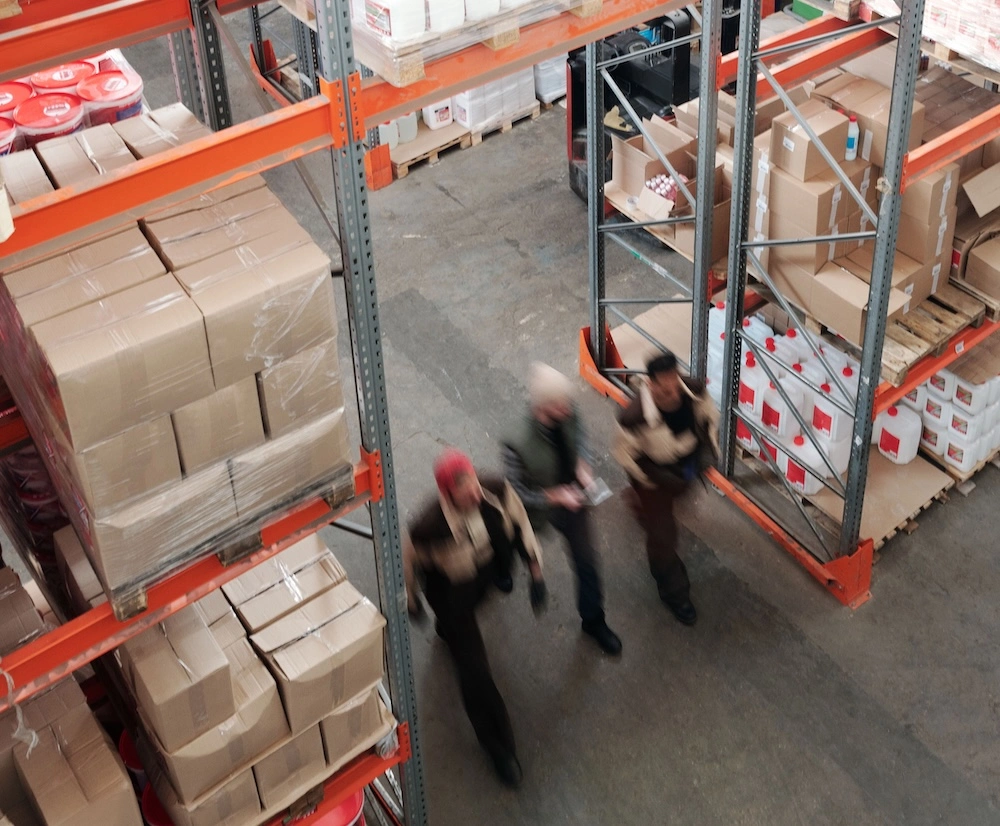
When everything depends on one facility, one problem can become everyone's problem.
Start with auto-routing. Automate the decision about which location should fulfill each order based on proximity to the customer, available inventory, delivery requirements, and shipping cost. Pair this with auto-splitting to divide orders across multiple locations when items are in different warehouses or weight restrictions apply. Powerful systems make those decisions automatically, so fulfillment can be both faster and more cost-effective.
As volume grows, consider 3PL partnerships. A third-party logistics provider can expand your fulfillment capacity without requiring you to open and operate another facility. During periods of high demand, you can also route overflow volume to a 3PL rather than allowing a surge to overwhelm your primary operation.
For certain product categories or high-volume SKUs, dropshipping may also make sense. The supplier holds and ships inventory directly to the customer, allowing you to expand your product offering without adding warehousing and fulfillment capacity.
CUSTOMER STORY
Five Senses Education
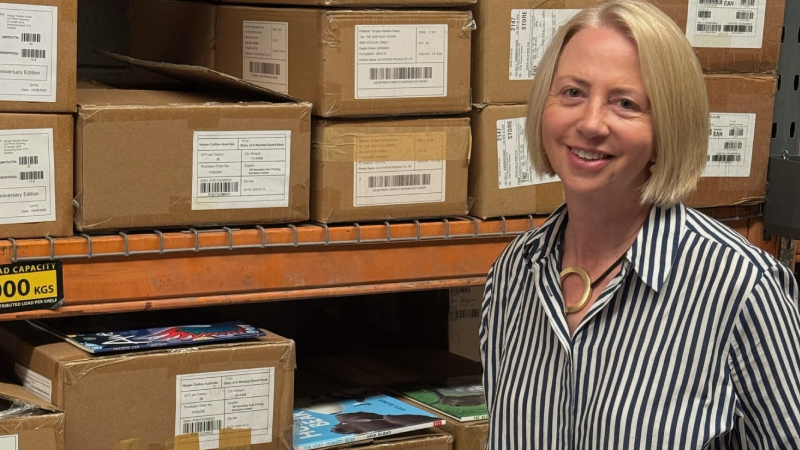
The key is to make these decisions before you hit the wall. Distributed fulfillment is about creating enough adaptability in your network to place inventory closer to customers, balance capacity, and keep orders moving when one location can't handle the load.
Make your fulfillment network flexible enough to grow with your business, rather than becoming what limits it.
CONCLUSION
Scaling isn't about doing more.
It's about building smarter infrastructure
Growth doesn't have to make fulfillment harder, but it does require your operation to evolve as your business does. The systems, processes, and infrastructure that work at one stage of growth won't necessarily support the next.
The key is to recognize those inflection points before they become crises. As volume increases, look beyond simply processing more orders and ask whether your operation is still built for the business you're becoming. Where can you eliminate manual work? Where are costs or capacity becoming constraints? Where do you lack visibility? And where could a better process or system create room for the next stage of growth?
The eight challenges in this guide aren't isolated problems. They're signals that your fulfillment operation needs to mature alongside your business, so your team can handle more volume without adding unnecessary complexity, cost, or risk.
Fulfillment is part of the foundation that makes everything else possible. When orders move efficiently, costs stay under control, customers get the experience they expect, and your team has the capacity to focus on what comes next, fulfillment becomes an engine for growth. You'll have an operation capable of handling whatever comes next.
Know the problems. Know the solutions.
Related Resources
Rules, Not Repetition
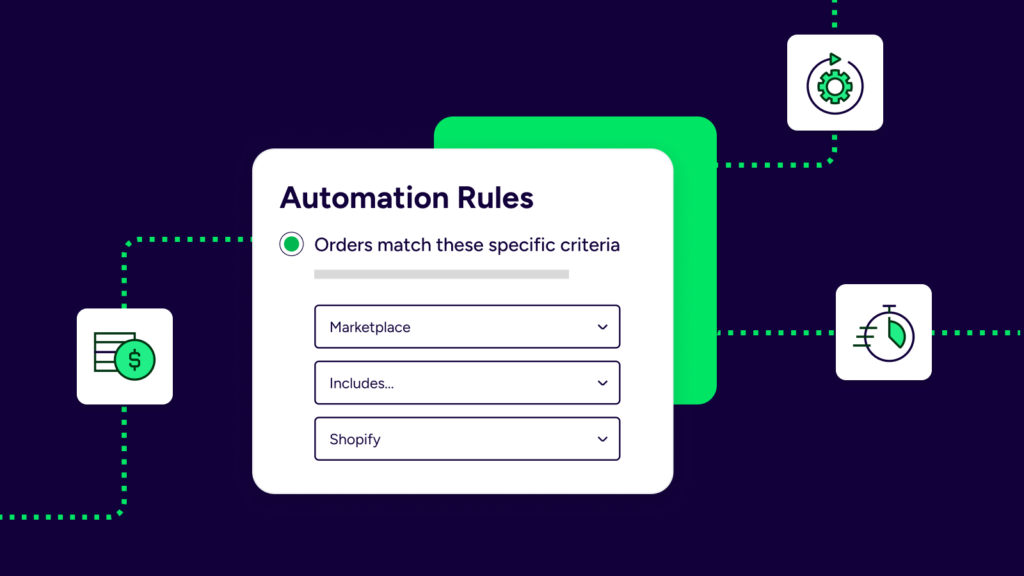
11 order fulfillment automation rules every high-volume shop should use to ship easier, faster, and cheaper.
The Surprising Cost of Manual Order Fulfillment
What you're really spending on manual fulfillment and how to automate your way out of it.
Automation in Action
Inside the automation and smart workflows real brands use to reduce labor costs, minimize errors, deliver reliably, and grow with confidence.

The Ecommerce Delivery Shift
How AI and automation are becoming the decision-making engine behind faster, smarter, more profitable fulfillment.

5 Ecommerce Delivery Myths Busted by Experts
Debunking some of the most stubborn delivery myths via unfiltered, data-backed debate.
ShipStation Ecommerce Delivery Benchmark Report 2026
Data-driven insights on how AI is transforming ecommerce delivery and how retailers can keep pace.
Continue Reading
Scaling Without Breaking
"*" indicates required fields