Back




































 Shipping Basics


Shipping less-than-truckload (LTL) freight takes more than securing pallets and scheduling a pickup. You also need the right paperwork to tell carriers what you’re shipping, where it’s going, and how it should be handled. One of the most important freight documents is the bill of lading (BOL).
If you manage freight shipments, you know how quickly paperwork problems can turn into bigger headaches. An incorrect weight, missing delivery instruction, or inaccurate freight description can lead to delays, unexpected accessorial charges, and billing disputes. And when something goes wrong in transit, incomplete records can make the problem harder to resolve.
The good news? Most documentation mistakes can be prevented with accurate shipment information and a careful review before pickup. This guide explains what a BOL means in shipping, how to complete one, and which other freight records your business should understand.
BOL stands for bill of lading, a shipping document that records important details about freight and its transportation. It identifies the shipper, carrier, recipient, and goods being transported.
In LTL shipping, the BOL tells the carrier what it’s picking up and where the freight needs to go. It also provides a record that shippers and carriers can reference when questions arise about charges, delivery, or shipment details.
A bill of lading traditionally serves three functions:
Unlike most parcel shipments, LTL freight often passes through several terminals before reaching its destination. Pallets may be transferred between trailers and transported alongside shipments from other businesses. Accurate paperwork helps carriers identify and move your freight through that network. It also gives your business a record of what was tendered to the carrier.
A properly completed shipping BOL can help you:
Keep in mind that a BOL isn’t proof that the carrier has verified every detail. You’re responsible for providing accurate shipment information, and the carrier may record exceptions when accepting the freight.
A typical freight BOL includes shipment details, freight classification, billing instructions, and other information the carrier needs. Here’s what to include and what to double-check before pickup.
The BOL identifies the shipper and consignee, or the person or business receiving the freight. Include complete names, addresses, and contact information. Double-check delivery locations, especially when shipping to large warehouses, construction sites, or facilities with multiple entrances.
Describe what you’re shipping and how it’s packaged. Include the number of pallets, crates, or other handling units, along with the shipment’s weight. Be specific. A description such as “steel machine components” is more useful than simply writing “parts.” Make sure the weight reflects the prepared shipment, including pallets and packaging.
Many LTL shipments require a freight class and National Motor Freight Classification (NMFC) item number. The NMFC identifies commodities and establishes rules for assigning freight classes. The correct class depends on the requirements for the specific commodity. Some commodities use density-based classifications, while others follow different provisions. Confirm the correct NMFC item and applicable rules rather than assuming density alone determines the class.
Does your shipment need a liftgate? Is the delivery location a construction site? Does the recipient require an appointment? Communicate these needs when booking and include applicable instructions on the BOL. Some services carry additional charges, so identifying them upfront helps you understand what the shipment may require.
A BOL may also identify who should be billed for transportation charges. These instructions help the carrier direct the freight invoice to the appropriate party.
Three common billing arrangements include:
For example, a manufacturer shipping products to a retailer might use prepaid terms when it handles transportation charges. If the retailer is responsible for paying the carrier, collect terms may apply.
These billing instructions don’t necessarily determine who owns the goods or who ultimately pays under the sales agreement. Confirm the correct arrangement before booking to help prevent invoice disputes and billing corrections.
Your BOL may include purchase order numbers, customer references, and shipment identifiers. Signatures or electronic acknowledgments help document the carrier’s acceptance of the freight. Follow the carrier’s process and keep a copy of the completed record.
Before completing a BOL, compare the information you’re entering with the actual shipment. For this walkthrough, a manufacturer is shipping two pallets of packaged machine components to a distribution center. The shipment weighs 850 pounds, including packaging and pallets.
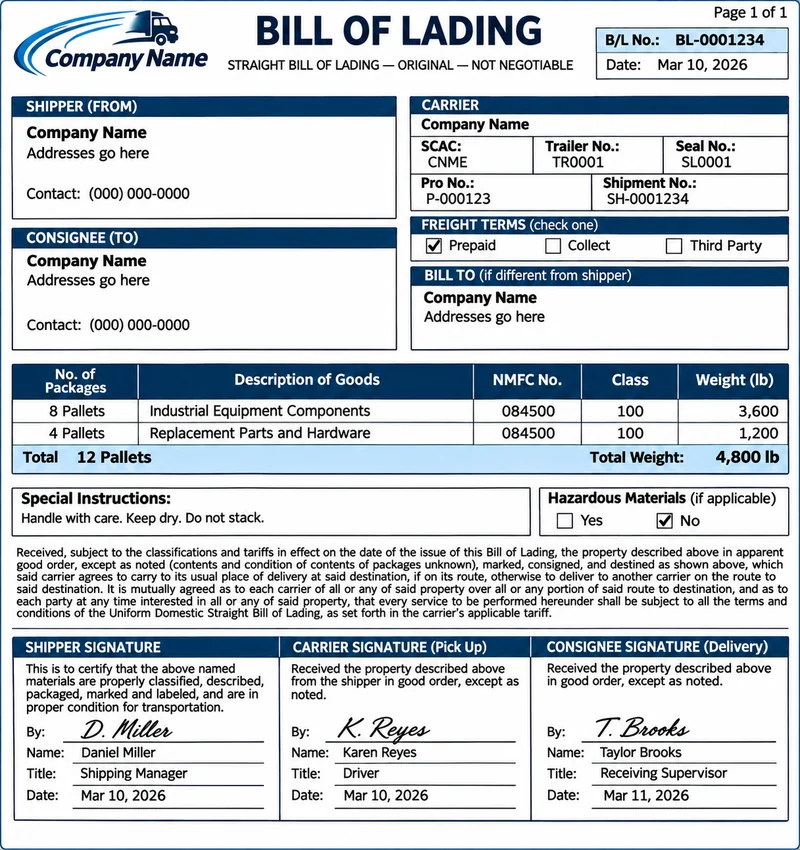
This simplified example highlights common fields. Actual carrier forms may include additional required information and transportation terms.
Now that you’ve seen what a typical BOL looks like, let’s walk through how to complete one. We’ll use the manufacturer’s two-pallet shipment to show what information belongs in each section and what to check before the carrier arrives.
For the example shipment above, the manufacturer enters its pickup address and the distribution center’s delivery address. Before completing the form, the shipping team checks the receiving hours and confirms the correct delivery entrance. This helps avoid sending the driver to the wrong location.
The manufacturer includes its purchase order number and any required customer reference. These details help the distribution center match the arriving freight to the correct order. Carrier shipment identifiers can also be added when available.
The shipping team lists two pallets of packaged machine components weighing 850 pounds. Before entering the weight, employees confirm that it includes the pallets and packaging. They also check that the handling-unit count matches the freight waiting for pickup.
Next, the manufacturer identifies the applicable NMFC item and freight class. Because “machine components” can describe many different products, the team must confirm the actual commodity and its classification requirements. The description alone isn’t enough to assign a class.
Suppose the distribution center has a loading dock but requires a delivery appointment. The manufacturer confirms that requirement when booking and includes the appropriate instructions on the BOL.
Before pickup, the shipping team compares the BOL with the freight. They verify the addresses, two-pallet count, 850-pound weight, commodity information, and delivery instructions.
When the carrier arrives, the parties follow the required acknowledgment process. The manufacturer keeps a copy of the completed BOL, including any exceptions noted by the driver.
Check before the truck arrives.
Not every bill of lading serves the same purpose. The type used depends on the shipment and transportation agreement.
A straight BOL is nonnegotiable and identifies a specific recipient. It’s commonly used for domestic LTL shipments where the freight is intended for a designated business or customer.
An order BOL is a negotiable document that allows the right to receive freight to be transferred from one party to another. For example, a seller may use an order BOL to retain control of a shipment until the buyer meets agreed-upon payment terms. This type is more common in transactions where ownership and payment arrangements affect the release of goods.
An electronic BOL is a digital version of the shipping document. It can make paperwork easier to prepare, share, and store. Electronic processes must still meet applicable requirements, and carrier support can vary.
For most businesses shipping routine domestic LTL freight, a straight BOL is the most familiar option. Federal law distinguishes between negotiable and nonnegotiable bills of lading, although the rules that apply depend on the shipment and transportation arrangement.
It’s easy to confuse these documents because they all contain shipment information. But each serves a different purpose.
Consider the manufacturer from before who is shipping two pallets of machine components. The BOL records the shipment details and transportation information. Pallet labels help the carrier identify the freight as it moves through its network. When the shipment arrives, the delivery record documents its receipt, including any damage or shortages noted by the recipient. These records work together, but one doesn’t replace another.
Even small errors on a bill of lading can create problems during transportation. Incorrect shipment details may lead to unexpected charges, delivery delays, or disputes that take time to resolve.
Here are 10 common BOL mistakes, how they can affect an actual shipment, and what you can do to prevent them.
For more information, see our guide to LTL accessorial fees.
Even with careful preparation, BOL mistakes can happen. Maybe the shipment weight was entered incorrectly, the delivery address changed, or a special service was left off the document. What happens next depends on when you discover the error.
The most important step is to address errors as soon as you discover them. Keeping copies of the original BOL, corrected documents, and carrier communications can help you resolve questions more efficiently.
Some common assumptions about bills of lading can lead to mistakes during shipping. Here are five misconceptions worth clearing up.
The BOL establishes important shipment information at pickup, but other documents become necessary as freight moves through the transportation process. Delivery receipts, packing lists, invoices, and claims records each serve a different purpose.
A delivery receipt records the arrival of freight and the recipient’s acknowledgment. Before signing, inspect the shipment for visible damage or missing items whenever possible. Record specific problems on the receipt, take photographs, and keep copies.
A clean receipt can make some claims more difficult to support, especially when damage or shortages should have been visible at delivery.
A packing list identifies the products included in a shipment. It typically shows item descriptions, quantities, and other order details. While the BOL supports transportation, the packing list helps the recipient verify what’s inside the shipment. For example, a manufacturer might ship several types of replacement components on one pallet. The packing list helps the customer check that everything arrived.
A freight invoice shows what the carrier charged to transport your shipment. It may include the base freight rate, fuel surcharge, and additional service fees. Compare the invoice with your original quote, BOL, and other shipping records. If the total differs from your quote, check for reweighs, reclassification, or services added during transportation.
When freight arrives damaged or goes missing, you’ll need records to support a freight claim. Depending on the situation, these may include the BOL, delivery receipt, photographs, invoices showing the value of the goods, and other supporting evidence. Requirements and filing deadlines vary. Keeping your records organized makes it easier to respond quickly.
Some shipments need additional paperwork. Hazardous materials, for example, may require shipping papers with specific descriptions and certifications. International freight may require customs documents, commercial invoices, or other records. Check the requirements for your shipment before booking. A standard BOL won’t necessarily cover every documentation need.
Preparing BOLs for multiple shipments can quickly become time-consuming, especially when your team works with different carriers. Entering shipment information across separate systems also creates opportunities for mistakes.
ShipStation brings parcel and eligible LTL shipping into one platform, helping businesses simplify several everyday shipping tasks.
Shipping technology can reduce repetitive data entry, but accurate documentation still starts with the information you provide. Before booking, verify shipment weights, freight classes, commodity descriptions, and special service requirements.
We’ve covered many of these terms throughout the guide. For quick reference, here’s a glossary that brings the most important freight documentation terms together in one place.
A well-prepared BOL does more than help your freight leave the dock. It gives carriers the information they need and helps your business maintain reliable records from pickup through delivery. Combined with delivery receipts, invoices, and other documents, it supports a more organized shipping operation.
ShipStation helps simplify LTL documentation by generating downloadable bills of lading and pallet labels for supported U.S. shipments. With document preparation connected to the booking process, your team can spend less time managing paperwork and more time preparing freight for pickup.
Explore ShipStation’s LTL shipping solutions and discover how a more efficient documentation process can support your everyday shipping operations.
Want to learn more? Log in or sign up for a free trial today.