Back








































Parcel Carriers
Standard Forwarding Shipping, Built Into ShipStation
Give your team more control over every freight day. When Standard Forwarding is part of your shipping mix, ShipStation helps you compare rates, use your own negotiated carrier rates, batch print labels, track shipments, and automate repetitive shipping work from one place.
Key integration features
- Compare parcel and freight options
- Use your negotiated carrier rates
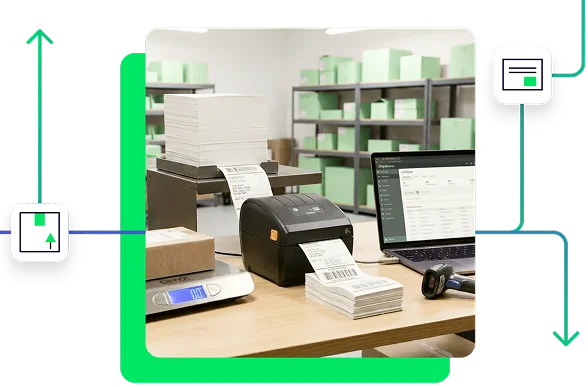
- Batch print shipping labels
- Automate repetitive shipping rules
- Track shipments in one view
About
Standard Forwarding is a freight transportation name associated with regional LTL and logistics services in the US. Searchers usually associate it with Midwest trucking operations and palletized freight for businesses that need more than basic parcel shipping.
If Standard Forwarding fits part of your lane mix, ShipStation gives your team a cleaner way to manage the work around it. You can keep freight and parcel activity in one shipping hub, compare options before you book, print labels in batches, and stay on top of shipment status without bouncing between scattered tools.
That kind of control matters when your team is balancing cost, speed, and day-to-day output. ShipStation cuts manual work with automation, helps you keep shipping choices organized, and supports growing operations with 200+ store and marketplace integrations plus 200+ global carrier integrations. So even if Standard Forwarding is only one part of your freight plan, your workflow stays simple, flexible, and ready to scale.
Why Standard Forwarding users choose ShipStation
Move beyond basic shipping tools with ShipStation
TESTIMONIAL
Find the best rate for every shipment
Compare rates, delivery speeds, and services side-by-side for every order that comes in from Shopify, and let ShipStation pick the best option—with up to 90% discounted rates across 200+ carriers.
ShipStation AI
Next-gen shipping intelligence
- SmartFill
- Automated Order Creation
- Universal AI Connect (MCP)
- Batch Label Processing
- Auto-PRO Retrieval
- Dynamic Spot-Pricing Engine
- Packing Recommendations
- 24/7 Always-On
Sign up for a free trial. No credit card required.
FAQ
Standard Forwarding FAQ for freight shipping and carrier details
What kind of shipping service was Standard Forwarding known for?
Standard Forwarding is generally described as a freight transportation and logistics company tied to less-than-truckload, or LTL, shipping. That means it was associated with palletized business freight rather than small consumer parcels. If your team ships larger, heavier, or multi-piece commercial loads, that is the kind of workflow people usually mean when they search for Standard Forwarding.
Was Standard Forwarding a national freight forwarder or a regional LTL carrier?
Search results most often frame Standard Forwarding as a regional LTL carrier with Midwest freight roots, not as a coast-to-coast parcel network. That matters when you plan coverage, transit expectations, and carrier backups. For shippers, the practical takeaway is simple: check lane fit first, then compare that option against other freight choices inside the same shipping workflow.
Is Standard Forwarding the same as Standard Forwarding Freight or Standard Forwarding LLC?
Search results often mix several similar names, including Standard Forwarding, Standard Forwarding Freight, and Standard Forwarding LLC. Some records also connect those names to older ownership or branding references. Before you book freight, match the exact legal entity, operating status, and service area to the shipment you need to move, because similar names do not always point to the same business record.
What should you know about Standard Forwarding's current status?
Search results around Standard Forwarding often point to older records, ownership changes, and suspension notices. That is why shippers should treat the name as one that needs verification, not assumption. Before you tender freight, confirm that the carrier you mean is currently available for your lane, that the quote is current, and that the legal name on the paperwork matches the carrier record you reviewed.
What regions did Standard Forwarding serve?
Search results commonly describe Standard Forwarding as Midwest-focused, with service tied to Illinois, Indiana, Iowa, Minnesota, and Wisconsin. That points to a regional freight footprint rather than broad national parcel coverage. If your freight moves in or around those states, ShipStation helps you keep that carrier choice visible alongside your other shipping options instead of managing each one in isolation.
What is the difference between standard shipping and freight delivery?
Standard shipping usually means small-parcel service for boxes that move through parcel networks. Freight delivery usually means heavier, bulkier, or palletized shipments that need dock scheduling, different documents, and more carrier planning. If your team handles both, ShipStation is valuable because it keeps shipping work organized across modes instead of forcing parcel and freight into separate routines.
Why do some Standard Forwarding results mention DHL?
Some search results and registry references tie Standard Forwarding to DHL-related freight history or older business records. That can confuse shippers who are trying to figure out whether they are looking at the right carrier. The safest move is to verify the current entity name and operating details on the exact record you plan to use, rather than relying on a search snippet alone.
Where can you verify federal motor carrier records for Standard Forwarding?
Use the Federal Motor Carrier Safety Administration SAFER system when you need formal carrier details. Please note that registry pages can surface extra fields that add confusion, such as terminal references like East Moline or equipment counts such as power units. Before you move freight, check these basics:
- Exact legal company name
- Federal motor carrier operating status
- Authority and registration details
- Service address and region served
- Whether the record matches your quote or paperwork
**Tip:** Keep a saved copy of the carrier record your team used for booking so dispatch, billing, and receiving all work from the same details.
Related integrations
A. Duie Pyle
Grow freight without growing chaos. ShipStation and A. Duie Pyle give your team one place to compare rates,…
AAA Cooper Transportation
Give your freight team one faster, cleaner way to ship. With AAA Cooper Transportation in ShipStation, you can…
APC Overnight
Grow your UK shipping without adding more admin. With APC Overnight in ShipStation, you can compare carrier options,…