Back
Back










































This UK Dollhouse Retailer Boosted Shipping Volume 30% with the Right Ecommerce Shipping Solution


Minimum World: Tiny details, big ambitions
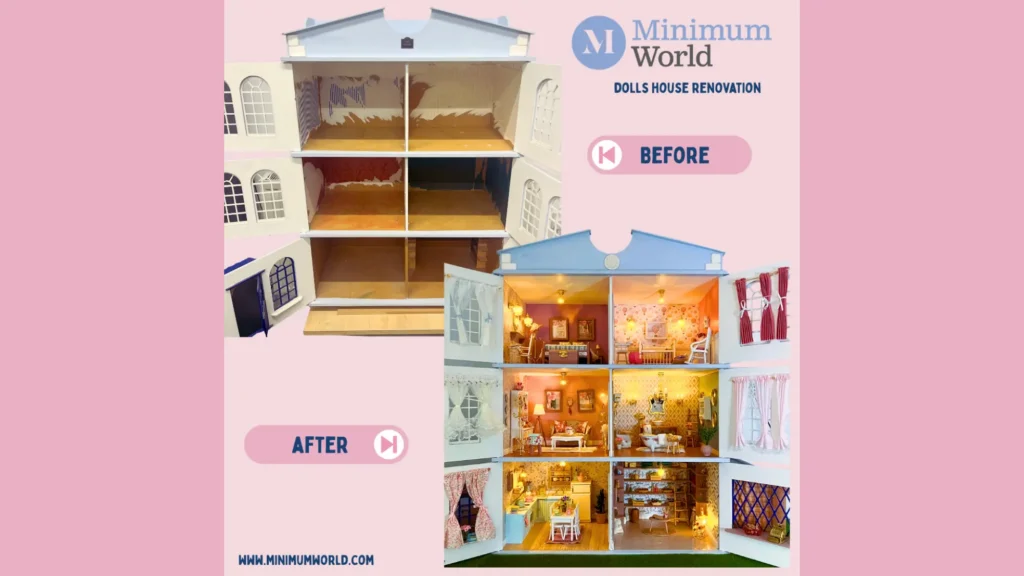
Somewhere in Norfolk, England, there’s a staff room with a custom-built dollhouse on display. It’s not a toy—it’s a family heirloom, the kind of piece that takes hundreds of hours and an obsessive eye for detail to get right. Every hinge, every bannister, every impossibly small teacup is crafted to 1:12 scale, and if you look closely enough, you’ll understand why adults around the world have turned this hobby into a lifelong passion.
That dollhouse belongs to Rachel Read, whose mother Karen bought Minimum World—one of the UK’s leading dollhouse miniatures retailers—in 2010. And it’s a fitting symbol for a business where the details matter just as much as the big picture.
Since 2001, Minimum World has been supplying collectors with meticulously crafted miniatures, building a fiercely loyal customer base that spans continents. The company’s core demographic is predominantly women over 65, though Hannah Read, Buyer at Minimum World and Karen’s youngest daughter, has noticed a generational shift in recent years as younger hobbyists discover the craft.
“The hobby is a happy escape for a lot of our customers,” Read said. “Especially over Covid, we were a lifeline for a lot of older customers who were isolating alone. The miniature hobby kept them busy, and we had an influx of customer emails just wanting a chat. A lot of those customers we still email to this day for a catch up.”
It’s that personal connection—the emails, the shared photos of finished rooms, the community that forms around a niche passion—that sets Minimum World apart. But as the business grew from a small UK operation into one shipping to roughly 15 countries, the team realized their manual processes couldn’t keep up with demand.
A family affair across generations
Minimum World has changed hands twice since its founding, but it’s never lost its family feel. Karen Read bought the business in 2010 alongside her daughter Rachel, who’d grown up working on that custom dollhouse with her mother. In 2013, Karen sold to the current owners, Ben and Kate Griffiths—but with the Griffiths based outside of Norfolk, the Read family remains very much at the helm. Karen has since semi-retired, Rachel manages the day-to-day, and her youngest daughter Hannah has joined the team as well.
The business’s trajectory shifted quickly under the Reads’ stewardship.
“When Karen bought the business in 2010, the majority of orders were getting shipped within the UK,” Read said. “Within a year, our overseas customers grew rapidly, especially our US trade—making up almost half our orders and customer database!”
Suddenly, a business built on intimate customer relationships needed an ecommerce shipping solution that could match its global ambitions.

When spreadsheets couldn’t keep up
For years, Minimum World’s dispatch process was largely manual. Domestic orders were straightforward enough—pack the order, generate a label through click-and-drop or a courier portal, and send it on its way. But international shipments were a different story entirely.
“Back in the day before ShipStation, to dispatch parcels overseas, we used to send spreadsheets with vast information on to DHL,” Read explained. “This took hours a week and was done by management, which meant the packers were only generating labels for the UK.”
For Tom West, the company’s Technical Ecommerce Manager, the problem boiled down to one thing—processing high volumes of orders across multiple courier portals simply took too long. With a small dispatch team of four to five people, every hour spent on manual data entry was an hour not spent serving customers.
The breaking point came when Minimum World decided to re-platform its website to Magento 2 in 2021. The old shipping system would no longer be compatible, and the team saw an opportunity to modernize their entire IT infrastructure in one go.
“We were recommended ShipStation as a Magento 2-compatible partner, which at the time had three out of four of our current shipping couriers already integrated,” West said.
Today, ShipStation has integrated all of Minimum World’s carriers in the platform.

From hours of admin to the click of a button
The onboarding process was smooth. West described it as excellent, with no significant issues getting up and running.
“ShipStation provided an automated solution with our current couriers already integrated,” West said. “It improved our dispatch process and shipping times.”
The impact on day-to-day operations was immediate. What had previously been a slow, manual dispatch process became streamlined and largely automated. The team could now handle international orders that once required management involvement and hours of spreadsheet preparation directly from the packing desk.
“When we integrated with ShipStation, the ease of shipping parcels overseas became a much quicker process—a click of the button for the packers and the label was printed. No more spreadsheets for us to send!”
Hannah Read, Buyer, Minimum World
West pointed to a 30% increase in daily shipping volume as a direct result of the improved efficiency. And with ShipStation’s customs information imported into the product grid, the team eliminated one of their biggest operational headaches: the long, manual process of booking international orders.
“We can now do this straight from the packing desk,” West said.

Seeing the bigger picture with ShipStation Analytics
For a business with ambitions to grow its global presence while maintaining UK market dominance, visibility matters. West highlighted ShipStation’s Analytics as one of his favorite features, giving the team a comprehensive view of every touchpoint in the fulfillment process across all their integration platforms—whether through pre-built dashboards or custom views tailored to the data that matters most to their business.
“With ShipStation Analytics, we can visually see on the generated maps our most shipped-to locations,” he explained. “This gives us an idea of how many orders we are sending domestically and internationally across all of our integration platforms.”
For Minimum World, that kind of visibility isn’t just a nice-to-have—it’s how the team makes informed, data-driven decisions about where to focus their international growth efforts.
Comparing rates without leaving the platform
DHL remains Minimum World’s preferred carrier, largely because of live rate estimation before label confirmation. For a company that regularly quotes multiple carriers for the best price on large international shipments, having that pricing visibility within ShipStation Rate Shopper—rather than switching over to a separate courier platform for a direct quote—saves valuable time.
“ShipStation modernized our manual processes with a stress-free solution.”
Tom West, Technical Ecommerce Manager, Minimum World
ShipStation’s tracking and email notification features have also improved the customer experience, keeping Minimum World’s loyal community informed about their orders without requiring additional manual effort from the team.

Built for busy periods
Peak seasons are a reality for any ecommerce business, and Minimum World is no exception. During high-volume periods, ShipStation has allowed the team to prioritize orders based on dispatch times, better manage staff scheduling, and provide visible improvements in order management for customers.
For Minimum World, the platform hasn’t just modernized shipping—it’s freed the team to focus on what they do best: nurturing a passionate community of miniature enthusiasts who rely on the business for far more than just products.
“The dollhouse hobby acts like a community hub,” Read said. “So it’s important for us to use our social media platforms to engage and interact with our customers by sharing their work or generating inspiration for them.”
With ShipStation handling the logistics and analytics, the Minimum World team can keep doing exactly that. It turns out the right shipping platform can make a big difference—even for a business that specializes in the very, very small.
If spreadsheets and courier portals are slowing down your shipping, there’s a better way. Try ShipStation free.