

































Ecommerce international shipping that scales with your store
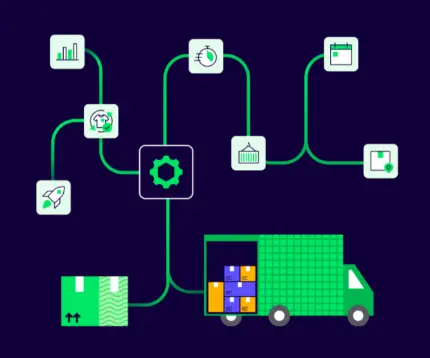
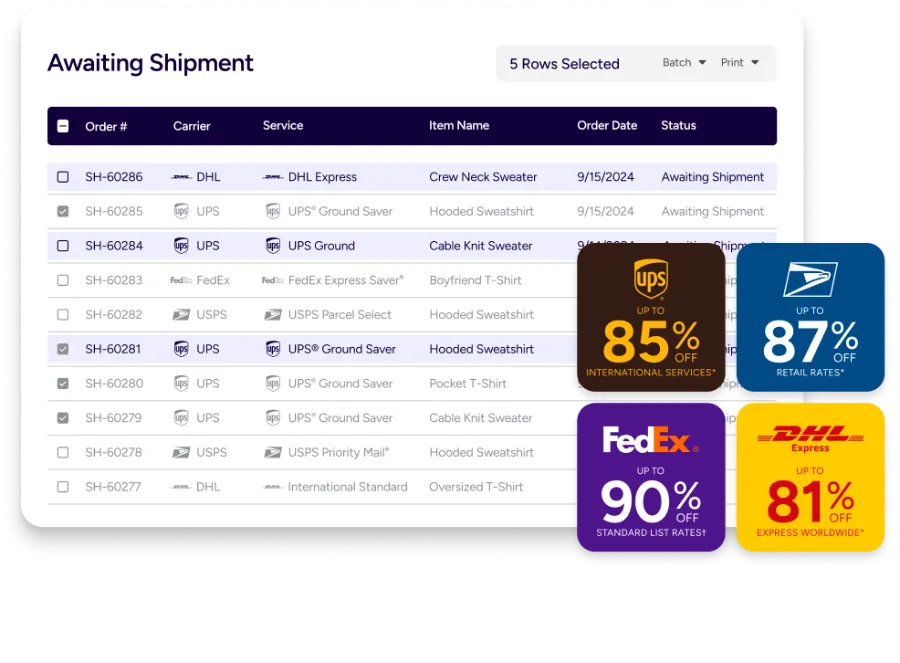
Ecommerce international shipping shouldn’t force you into five tabs and a dozen manual checks. ShipStation brings your orders, labels, customs details, and tracking into one fast workflow. Rate shop across USPS®, UPS®, FedEx®, and DHL Express® and keep your brand front and center from checkout to delivery.
Driving fulfillment for the world’s leading brands
What is ecommerce international shipping and how ShipStation simplifies it
It’s the full flow of selling, labeling, declaring, and tracking orders across borders. ShipStation turns that flow into a repeatable system, so you can ship globally with less guesswork and more control.
Challenges of cross border ecommerce fulfillment, solved with one workflow
How to ship products internationally from an online store
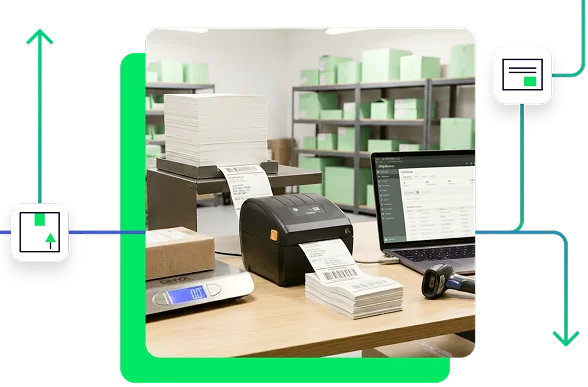
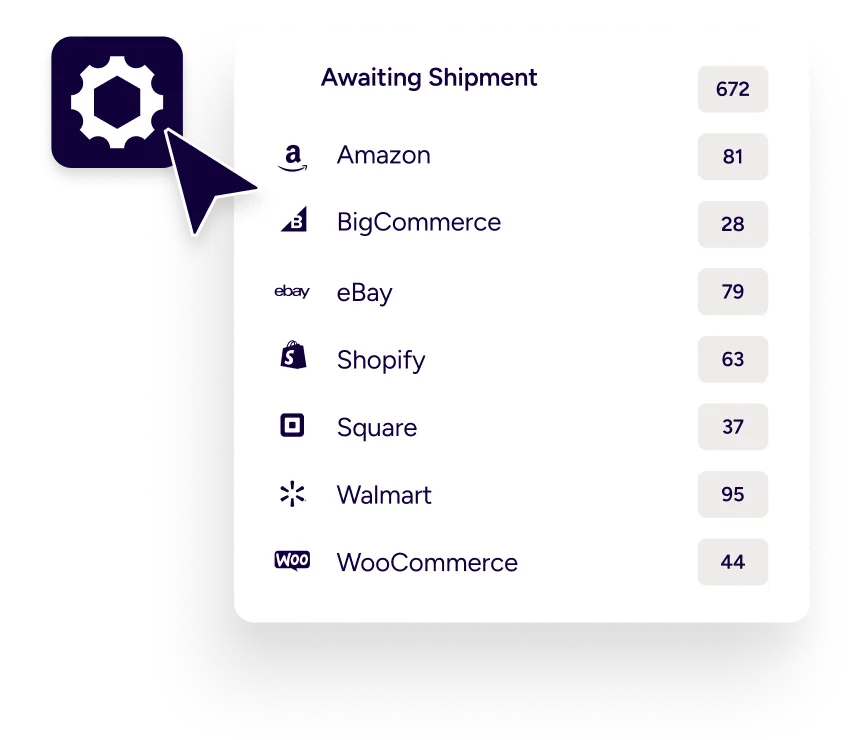
Start with your channels. ShipStation integrates with Shopify, WooCommerce, BigCommerce, Amazon, eBay, Etsy, and Walmart, so orders import automatically. Pick, pack, and print in batches with presets and scan-to-ship tools. Your team moves faster. Your process stays consistent, even when volume spikes.
Compare international shipping carriers and rates
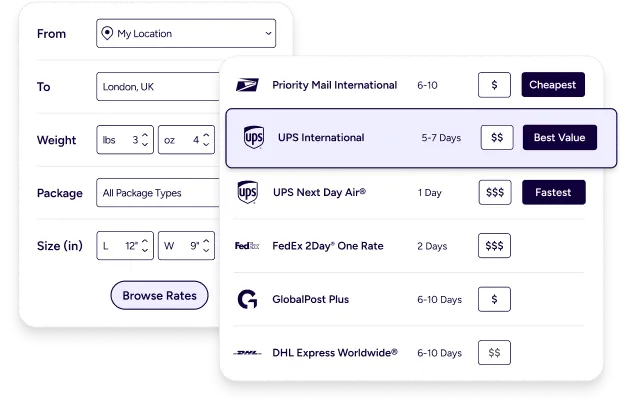
Build a multi carrier global shipping strategy without juggling portals. In ShipStation, you can compare services across major carriers and pick what fits each order. Use automation rules to match service to destination, weight, or order tags. That’s a scalable cross border fulfillment infrastructure that supports both DTC and B2B shipping needs.
Managing duties taxes and customs workflows
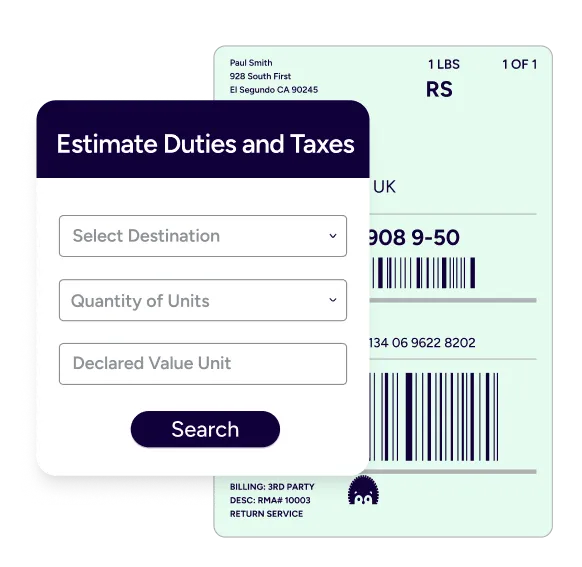
Duties and taxes can surprise you and your customer at delivery. ShipStation helps you automate customs documentation workflows by storing product-level customs info like descriptions and harmonization codes. For more cost clarity, use ShipStation’s Guaranteed Prepaid Duties and Taxes capability on eligible shipments, so you can see duties and taxes at label purchase time and help avoid delivery-day fees with Delivered Duty Paid (DDP) workflows.
Automate cross border order fulfillment
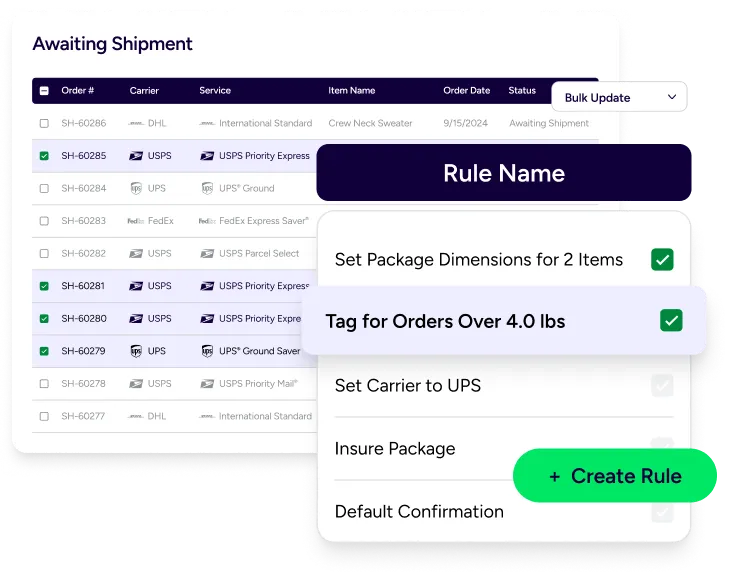
Rules do the sorting. Set automation for shipping service, package type, confirmation, split shipments, and more. You can also use service mapping when you need service choices to scale across many products and order types. This is enterprise international shipping automation power, built in a UI that still feels simple for a growing team.
Scaling international shipping operations
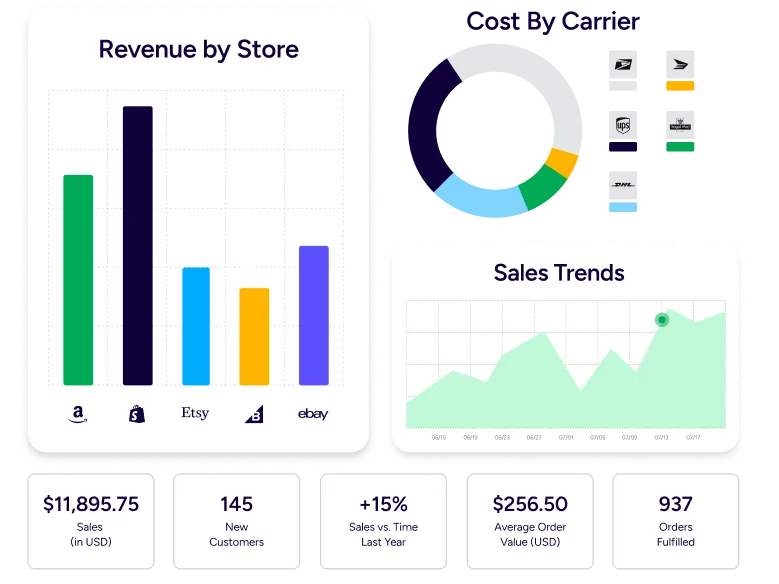
When you add countries, you add pressure. ShipStation is built to keep up: batch label printing for daily waves, mobile app tools for shipping on the go, and reporting that shows cost and carrier performance trends. Add inventory management to prevent oversells across channels. Put it together and you get global ecommerce expansion logistics tools that support growth without adding chaos.
Expanding ecommerce into global markets
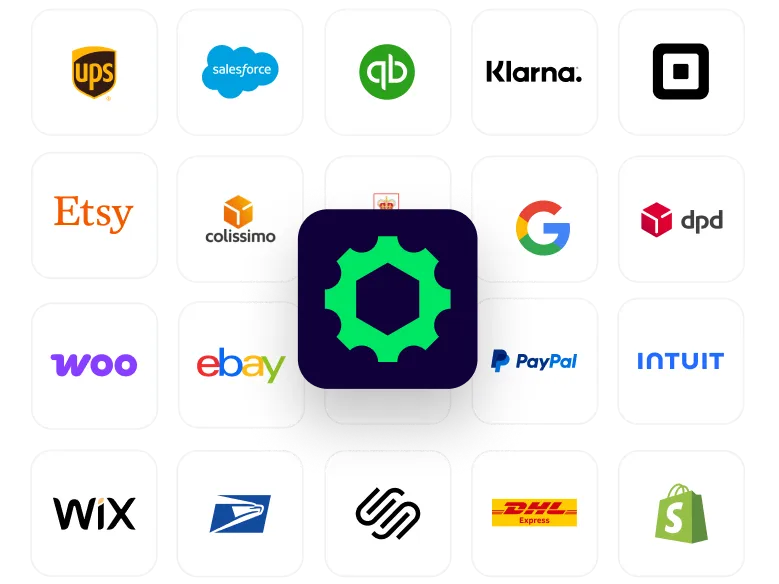
Global growth works best when shipping is predictable. With ShipStation’s huge library of integrations, you can connect the selling channels and tools you already use, route international orders into one workflow, and scale into new markets faster. Keep buyers informed with branded tracking, then tighten the experience with returns management that protects revenue and loyalty. Need landed cost clarity? Use supported integrations to bring those orders into ShipStation and apply DDP rules where eligible. That’s practical ecommerce export fulfillment solutions, ready for your next market.
RELATED CONTENT
Helpful Shipping Resources
Browse additional articles, guides, and insights related to shipping and fulfillment. These resources provide practical advice and best practices to support your day-to-day operations.
Try us free
What you can look forward to in your 30-day free trial:
Get instant access to all of our features


Connect to over 400 integrations
See how much our rates can save you on shipping
Create your ShipStation account
Ecommerce international shipping FAQs for growing teams
What is ecommerce international shipping?
It’s the end-to-end process of fulfilling online orders across borders, including labels, customs info, and tracking. The goal is simple: deliver fast, keep costs controlled, and avoid surprises.
What are the biggest challenges of cross border ecommerce fulfillment?
The hard parts are usually rate changes, customs paperwork, duties and taxes, and uneven tracking updates. A tool that centralizes the workflow helps you reduce errors and stay consistent.
How does ShipStation support multi carrier international shipping management?
You can connect carrier accounts and then rate shop in one screen. That makes it easier to choose services that match delivery goals and cost targets, order by order.
Can I automate customs documentation workflows in ShipStation?
Yes. You can store customs details at the product level, like a short description, declared value, and harmonization code. Those details can then flow into international shipments to speed up label creation.
How do prepaid duties and taxes help my customer experience?
Prepaid duties and taxes can reduce delivery-day fees and friction. With ShipStation’s cost transparency at label purchase time on eligible DDP shipments, you can set clearer expectations and protect your brand.
How do I optimize global delivery strategies for ecommerce brands?
Use automation rules to standardize decisions, and use rate shopping to keep options open. Pair that with branded tracking and clear returns flows, and you’ll improve visibility while you scale.
One place for your business
Begin a free trial to see what’s possible with ShipStation.