Back
Back











































How The Soccer Archive Keeps Up With World Cup Demand, One Vintage Jersey at a Time


A World Cup summer doesn’t creep up, it erupts. Flags show up in windows that never had them before. National colors flood the streets on strangers who couldn’t tell you the offside rule the rest of the year. Old songs get sung again, old rivalries reheat, and shirts that have sat quietly in a drawer for 20 years suddenly matter again. For a shop that sells nothing but vintage football jerseys, that eruption isn’t background noise, it’s the entire season. Order volume can climb as much as 500% on the biggest match days, and the energy on the shop floor matches it—loud, packed, and a little bit electric.
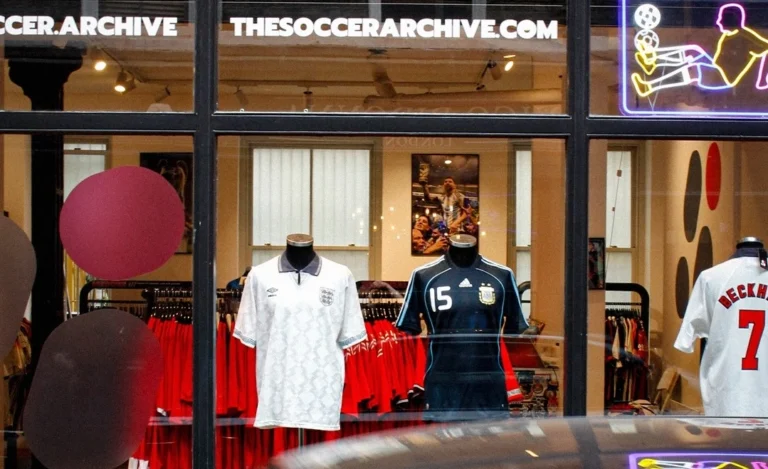
Rob Armin has built The Soccer Archive to run on exactly that kind of energy. He’s spent 20 years in the vintage football shirt business, 13 of them working for one of his biggest competitors before deciding to build something of his own. Five years ago, he and a former colleague launched the company. Today it runs a warehouse and store in Manchester, a store in Soho, London, and a store in Milan, shipping vintage jerseys to fans across the UK, Italy, the US, South Korea, and beyond.
For Armin, the business was never just a business.
It just became a job from passion. It became a job, and now it’s a business.
Rob Armin — Founder
The Soccer Archive
That passion shows up in the smallest details, like the France 2011 shirt he still owns himself, or the loyal customer in Dubai who buys every Will Grigg jersey the shop can find, just because he’s decided to support a cult hero from Northern Ireland.

Building shipping right from day one
Armin already knew what good shipping software looked like. His former employer, where he spent 13 years before setting out on his own, ran on ShipStation. So when he and a former colleague built The Soccer Archive’s website, they briefly pieced shipments together through individual courier sites, Royal Mail, DHL, FedEx, keying in the same details for every order. It didn’t last long.
Knowing exactly what worked, the new company moved onto ShipStation almost as soon as the site went live, pulling orders straight from Shopify instead of juggling separate carrier platforms. It’s a decision that’s paid off as the business has scaled from its first sale to a standard 80 to 90 orders a day today.

Shipping automation that handles the complexity so his team doesn’t have to
Running stores and warehouses in both the UK and Italy adds a layer most retailers never have to think about: two separate carrier accounts, one per country, that every order needs to route through correctly. Shipping automation in ShipStation handles that routing behind the scenes, so an order fulfilled from the Milan warehouse automatically goes out on the Italian FedEx account, while a UK order uses the UK account, with no manual sorting required.
With automation, it doesn’t matter what courier or where something’s going, the information’s in the same place, and it’s just muscle memory for the guys.
Rob Armin — Founder
The Soccer Archive
Without it, he estimates his small dispatch team would need three times as long to get through the same volume of orders.
The savings extend to cost, too. Before finalizing a shipment, Armin can compare carrier prices instantly, switching from one courier to another with a single dropdown change and catching savings of £15 or more on a single package. Multiplied across dozens of orders a day, those small comparisons add up.
When the World Cup hits, the numbers move fast
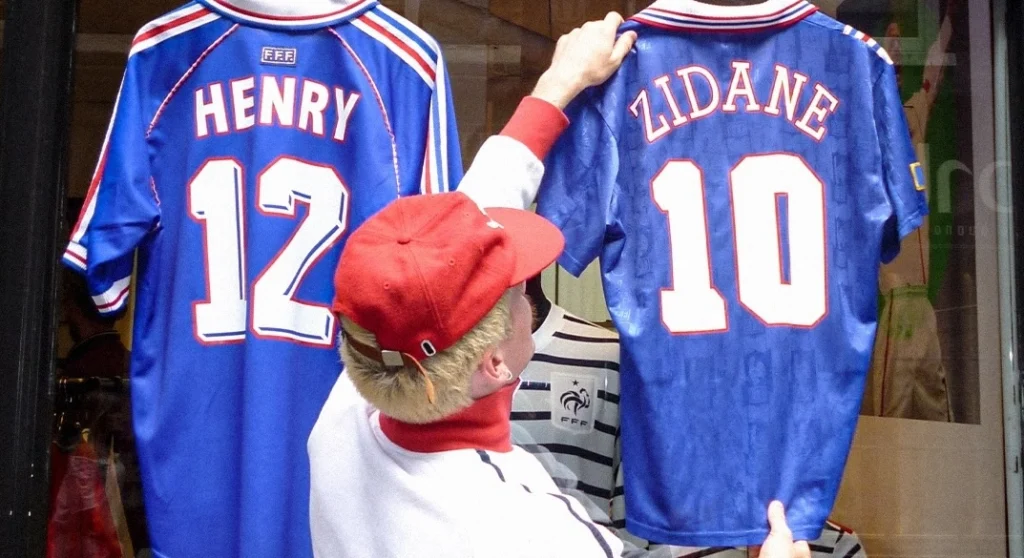
Tournament summers test every part of Armin’s operation. Orders for competing nations start climbing months before kickoff and keep building as the tournament goes on. On a typical World Cup day, that’s a 100% jump in order volume. On the biggest match days, daily orders climb from a standard 80 to 90 up toward 200.
Shipping automation is what keeps that surge from turning into chaos. The same rules that route orders between UK and Italian carrier accounts on a quiet Tuesday still hold up when volume spikes overnight. Armin’s team can focus on getting jerseys out the door, not on figuring out which carrier account each order should use.
There’s a human side to that speed, too. Every jersey The Soccer Archive ships carries some kind of story: a shirt tied to a specific match or player a fan remembers, a national team jersey headed to a diaspora community abroad, or a vintage find that feels more meaningful than anything off a shelf today. Fans buying vintage are often chasing a memory attached to a particular shirt, or choosing a piece of history over something that will end up in a landfill within the year. Getting that jersey into their hands quickly, especially during a tournament, is part of what makes the moment land.
Built to grow with the business
The Soccer Archive has grown from a two-person startup to a company with three retail locations and a customer base that spans the globe. Shipping automation has been part of that growth from the start rather than something bolted on later.
ShipStation just takes care of that process, really. You go on, you refresh your orders, and with a few clicks of a button, the order’s gone.
Rob Armin — Founder
The Soccer Archive
As The Soccer Archive keeps expanding, that same shipping automation gives Armin’s team room to grow without adding complexity—whether that’s a busier tournament summer or a new store on the horizon.
Ready to see what shipping automation can do for your growing business? Start shipping with ShipStation today.