Back






































Apps & Tools
Integrate iPaaS.com With Your Shipping Software
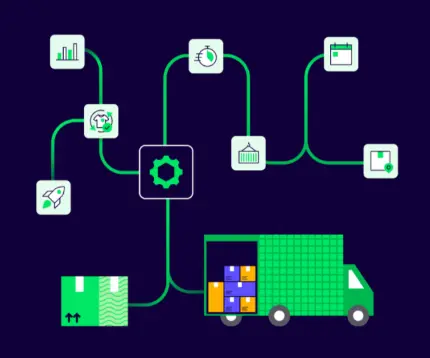
Build a smarter fulfillment engine for every order you ship. Pair iPaaS.com and ShipStation to move data across ecommerce, ERP, warehouse, and order management systems, cut manual work, automate shipping decisions, and keep tracking updates flowing back to the tools your team already uses.
Key integration features
- Route orders across systems
- Map fields without custom code
- Sync tracking to source records
- Automate shipping rules at scale
- Monitor data flows with visibility
About
iPaaS.com is an integration platform built on standards for businesses that need cleaner data movement across multiple systems. It uses a hub-and-spoke model and is known for certified integrations, pre-built templates, low-code flexibility, API-first control, and visibility into how data moves across your stack.
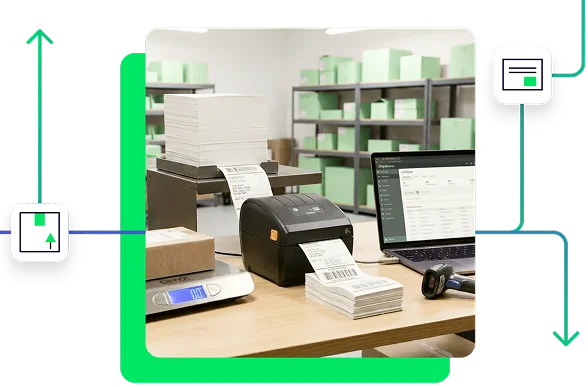
When your business runs on more than one tool, fulfillment gets messy fast. Orders move through ecommerce platforms, ERP systems, POS tools, CRM records, warehouse management systems, and order management systems. Then someone has to keep that flow accurate. ShipStation gives you one place to manage shipping, labels, tracking, returns, and automation while iPaaS.com helps shape the data flows around that work.
That combination helps reduce manual handoffs across your supply chain. Your team spends less time rekeying details, checking status in multiple systems, or cleaning up bad syncs after the fact. Instead, you get stronger control over shipping data, better visibility into what changed and where, and more flexible integration capabilities as your business adds channels, warehouses, or new back-office tools. It's a cleaner path than patching together legacy connectors every time your workflow changes.
Why iPaaS.com users choose ShipStation
Move beyond basic shipping tools with ShipStation
TESTIMONIAL
Find the best rate for every shipment
Compare rates, delivery speeds, and services side-by-side for every order that comes in from Shopify, and let ShipStation pick the best option—with up to 90% discounted rates across 200+ carriers.
ShipStation AI
Next-gen shipping intelligence
- SmartFill
- Automated Order Creation
- Universal AI Connect (MCP)
- Batch Label Processing
- Auto-PRO Retrieval
- Dynamic Spot-Pricing Engine
- Packing Recommendations
- 24/7 Always-On
Sign up for a free trial. No credit card required.
FAQ
ShipStation iPaaS.com frequently asked questions about real-time data, pre-built connectors, and API workflows
What is iPaaS, and why does it matter for ShipStation users?
iPaaS stands for integration platform as a service. In plain terms, it gives your business a structured way to move data between the systems you already rely on instead of leaving each app to operate on its own island.
For ShipStation users, that matters because shipping rarely lives alone. Order details may start in ecommerce platforms, pass through ERP systems or order management systems, touch warehouse management systems, and then come back with tracking, status, and cost data. iPaaS.com is built to support that bigger picture with a standards-based integration platform, low-code tools, pre-built templates, customizable data maps, and API-first controls. ShipStation becomes the fulfillment engine inside that workflow, while iPaaS.com helps keep the surrounding data flows organized, visible, and easier to change as your business grows.
Which systems can work alongside ShipStation in an iPaaS.com workflow?
iPaaS.com is designed for businesses that need data to move across several business systems, not just one storefront and one shipping screen. That makes it relevant for teams with more complex supply chain and back-office needs.
Common categories around ShipStation include:
- ERP systems for operational records and finance
- CRM tools for customer history and service visibility
- POS systems for in-store or hybrid order capture
- Order management systems for routing and fulfillment logic
- Warehouse management systems for picking, packing, and inventory control
- Ecommerce platforms and loyalty tools for front-end selling and customer engagement
ShipStation adds shipping execution to that mix. It supports 200+ store and marketplace integrations, 200+ global carrier integrations, and 400+ total integrations, so shipping doesn’t have to stay trapped inside a single sales channel or carrier account.
How do pre-built connectors compare with legacy or custom integration work?
Pre-built connectors shorten the path from idea to working workflow. Instead of starting every sync from scratch, your team begins with a framework that already understands common business patterns, then adjusts the details that matter to your operation.
That’s a big shift from legacy or point-to-point integration work. Older connectors often become hard to maintain because each change creates another dependency. Fully custom projects can solve that for a while, but they usually add more developer reliance, more testing cycles, and more upkeep each time your stack changes. iPaaS.com is built around pre-built templates, low-code configuration, customizable maps, and API flexibility, which makes change easier to manage. Pair that with ShipStation, and your team can reduce manual fixes, keep fulfillment moving, and avoid rebuilding shipping-related data flows every time a new store, warehouse, or process comes online.
Can iPaaS.com support ERP, OMS, POS, and warehouse management systems alongside ShipStation?
Yes. iPaaS.com is built to work across multiple business system categories, including ERP systems, CRM tools, POS systems, PIM tools, ecommerce platforms, loyalty tools, and more. That makes it a strong fit for operations that need ShipStation to work within a broader fulfillment and supply chain process.
In practice, that means ShipStation can sit at the shipping layer while surrounding systems handle their own jobs:
- ERP systems can stay focused on business records
- Order management systems can drive routing and exception handling
- POS systems can feed order data into fulfillment workflows
- Warehouse management systems can support picking, packing, and inventory control
That structure helps reduce manual steps between teams and gives you clearer ownership of where data starts, where it changes, and where it needs to land next.
Where does an API fit if your team needs more flexibility?
An API fits when your team wants low-code speed for most workflows but still needs room for deeper control, custom logic, or system-specific behavior. That’s one reason iPaaS.com describes itself as API-first rather than low-code only.
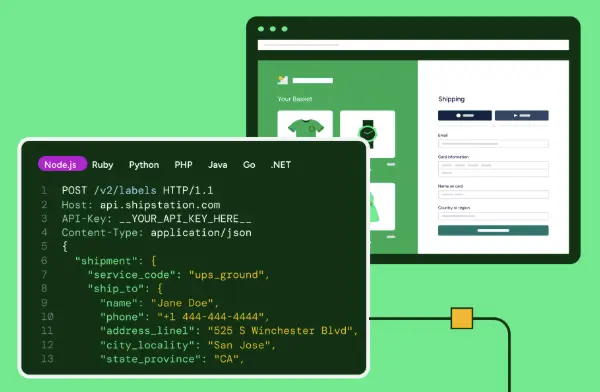
ShipStation API expands what your connected workflow can do behind the scenes. It supports label creation, rate shopping, rate estimates, package tracking, tracking webhooks, delivery predictions, and worldwide address validation. That gives technical teams more ways to shape the exact data they want to send to dashboards, customer notifications, service tools, or internal ops flows. The result is a better balance: business teams can automate workflows without waiting on a fresh custom build for every change, while technical teams still have the flexibility to extend the process when standard templates are not enough.
Is there a case study or example workflow for ShipStation and iPaaS.com?
Yes. iPaaS.com includes Memphis Drum Shop as a named customer, and it also presents the broader value of moving business data through one governed integration layer instead of relying on disconnected handoffs.
A simple example workflow looks like this:
- An order enters through one of your ecommerce platforms or POS tools
- Business records update inside your ERP or order management system
- ShipStation handles label creation, carrier choice, and shipment tracking
- Tracking numbers, shipment status, and service details flow back to the source system
- Customer-facing teams see the same shipping picture without checking separate tools
That kind of workflow matters because it cuts down on re-entry, reduces status chasing, and keeps shipping from becoming a blind spot inside the rest of your operation.
Does ShipStation update your selling channel after you create a label?
Yes. ShipStation automatically sends a shipment notification to your selling channel as soon as you create the label. That update includes the order number, shipping service, and tracking number.
If your team wants a different timing for marketplace notifications, ShipStation lets you adjust that behavior in each store’s notification settings. For example, a marketplace update can go later in the process when the package enters the mail stream. You can also disable marketplace notifications on an individual order when needed. That gives your team tighter control over outward-facing updates without adding more manual follow-up work.
How does real-time data help reduce the risk of sync errors?
Real-time data improves visibility. When your team can see how shipping information moves through multiple systems, problems are easier to catch before they create customer service issues, bad records, or fulfillment delays.
For businesses using iPaaS.com with ShipStation, that matters in several ways:
- Data transfers are easier to monitor across multiple systems
- Tracking and shipment status updates do not stay trapped in one tool
- Teams spend less time checking separate screens for the same answer
- Alerts, retries, or intervention points are easier to build into the workflow
ShipStation also supports tracking updates through webhooks in the API, and it automatically sends shipment notifications to selling channels when labels are created. Together, that supports stronger real-time data synchronization and gives you a clearer path to reduce the risk of silent failures.
What fulfillment work can ShipStation automate for iPaaS.com users?
ShipStation automates the repetitive shipping work that usually slows teams down once order volume starts climbing. That includes rule-based decisions, label workflows, and operational steps that don’t need hands-on review every time.
ShipStation’s Automation Overview page acts as a central place to discover, enable, and manage automation tools. Automation Rule Templates give you pre-built workflows based on common merchant needs, and each template is customizable. You can modify conditions, actions, and settings to match how your business operates without needing technical experience. The payoff is concrete: ShipStation automation cuts clicks per order by 40%, lets merchants create up to 15x more labels per hour, and drives up to 100% fewer shipping errors. For iPaaS.com users, that means cleaner downstream data because shipping decisions become more consistent.
Can ShipStation manage returns for businesses using iPaaS.com?
Yes. ShipStation includes branded, self-service returns and exchange workflows that let customers help themselves while your team keeps tighter control over the process. That matters for businesses that want returns to feed back into the rest of their operation instead of turning into a separate manual queue.
ShipStation’s returns portal supports a smoother post-purchase experience, and real-time inventory checks help exchanges move forward with less friction. The operational impact can be major. In one customer example, return handling time dropped by 50%, from 15 minutes to under eight minutes per return. When returns data needs to travel across customer service, fulfillment, inventory, and finance workflows, that kind of structure helps the whole business stay better aligned.
Can ShipStation keep inventory aligned across multiple channels?
Yes. ShipStation supports inventory sync across 10+ channels every hour, which helps businesses avoid overselling and keep stock data more current across the places they sell. For teams juggling storefronts, marketplaces, and warehouse activity, that kind of alignment matters.
ShipStation also supports barcode scanning that drives 99%+ inventory accuracy across physical and digital counts by removing manual entry errors. Merchants use inventory sync settings, including buffer stock, to prevent overselling, and Scan to Receive helps cut receiving time by an average of 10 hours a month. If your business uses iPaaS.com to coordinate data across multiple systems, ShipStation gives that broader workflow stronger inventory discipline at the fulfillment layer.
Can ShipStation API support international shipping and address validation in connected workflows?
Yes. ShipStation supports shipping to over 195 countries and gives businesses access to 200+ global carrier integrations. That creates room for cross-border workflows without forcing your team to manage international shipping as a separate operating model.
On the API side, ShipStation supports address validation for virtually every country on Earth, including the US, Canada, Great Britain, Australia, Germany, France, Norway, Spain, Sweden, Israel, and Italy, plus more than 160 others. That helps connected workflows catch address issues earlier and gives teams more confidence before labels are created. If your operation uses iPaaS.com to route order and shipment data across multiple systems, that international coverage helps keep global fulfillment from becoming a manual exception process.
Related integrations
Acumatica
Build a stronger fulfillment engine for your business with the ShipStation Acumatica integration. Pair Acumatica with ShipStation to…
AIMS360
Turn fulfillment into a growth engine for your AIMS360 business. Pair AIMS360 with ShipStation to organize shipping around…
AmeriCommerce
Unlock a faster, more scalable fulfillment engine for your AmeriCommerce business. Connect AmeriCommerce to ShipStation to bring orders…