Back





































Apps & Tools
Integrate Make With Your Shipping Software
Build a sharper, faster fulfillment engine for your business. Use Make with ShipStation to centralize shipping work, automate repetitive steps, compare carrier options, create labels at scale, and keep tracking, returns, and post-purchase updates moving in a cleaner workflow.
Key integration features
- Centralize orders across channels
- Automate repetitive shipping tasks
- Compare rates across carriers
- Send branded tracking updates
- Manage returns with more control
About
Make is an AI automation platform for teams that want to connect apps, data, and workflows in one place. It's known for visual workflow building, AI agents, broad app coverage, and clear visibility across automated processes.
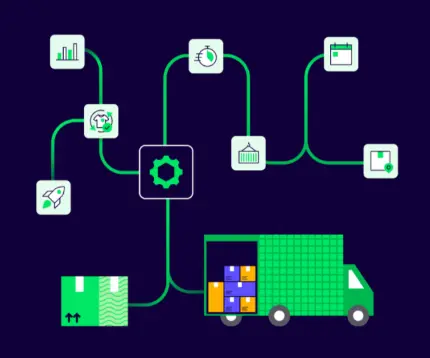
When you run Make with ShipStation, shipping stops being one more disconnected task your team has to chase down. ShipStation becomes the command center for fulfillment—giving you one place to manage orders, labels, carrier choices, tracking, and returns while Make supports the broader automation around your business.
That means less manual work, fewer handoffs, and more control when volume climbs. ShipStation supports over 1 million businesses, processes 1 billion packages annually, and gives you access to 200+ store and marketplace integrations plus 200+ global carrier integrations. Automation cuts clicks per order by 40%, creates up to 15x more labels per hour, and reduces shipping errors by up to 100%.
Why Make users choose ShipStation
Move beyond basic shipping tools with ShipStation
TESTIMONIAL
Find the best rate for every shipment
Compare rates, delivery speeds, and services side-by-side for every order that comes in from Shopify, and let ShipStation pick the best option—with up to 90% discounted rates across 200+ carriers.
ShipStation AI
Next-gen shipping intelligence
- SmartFill
- Automated Order Creation
- Universal AI Connect (MCP)
- Batch Label Processing
- Auto-PRO Retrieval
- Dynamic Spot-Pricing Engine
- Packing Recommendations
- 24/7 Always-On
Sign up for a free trial. No credit card required.
FAQ
ShipStation and Make FAQ for shipping automation, labels, carriers, and returns
What can I automate when I use Make with ShipStation?
The biggest win is taking repeat shipping work off your team’s plate. Make helps automate work across your stack, while ShipStation runs the shipping workflow itself.
With ShipStation in the middle of fulfillment, you can automate things like:
- Applying shipping rules to incoming orders
- Choosing carriers and services faster
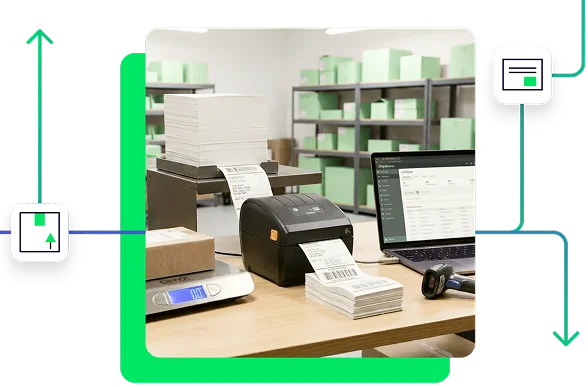
- Printing labels in bulk with batch printing
- Tagging orders for different fulfillment paths
- Sending branded tracking updates
- Routing returns through a self-service portal
That gives you one system for shipping execution instead of scattered manual steps across different tools. As volume rises, that kind of control matters more than ever.
Why use ShipStation with Make instead of a direct carrier connection?
Here’s the bottom line: a direct carrier connection gives you access to one carrier, while ShipStation gives you a multi-carrier shipping system your team can actually run day to day.
That matters when your workflow gets more complex. With ShipStation, you don’t have to build your shipping process around one carrier’s logic. You can manage labels, rules, tracking, returns, and carrier choice in one place. You also get access to 200+ global carrier integrations and 200+ store and marketplace integrations, which is a much stronger operating model for growing businesses using Make elsewhere in the business.
Does ShipStation support multi-carrier shipping for Make users?
Yes. ShipStation supports multi-carrier shipping, which is one of the biggest reasons growing teams use it alongside Make.
Instead of locking your workflow to one shipping provider, ShipStation lets you compare options across carriers such as UPS®, USPS®, FedEx®, and DHL Express. That gives your team more control over cost, service level, and destination needs inside one shipping workspace. It also helps when you ship across channels, serve different customer expectations, or need to shift carrier mix as your business grows. If shipping is part of a bigger automated workflow in Make, ShipStation gives that workflow a stronger shipping layer.
What is a shipping API, and when do Make users need one?
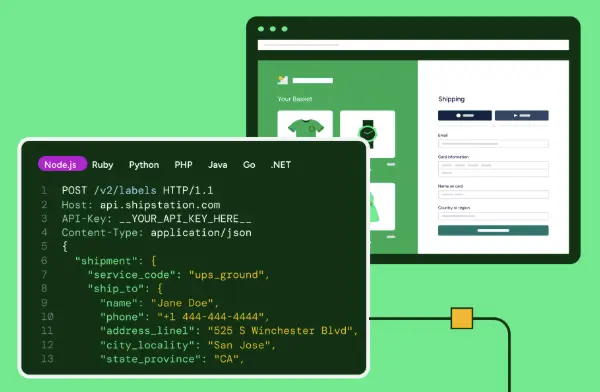
A shipping API is a way to build shipping functions into the systems your business already uses. Teams use it when they want shipping logic to happen inside their own software, warehouse system, marketplace, or checkout flow.
Not every Make user needs that level of buildout. Many teams need a shipping command center more than a custom development project. That’s where ShipStation fits. It centralizes daily fulfillment work, gives you broad carrier access, and lets your team automate operations without rebuilding the whole shipping stack. A shipping API makes sense when you have deeper custom product or engineering needs. For many operational teams, ShipStation is the faster path to control.
What's the cheapest way for Make users to create shipping labels?
The cheapest path usually isn’t buying labels one by one from a single carrier. It’s using a system that lets you compare options and standardize how your team buys labels.
ShipStation helps in three ways:
- It gives you access to discounted shipping rates
- It lets you compare carrier options in one place
- It automates shipping decisions so your team avoids costly manual choices
That mix matters more than chasing one-off prices. A low label price means less if your team is spending extra labor, picking the wrong service, or creating avoidable errors. Make helps automate business workflows around shipping. ShipStation helps you control the actual label-buying process inside fulfillment.
Can ShipStation help cut shipping errors as order volume grows?
Yes. That’s one of ShipStation’s clearest strengths.
As order counts rise, errors usually come from rushed manual work, disconnected tools, and inconsistent processes. ShipStation addresses that with automation rules, clearer workflows, batch printing, and warehouse tools that help your team stay consistent. Automation reduces shipping errors by up to 100% and lets merchants create up to 15x more labels per hour. That means growth doesn’t have to bring chaos with it. If your Make workflows already reduce manual work upstream, ShipStation keeps the shipping side just as disciplined once orders are ready to move.
Do I need an order management system to use Make with ShipStation?
No. You don’t need an order management system to get strong value from Make and ShipStation.
For many businesses, ShipStation already handles the shipping-side control they need by centralizing orders, labels, carrier selection, tracking, and returns. Make then helps connect that shipping layer to the rest of your operational workflows. An order management system becomes more relevant when you need broader orchestration across purchasing, inventory planning, finance, or other complex business processes outside fulfillment. But if your main goal is to automate shipping work, reduce manual touchpoints, and scale without extra complexity, ShipStation and Make can take you a long way on their own.
Can ShipStation help with tracking updates and returns for businesses that use Make?
Yes. ShipStation helps you improve both tracking and returns, which is critical once your business moves beyond basic label printing.
On the tracking side, ShipStation gives you branded tracking pages and shipment notifications that keep customers informed after the order leaves your warehouse. On the returns side, ShipStation offers a branded, self-service returns portal and exchange flows that make the post-purchase experience easier to manage. Those tools do more than tidy up operations. They reduce support pressure, protect customer trust, and keep your brand visible after checkout. If Make is already automating other customer workflows, ShipStation gives the shipping and post-purchase part of that journey real structure.
Is ShipStation a good fit for growing teams that use Make?
Yes. ShipStation is built for teams that want to grow without turning fulfillment into a bigger mess.
ShipStation scales from startups to businesses shipping hundreds of thousands of orders per month. It supports over 1 million businesses, processes 75 million orders annually, and handled 28.5 million labels during Cyber Week 2024. That kind of scale matters because growth changes shipping fast. More channels, more carrier choices, more staff, and more exceptions all show up at once. Make helps automate work across your business. ShipStation gives that growth a fulfillment engine strong enough to keep up, without asking your team to live in spreadsheets or disconnected carrier tools.
How does ShipStation help Make users ship internationally?
ShipStation gives international shipping a structure that’s easier to run at scale. Instead of treating cross-border shipping as a separate process, you keep it inside the same fulfillment workflow your team already uses every day.
That helps in a few important ways:
- You get access to 200+ global carrier integrations
- You can compare carrier options across domestic and international shipping
- You can keep order handling, label creation, tracking, and returns in one system
- You can support growth into more than 195 countries
International shipping gets harder as services, destinations, and customs needs expand. ShipStation keeps that complexity from spilling across your team’s whole operation.
Can I add insurance to shipments I manage in ShipStation?
Yes. You can add insurance before you create a label by choosing an option from the Insurance menu.
ShipStation offers several insurance paths, and the options vary by account home country. Depending on your account, those options may include carrier insurance, partner insurance options, or marking a shipment as externally insured. If the order value exceeds the default coverage amount for the service you selected, adding insurance helps protect you if the shipment is lost or damaged on its way to your customer. That gives Make users another layer of control when they’re building more reliable shipping workflows around high-value orders.
Which shipping app is best for teams that already use Make?
The best shipping app for a Make-driven business is one that doesn’t just print labels. It should act as the shipping system of record for the rest of your automation stack.
That’s where ShipStation stands out. It centralizes fulfillment work, supports multi-carrier shipping, gives you access to 200+ store and marketplace integrations plus 200+ global carrier integrations, and adds automation that cuts clicks per order by 40%. It also supports returns, branded tracking, warehouse workflows, and batch printing. If your team is already thinking in workflows, not isolated tasks, ShipStation fits that mindset. It gives Make a stronger shipping layer instead of leaving your team to manage labels in fragmented tools.
How does ShipStation help protect shipping margins for Make users?
Shipping margin leaks usually come from three places: labor, errors, and weak carrier selection. ShipStation helps tighten all three.
First, automation reduces manual work, which cuts labor drag. Second, more consistent workflows reduce avoidable errors, rework, and wrong-label costs. Third, multi-carrier rate comparison helps your team make smarter choices shipment by shipment. That’s especially useful when business rules in Make are already coordinating work across sales, service, finance, or operations. ShipStation gives the shipping side of that business the same discipline. Instead of treating fulfillment as a cost center you react to, you get a clearer way to manage cost, speed, and service together.
Can ShipStation flag orders that need special handling or split fulfillment?
Yes. ShipStation automation rules can identify orders that need special attention before your team ships them.
For example, automation rules can:
- Tag orders based on fulfillment method
- Send externally fulfilled orders to the right provider
- Add internal notes for your staff
- Create alerts when an order needs to be split
That matters because mixed fulfillment is where manual teams often lose time and accuracy. A growing business might fulfill some items in-house and route others to outside providers. ShipStation helps surface those exceptions early, so your team isn’t catching them late at the packing table. It’s a smarter fit for Make users who already value structured, rule-driven workflows.
*Rates are limited to shipping from the continental US only. These rates and discounts exclude shipment origins from Hawaii, Puerto Rico, and Alaska. Rates and any applicable discounts are subject to change at any time without notice.
Discounts are subject to minimum charges set forth in the FedEx Service Guide, which can be found at fedex.com.
†FedEx shipping discounts are off standard list rates and cannot be combined with other offers or discounts. Discounts are exclusive of any FedEx surcharges, premiums, minimums, accessorial charges, or special handling fees. Eligible services and discounts are subject to change. For eligible FedEx® services and rates, call 1.800.GoFedEx (1.800.463.3339). See the applicable FedEx Service Guide for terms and conditions of service offers and money-back guarantee programs.*
Related integrations
Acumatica
Build a stronger fulfillment engine for your business with the ShipStation Acumatica integration. Pair Acumatica with ShipStation to…
AIMS360
Turn fulfillment into a growth engine for your AIMS360 business. Pair AIMS360 with ShipStation to organize shipping around…
AmeriCommerce
Unlock a faster, more scalable fulfillment engine for your AmeriCommerce business. Connect AmeriCommerce to ShipStation to bring orders…