Back
Back

































 Platform Options


Compare ShipStation and Redo to see how each platform approaches ecommerce shipping, fulfillment, and returns. Explore where the platforms overlap, how their strengths differ, and which capabilities may fit your business operations.
ShipStation is an ecommerce fulfillment platform that brings order management, shipping, automation, inventory, tracking, and returns into a single workflow. Orders from ecommerce platforms and marketplaces flow into a centralized dashboard, where businesses can automate fulfillment tasks, compare carrier rates and access discounts, print labels in batches, and manage returns—all from one platform. ShipStation is used by over a million customers, connects with 200+ carriers, and integrates with more than a hundred sales channels.
Redo is a Shopify-focused post-purchase platform that bundles shipping, returns management, order tracking, warranty workflows, and claims into a single application. It leans into revenue retention—nudging customers toward exchanges over refunds and adding upsell touchpoints along the way.
When deciding between the two platforms, the key difference is how you want to manage your operations. With ShipStation, you manage your entire operational workflow from order creation through exchanges, while Redo’s capabilities center around returns, claims, and post-purchase experiences.
ShipStation is built to streamline your fulfillment operation, helping you move orders from checkout to delivery faster and with fewer manual steps. Orders from hundreds of selling channels and marketplaces flow into a centralized dashboard, where automation rules assign the right carrier and service, and labels can be printed in batch—so a few clicks can move hundreds of shipments accurately, reliably, and at once.
The platform also helps you manage the economics of shipping. Businesses can connect their own carrier accounts or access available discounted rates, and built-in rate shopping tools automatically select the right carrier and service based on cost, speed, or other shipping priorities.
Automation is a core part of the ShipStation workflow. Set rules and preferences once, and ShipStation can apply them automatically as orders enter the system—reducing repetitive work, manual data entry, and opportunities for error.
Returns are part of the same fulfillment workflow, giving your team visibility across the order lifecycle without requiring a separate system just to manage returns.
Redo may be the best fit for businesses that need specialized workflows for warranty registration, claims handling, exchanges, and returns. The platform includes basic shipping features, though the focus remains on post-purchase rather than end-to-end fulfillment.
Merchants typically consider Redo when warranty management and the broader post-checkout experience are at the center of their operations, rather than when shipping and returns are core.
| Feature | ShipStation | Redo |
|---|---|---|
| Order management | ||
| Selling channel integrations | Yes100+ channels, including Amazon, Shopify, TikTok Shop, Walmart Marketplace, WooCommerce, and eBay | PartialShopify, WooCommerce, and Salesforce Commerce Cloud |
| Native marketplace order support | YesAmazon FBA and FBM, eBay, Etsy, and Walmart Marketplace orders in one queue | NoNo native Amazon, eBay, Etsy, or Walmart Marketplace connection |
| Carriers and rates | ||
| Multi-carrier label printing | YesUPS®, USPS®, FedEx®, DHL Express, GlobalPost™, Canada Post, Australia Post, Royal Mail, DPD, and more from one screen | PartialUPS®, USPS®, FedEx®, DHL Express, Canada Post, and Australia Post via Redo OMS |
| Side-by-side rate comparison | YesLive rates compared per shipment; the cheapest option highlights automatically | PartialConnect your own negotiated rates; limited rate shopping across carriers |
| Platform-discounted carrier rates | YesDiscounted rates with UPS, USPS, FedEx, DHL Express, GlobalPost, and more | YesDiscounted rates with a limited number of carriers |
| LTL freight | YesBook, compare, and track LTL freight on the same platform as parcel | NoNo platform integration with LTL freight |
| Fulfillment operations | ||
| Batch label printing | YesPrint 200 labels in one click to a 4×6 thermal printer, no driver setup | PartialOrder batching and packing verification in Redo OMS |
| Automation rules | YesAutomated rate shopping that chooses the cheapest, fastest, or best-value option for each shipment; Pick a carrier by weight, route by ZIP, tag on import, apply insurance thresholds, and more | PartialRules cover returns eligibility, approvals, country-specific policies, and a limited number of other rules |
| Multi-warehouse ship-from | YesRoute based on available inventory and closest to the destination ZIP; split an order across locations | Partial3PL and multi-location aware for exchange routing |
| Inventory management | YesStock syncs across all channels in real time, with low-stock alerts by location, reorder assist, a forecasting tool, purchase orders, stock auditing, lot tracking, units of measure, scan-to-receive, and other features. | YesPredictive reordering, purchase order creation, and other features |
| Post-purchase and returns | ||
| Self-service returns portal | YesBranded portal; email a pre-paid return label in one click | YesBranded portal with customizable return policies and workflows |
| Instant and variant exchanges | NoReturns and pre-paid labels, not exchange-first flows | YesShips the replacement before the return arrives; size and color swaps |
| Warranty and claims management | NoAvailable through integration partners | YesWarranty registration portal and built-in claims workflows |
| Returns analytics and fraud detection | PartialReturn-reason reporting and data to refine product pages, improve packaging, and work more effectively with suppliers; no fraud detection | YesReturn-reason and open-text analytics; flags serial return abusers |
| Branded tracking and notifications | YesBranded tracking pages, options for promotional graphics/image; shipped, in transit, and delivered updates | YesBranded tracking pages with upsell placements |
| AI support agent and email/SMS marketing | No | YesBrand-trained chat replies plus shoppable email and SMS campaigns |
| Platform and support | ||
| Shipping analytics and reporting | YesIncludes shipping volume, carrier usage, shipping costs, inventory, and other data | YesIncludes AI risk scoring, SKU-level return rates, fraud detection, and exchange outcomes |
| REST API and webhooks | YesCustom label generation plus webhooks for every shipment update | YesAPIs and webhooks for returns, refunds, and shipments |
| Onboarding and support | YesPhone, chat, and email on every plan, plus a free dedicated implementation manager | YesWhite-glove onboarding for larger brands; self-serve guides otherwise |
| Pricing | ||
| Pricing model | Month-to-month subscriptionCancel anytime, no contract, and discounts for annual plans | Freemium core with per-order usage feesOMS subscription, shopper-paid return coverage, enterprise by quote |
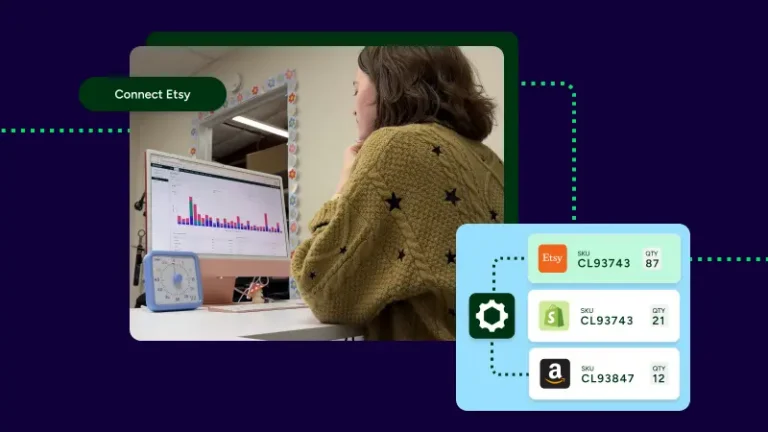
Selling channel breadth is one of the clearest differences between the platforms. ShipStation integrates with 100+ ecommerce platforms, including Shopify, Amazon, eBay, Etsy, Walmart, WooCommerce, and TikTok Shop, giving you a centralized place to manage all of your orders.
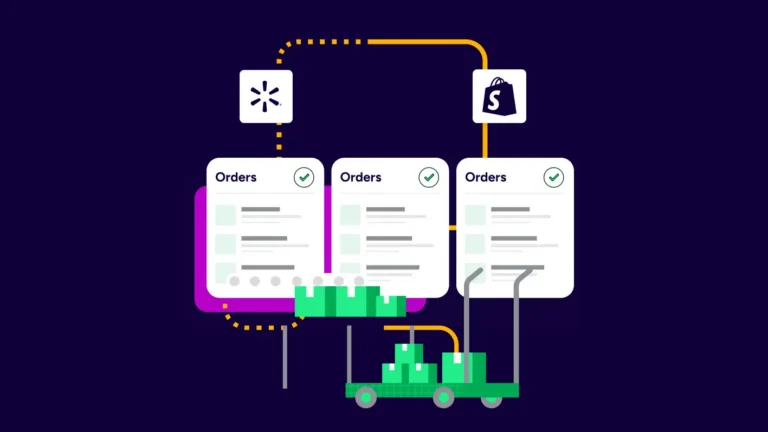
ShipStation also supports native marketplace order management within a single workflow, including orders from Amazon FBA and FBM, eBay, Etsy, and Walmart.
Redo has a narrower native integration footprint, with integrations for platforms including Shopify, WooCommerce, and Salesforce Commerce Cloud. If your business sells across multiple marketplaces and ecommerce storefronts, the difference in order coverage can be an important consideration.
ShipStation gives merchants broad control over multi-carrier shipping, services, and rates. You can compare shipping rates from UPS®, USPS®, FedEx®, DHL Express, and other connected carriers, use your own negotiated rates, access available ShipStation carrier discounts, or compare both from the same workspace.
ShipStation’s rate shopping tools use shipment details such as weight, destination, package type, and dimensions to compare available services and help you select the option that best fits your cost and delivery requirements. Merchants can also leverage automated rate shopping that chooses the cheapest, fastest, or best-value option for each shipment.
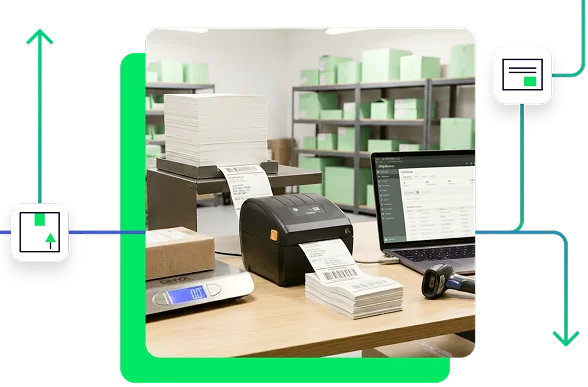
Shipping software can make a significant difference in day-to-day fulfillment, particularly for teams processing high order volumes and businesses with international shipping. With ShipStation, you can print shipping labels in batches or individually, use thermal printers, and apply shipping presets and other tools designed to reduce manual steps and keep orders moving through fulfillment.
Automation rules handle the next layer of work. You can automatically select carriers and services, route orders based on ZIP code or other criteria, tag orders as they import, apply insurance thresholds, or assign service and package presets by SKU. By automatically applying your fulfillment logic, ShipStation helps businesses ship orders faster without adding headcount as order volume grows.
ShipStation supports multi-location fulfillment, allowing businesses to manage stock and sync inventory in real time across multiple locations and route orders based on inventory availability or the closest warehouse to the destination by ZIP code.
The platform also features low-stock alerts and reordering assistance—using your historical sales data to recommend exactly how much stock to order and when—as well as purchase order and supplier management.
Redo supports automation and rules, with a greater emphasis on returns workflows such as return eligibility, approvals, and return policies. Redo offers inventory management and multi-warehouse ship-from capabilities, but with fewer features. If your warehouse team needs shipping and inventory in one platform, that’s a major difference.
For businesses that want shipping, order management, and inventory workflows connected in one platform, that broader operational scope can be an important distinction.
ShipStation covers the core returns management workflow, including a branded self-service returns portal, return labels, and return tracking connected to the original order. That keeps returns within the same fulfillment environment your team uses to manage outbound shipments.
ShipStation also supports exchanges for Shopify sellers, but warranty and claims management fall outside its main focus.
Redo has stronger post-purchase depth, with capabilities designed around exchange-first returns, warranty workflows, claims management, and return analytics.
For shipping-led teams, ShipStation provides returns tools as part of a broader fulfillment platform. For businesses where returns, exchanges, warranties, and claims are a larger part of the operation, Redo’s deeper post-purchase functionality may be more relevant.
Both platforms support branded tracking and customer communications. ShipStation lets merchants customize the tracking experience with their own branding and provide shipment updates that keep customers informed from shipment through delivery.
Redo also supports branded tracking and adds upsell placements and stronger AI messaging around post-purchase flows.
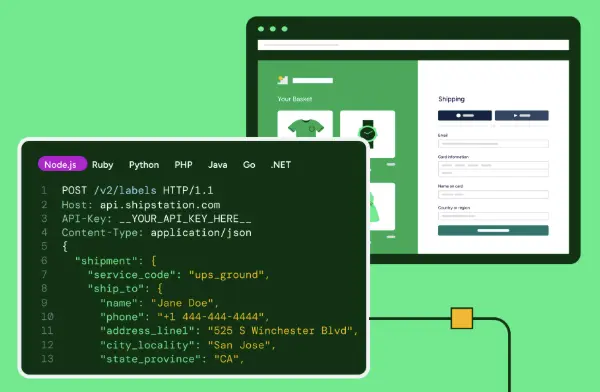
API access becomes increasingly important when shipping needs to connect with other business systems. ShipStation provides API access for custom shipping workflows and label generation, as well as webhooks for shipment and order updates. Its integrations also connect shipping and fulfillment data with ecommerce platforms and other business tools.
ShipStation’s reporting and analytics tools give merchants visibility into fulfillment activity, including shipping volume, carrier usage, and shipping costs. Instead of pulling information from multiple systems, teams can use shipping data to understand fulfillment performance and make more informed decisions about carriers, services, and shipping operations.
Inventory reporting can also help businesses monitor product activity and inventory levels alongside their fulfillment workflows, giving teams greater visibility into the relationship between orders, inventory, and shipping.
Redo offers its own analytics dashboard focused on the post-purchase experience and returns, including AI risk scoring, SKU-level return rates, fraud detection, and exchange outcomes.
If you need visibility into carrier costs, shipping spend trends, or inventory demand signals alongside your returns data, that’s a separate tool or a gap entirely.
Support options vary by plan. Some ShipStation plans include email and chat support, while higher-level tiers add phone support and onboarding assistance.
Redo also provides APIs, webhooks, and onboarding resources. The primary difference lies in the role those capabilities play within each platform: ShipStation’s ecosystem is centered on shipping, fulfillment, and order management, while Redo’s is more focused on returns and post-purchase workflows.
The pricing models reflect different platform approaches, with plan options tailored to shipping and fulfillment needs.
ShipStation offers subscription plans that can be canceled at any time and a free 30-day trial with no credit card needed
Redo uses a freemium-style model for core returns, claims, and warranty modules, then layers in usage-based and quote-based elements depending on the product set. That makes cost comparison less about a simple per-month number and more about which workflow you need most.
The more useful question is which platform includes the workflows your team needs—and whether you would need additional software to fill the gaps.
The right platform depends on which parts of the ecommerce operation you need to centralize and automate.
Choose ShipStation if you need a broader fulfillment platform that spans order management, multi-carrier shipping, rate shopping, label creation, batch processing, marketplace orders, automation, warehouse management, inventory management, and returns.
Choose Redo if you need more post-purchase experience capabilities centered around returns, exchanges, claims, warranties, and related customer workflows. Its broader platform can also support shipping and fulfillment, but its product focus is different.
For businesses evaluating the two, the key question is where you need the most depth: end-to-end shipping and fulfillment, or returns and post-purchase operations.