Back









































 Shipping Basics


From December 30, 2026, some EU-bound and EU-origin shipments need a new piece of customs data. Without it, customs can hold your package.
The EU Deforestation Regulation (EUDR) covers seven commodities and the products made from them. If you ship any of them across the EU border, in either direction, you’ll need a reference number or an exemption code on your customs paperwork.
Large and medium-sized companies must comply by December 30, 2026. Micro and small companies have until June 30, 2027.
EUDR covers seven commodities: cattle, cocoa, coffee, oil palm, rubber, soy, and wood. It also covers many products made from them. To sell these goods in the EU, or ship them out of it, you must show three things:
The DDS is filed in the EU’s information system by the first operator, usually the importer or the business placing the goods on the market. Filing it produces a reference number. Everyone further down the chain keeps that number and passes it on.
The rules apply whether you sell online or in a shop, and they apply to goods made in the EU as well as imported ones.
EUDR only covers products listed in Annex I of the regulation, matched by customs code (HS/CN). The list changed in September 2026:
Check the full eight-digit code, not just the product name. The first four digits only name a broad category, and sometimes the EU covers only part of it. The EU’s list of covered products marks these with “ex” in front of the code, which means “only some products in this category.”
For example, one category covers live cattle, buffalo, and bison. Only the cattle are covered by EUDR. All three share the same four digits, but they fall on different sides of the rule.
For each covered line item on a shipment that crosses the EU customs border, in either direction, customs and carriers look for one of two things:
Shipments between two EU countries don’t need this in the shipment data. The obligation still sits with the businesses in the chain, who keep their supplier references for five years.
Most product catalogs track what an item is, not the customs paperwork behind it. Three things catch sellers off guard:
For covered goods, the first consequence is a stopped shipment. Customs can refuse to release goods that arrive without the reference or exemption code, and carriers warn of delays, storage charges and returns to origin.
Fines and confiscation come later, after checks, and each EU country sets its own penalties. For most sellers, the practical risk is the parcel sitting at the border.
ShipStation passes your data on to the carrier. The platform doesn’t file customs declarations, so you stay responsible for the declaration and for its accuracy. Because not every product is covered, EUDR fields are optional, so sellers with out-of-scope goods are never blocked.
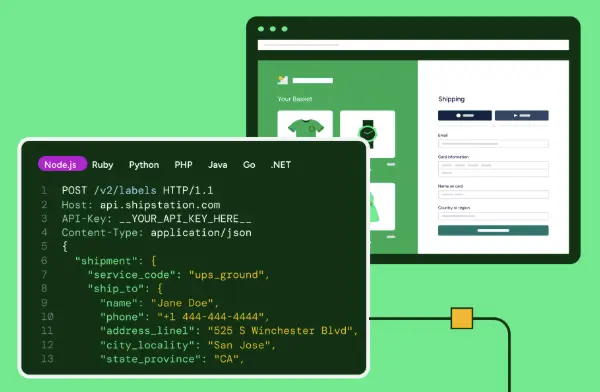
ShipStation API users: The API accepts two optional fields at product level, dds_reference_number and taric_document_code. See the API documentation for the details.
ShipStation UI users: EUDR fields are in development for the ShipStation interface. Plans include a spot in each product’s customs details, a field in the label flow, and import and export, so you can set the values once instead of retyping them.
Carriers: Each carrier needs EUDR data in its own format. ShipStation is adding support one carrier at a time.
Check your products against Annex I. Match the eight-digit customs code of every EU-bound product, and note which ones are covered, which sit under an “ex” code, and which dropped out in September.
Work out your role. Are you the first business to place the goods on the EU market, or do you buy from an importer who files the statement? That decides whether you file or collect, and your company size decides the date.
Ask suppliers and importers for DDS reference numbers. This is the step with the longest lead time, so start these conversations first.
Clean up your customs data. Check that every item has an accurate HS code, description and country of origin.
Plan how the numbers reach the shipment. You can send both values through the ShipStation API today. Keep your records for five years.
Check in with your carrier. Each carrier handles EUDR data on its own timeline. DHL Express, for example, asks for the data per line item and on the customs invoice, and FedEx asks for it on the commercial invoice and air waybill. Confirm what your carriers need and by when.
The sellers who treat this as a data project, not a last-minute form, are the ones best placed to clear customs smoothly on December 30. Everyone else will be doing the same audit with a lot more pressure.
Get your EU shipments ready for what’s next. Start with ShipStation today.
A few related details, including the ShipStation interface and carrier support, are still being finalized, and this guidance will be updated once they’re confirmed.
Disclaimer: This is not legal or tax advice and is not a guarantee of customs clearance outcomes, duty amounts, or fees. Please consult your advisors for guidance specific to your business.