Back








































 Shipping & Fulfillment


Your new hire starts Monday. By 9:15 AM, they’re holding an order and a question nobody wrote down: Which carrier? Which box? Does this one need a gel pack?
Your veteran answers in two seconds. The new person asks a teammate, who stops what they’re doing. Multiply that by every order and every new face, and peak season slows down before it speeds up.
Training isn’t the real problem. Judgment calls are.
ShipStation has made the case for the brands that stopped hiring for peak season and what they did instead. For many operations, that’s the goal. For others, it isn’t on the table. Someone still has to pull product off the shelf and tape the box.
This post is for that second group. If you’re bringing on seasonal shipping staff no matter what, the aim is simple: get them productive by lunch on day one. The fixes below also happen to reduce the number of people you need.
Every shipping operation runs on rules that live in people’s heads. Heavy orders go with this carrier. Fragile items get the bigger box. That customer always wants a signature. Call it tribal knowledge: the know-how veterans carry that nobody ever wrote down.
It works fine until you add people.
“You’re not breaking at a technology point. It’s really around the decision consistency and the process layer,” Bethany DeAngelo of ShipStation Global explained at Innovation Delivered 2026.
She has a simple first step for action.
Map every shipping decision that currently requires a human being.
Try it this week. Follow one order from the moment it lands to the moment the box leaves. Write down every choice someone makes along the way. That list is your real training manual, and most of it shouldn’t be a choice at all.

Once you’ve mapped the decisions, hand the repeatable ones to Automation Rules. A rule works the same on day one as it does on day 300, and it doesn’t care who’s standing at the bench. Not sure where to start? These six Automation Rules to build before peak season hits make a good first batch.
Norman Love Confections ships hand-painted chocolates from Fort Myers, Florida, and Christmas is its biggest surge. On peak days, the team may process more than 10,000 orders. Automation Rules assign the service level, package dimensions, weight, and fulfillment flags for each order. They even set the right number of gel packs for each box size.
Nobody needs to memorize a gel pack chart.
Without ShipStation’s batch tools and Automation Rules, our team would spend hours each day manually configuring individual shipments. During peak season when we might process 10,000+ orders in a day, that would be physically impossible with our current team size.
Botham’s of Whitby, a Yorkshire bakery shipping since 1865, works the same way. One standing rule sends Scottish Highlands and Islands orders to Royal Mail regardless of weight. Address verification flags undeliverable addresses before they ship. A seasonal hire doesn’t need to know any of that. The system already does.
A temp needs to ship orders. They don’t need to change a carrier account, edit a rule, or adjust settings on day two.
Give new people access to the work in front of them, and keep rules, carrier connections, and account settings with your core team. You can also assign orders to specific users, so each person sees their own queue instead of the entire warehouse.
One wrong click in settings can cost more than a slow first hour. Keep the controls where your experienced people can see them.

The simplest job to teach is one with almost no decisions left. That’s what Botham’s built.
Christmas hamper season increases daily parcels from around 50 to 350. Orders ship on a customer-chosen delivery date, so arriving on the right day is the product. Before automating, each label took about two minutes to build by hand.
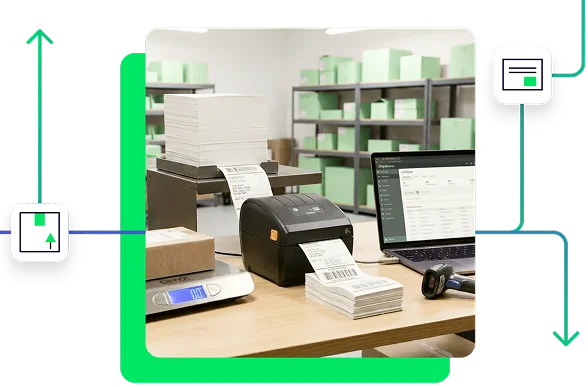
The team now uses Scan to Print.
It just automated our packing flow—so all a person had to do is scan the barcode on the packing sheet, then scan the barcode on the printer, and a label comes out. No fuss.
Label time dropped 75%, from two minutes to about 30 seconds, with near-zero labeling errors. Botham’s absorbs the seven-fold surge with minimal additional dispatch staff.
Norman Love gets the same effect upstream. The team generates daily pick lists from ShipStation data, so everyone knows what to pull before the shift starts. Batch printing saves two to three hours of labor a day at peak, more than 100 hours across a six-week surge. A new person follows the list, scans, and packs.
When the job is mostly scanning and following a list, onboarding fits into a short first session. Here’s a simple sequence:
If a question keeps coming up, that’s a decision still living in someone’s head. Turn it into a rule.
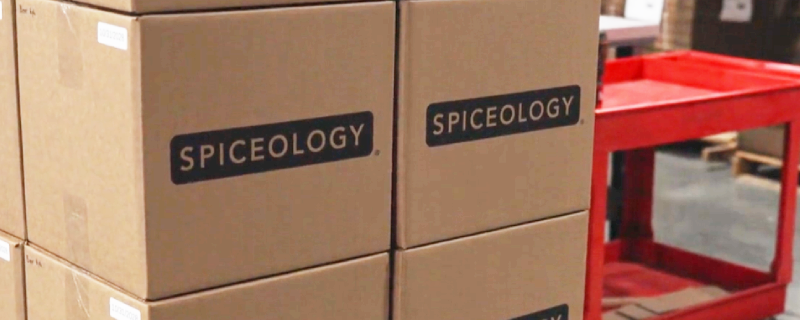
Spiceology sells more than 450 spice blends, and its Black Friday volume triples.
During our peak holiday Black Friday sale, we could be shipping three times our normal daily volume. So, three times the output of a normal period. ShipStation’s able to help us meet that demand with no issues.
That used to mean two shifts and seasonal hires. After the team moved to real-time rate shopping and automation rules, it didn’t need the extra shift in the 2024 holiday season.
The pressure to run lean isn’t going away. In ShipStation’s 2026 Ecommerce Delivery Benchmark Report, about 28% of retailers named rising operational and fulfillment costs as their biggest challenge this year. Meanwhile, more than half of consumers expect a standard online order within two days. Customers won’t give your temps a grace period.
Fewer decisions per order helps on both fronts. You hire only the seasonal shipping staff you truly need, and the people you do hire get up to speed faster.
Your seasonal shipping staff will be only as fast as the process you hand them. Before the next person starts, map the decisions, build the rules, and lock down what new people can change. Then give them a short list and a scanner.
Start shipping with ShipStation today.