Back
Back










































How Spoke Custom Products handles a 2x peak-season surge with ShipStation’s multi-carrier shipping API


A print-on-demand powerhouse finds flexibility in a single integration
For more than a decade, Spoke Custom Products has built a reputation as a print-on-demand powerhouse. From branded blankets and tumblers to tech accessories and journals, the company manufactures custom-decorated products for partners who need fulfillment at scale.
But running a manufacturing operation that serves other businesses means shipping isn’t just about getting packages out the door. It’s about giving each customer the flexibility to ship however they want—on their own accounts, with their own carriers, under their own brand.
In 2019, Spoke Custom Product’s team realized their existing approach wasn’t going to cut it much longer.
Managing seven carriers meant managing seven headaches
Before switching to a multi-carrier shipping API, Spoke Custom Products had built separate connections to seven different carriers. Each one had its own quirks, its own way of handling information, and its own maintenance demands.
“The most frustrating part was needing to account for carrier-specific field mappings opposed to a generic integration, and managing carrier exceptions as they are needed to code branches,” said Andrew Kriske, Senior Business Analyst at Spoke Custom Products.
Every time a carrier made updates or Spoke Custom Products needed to add a new shipping option, the development team had to stop what they were doing, figure out the requirements, and build it from scratch. It was time-consuming and pulled resources away from other priorities.
What pushed the team to seek a new solution wasn’t a failure—it was growth. Customer requests were expanding, and many partners wanted the option to ship on their own negotiated rates rather than Spoke Custom Product’s accounts.

One connection instead of seven
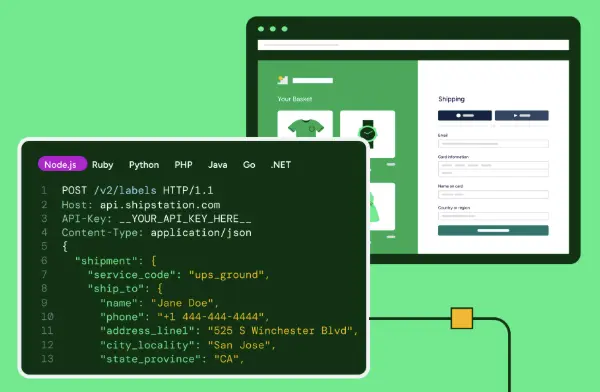
Spoke Custom Product’s team integrated ShipStation API in roughly two months. The shift was simple in concept: instead of maintaining separate connections to each carrier, they connected once to ShipStation and let the platform handle the carrier complexity behind the scenes.
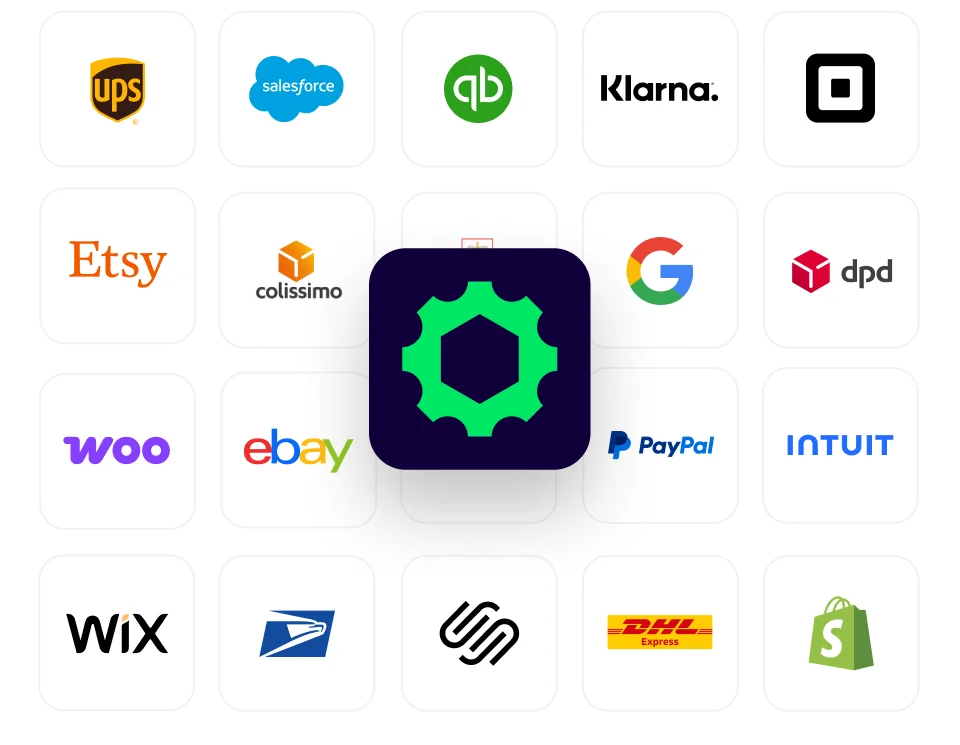
The impact was immediate. Spoke Custom Products went from juggling seven direct carrier relationships to offering eleven carriers through ShipStation’s multi-carrier shipping API—without the added complexity. Today, roughly 90% of the company’s customers either bill shipping to their own accounts or use third-party billing through the integration.
“The biggest change is that it no longer requires any IT or dev. We’ve been able to leverage common functions to enable the business and customers to ship with accounts for any carrier we’re enabled for.”
Andrew Kriske, Senior Business Analyst, Spoke Custom Products
Less work for developers, more control for the business
One of the more surprising outcomes was how ShipStation API changed who handles what. As a business analyst, Kriske can now gather requirements and configure settings directly within ShipStation, speeding things up for the development team. For new customer accounts, developers aren’t needed at all.
Once a new carrier is set up, ShipStation handles the ongoing upkeep.
“When carriers make changes on their end,” Kriske noted, “a lot of the changes happen without Spoke Custom Product’s knowledge given ShipStation maintains the integration.”

Peak season without the panic
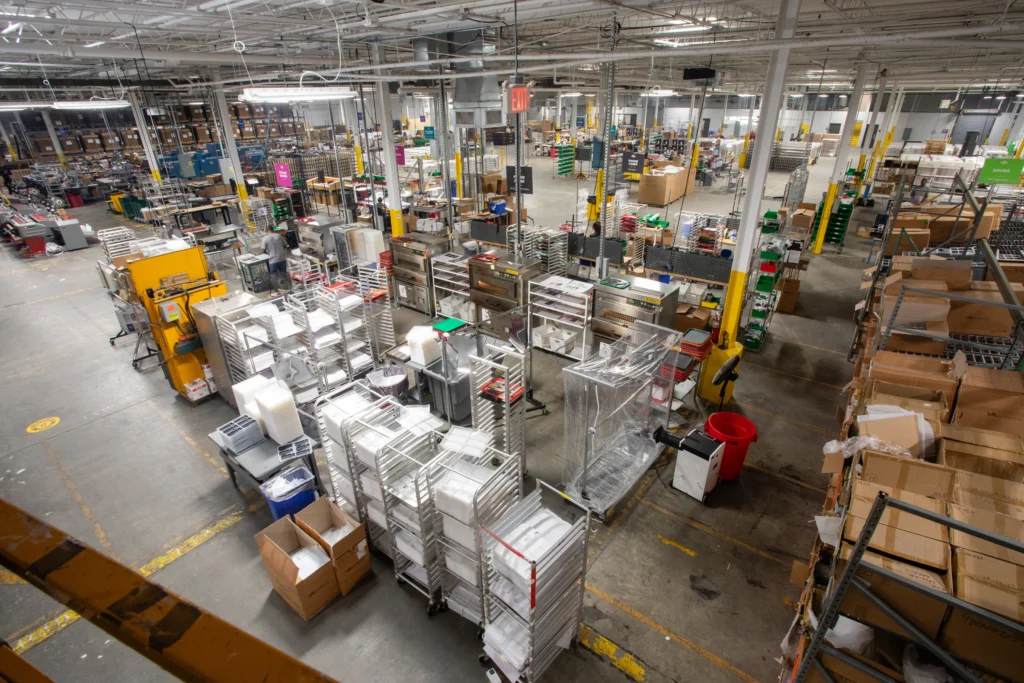
Spoke Custom Products processes roughly 8,000 shipments daily during standard periods. When peak season hits, that volume more than doubles—surging past 17,000 daily shipments, an increase of over 112%.
ShipStation API has maintained speed and reliability during those high-volume stretches without any negative impact to the business, according to Kriske.
Custom branding and easy customer onboarding
The flexibility extends beyond billing. Kriske shared an example of a customer where branding was essential: “ShipStation’s branded labels feature allowed us to upload the customer’s image and pass that in the payload for a label. We don’t have to concern ourselves with which carrier allows for branded labels—if it is an available feature, it applies their logo automatically.”
In another case, a customer already used ShipStation on their own. Because Spoke Custom Products runs everything through ShipStation, the team simply swapped in that customer’s account details without overhauling their entire setup.
Looking ahead, the team plans to use ShipStation’s rate-shopping tools to automatically find the best price between comparable carriers and service levels.

Seven years and no reason to leave
When asked what would happen if Spoke Custom Products had to go back to managing carriers directly, Kriske didn’t sugarcoat the answer: the team would need to catch up on years of carrier changes, rebuild internal systems, account for all the carriers added since the switch, and pull developers away from other work.
But that’s not a scenario he spends time worrying about.
“There has been ZERO temptation to migrate away from ShipStation. The service provided is top notch—from account management, support, customer engagement, as well as enhancements like Analytics. It’s a singular platform that stands by their product without hesitation.”
Andrew Kriske, Senior Business Analyst, Spoke Custom Products
For companies evaluating multi-carrier shipping API solutions, his advice is straightforward: “For the fulfiller that needs to ship on their own account or their customers’ to all corners of the business—and hungry for shipping data—ShipStation API is the best solution. It’s the leader in ecommerce logistics data, shipping flexibility, and hardened infrastructure your business can count on.”
Ready to simplify your shipping operations? Learn how ShipStation API can power your platform.
See how other sellers are scaling with ShipStation API. Rush Order Tees cut shipping errors 30% and freed up 25+ labor hours a day through ShipStation API. That’s a lot of tees—and a lot of time back. Read their story.