Back








































 Platform Options


The best shipping software does more than print labels. It reduces manual work, makes shipping rates easier to compare, and keeps orders moving without adding complexity. It connects your sales channels, automates repetitive tasks, manages returns, and scales with your business as order volume grows.
Whether you’re a small business shipping a few dozen orders a week or an enterprise processing tens of thousands of domestic and international shipments, the right shipping software depends on how you sell, ship, and plan to grow.
This guide covers the capabilities to look for, what free tools may be missing, and how ShipStation fits into the picture.
The best shipping software brings your orders together in one place, helps you compare carrier services, generate shipping labels, send tracking updates, and manage the shipping process. That means less time switching between systems, fewer manual errors, and a faster path from order to delivery.
Most shipping software handles the basics: importing orders from your store or marketplace, creating labels, and notifying customers when orders ship. More advanced solutions go further with automation, returns management, address validation, and reporting.
The benefits show up in speed, cost control, and accuracy. Instead of creating labels one at a time, you can process orders in batches, automate routine shipping decisions, and spend more time on products, customer service, and growth.
You may be ready for shipping software if:
The best shipping software isn’t necessarily the one with the longest feature list. It’s the one that fits your current operations and can support your business as it grows. Here are four key considerations:
You don’t need the most advanced system from day one. You need a solution that addresses your current bottlenecks without limiting your growth.
A simple way to narrow your options is to match the software to your biggest operational needs. If you ship relatively low volumes through one channel, a basic tool may be enough. If comparing carrier rates is part of your daily workflow, look for multi-carrier support. If your team spends hours on repetitive tasks, prioritize automation. And if you need to manage more of the post-purchase experience, look for a broader platform that includes tracking, returns, and inventory capabilities.
Not all shipping software capabilities deliver the same value. These are the ones that distinguish a basic label-printing tool from a shipping solution built to support long-term success.
Effective rate shopping gives you more control over shipping costs. Look for software that lets you compare multiple carriers and services, use your own negotiated rates, and choose the best option for each shipment rather than locking your business into a single carrier.
A powerful rate-shopping tool can calculate costs in real time while accounting for origin and destination ZIP codes, package weight, dimensions, and service level.
Keep in mind that the best rate isn’t always the cheapest one. A low-cost service may not meet a customer’s delivery expectations, while a faster service may not justify the added expense for every order. More advanced rate-shopping tools let businesses evaluate shipping options based on cost, delivery speed, and other requirements. Some can automatically select the best available rate based on predefined rules, reducing the need to manually compare services for every shipment.
A rate-shopping tool that compares only two or three carrier options may not give you enough flexibility to find the best service and price for every shipment.
Address validation is another useful capability. Checking addresses before labels are created can help catch incomplete or incorrect information that could otherwise lead to delivery delays, additional carrier charges, or returned packages.
Those cost savings, which could be $0.25, could be several dollars, add up over the course of the year and allow us to take and reinvest back into our business for continued growth.
Shipping automation is often one of the biggest opportunities to improve shipping efficiency. The right rules eliminate repetitive steps, reduce errors, apply consistent shipping decisions, and help your team focus on exceptions rather than processing every order manually.
Key capabilities include:
Batch processing adds another layer of efficiency. Instead of opening and processing each order individually, teams can filter orders by shipping method, destination, store, or other criteria, then apply actions to multiple shipments at once. This makes it easier to handle daily order surges, prioritize expedited shipments, and print large batches of labels.
The result is a more consistent shipping process that can handle increasing order volume without requiring the same increase in manual effort.
Automation eliminated thousands of manual actions per day, freeing our team to focus on production and quality rather than repetitive shipping tasks.
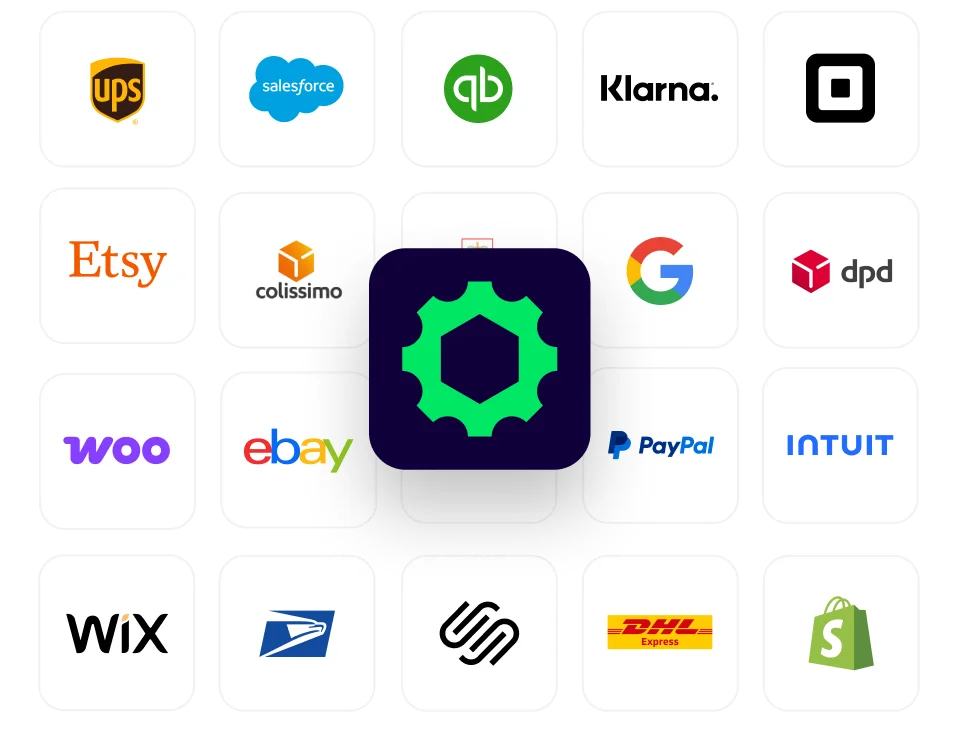
Shipping becomes more complicated when orders live in one system, shipping labels in another, and tracking information in a third. Strong ecommerce integrations bring these workflows together, importing orders and sending shipment updates back to your sales channels without additional manual work.
The best shipping software offers hundreds of store and marketplace integrations and an API for custom integrations. This flexibility is especially important if you sell through multiple storefronts or plan to expand into additional channels.
Look beyond simply connecting your systems, too. A good integration should keep order information synchronized as shipments move through the fulfillment process. When a label is created, tracking information and shipment status should flow back to the appropriate sales channel. This reduces manual updates and helps ensure customers receive consistent information regardless of where they placed their orders.
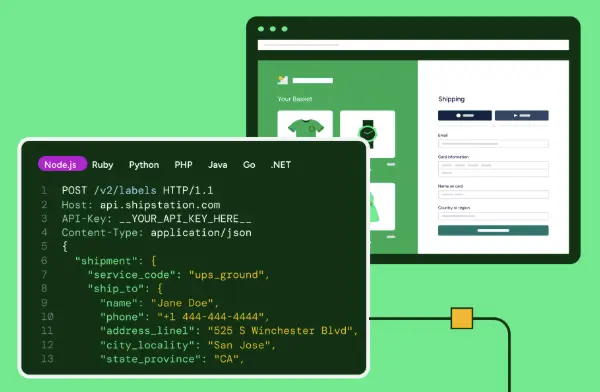
For businesses with more specialized workflows, API access can provide additional flexibility. Developers can use APIs to connect shipping operations with internal systems, retrieve rates, create labels, manage shipments, and synchronize inventory. This becomes particularly valuable for businesses with custom storefronts, proprietary order management systems, or more complex technology requirements.
We previously had to hire a full-time staff member to copy and paste tracking numbers into Shopify, which was a nightmare. Now this process is automated, saving time and reducing errors.
Shipping software and inventory management tools aren’t the same thing, but keeping them connected can make a significant difference in day-to-day operations. When inventory, picking, and shipping workflows operate independently, errors and fulfillment delays are more likely.
A sophisticated shipping platform consolidates orders across sales channels, allowing you to prioritize and organize them with filters, tags, stores, and other criteria.
When your order management lives in the same system as warehouse management and inventory tools, you get additional capabilities such as:
These capabilities become especially important when a business fulfills orders from multiple warehouses. Inventory visibility across locations helps teams understand where products are available and which location makes the most sense for fulfilling each order. Rather than defaulting every shipment to a single warehouse, smart routing can account for inventory availability and destination to help reduce transit times and unnecessary shipping costs.
Inventory synchronization also helps prevent a common multichannel problem: selling products that are no longer in stock. When an order comes in through one channel, inventory levels can be updated across connected stores to help keep product availability accurate. Some systems also support buffer stock, allowing businesses to reserve a portion of their inventory rather than making every available unit purchasable online.
Together, these tools connect the steps between receiving an order and getting the right products out the door.
We love inventory sync for all marketplaces. It means we don’t oversell, we don’t undersell.
The customer experience doesn’t end when a shipping label prints. Clear tracking updates reduce order-status questions, while a straightforward returns process makes it easier for customers to shop with confidence.
Look for shipping software that supports branded tracking pages, real-time notifications, and self-service returns. Customers get a consistent post-purchase experience instead of a generic carrier website, and your team spends less time answering tracking questions and managing return requests by email and spreadsheet. Proactive updates at key delivery milestones can also reduce the number of “Where’s my order” inquiries.
Returns management capabilities deserve the same attention. A self-service returns portal allows customers to initiate requests and generate return labels without waiting for someone on your team to respond. More advanced workflows can offer exchange options, apply return rules based on products or order details, and help teams track returned items through the process. Connecting returns with inventory management also makes it easier to account for restocked products and maintain accurate stock levels.
These capabilities turn shipping software into more than an operational tool. They help businesses manage the customer experience before, during, and after delivery.
Returns management is brilliant and something we’ve wanted in the business for a very long time. Our customers are happy. The business is happy. It’s a win-win.
Shipping data is most valuable when it helps you make better decisions. Look for software that makes it easy to monitor shipping costs, compare carrier performance, and track delivery times. It should include dashboards that bring these metrics together in one place, helping you identify unnecessary expenses, spot carrier performance issues, and find opportunities to improve your shipping operations.
More detailed reporting can also help uncover patterns that aren’t immediately obvious. For example, comparing average shipping costs across destinations can reveal opportunities to use different carrier services. Reviewing delivery performance can help identify carriers or routes that consistently experience delays. And tracking order processing times can show where fulfillment bottlenecks are developing.
The ability to filter and analyze data by carrier, service, store, SKU, or warehouse makes reporting even more useful. Instead of relying on broad averages, teams can investigate specific areas of their operations and make adjustments based on actual performance.
We got to use that information and focus our marketing strategies around how to get that bigger average order volume, which has helped save us money on the shipping side, and it also increased our overall sales, too.
International shipping introduces additional complexity, from customs documentation and carrier selection to delivery expectations and tracking. Choosing software that supports both domestic and international workflows makes it easier to manage shipments as your business expands into new markets.
Even if international orders make up a small percentage of your shipments today, choosing a platform with established global shipping capabilities can help you avoid switching systems as your business grows.
Look for tools that help generate customs documentation using order and product information, including item descriptions, quantities, values, and country of origin. The ability to save customs details for frequently shipped products can reduce repetitive data entry and help keep documentation consistent. Support for multiple international carriers and services also gives businesses more flexibility to balance delivery speed, shipping costs, and destination requirements.
Having international shipping within the same workflow as domestic orders makes it easier to manage both without maintaining separate processes for different destinations.
Shipping is no longer something we have to work around. It’s a reliable, streamlined part of the process.
The best shipping platform should work just as well as your business grows. That means supporting higher order volumes, additional warehouses, more carrier relationships, and increasingly complex shipping workflows without sacrificing performance.
Also consider how easily a platform can accommodate changes to your operations. Adding another sales channel, expanding into a new country, opening a warehouse, or increasing your daily shipment volume shouldn’t require rebuilding your entire shipping process. Flexible integrations, configurable automation, and scalable batch workflows help businesses adapt without introducing unnecessary complexity.
Scalability has been proven through us because we went from shipping basically nothing to shipping more paddles than we ever thought possible.
The best shipping software for small business should be easy to set up, simple to learn, and capable of growing alongside your operations. Free shipping tools can be a good starting point if you only need to print occasional labels and manage a straightforward order flow. However, limitations often become more noticeable as your business grows and needs more automation, users, reporting, or integrations.
When comparing paid plans, look beyond the monthly price and number of labels included. Consider potential limits on automation rules, user access, API functionality, and customer support. For many growing businesses, the better question isn’t simply whether shipping software is free. It’s how much time, labor, and operational complexity it can save.
It’s also worth thinking beyond your current shipping volume. The best shipping solution for a small or growing business today should still support its needs 12 to 24 months from now. Otherwise, you may find yourself migrating to another platform sooner than expected.
As ecommerce businesses grow, their shipping processes often become more complicated. New sales channels, higher order volumes, and different fulfillment requirements can create operational bottlenecks if shipping workflows aren’t connected.
The best shipping software for ecommerce brings orders, shipping decisions, and tracking together, making it easier to manage fulfillment across multiple channels without adding manual work.
If you sell through Shopify, eBay, or multiple marketplaces, prioritize fast order synchronization, bulk processing, automatic status updates, and exception handling. Even a small breakdown in the fulfillment process can lead to delayed shipments, additional customer inquiries, and marketplace account issues.
A connected shipping platform helps keep these workflows organized as your sales channels and order volumes expand.
At the enterprise level, shipping software becomes more than an operational tool. It becomes part of your business infrastructure. Higher shipment volumes, multiple warehouses, complex carrier agreements, and larger fulfillment teams all introduce additional requirements.
The best shipping platforms for enterprise combine advanced automation, flexible carrier options, reliable performance during peak periods, and integrations with critical business systems.
When evaluating enterprise solutions, look beyond feature lists and product demonstrations. Ask vendors how their platforms perform during peak shipping periods, and test the software using your own orders and workflows rather than demo data. You should also clarify implementation responsibilities, integration requirements, and customer support expectations before signing a contract.
The right platform should support your current operations while providing the flexibility to accommodate future growth and complexity.
The best shipping software should simplify your daily operations, reduce manual work, and support your business as it grows. Start by identifying your biggest shipping challenges, whether that’s comparing rates, creating labels, managing returns, or coordinating orders across multiple sales channels. Then look for a platform that addresses those needs while giving you room to expand.
If you want broad carrier access, powerful automation, and the flexibility to scale, get started with a free trial of ShipStation. The right shipping solution does more than make fulfillment easier. It gives your business more time and resources to focus on growth.