Back
Back







































How Workwear Giant Built a Click-to-Ship Operation With ShipStation’s WooCommerce Shipping Integration


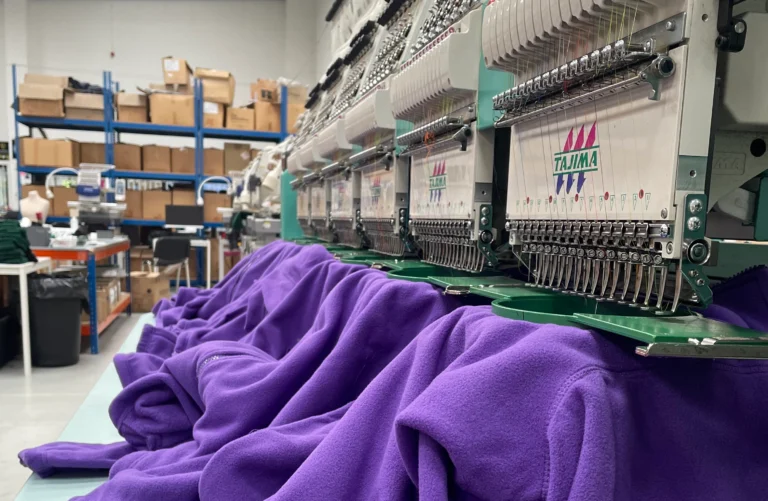
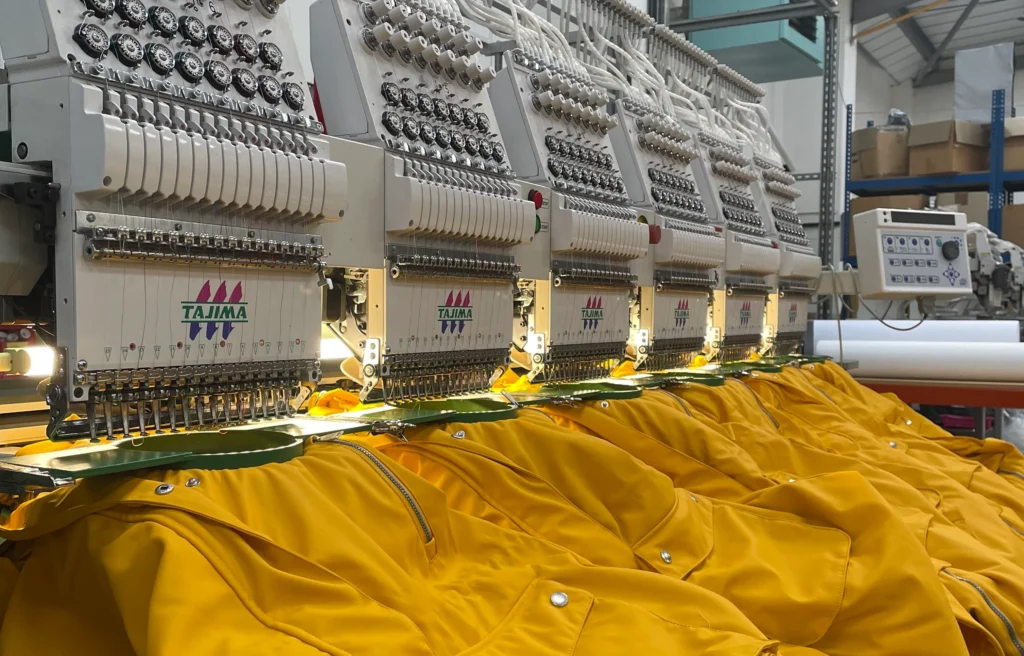
In a unit off the M4 in Wokingham, rows of Tajima embroidery machines stitch logos onto polo shirts, hoodies, and hi-vis jackets for some of the most recognizable names in business—Tesco, Google, and Honda among them. Workwear Giant is one the UK’s top suppliers of customized workwear, with a setup to match: in-house design, skilled embroiderers, two shifts seven days a week, and lead times that sometimes compress to “super urgent.”
It’s a craft-led business. But behind the production floor sits a dispatch operation that can push 70 orders out the door on a busy day and 150 at peak—and for the past five years, that dispatch has run on ShipStation.
The manual era, before ShipStation
The setup wasn’t always this smooth. Before Bela Csontos—Workwear Giant’s Purchasing & Logistics Manager—rewired the back end, shipping was a slow, manual, error-prone bottleneck. Two separate teams, one for plain goods and one for customized orders, typed every order into the FedEx portal by hand.
“The platform was quite rigid,” Csontos said. “Character restrictions on business names, session timeouts that could reset your progress without warning. It meant re-entering information from scratch more often than you’d like.”
And the old workflow came with its own tax: typos, incorrect postcodes, small human errors that occasionally led to delayed or returned orders.
A WooCommerce shipping integration that fades into the background
Workwear Giant runs its storefront on WooCommerce, and fixing the bottleneck started with wiring the two systems together. ShipStation’s WooCommerce shipping integration pulls orders into dispatch automatically and pushes tracking updates back to the store once orders are sent—keeping customers in the loop without anyone touching a spreadsheet.
Csontos inherited the original setup, but he’s since configured the integration for additional stores.
“It’s very straightforward,” he said. “Some technical familiarity helps, but it’s entirely achievable without deep expertise.”
For the dispatch team, the experience is almost invisible—which is the point.
“ShipStation integrates with WooCommerce, in a word, seamlessly. The integration is so smooth that it almost goes unnoticed. Some team members didn’t initially realize they were working across two separate systems.”
Bela Csontos, Purchasing & Logistics Manager, Workwear Giant
Building on top of ShipStation with API and webhooks
The WooCommerce shipping integration was the foundation. But Csontos wanted to go further—and ShipStation gave him the building blocks to do it.
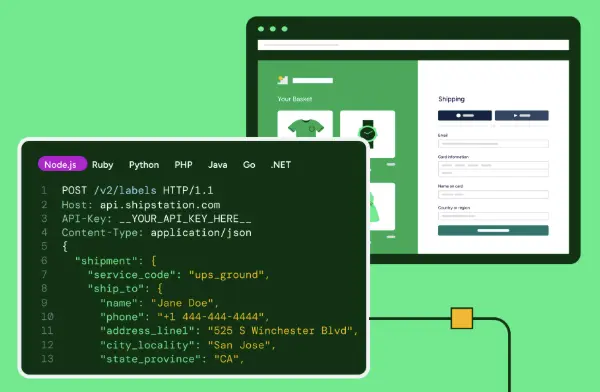
Using ShipStation’s API, he built a pipeline that automated the upload of sales orders, a job that had previously been done by hand. Then, using webhooks, he connected ShipStation to Workwear Giant’s internal production board. Completed jobs now drop off the list in real time. Before, that same visibility lived in a shared Google Sheet, manually updated and prone to going out of sync.
“At the time, there was a learning curve due to my limited [API coding] experience,” Csontos said. “Looking back, the documentation is clear and the setup is relatively straightforward once you’re familiar with APIs.”
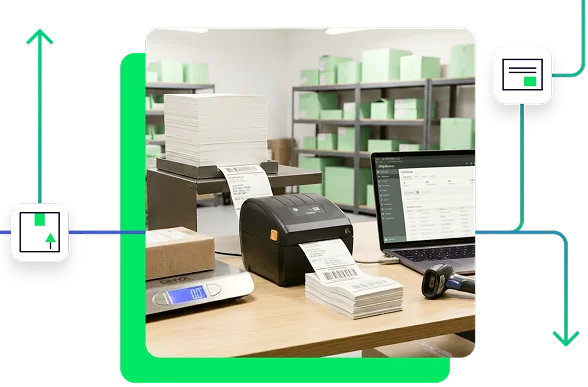
The result is a click-to-ship dispatch workflow fast enough to keep pace with the production floor, no matter what the day brings. Labels print, tracking numbers sync, the production board updates itself. New staff can be trained in minutes.
“What used to take around 3–7 minutes per shipment now takes closer to 15–20 seconds.”
Bela Csontos, Purchasing & Logistics Manager, Workwear Giant
What the numbers say, at peak and every day
That per-shipment speed matters most when volume spikes. In November and December 2023, Workwear Giant was dispatching 130 to 150 orders a day with just two people on shipping—a volume Csontos said would have been extremely difficult to manage manually. The payoff shows up across the day, too: order uploads that used to take around two hours now take closer to 20 minutes.
Outside of peak, an automated WooCommerce shipping integration keeps daily operations steady. Order volume can swing from 20 or 30 orders on a quiet day to 70 or more on a busier one, with shipment sizes ranging from a single bag to shipments of up to 20 boxes. ShipStation absorbs the variability so the team doesn’t have to.
And the hours reclaimed from manual data entry haven’t gone quiet, either. That time has been redirected into further automation projects across the business.
“Shipping is no longer something we have to work around. It’s a reliable, streamlined part of the process.”
Bela Csontos, Purchasing & Logistics Manager, Workwear Giant
One order, many destinations
For a B2B supplier kitting out corporate clients, one order doesn’t always mean one destination. A single uniform rollout might mean 20 boxes going to five different regional offices. Previously, each leg of a split shipment lived as a separate record, linked only by a reference field that could easily break with a typo.
Now, every package, every tracking number, every destination is tied back to one order and viewable from one screen. Shipment history, split shipments, delivery issues—all in a single, searchable place.
“It’s a level of visibility that’s hard to replicate elsewhere,” Csontos said.
The quiet backbone behind the craft
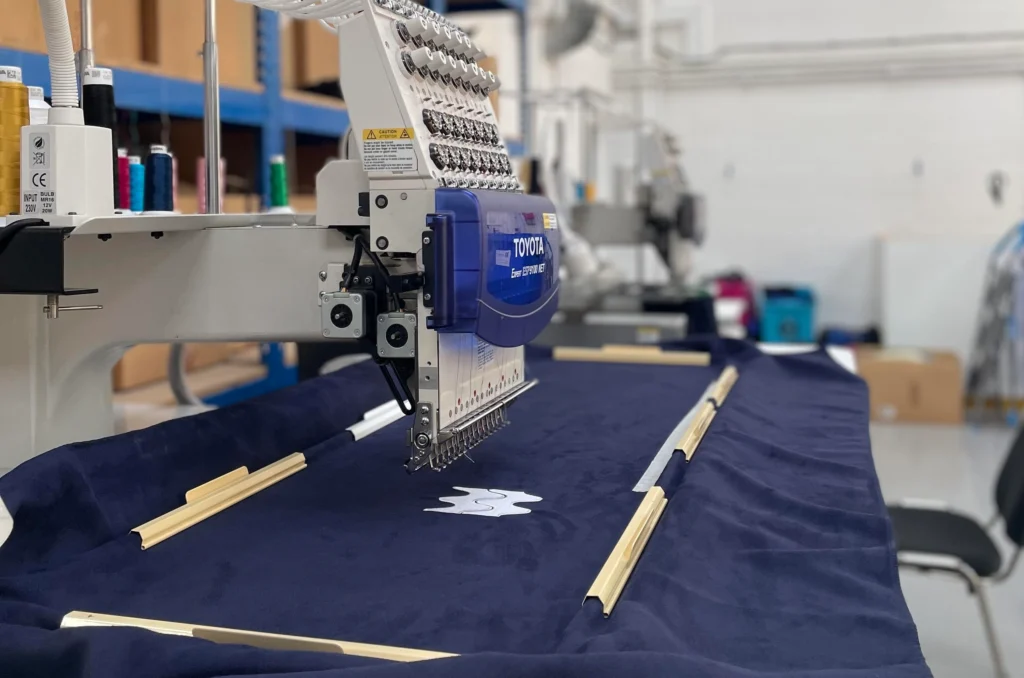
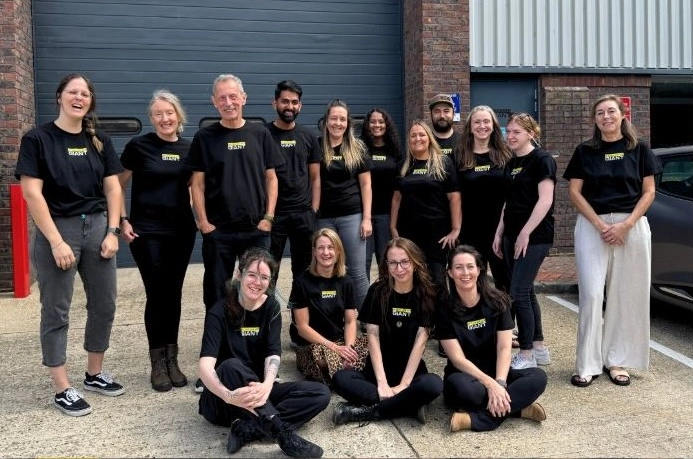
Workwear Giant’s craft hasn’t changed. The Tajima machines still run in two shifts. Embroiderers still hoop garments by hand. Logos still get stitched in-house by trained staff. What’s changed is everything around the craft—the invisible plumbing that gets finished orders to the right doorstep, fast, without adding headcount.
Shipping used to be the most demanding part of the process—the most manual entry, the most apologies when something slipped. Now it’s the part the team barely has to think about.
“For us, ShipStation has become an essential part of the workflow.”
Bela Csontos, Purchasing & Logistics Manager, Workwear Giant
Running on WooCommerce? See how ShipStation’s WooCommerce shipping integration can turn your dispatch from a daily bottleneck into the quietest part of your workflow. Start shipping with ShipStation.