Small BusinessesStart small, think big. Elevate your small-business shipping today.
Start Shipping in MinutesStart shipping instantly with a simple setup. Buy and print labels in minutes with no training needed and no unnecessary steps.
Automate and ScaleSave time with rules that batch, route, and print labels automatically so your shipping keeps up as orders grow.
Save on Every ShipmentAccess exclusive 80% – 90% discounts from every major carrier from parcel to LTL freight and cut costs on every label, everywhere you ship.
Connect and CustomizePlug into hundreds of stores, marketplaces, and carriers, or extend ShipStation with custom API integrations built for your business.
Manage Everything in One PlaceManage shipping, inventory, warehouse, tracking, and returns for all your stores and marketplaces in one simple platform.
Simplify ReturnsManage returns in one platform with prepaid labels and self-serve features that keep the process fast and frustration-free.
Get Up and Running QuicklyOur implementation team guides you through a step-by-step process across parcel and freight, helping you streamline workflows and keep costs minimized.
Join us on October 20 for a look at findings from our 2026 Merchant Insights Report—including why shipping costs are now the #1 growth constraint for merchants and what you can do now to prepare for peak season.
Mid-size and GrowingShip smarter, grow faster. Scale your fulfillment with ease.
Save on Shipping as you ScaleAutomate rate shopping across 200+ parcel carriers and 50+ LTL freight carriers,, bring your own carrier accounts, and unlock deep volume discounts that grow with you.
Smarter Shipping IntelligenceTurn shipping into your competitive advantage with intelligence that improves with every order.
Centralize Omnichannel FulfillmentManage orders, shipping, inventory, warehouse operations, tracking, returns, and analytics across online stores and marketplaces with one platform.
Automate Order ManagementCombine AI intelligence with rule-based workflows across parcel and freight to speed up fulfillment, streamline operations, and eliminate bottlenecks.
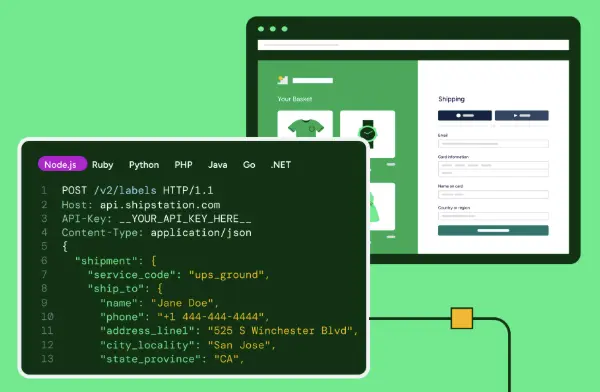
Scale With our APIsExtend your setup using our developer-friendly API for custom automated workflows and insights.
Start with Guided OnboardingOur experts walk you through setup, training, and workflows so your team feels confident and ready to ship quickly.
Ship LTL Freight Alongside ParcelCompare rates, book, and track LTL freight in the same platform and workflow you already use for parcel.
EnterpriseGlobal scale, local precision. Master shipping at every level.
Lower Shipping Costs at Global ScaleReduce global shipping expenses with real-time rate shopping and discounted carrier rates, helping your enterprise control costs and ship efficiently at scale.
International Shipping Made SimpleEasily manage customs forms, duties, taxes, and tracking while accessing global carrier options from one platform built for cross-border shipping.
Fulfillment APIsCustomize workflows at scale with APIs for consolidating parcel and LTL freight orders, comparing shipping rates, validating addresses, tracking, analytics, and more.
Multi-Location FulfillmentManage inventory, orders, and shipping across multiple warehouses and stores with one platform built for multi-location fulfillment.
Advanced Shipping IntelligenceTurn shipping into your competitive advantage with intelligence that improves with every order.
Dedicated Guidance and SupportCount on 24x7 support plus dedicated onboarding guidance so your enterprise shipping runs reliably from day one and beyond.
Scale Freight and Parcel TogetherManage LTL freight with the same automation, reporting, and carrier network you rely on for parcel—all from one platform, at enterprise scale.
How Guardian Sports Used Automated Returns to Scale After Going Viral with the NFL
After the NFL adopted their concussion-reducing Guardian Cap, this Atlanta-based sports safety company saw orders explode to 400 per day—and the team’s manual processes couldn’t keep up.
Compare ShipStation and Redo Side by SideCompare ShipStation and Redo to see pricing, returns, and shipping rate differences, then choose the better fit for your...
The conclusion is clear: AI is already influencing demand, competition, and delivery performance—and retailers that fail to adapt risk being excluded from AI-led shopping journeys altogether.
Join us on October 20 for a look at findings from our 2026 Merchant Insights Report—including why shipping costs are now the #1 growth constraint for merchants and what you can do now to prepare for peak season.
The conclusion is clear: AI is already influencing demand, competition, and delivery performance—and retailers that fail to adapt risk being excluded from AI-led shopping journeys altogether.
Join us on October 20 for a look at findings from our 2026 Merchant Insights Report—including why shipping costs are now the #1 growth constraint for merchants and what you can do now to prepare for peak season.
A five-pound box and a 400-pound pallet have very different shipping needs. One may be a natural fit for parcel shipping, while the other calls for less-than-truckload (LTL) freight. If your business ships both, managing separate carriers, systems, and relationships can add unnecessary complexity.
But you have options. Bringing parcel and LTL together into one shipping strategy can reduce that complexity while giving you the flexibility to use the right mode for each shipment.
With ShipStation, you can manage parcel and LTL freight through one intelligent technology platform and one powerful shipping partner. That means more carrier options, easier rate and service comparisons, and the flexibility to move between shipping modes as your needs change.
Here’s what a more connected approach to parcel and LTL can mean for your business.
Parcel vs. LTL: What’s the difference?
Parcel and LTL shipping are designed for different types of shipments, with distinct networks, pricing structures, handling requirements, and ideal use cases. Here’s the breakdown:
Parcel shipping typically covers individual boxes and packages that move through a carrier’s parcel sorting and delivery network. Carrier limits vary, but UPS, for example, accepts packages weighing up to 150 pounds.
LTL freight is designed for larger, heavier, or palletized shipments that don’t require an entire trailer. Multiple shippers share space on the same truck, allowing each to move freight without paying for a full truckload.
Comparison guide
Consideration
Parcel shipping
LTL freight
Typical shipment
Individual boxes and packages
Pallets, crates, and larger freight
Typical weight
Up to carrier limits
Often 150–15,000 lbs.
How it moves
Parcel sorting and distribution networks
Freight terminals and shared trailers
What affects cost
Weight, dimensions, zone, service, and surcharges
Weight, dimensions, freight characteristics, lane, and accessorials
Typical destination
Homes and businesses
Often businesses, although other delivery options are available
Best for
Individual packages within carrier limits
Larger, heavier, or consolidated freight
Neither shipping mode is the right choice for every shipment. Having access to both gives businesses the flexibility to choose based on the size, weight, destination, cost, and service requirements of each shipment. And increasingly, merchants want to manage those shipping modes through a more connected operation.
78%
78% of merchants already ship freight, and more than half manage it separately from their parcel operation, often through a broker or provider with no connection to their shipping software. Nearly three-quarters of merchants say having one provider for parcel, freight, and warehousing is important or very important to them.
LTL shipping comes with its own set of considerations and challenges, from choosing the right carrier and service to managing accessorial fees, tracking, and delivery requirements. With ShipStation, managing those additional moving parts doesn’t have to mean adding another disconnected process to your shipping operation. Here’s what we offer:
A vetted carrier network. Picking the right LTL carrier can depend on the lane, shipment, service requirements, and other factors. ShipStation gives you access to a network of over 50 top LTL carriers selected for service quality and reliability, making it easier to find the right fit for each shipment.
Technology built for LTL shipping. Freight involves more than generating a label. ShipStation technology helps you compare LTL rates and carriers, book shipments, manage shipment details, and track freight from pickup through delivery.
Standard and specialty shipping options. Not every freight shipment has the same requirements. ShipStation supports standard LTL service along with options such as liftgate, inside delivery, appointment scheduling, and limited-access delivery. Specialty options, including temperature-controlled freight, are also available for shipments with more specific needs.
Real-time shipping visibility. Once freight is on the move, knowing where it is and when it’s expected to arrive is critical. Tracking tools help you follow shipments throughout their journey, stay informed about status, and respond when plans change.
Easy access to LTL rates. New ShipStation customers can set up a freight account and access competitive LTL rates within minutes, without an existing carrier relationship. Already have negotiated LTL rates through Worldwide Express or Unishippers? You can bring those rates with you.
Dedicated freight support. LTL can get complicated, especially when questions come up around freight classification, accessorials, or claims. ShipStation gives you access to shipping experts who understand freight and can help you work through issues when they arise.
The advantage of shipping parcel and LTL freight with ShipStation
Parcel and LTL freight each bring their own advantages. But when your business ships both, managing them together can make it easier to choose the right shipping mode, adjust as your needs change, and reduce the complexity of working across separate systems and providers. When shipping parcel and LTL with ShipStation, you can:
Manage both modes in one platform. Keep parcel and LTL freight in ShipStation instead of working across separate shipping systems. Compare options, book shipments, track activity, manage invoicing, and keep shipping data connected in one place. That gives you greater visibility across your shipping operation without jumping between platforms to manage different modes.
Work with one shipping partner. Get support for both parcel and freight from a team that understands your broader shipping operation and how each mode fits into it. Instead of maintaining separate provider relationships, you have one partner that can help you navigate changing shipment requirements and support your business across both modes.
Choose the right mode for each shipment. When parcel and LTL are both worth considering, you can compare rates, carriers, services, and delivery times before making a decision. Having those options available through ShipStation makes it easier to evaluate the shipment in front of you and select the mode and service that best fit its requirements.
Adapt as your shipping needs change. Order sizes, destinations, products, and shipment requirements can change as your business grows and evolves. With parcel and LTL available together, you can move between modes as those needs change without finding a new provider, switching to another system, or building a separate shipping process from scratch.
Compare rates and transit times across shipping modes
When a shipment could move by either parcel or LTL freight, size and weight are only part of the decision. Cost, transit time, handling needs, and other shipment requirements can help determine the better fit. Here’s what to compare:
Cost. Compare the parcel rate, including applicable dimensional weight and surcharges, with the LTL rate and any required accessorial charges.
Transit time. Compare available delivery timelines for each mode based on the shipment’s origin, destination, and service requirements.
Handling needs. Consider whether individual boxes provide appropriate protection or whether consolidating and securing the shipment on a pallet makes more sense.
Shipment characteristics. Look at the shipment as a whole, including its weight, dimensions, number of packages, destination, and delivery requirements.
Selecting parcel vs LTL freight when your shipping needs change
The right shipping mode can vary from one shipment to the next. As order sizes, destinations, and shipment requirements change, your shipping strategy should be able to adapt. Here’s what to look for:
If this changes…
Consider…
Why
Orders become larger or heavier
Parcel → LTL
Larger shipments may be better suited for palletized freight.
Several boxes go to one destination
Parcel → LTL
Consolidating cartons onto a pallet may simplify the shipment and keep multiple packages together as one handling unit.
Parcel DIM weight or surcharges increase
Parcel → LTL
Comparing LTL services can reveal a better option for large or bulky shipments.
Customer orders become smaller
LTL → Parcel
Smaller shipments may no longer require palletized freight.
A large order is split into smaller shipments
LTL → Parcel
Individual packages may make more sense for partial fulfillments.
Direct-to-consumer volume increases
LTL → Parcel
Smaller orders shipped to individual customers are typically a natural fit for parcel.
Parcel and LTL shipping: Myth or fact?
Think you now know when to use parcel or LTL freight? Put a few common shipping assumptions to the test. Click each headline to discover whether it’s myth or fact.
Once a shipment reaches 150 pounds, it has to ship by LTL freight.
Myth. The 150-pound limit applies to an individual UPS package, not the total shipment. A shipment weighing more than 150 pounds can still move by parcel if it’s divided into packages that meet carrier limits. Depending on the shipment, however, consolidating those packages onto a pallet and shipping LTL may be more practical or cost-effective.
If a package is under the parcel weight limit, parcel is always the better option.
Myth. Weight is only one consideration. Dimensional weight, which reflects the amount of space a package occupies relative to its actual weight, can increase parcel costs. Surcharges or multiple boxes going to one destination may also make LTL worth comparing.
You don’t need to ship freight every day to use LTL.
Fact. LTL can make sense whenever a shipment is better suited for freight than parcel. Even businesses that primarily ship small packages can use LTL occasionally for larger orders, heavier shipments, or multiple boxes going to one destination.
Parcel and LTL rates can be compared before choosing a shipping mode.
Fact. ShipStation lets you compare parcel and LTL options in the same platform. Looking at rates, carriers, services, and delivery times across modes can help you choose based on the needs of the individual shipment.
LTL freight is limited to standard dock-to-dock shipments.
Myth. LTL can accommodate a variety of pickup, delivery, and handling requirements. ShipStation offers options such as liftgate service, inside delivery, appointment scheduling, limited-access delivery, and temperature-controlled freight for shipments with additional needs.
Adding LTL means moving away from parcel shipping.
Myth. LTL can accommodate a variety of pickup, delivery, and handling requirements. ShipStation offers options such as liftgate service, inside delivery, appointment scheduling, limited-access delivery, and temperature-controlled freight for shipments with additional needs.
Businesses can manage parcel and LTL through the same shipping partner.
Myth. Parcel and LTL can work together as part of the same shipping strategy. Parcel may make sense for individual packages, while LTL provides another option as shipments become larger, heavier, or better suited for consolidation.
Build a shipping strategy with more options
The right shipping mode can change from one shipment to the next. What matters is having the options to make the right call without adding more systems, providers, or complexity to your operation.
With parcel and LTL in ShipStation, you can compare rates and services, choose the right mode for each shipment, and manage more of your shipping in one place. Whether you’re sending individual packages or palletized freight, you have the carrier options, technology, and support to keep shipments moving as your business grows.
 Back
Back






































 LTL Shipping