Back
Back






































 Shipping & Fulfillment


The companies that will thrive in 2026 have one thing in common: they’re automating the time-drains holding others back.
Business automation uses technology to handle repetitive tasks automatically—without human intervention—so your team can focus on higher-value work.
Your ecommerce team spends precious hours every week on tasks that could run automatically: order fulfillment, rate comparisons, invoice handling—these necessary but repetitive duties eat up time that could be spent growing your business.
The good news? Business automation has never been more accessible or impactful. Organizations implementing automated workflows are saving 20+ hours weekly while reducing costs and improving accuracy. The technology exists. The ROI is proven. The question is: how much time will you save?
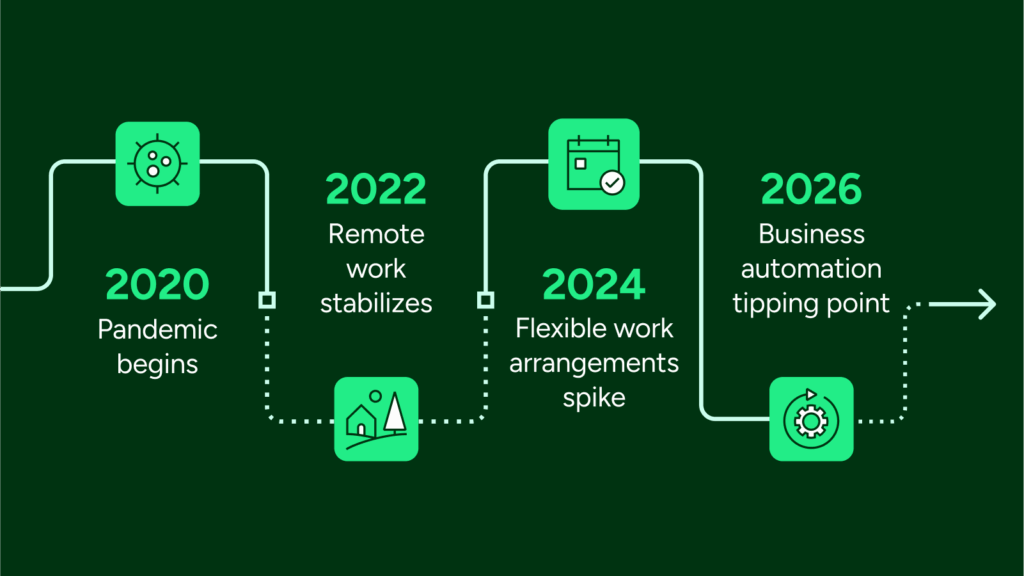
Business has fundamentally shifted. Robert Half’s 2025 research shows modern organizations operate differently, with 40% of new job postings offering flexible work arrangements—up from 19% in early 2023.
This isn’t just about where people work. It’s about how work gets done. Teams need processes that function smoothly whether someone’s in the office, at home, or traveling. Manual handoffs and paper-based workflows create bottlenecks that slow things down.
We Work Remotely’s 2025 report found 65% of employees predict continued growth in flexible work arrangements. The businesses adapting fastest are those that automated their core processes early.
Companies with business automation now operate with 22% lower costs and significantly faster response times than those still handling tasks manually, according to comprehensive automation research.
Speed matters more than ever. Digital Silk’s research shows companies using automation achieve $5.44 return for every $1 invested—primarily because they can respond faster than competitors.
Customers notice the difference. When one company can process your request in minutes while another takes days, the choice becomes obvious.
Formstack and Mantis Research found over half of employees spend two hours daily on repetitive tasks. That’s 500+ hours per employee annually—time that could drive growth instead.
What automation looks like: Instead of manually entering expense receipts, automated systems scan and categorize them instantly. Rather than typing the same customer information into multiple systems, automation syncs data across platforms. Automated workflows generate batches with accurate calculations, eliminating the need to create mailing labels one by one. Real-time tracking replaces manual inventory spreadsheet updates.
Manual processes create errors that require even more time to fix. Vena Solutions’ research shows 93% of IT professionals report increased satisfaction with their productivity after implementing automation—largely because they spend less time correcting mistakes.
What automation looks like: Automated data validation catches incorrect information before it enters your system, preventing costly mistakes. Customer relationship management systems automatically verify contact details and flag duplicates. Address validation prevents shipping delays and failed deliveries before labels are printed. Accounting software reconciles transactions automatically, eliminating manual bank statement matching.
How much time does your team spend tracking down information? Looking for documents, checking order status, finding contact details—these micro-tasks add up quickly.
What automation looks like: CRM software for business automation stores all customer interactions in one searchable place, automatically populating shipping information across order processing, support tickets, and delivery notifications. Project management tools automatically track task progress and deadlines. Shipping management systems provide real-time package tracking across all carriers from a single dashboard. Integrated platforms automatically populate customer information when you need it, whether for invoicing, support tickets, or shipping labels.

Manual status updates consume enormous amounts of time. Checking on orders, updating customers, coordinating between departments—automation handles these communications automatically.
What automation looks like: Email marketing platforms automatically send follow-up sequences to new leads. Automated text messages for business notifications keep customers informed about shipping status, delivery updates, and order confirmations without manual intervention from your team. Customer service systems generate automatic responses to common questions. Shipping platforms automatically send tracking notifications when orders ship and delivery confirmations when packages arrive. Project management tools send automatic status updates to team members without manual intervention.
PointStar Consulting’s research shows 89% of companies streamline communication after automation implementation.
Every manual handoff creates a potential bottleneck. Orders waiting for shipping rate quotes, inventory updates sitting in queues, returns stalled until someone processes refund approvals, peak season volumes overwhelming manual workflows.
What automation looks like: Approval workflows automatically route documents to the right people for sign-off. Customer orders flow seamlessly from eCommerce platforms to shipping carriers without manual data entry. Automated invoicing triggers when services are completed or packages are delivered. Peak season scaling systems handle increased shipping volumes without proportional staff increases, preventing holiday bottlenecks.
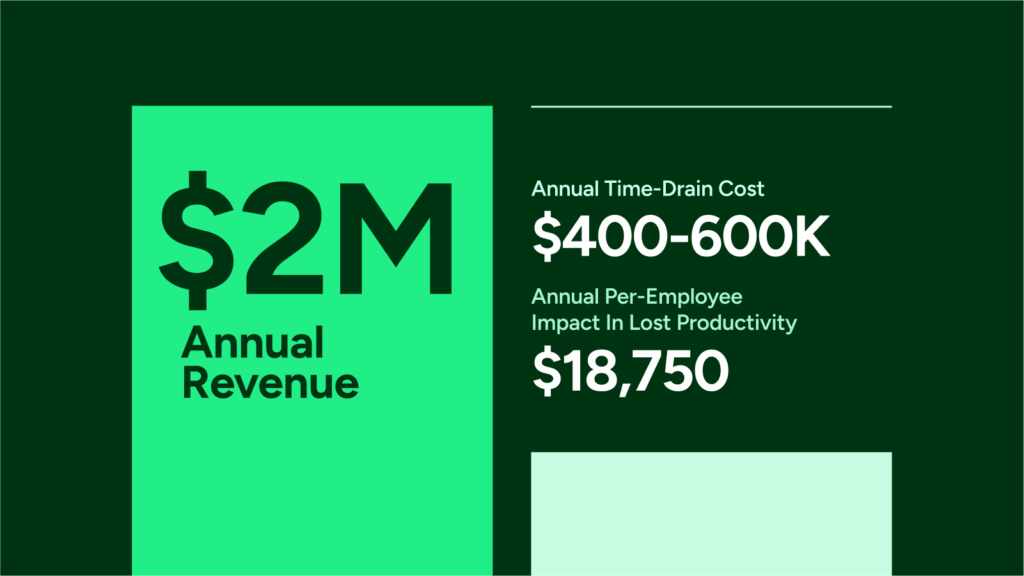
Research shows manual processes cost companies 20% to 30% of revenue annually.
Here’s what that looks like for a typical business:
Business efficiency research reveals time-drains beyond the obvious:
Organizations that save time through automation gain more than efficiency. They reinvest those hours into activities that drive growth: customer service, product development, strategic planning, and business expansion.
Order fulfillment touches every business function. Product shipments, customer communications, invoices, order confirmations—every department handles shipping-related tasks.
Organizations implementing shipping automation can save significant time across their team while accessing ShipStation’s pre-negotiated discounts across 200+ carriers through multi-carrier rate shopping.
Shipping automation creates ripple effects. Shipping automation often serves as the gateway to broader efficiency gains. Once teams experience time savings from automated order processing and multi-carrier shipping, they naturally explore marketing automation software for small businesses to handle post-purchase email campaigns, customer follow-ups, and review requests. The time-saving mindset spreads throughout the organization.
Instead of being locked into one carrier, automated shipping gives you access to the best rates and delivery options for every order—from next-day delivery to international shipping. Most businesses see time savings within the first week of implementation.
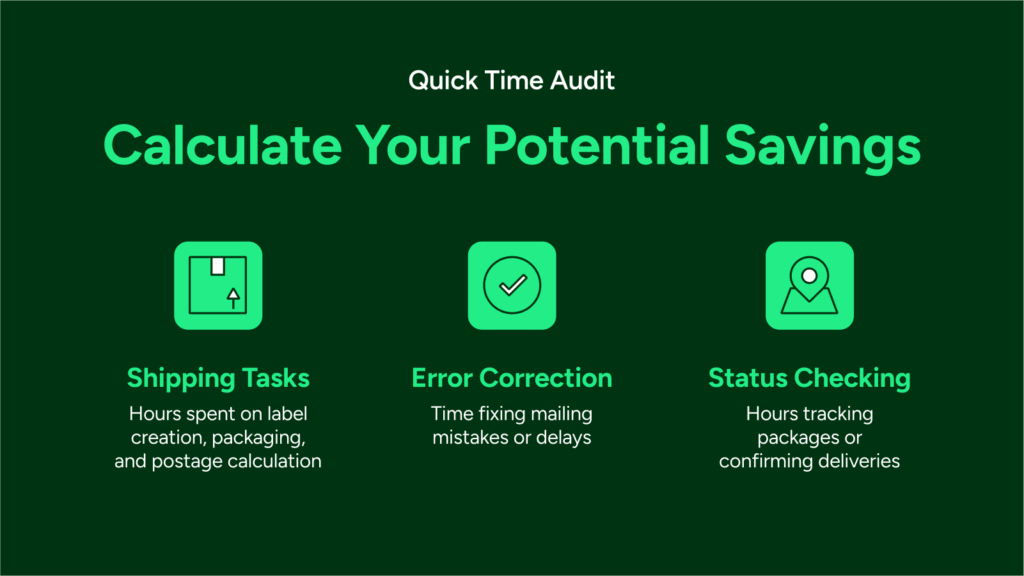
Multiply your team’s hourly rate by hours spent on manual shipping tasks. Most businesses discover they’re spending thousands of dollars annually on tasks automation could handle.
Ask yourself: What could your team accomplish with 15+ extra hours weekly? New customer outreach? Product development? Strategic planning? The opportunity cost of manual processes often exceeds the direct time cost.
Kissflow’s research shows 80% of organizations are investing more in intelligent automation in 2025, and 75% view automation as essential for competitive advantage.
The global workflow automation market reaches $18.45 billion in 2025, driven by businesses seeking time savings and efficiency gains.
AI business process automation represents the next evolution in efficiency. These intelligent systems learn from shipping patterns, optimize carrier selection automatically, and adapt fulfillment workflows based on order volume. By 2026, businesses using AI-powered automation will operate with unprecedented speed and accuracy.
In 2026, the fastest companies will win. Customers choose vendors that respond quickly. Workers prefer organizations that respect employees’ time. Partners work with businesses that operate efficiently.
Business automation provides the time advantage that separates organizations that thrive from those that flounder.
Focus first on processes that consume the most time or create the biggest bottlenecks. Shipping automation often provides the best starting point because:
The right business process automation software makes the difference between scattered tools and seamless operations. Look for platforms that integrate with your existing ecommerce systems and handle your highest-volume shipping processes first.
Success with one automated process creates enthusiasm for more. Teams that save time through shipping automation become advocates for broader efficiency improvements.
Once you’ve proven the time-saving benefits, expand automation to other high-impact areas. Marketing workflows, financial reporting, and HR processes all offer significant time-saving opportunities that complement your streamlined fulfillment operations.
Start with platforms that address your highest-impact processes. Popular business automation software includes Zapier for connecting applications, HubSpot for customer management, and ShipStation for multi-carrier shipping optimization. Focus on tools that integrate well with your existing ecommerce platforms.
Bottom line: Businesses thriving in 2026 will have automated their time-drains and redirected those hours toward growth activities. They will respond faster, operate more efficiently, and focus on what matters most.
Time reality: Every hour spent on manual processes is an hour competitors use for strategic advantage. The businesses saving time through automation today will dominate their markets tomorrow.
Your opportunity: Business automation isn’t about replacing people—it’s about giving them time to do what they do best. Start with shipping automation and discover how much time your business can reclaim.
Ready to save valuable time through business automation? The biggest time-savings opportunity might be simpler than you think. Discover how automated shipping operations can transform your team’s productivity.
Business process automation uses software and technology to handle repetitive tasks without human intervention. It streamlines workflows like order processing, shipping label creation, and customer communications, allowing teams to focus on strategic work while reducing errors and operational costs.
Business process automation software includes CRM systems, workflow management tools, marketing automation platforms, and shipping management systems like ShipStation. These tools handle tasks like automated shipping labels, multi-carrier rate comparison, order processing, data synchronization, inventory management, and customer status updates automatically across departments.
Automation helps businesses save 20+ hours weekly per employee, reduce operational costs by 22%, and achieve $5.44 return for every $1 invested. Shipping automation solutions like ShipStation provide access to pre-negotiated discounts across 200+ carriers while eliminating manual errors and speeding up order fulfillment.
Automate ecommerce through inventory management systems, automated order processing, shipping solutions like ShipStation for multi-carrier rate shopping and label printing, customer service chatbots, and marketing email sequences. Focus on repetitive tasks like order confirmations, tracking updates, shipping notifications, and customer follow-up communications for maximum time savings.
Intelligent business automation combines traditional automation with artificial intelligence and machine learning. It can make decisions, learn from patterns, and adapt processes automatically. Examples include AI-powered order routing, predictive inventory management, smart shipping carrier selection, and intelligent customer service routing.
Start with AI tools for order processing, shipping optimization, and customer communications. Implement AI-powered shipping platforms, chatbots for customer service, automated text messaging for delivery updates, and intelligent workflow routing. Focus on high-volume, rule-based processes like carrier selection and delivery route optimization for best results.