Back










































 Peak Season


Customs delays during holiday shipping often happen when paperwork is incomplete, duties go unpaid, or parcel volumes overwhelm border agencies. A documentation error that costs an hour to resolve during a quiet month can add days to delivery times in December.
This guide explains why customs delays increase during peak season, what common tracking updates mean, how long customs can hold a package, and what you can do to prevent border holdups.
Whether your international orders are still on your shelves or already stuck at the border, these tips can help keep shipments moving.
Customs delays increase during the holidays because more parcels reach border agencies simultaneously, and every shipment still requires accurate, complete documentation. As processing queues grow, even a minor discrepancy on a commercial invoice or customs declaration can trigger a manual review. That review may now sit in a much longer queue.
This is where many sellers get caught off guard. During a slower month, a fixable documentation error might require only a quick correction and a little back-and-forth. During peak season, that same error can leave a package waiting for days, or even a week, for review. Reduced staffing and holiday closures at government agencies can further slow customs processing and duty payments.
That’s why holiday shipping delays often feel different from ordinary delivery delays. The package usually isn’t lost. It’s waiting for clearance, additional information, or its turn in the processing queue. The real problem is timing: A two- or three-business-day delay can mean a missed gifting deadline, a refund request, or an unhappy customer.
If you’re reading this in late November, peak season is already underway. The strategies below cover both shipments you haven’t sent yet and packages already held up at customs.
Most customs holds can be traced to five factors: increased parcel volume, incomplete documentation, incorrect product classification, unpaid duties and taxes, and changing import regulations. Four of these five can be addressed before a shipment leaves your facility, giving sellers an opportunity to prevent many avoidable delays.
Peak season creates a straightforward capacity problem. As more orders cross international borders, customs teams must review additional declarations, invoices, and duty assessments. As processing queues grow, packages that would normally clear quickly may spend additional time waiting for review.
A shipment doesn’t necessarily need a documentation problem to experience a delay. Sometimes, there are simply too many parcels arriving at once for customs agencies to process them efficiently.
Missing information or discrepancies between shipping documents can cause customs to hold a package for additional review. Common issues include missing HS codes, incorrect EORI information where required (an EORI number identifies businesses involved in importing and exporting goods in the EU), inaccurate quantities, unclear declared values, and inconsistent product descriptions.
Customs officials rely on this information to identify goods, determine applicable duties and taxes, and decide whether a shipment can enter the destination country. If the documentation is incomplete or raises questions, the package may be held until the information is corrected or verified.
An HS (Harmonized System) code is a standardized number used to classify products for international trade. An incorrect code or overly broad product description can slow customs clearance and potentially trigger additional inspection.
Descriptions such as “gift,” “sample,” or “variety” don’t give customs officials enough information to identify what’s inside a package. Although “gift” might seem like a natural description during the holidays, it can create unnecessary complications.
A clear product description should answer three questions:
For example, “Men’s jeans, 80% cotton, 20% polyester” provides more useful information than simply “jeans.” Similarly, “Bicycle rear pivot part” is more specific than “bike part.”
Vague or incomplete descriptions can trigger additional inspections and delays of five to 10 days.
When duties and taxes remain unpaid after a package reaches its destination country, customs clearance and final delivery can stall. The shipment may wait for payment, for the carrier to collect the charges, or for the recipient to respond.
During the holidays, customers may overlook carrier emails and text messages or refuse unexpected fees altogether. What should be a straightforward delivery can quickly become a stalled shipment.
Choosing the right delivery duty arrangement before checkout can help prevent these situations. We’ll cover the differences between DDP and DDU/DAP below.
International customs regulations are constantly evolving. De minimis thresholds, which determine the value below which imported goods may qualify for duty-free treatment, have changed in several major markets. As the U.S. ends duty-free de minimis treatment, more shipments face formal customs procedures regardless of their value.
The EU provides another example of how quickly import requirements can change. A flat €3 duty per HS line item began July 1, 2026, for applicable B2C shipments valued at €150 or less. Product identifiers (PIDs), such as SKUs, manufacturer part numbers, or GTINs, UPCs, and EANs, were also scheduled to become mandatory for B2C distance sales on Nov. 1, 2026.
Missing or inaccurate product information can result in shipments being held, delayed, or rejected. Because customs requirements vary by destination and continue to change, verify the latest regulations before shipping. This information is not legal advice.
One of the most effective ways to prevent customs delays is to provide complete, accurate, and consistent shipment information. Customs officials should be able to identify your products and assess applicable duties and taxes without having to guess what’s inside the package.
Before shipping an international order, make sure you:
A few details deserve extra attention. Country of origin refers to where a product was manufactured or substantially transformed, not necessarily where it’s being shipped from. USPS requires a six-digit HS code on customs declarations for every item on international commercial shipments.
If a shipment requires an importer of record (the party responsible for the accuracy of the customs declaration), identify that party before the package leaves your facility.
For more detailed, field-by-field instructions, see ShipStation’s customs declarations help article.
Unpaid duties and taxes are among the most common reasons international shipments stall. That’s why it’s important to decide who will pay these charges before an order ships.
The two common options are:
| DDP | DDU / DAP | |
|---|---|---|
| Buyer experience | Smoother delivery with no surprise fees | Potential additional charges at delivery |
| Refusals and stalls | Lower risk of packages being refused or held for payment | Higher risk of payment delays and refused packages |
| Your costs | Higher upfront costs; duties must be calculated correctly | Lower advertised price; buyer handles import charges |
| Your responsibility | Seller handles applicable duties and customs obligations | Buyer handles the payment step |
DDU/DAP can still be a viable option, provided customers understand their potential import charges before completing checkout. Whether you’re shipping to Canada, Mexico, the EU, or another international market, transparency is essential.
If a customer needs an order by a specific holiday, an unexpected duty bill can create an unnecessary obstacle to delivery. Offering DDP where practical can help reduce that risk and create a more predictable buying experience.
A proactive customs plan can help prevent last-minute shipping problems, reduce “Where Is My Order?” (WISMO) inquiries, and minimize the number of packages held at the border.
For a broader look at preparing for the busiest time of year, ShipStation’s peak season shipping playbook covers how to prepare, manage fulfillment, and evaluate performance throughout peak season.
Rather than relying on one universal holiday shipping deadline, establish cutoffs based on destination country, carrier, service level, and product type.
A shipment to Canada may require a different cutoff than one headed to the EU, particularly when product documentation or import requirements are more complex.
Build additional business days into your delivery estimates to account for customs clearance, not just carrier transit times. Be especially conservative with gift shipments, where delivery dates are particularly important and vague product descriptions can create additional complications.
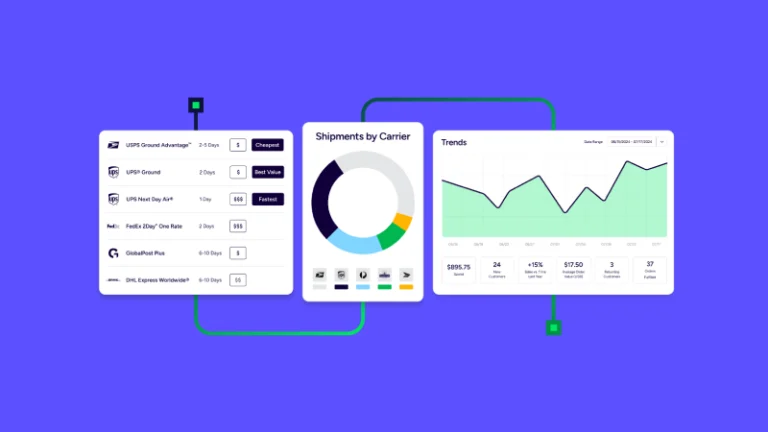
A multi-carrier shipping strategy gives you more flexibility when a particular shipping lane becomes congested, or a carrier’s service becomes less reliable during the holidays.
Different carriers and services offer varying delivery speeds, rates, and destination coverage. Having multiple options makes it easier to adjust your shipping strategy as conditions change without disrupting your fulfillment workflow.
ShipStation integrates with 200+ global carriers, allowing you to compare shipping options and maintain flexibility without relying on a single carrier.
Address errors can cause avoidable shipping delays, sometimes before a package even reaches customs. Validate shipping addresses, confirm postal codes, and make sure destination address formats meet local requirements.
You should also consider whether DDP is the right option for your international shipping lanes. Prepaying duties and taxes won’t eliminate every customs issue, but it removes one of the most common reasons a shipment gets held after arriving in its destination country.
Customers are generally more understanding of shipping delays when they know what’s happening and what to expect next.
Send tracking information as soon as orders ship, provide realistic delivery estimates, and explain that customs processing may add time during the holidays. If tracking indicates a customs hold, communicate that clearly rather than leaving customers wondering where their orders are.
For example:
“Your order is currently going through customs clearance, a routine step that can take a few additional days during the holidays. Please watch for a message from the carrier requesting any applicable duties, taxes, or additional identification information.”
A short, proactive update is far better than a lengthy apology after a missed delivery deadline.
If a package is stuck in customs, start by reviewing its tracking status and checking the shipment’s documentation, duties, and recipient contact information.
Most customs holds involve missing information, unpaid charges, or additional inspections rather than a lost package. Understanding the tracking updates can help you identify the issue and determine what to do next.
| Tracking status | What it usually means | What to do next |
|---|---|---|
| Awaiting customs clearance | Customs has received the parcel and is reviewing its entry information | Check the commercial invoice, HS code, declared value, and recipient details |
| Held in customs | The shipment requires additional review, payment, or information | Look for requests from the carrier or customs agency |
| Customs hold | The package cannot move forward until an issue is resolved | Check for missing documentation, unpaid duties, or restricted-item concerns |
| Package has been detained | The shipment is subject to a more significant compliance or inspection issue | Contact the carrier and gather all relevant shipment records |
| Inbound out of customs | The package has cleared customs and returned to the carrier’s delivery network | Monitor tracking for the next delivery scan |
When a customs hold appears, work through these steps:
There’s no universal timeframe for customs holds. A shipment delayed by missing information or an unpaid duty charge may clear relatively quickly once the issue is resolved. However, packages requiring physical inspections, additional documentation, or restricted-item reviews can take considerably longer.
Pay attention to whether the carrier or customs agency has requested information from you or the recipient. If so, respond as quickly as possible to avoid adding unnecessary time to the process.
If a package hasn’t received a tracking update for a week or longer, contact the carrier to confirm its last known location, identify the reason for the hold, and determine what steps are needed to move it forward.
Customs processing often takes longer during peak season for two main reasons: higher shipment volumes create longer review queues, and customs agencies control the clearance process once a package reaches the border.
An issue that could have been corrected in minutes before shipping may take considerably longer to resolve after a package enters the customs system. That’s why accurate documentation and preparation are so important.
ShipStation helps reduce the risk of customs-related shipping errors by simplifying how sellers prepare and manage international shipments.
For orders to international destinations, ShipStation automatically generates customs declarations, reducing the need for manual data entry during peak order volumes. Its HS code lookup feature helps you identify the appropriate classification for products, while GlobalPost offers a free HS classification tool.
ShipStation also provides access to 200+ global carrier integrations and shipping to more than 195 countries. This gives sellers the flexibility to compare services, select appropriate delivery speeds, and establish backup options for busy international shipping lanes.
With tracking information and order details centralized on a single dashboard, you can also more easily identify customs holds and keep customers informed about potential delivery delays.
To learn more about managing cross-border fulfillment, explore ShipStation’s international shipping tools.
Customs delays are much easier to prevent than they are to resolve once a package is already in transit. Accurate product descriptions, correct HS codes, a clear DDP or DDU/DAP strategy, earlier shipping cutoffs, and proactive customer communication can all help keep international orders moving during the holidays.
With the right processes and shipping tools in place, you can reduce avoidable customs holds, manage international orders more efficiently, and deliver a better customer experience throughout peak season.
Ready to simplify international shipping? Start a free trial with ShipStation or explore the international shipping tools to see how you can streamline cross-border fulfillment.

A package is usually delayed in customs because the shipment data is incomplete, the item description is vague, duties and taxes are still unpaid, or the parcel was selected for review. In some cases, customs may open packages during inspection. Peak-season volume makes every one of those steps move slower.
Yes. Holiday shipping brings more international parcels into customs systems at the same time, so backlogs grow. That means normal reviews take longer, and small paperwork mistakes are more likely to create shipping delays.
Customs can hold a package for very different lengths of time depending on the issue. A simple payment or data problem may clear fast, while a customs hold tied to inspection, restricted goods, or missing product details can last much longer. The best clue is whether the carrier is asking for action from the sender or recipient.
Yes, but the odds depend on how early you shipped and what caused the delay. If the package is already inbound out of customs, it has cleared and may still make the delivery window. If it is still awaiting customs clearance close to a holiday, sellers should prepare the customer for a later arrival.
For cross-border orders, the main reason is usually incomplete or unclear shipment data. Poor descriptions, wrong HS codes, bad values, or unpaid duties and taxes slow customs clearance more often than the box itself does. During peak season, those errors hurt more because queues are longer.
Start with better data. Use clear item descriptions, correct HS codes, accurate values, country of origin, and strong commercial invoice data. Then set earlier shipping deadlines, choose the right service for the destination, and decide in advance how duties and taxes will be paid.