Back
Back











































 Shipping & Fulfillment

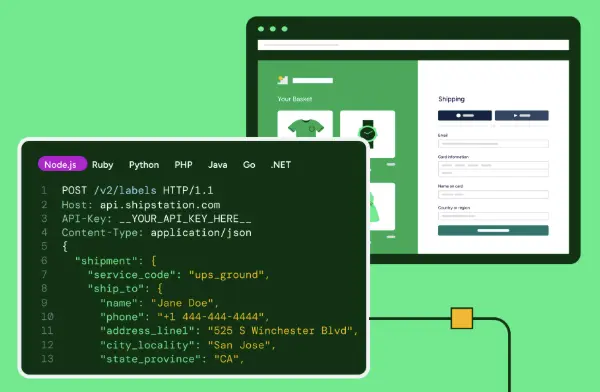


When you think about optimizing order fulfillment, you might imagine finding more efficient picking, packing, and shipping strategies. But fulfillment is about more than just efficiency. As one panelist put it during our recent Innovation Delivered session, “Fulfillment is really the business of expectations management.”
Even the best-run operations face issues like package delays and underperforming carriers that frustrate customers. What separates successful brands from competitors is how smoothly they navigate these challenges. Good ecommerce order fulfillment needs three things: smart planning, the right order fulfillment software, and happy customers.
But how do you go from a brand that simply delivers to one that inspires loyalty through fulfillment? Here are eight concrete strategies with practical tips from our panelists for building resiliency.
This article shares insights from ShipStation’s Innovation Delivered summit. Ecommerce experts shared tips for building strong businesses that focus on customers. Learn more about Innovation Delivered and watch all event sessions here.
The first step in creating a fulfillment process that drives loyalty is designing workflows that keep you on track even when things go wrong.
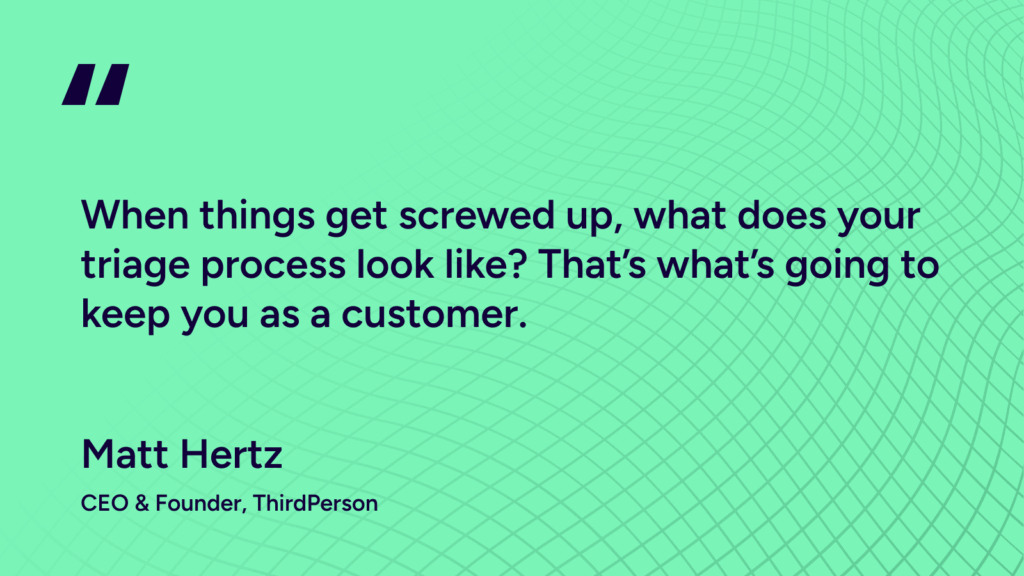
When a customer has a problem, how you respond to it determines whether or not they return. Plan for 5% of your orders to go wrong.
Use these strategies to handle issues smoothly when they arise:
Don’t want to design new workflows yourself? Skip the expensive logistics consultant and invest in the right technology instead.
Platforms like ShipStation diversify carrier options, automate fulfillment workflows, and give your team more time to engage customers. This approach improves your fulfillment experience right away. It costs less upfront.
Customer trust is often won or lost in small moments of friction. Empower frontline staff to make decisions without manager approval. They respond faster, which keeps customers happy, increasing their odds of purchasing again. This freedom helps with effective customer order fulfillment.
This idea is called the autonomy principle. As BK Beauty’s Jennifer Hernandez shared, “Give your team credit and communicate regularly. [Employees] have a very genuine desire to make the product better, and I think that there’s certainly room to do it.”
Start by creating clear guidelines to show staff what they can and can’t offer customers. For example, you could authorize a 10% discount on a future purchase for extensive delays instead of allowing returns outside of your standard window. These guidelines should integrate seamlessly with your ecommerce order fulfillment software.
Give employees regular recognition. Celebrate quick-thinking employees who turn negatives into wins—this builds loyalty and reinforces commitment to your policies.
Jennifer Hernandez explains the Amazon effect:
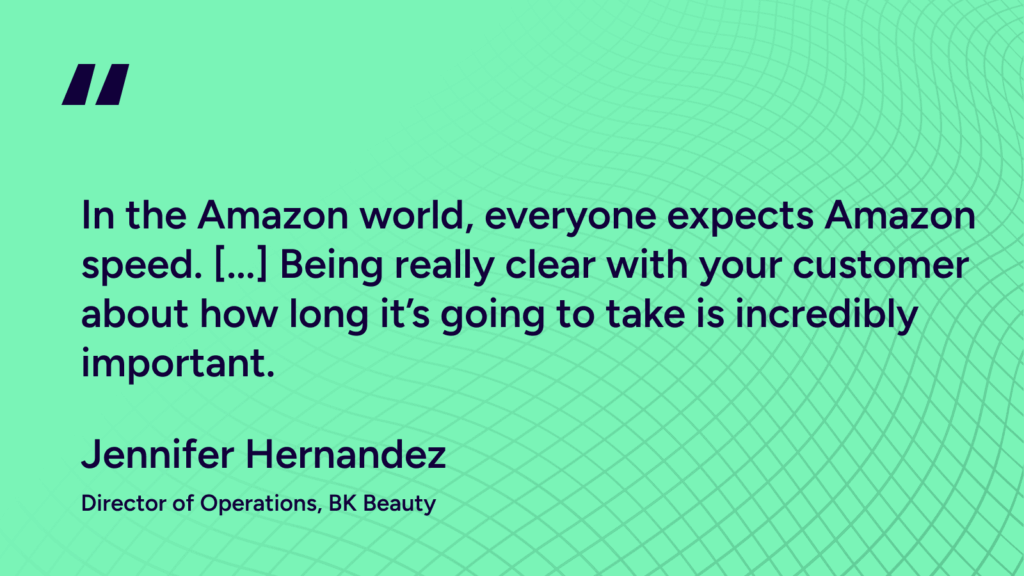
You don’t need to offer two-day shipping to be competitive. But you should:
Your customers shouldn’t chase updates. Support calls frustrate customers and damage your brand impression. Proactive updates and alerts protect your reputation.
Returns aren’t failures—they’re second chances to win trust. Seamless return and exchange processes turn frustrated first-time buyers into loyal customers. Here’s how:
Streamline your returns process with these strategies:
Prioritize exchanges over returns through your policies. This encourages customers to still buy from you, even if their initial purchase wasn’t what they expected.
Give instant store credit. Customers can buy again right away. Use smart tools to suggest other sizes or colors customers might like.
Think about giving customers a discount when they choose exchanges over returns. Streaming services often offer discounts when customers try to cancel—apply the same principle to exchanges.
Mine your return data to avoid similar issues moving forward. You may have repeated issues with wrong sizes, damaged packaging, or unpopular SKUs that need further attention.
Next on your fulfillment to-do list is optimizing for your actual product mix. Design processes that align with your actual shipping data—not the outliers that demand the most attention.
Some brands make the mistake of designing packaging for oversized products, international shipments, and other rare events. But focusing on these can slow down processing for the other 90% of your orders that should be simple.
Here are some strategies for optimizing your product mix:
Fulfillment complexity slows growth. It delays your delivery timelines, hurts your brand’s reputation with customers, and makes reaching your business goals all the more challenging.
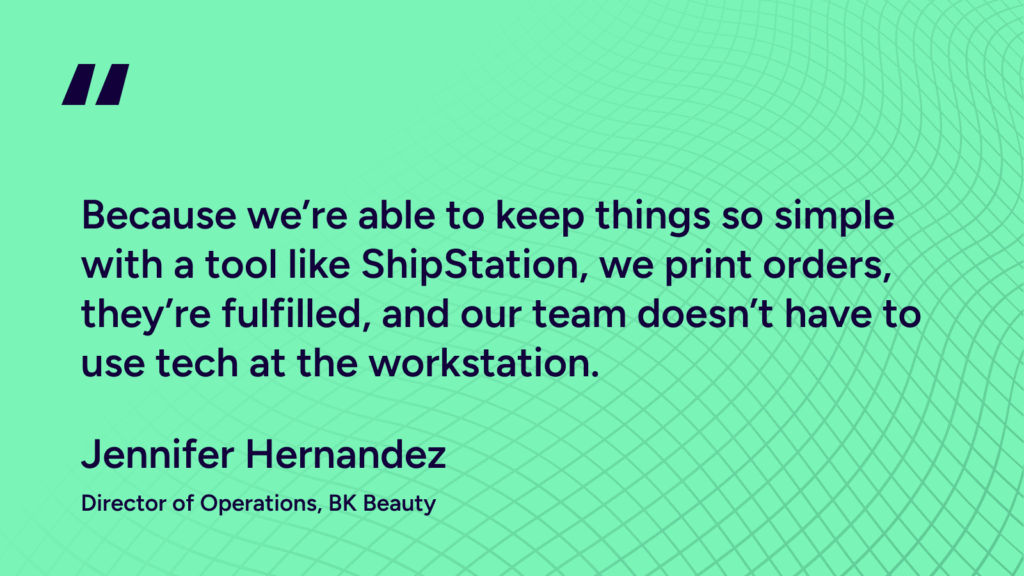
The right tools make a difference. Hernandez of BK Beauty shared how her team scaled its processes with better tech:
Surprises may work in marketing, but they’re terrible for fulfillment. When customers don’t know what to expect, they contact your team more often, which can be a frustrating experience. Be upfront and honest about fulfillment for every transaction:
Kian from Schwab highlighted cross-border pain points and the importance of transparency: “We show a cost at checkout that’s the final cost. Duty is included, and there’s no further part to that. [Unfortunately, the way many businesses are currently operating,] what a lot of people experience instead is getting an email saying, ‘You owe UPS this amount in fees and taxes.’”
The last thing you want is customers getting emails from carriers demanding more money because of your business. One bad surprise can lose a customer forever. Clear communication matters.
Fulfillment processes that work today might not work tomorrow. You need systems that can scale as your business grows. Otherwise, you’ll have to redesign your fulfillment strategy every time you hit a new milestone.
Technology makes this easier. You can use tools like ShipStation to handle bulk orders and reduce manual entry tasks. This frees your teams from routine decisions so they deliver value elsewhere.
Diversity your carriers. Over-reliance on a single partner means a single issue—like a strike—could halt your operations. Partner with more than one carrier you trust to reduce this risk.
Create systems that maintain the same standards no matter how many packages you send through them per day (within reason).
Many businesses aren’t getting as much as they could out of their customer service interactions. These are opportunities to strengthen relationships and create long-term loyalty. But companies often treat them like one-off issues to solve quickly.
Adopt a customer success mindset instead:
Every customer interaction is a chance to win loyalty. At scale, that means every time you engage with your customer base, you have a chance to improve your customer lifetime value (CLV) metric.
This is one of the most important key performance indicators (KPIs) for long-term business success. As long as costs and marketing remain constant, you become more profitable as CLV increases. Smart fulfillment helps you make more money from each customer. It also beats competitors.
Great order fulfillment means fixing problems fast, not avoiding them. Even the best brands experience mistakes, delays, and unexpected issues. You stand out by identifying and resolving problems faster than competitors. Use every fulfillment interaction to drive loyalty.
Focus on expectation management in your order fulfillment strategies. Build better order fulfillment workflows. Talk to customers first. Use scalable technology that grows with you.
ShipStation helps you do exactly this. From automating your workflows to helping you consolidate carrier options, our smarter management system can be the key to unlocking your company’s potential. Sign up today to get started.