Back
Back








































 Carriers & Rates


Picking international shipping companies isn’t a one-and-done decision. It’s more like conducting an orchestra. Smart businesses don’t hunt for one perfect carrier—they build a roster of shipping carriers. Each provider handles what it does best. Speed for one shipment. Cost savings for another. Premium service when it counts.
This approach flips shipping from a cost drain into a real edge. You meet different customer needs without blowing your budget. And you’re not stuck when one carrier can’t deliver. It’s strategic, not reactive.
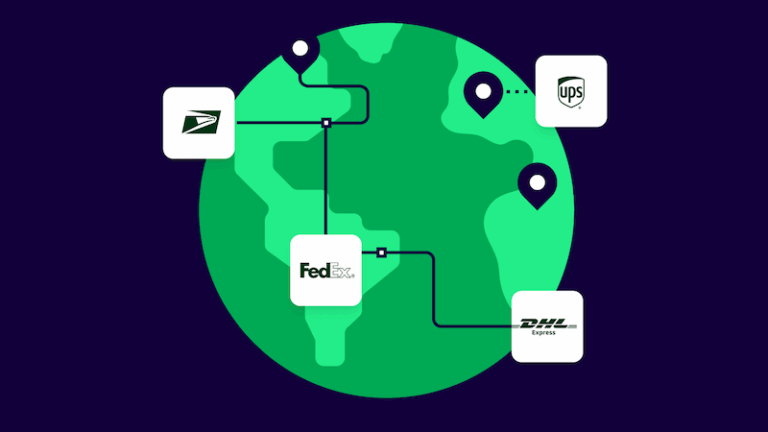
Cross-border shipping is messy. Every global carrier built their network differently. That’s actually good news. UPS excels at predictable B2B routes. FedEx offers flexibility across service tiers. DHL dominates challenging markets. USPS keeps costs low for lightweight packages.
These aren’t competing clones—they’re specialized tools. Using multiple carriers makes sense. But managing five different logins? That’s where things get painful. You need a central hub. Something that lets you compare rates, print labels, and track everything without jumping between systems.
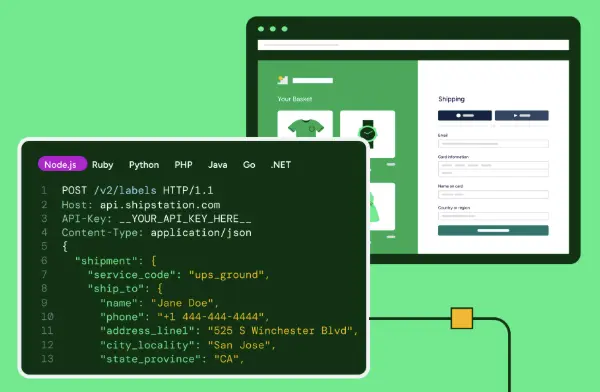
ShipStation does exactly that. One platform handles all your carriers. Carrier rate shopping happens automatically. Automation rules enforce your strategy without constant decision-making. It’s the difference between chaos and control.
UPS built its reputation on consistency. Their international network prioritizes repeatability over flash. For B2B shipments, commercial flows, or any scenario where ‘pretty good every time’ beats ‘amazing sometimes,’ UPS delivers. The network just works.
UPS international shipping time won’t always be fastest. That’s not the point. What you get is predictability. Worldwide Express hits most commercial centers in 1-3 days, while Worldwide Expedited takes 2-5 days but costs less. Worldwide Saver delivers within a week to most places.
Here’s what matters: the variance is low. You can actually plan around UPS timelines. Shipping high-value components? Industrial parts? Time-sensitive documents? UPS rarely surprises you. That reliability has value.
ShipStation’s UPS integration makes this even better. Real-time tracking. Automated documentation. Batch label printing for high volumes. You get UPS reliability plus operational efficiency.
UPS international shipping rates aren’t the cheapest published prices. But published rates are fiction. What matters is your actual cost after negotiations. Volume shippers get serious discounts through platforms like ShipStation.
Smart shippers look beyond base rates anyway. Dimensional weight fees. Fuel surcharges. Remote area charges. Duties and taxes. All these add up. Sometimes that ‘expensive’ UPS quote ends up cheaper once you factor everything in.
Rate shopping solves this instantly. ShipStation shows you what each shipment actually costs across UPS, FedEx, DHL, and USPS. Real numbers, not guesses. Most businesses cut shipping costs 15-30% just by choosing smarter.
UPS international customs processing includes brokerage services and electronic documentation. That helps. But customs forms still need accurate data. Product descriptions. Harmonized codes. Proper valuations. Get it wrong and your shipment sits in customs for days.
ShipStation automates this headache away. The platform pulls product details from your catalog—harmonized codes, origin countries, declared values. When you print a label, customs forms generate automatically. No typing or no mistakes. No delays at the border.
FedEx international brings options. Lots of them. From overnight express to budget economy, they’ve got service levels for every situation. That flexibility helps when different shipments need different treatment. But it demands discipline. Without rules, teams over-spend or under-service randomly.
FedEx international shipping times span a wide range. International Priority delivers next business day to major cities—fastest option when speed matters, while international Economy takes 2-5 days but costs way less. International Ground covers Canada and Mexico in 1-7 days.
This variety lets you match service to need. Customer emergency? Use Priority. Standard fulfillment? Go Economy. Nearshore markets? Ground works fine.
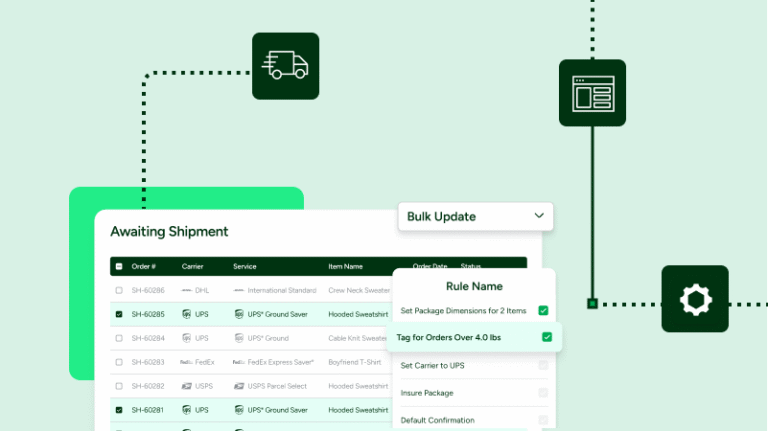
ShipStation converts this flexibility into a system. Set rules: ‘Use Priority for orders over $500.’ Or ‘Economy for standard fulfillment.’ Or ‘Premium customers always get express.’ The platform enforces these automatically. No judgment calls. No mistakes.
FedEx international shipping rates vary wildly by service level. Priority can cost 40-50% more than Economy. That difference adds up fast. But choosing the wrong service hurts too—either wasting money on speed you didn’t need, or disappointing customers with slow delivery.
Rate comparison tools fix this. ShipStation shows you every option before you commit. See exactly what Priority costs versus Economy versus UPS versus everyone else. Then set thresholds: ‘Use Economy unless Priority is under $45.’ Or ‘Switch to UPS if FedEx exceeds $60.’ The system handles it.
FedEx international customs relies on their global clearance network. Trade Networks provides consulting. Electronic docs speed things up. Priority Alert flags urgent shipments for faster processing. The infrastructure is solid.
What slows things down? Bad paperwork. Missing harmonized codes. Incorrect valuations. Incomplete forms. ShipStation prevents these problems by auto-generating commercial invoices, certificates of origin, and customs declarations. Data comes straight from your product catalog. Forms get pre-filled correctly. Shipments clear faster.
DHL Express international is the premium option. Built for speed and reach in tough markets. Where UPS or FedEx might struggle—remote destinations, complex regulations, emerging economies—DHL usually excels. You pay more. But when failure isn’t an option, DHL delivers.
DHL Express international shipping time sets benchmarks. Express Worldwide hits 220+ countries in 1-3 days. That’s broader reach than competitors at similar speeds. Need specific delivery windows? DHL Express 9:00 and 12:00 guarantee arrival times in major cities.
The speed comes from air-first network design. Everything moves by plane. Customs pre-clearance happens in transit. Secondary markets get the same priority as primary ones. That consistency matters when you’re breaking into new territories.
Use ShipStation to deploy DHL strategically. Automate rules: ‘DHL for Asia-Pacific orders over $1,000.’ Or ‘DHL to countries where UPS is slow.’ Get the speed advantage without manual carrier selection every time.
DHL international shipping rates run high. Published prices exceed UPS and FedEx for similar services. Volume discounts help but don’t eliminate the premium. The question isn’t whether DHL costs more. It’s whether you’re paying for value or just paying.
Strategic use makes the math work. Use DHL for high-margin products. Urgent customer needs. Destinations where reliability justifies the cost. ShipStation’s cost analysis calculates total landed costs—including duties, taxes, and fees—so you’re comparing apples to apples. Set spending thresholds to control DHL usage automatically.
DHL international customs handling is exceptional. Dedicated specialists. Customs facilities at major gateways. Direct relationships with customs authorities globally. This translates to faster clearance and proactive problem-solving when issues arise.
But expertise only helps if your documentation is clean. ShipStation feeds DHL accurate customs data automatically. Product details, harmonized codes, origin countries, declared values—everything pulls from your system. No manual entry. No transcription errors. Clean data meets DHL expertise, and shipments clear smoothly.
USPS international taps into global postal networks. That means broad reach at low prices. Speed isn’t the selling point. Neither is premium service. What you get is affordable access to nearly every country. For lightweight packages, low-margin products, or testing new markets, USPS makes sense.
USPS international shipping times vary a lot. Priority Mail International usually takes 6-10 days. First-Class Mail International runs 7-21 days. Priority Mail Express International promises 3-5 days but costs more—often approaching private carrier prices.
The tradeoff for lower rates is less control. Once USPS hands off to foreign postal services, delivery speed depends on their infrastructure. Tracking updates get sparse. Timelines extend past estimates, especially in countries with weak postal systems.
ShipStation provides whatever tracking USPS offers. Priority and Express services get decent visibility. But you’re working within postal network limitations. Best use case: cost-sensitive shipments where arrival windows are flexible.
USPS international shipping rates shine for packages under 4 pounds. First-Class options cost less than private carriers. Priority Mail International stays competitive up to 20 pounds. For lightweight items, USPS is hard to beat.
Economics shift as weight increases. Heavier shipments or faster transit needs often favor private carriers. ShipStation’s rate comparison shows these crossover points automatically. You’ll see exactly when USPS saves money and when UPS, FedEx, or DHL become better value. Most businesses save on lightweight international packages by mixing USPS intelligently with other carriers.
USPS international customs leans on destination postal services for clearance. That means less control than private carriers with in-house brokerage. Errors cause major delays. Packages get returned. Customs forms must be accurate—USPS requires PS Form 2976-A or 2976 depending on value and destination.
ShipStation generates proper USPS customs forms from your order data. Forms print alongside labels. No manual preparation. For high-volume shippers sending hundreds or thousands of international packages monthly, this automation is essential. What would take hours happens in the background.
Comparing international shipping rates is trickier than it looks. Published prices mean nothing. Total landed cost is what matters: base shipping plus fuel surcharges plus dimensional weight charges plus remote fees plus duties plus taxes plus customs clearance. One carrier’s ‘cheap’ rate can easily become the most expensive option.
Real-time visibility solves this. ShipStation calculates comprehensive costs across UPS, FedEx, DHL, USPS, and specialty carriers. Side-by-side comparisons show actual prices for each shipment. Current surcharges included. Zone calculations accurate. No surprises at checkout.
Beyond individual shipments, aggregate analysis reveals patterns. ShipStation’s reporting shows carrier performance by route, service level, and customer segment. Which carriers underperform certain destinations? Where are shipping costs spiking? What route optimizations make sense? Data-driven decisions replace hunches.
International customs clearance trips up everyone eventually. Every border crossing needs documentation: commercial invoices, harmonized codes, accurate valuations, origin certificates. Sometimes import licenses. Sometimes additional permits. Get something wrong and shipments sit for days or get returned.
Manual customs preparation eats time and generates errors. Product descriptions must match requirements. Values must align with transactions. Harmonized codes must classify goods correctly. Multiply this across hundreds of SKUs and dozens of countries? It’s brutal.
Automation changes everything. ShipStation pulls product data from your catalog—harmonized codes, origin countries, declared values. Print a label and customs forms generate automatically. All required fields are populated correctly. Consistent across all shipments.
High-volume operations need this. Manual processes that work at 50 international shipments monthly break at 500. ShipStation’s batch processing handles any volume. Built-in validation catches errors before printing. Integration with carrier electronic customs systems enables pre-clearance, reducing delays significantly.
Effective international shipping needs orchestration. Multiple carriers working together, each handling what it does best. This requires three things: centralized visibility, intelligent automation, and continuous improvement through analytics.
ShipStation provides the platform. UPS, FedEx, DHL, USPS, and dozens of regional carriers integrate into one interface. No more logging into separate systems. Everything happens from a single dashboard—rate comparison, label printing, tracking, and performance analysis.
Automation rules encode strategy into the system. Consistent execution without constant decision-making. Create rules: ‘Use UPS for Europe, DHL for Asia-Pacific.’ Or ‘Express services only for orders over $500.’ Or ‘Premium customers get faster delivery.’ Or ‘Choose carriers by lowest cost under $50.’ Rules run automatically. Strategy becomes systematic.
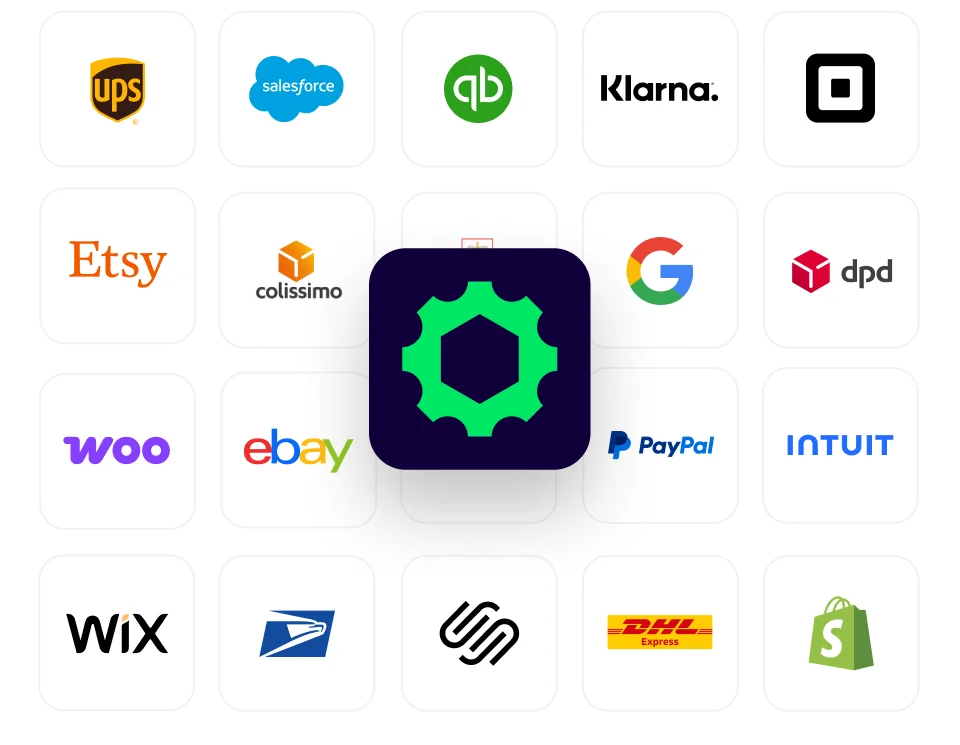
Integration reaches beyond carriers. ShipStation connects to 150+ selling channels, shopping carts, and marketplaces. Orders flow in automatically. Tracking updates push back without manual data entry. Truly multi-channel fulfillment means international orders from your website, Amazon, eBay, and everywhere else get handled the same way.
Analytics complete the loop. ShipStation’s dashboard reveals what’s working and what isn’t. Carrier performance by route. Delivery speed trends. Cost per shipment breakdowns. Customer satisfaction correlations. These insights drive optimization: switching carriers on underperforming routes, eliminating wasteful service levels, testing new carriers. Shipping transforms from intuition-based to data-driven.
International complexity doesn’t require complex operations. ShipStation turns multi-carrier management from an operational burden into a competitive advantage—visibility, automation, and intelligence working together.
ShipStation delivers:
Start your free trial: Experience how ShipStation simplifies international shipping across multiple carriers. No credit card required.