Back
Back










































 Carriers & Rates


FedEx international shipping services are built around intent rather than convenience. Priority, Economy, and Connect Plus each serve a different strategic purpose tied to speed, margin protection, and ecommerce scale. The real risk is rarely the choice of FedEx itself. The risk lies in choosing the wrong FedEx service to achieve the desired business outcome.
When service selection is manual or inconsistent, shipping becomes reactive. When it is automated and policy-driven, FedEx becomes a lever for consistency, risk control, and customer trust across global markets.
A common mistake organizations make is treating FedEx as a single, interchangeable carrier. In practice, FedEx operates as a portfolio of services, each optimized for a specific balance of cost, speed, and operational risk. Viewing these services as interchangeable often leads to overspending on speed or underserving customer expectations.
A portfolio mindset changes the conversation. Instead of asking which service is fastest or cheapest, teams should ask which service aligns with the shipment’s intent. When that alignment is clear, shipping decisions become predictable and defensible rather than ad hoc.
ShipStation makes this distinction visible at the moment of fulfillment by supporting FedEx international shipping services within a unified workflow.
FedEx International Priority exists to minimize risk. With international delivery times often falling between one and three business days to major global markets, Priority is built for reliability and speed. It is not designed to be the most economical service; it is designed to reduce exposure.
Priority makes strategic sense when order value is high, delivery commitments are explicit, or brand reputation is directly tied to delivery success. In these cases, shipping cost functions as insurance. The premium price for speed offsets the risk of delays, disputes, and customer dissatisfaction.
The hidden cost of choosing a service other than Priority is often underestimated. Downgrading service levels to control spend can trigger a cascade of downstream costs, including support escalations, refunds, reshipments, and lost lifetime value. For high-value international orders, Priority frequently prevents these outcomes altogether.
FedEx International Economy trades speed for cost efficiency. Transit times are longer, but pricing is more favorable. This service exists to protect your margin when urgency is not essential to the customer experience.
Economy performs best when expectations are clear. Customers are generally tolerant of slower delivery when timelines are consistent and well communicated. Problems arise when Economy is used without guardrails, creating ambiguity around delivery promises.
Economy should be paired with transparent delivery messaging, defined order value thresholds, and clear escalation paths for exceptions. Without these controls, Economy can quietly increase churn while appearing to reduce shipping costs on the surface.
FedEx International Connect Plus was designed specifically for ecommerce. It balances speed, tracking visibility, and cost for cross-border direct-to-consumer shipments. For many brands expanding internationally, it offers the most practical middle ground.
Delivery windows are predictable, tracking is end-to-end, and it simplifies customs and documents. These features matter at scale, where customer experience must remain consistent even as volume grows.
For standard international ecommerce orders, Connect Plus often delivers the best balance between customer satisfaction and cost discipline.
FedEx pricing accounts for risk. Faster services assume more responsibility for delivery outcomes, while slower services shift more risk back to the shipper. This distinction is often overlooked, yet it is central to building a coherent shipping strategy.
High-margin orders typically justify lower risk tolerance and faster services. Low-margin orders can absorb more risk in exchange for cost savings. Aligning service choice with margin structure prevents your shipping strategy from undermining your pricing strategy.
When it comes to shipping label requirements, like most international shipping carriers, FedEx applies dimensional weight pricing. What matters is not just how much a package weighs, but how much space it occupies. Thresholds and enforcement vary by service and region, which makes packaging discipline a recurring cost driver.
This reality reinforces the need for standardized packaging, SKU-level audits, and executive visibility into dimensional exposure. Packaging inefficiencies compound quickly. Once embedded, they affect FedEx costs for all your shipments.
Manual service selection works until volume increases. At scale, human judgment introduces inconsistency, bias, and error. Automation changes this dynamic by translating shipping intent into execution.
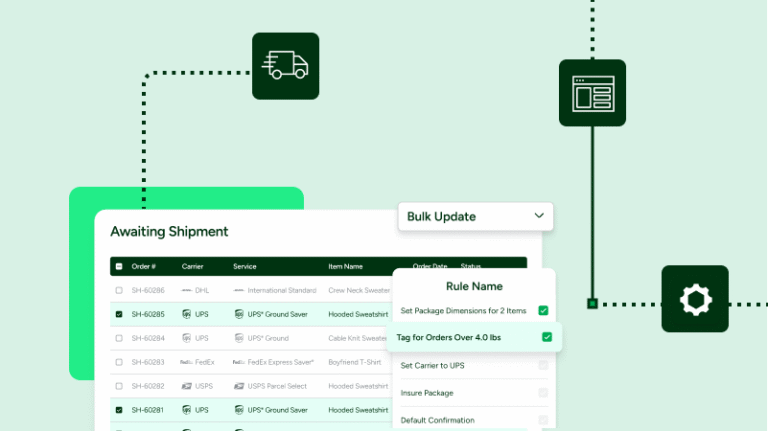
With automation rules in place, high-value orders and certain destinations can default to Priority, and standard DTC orders can route through Connect Plus. These decisions happen automatically, without slowing fulfillment.
ShipStation automation enables this policy-based approach to service selection.
Automation does not remove control. It enforces it.
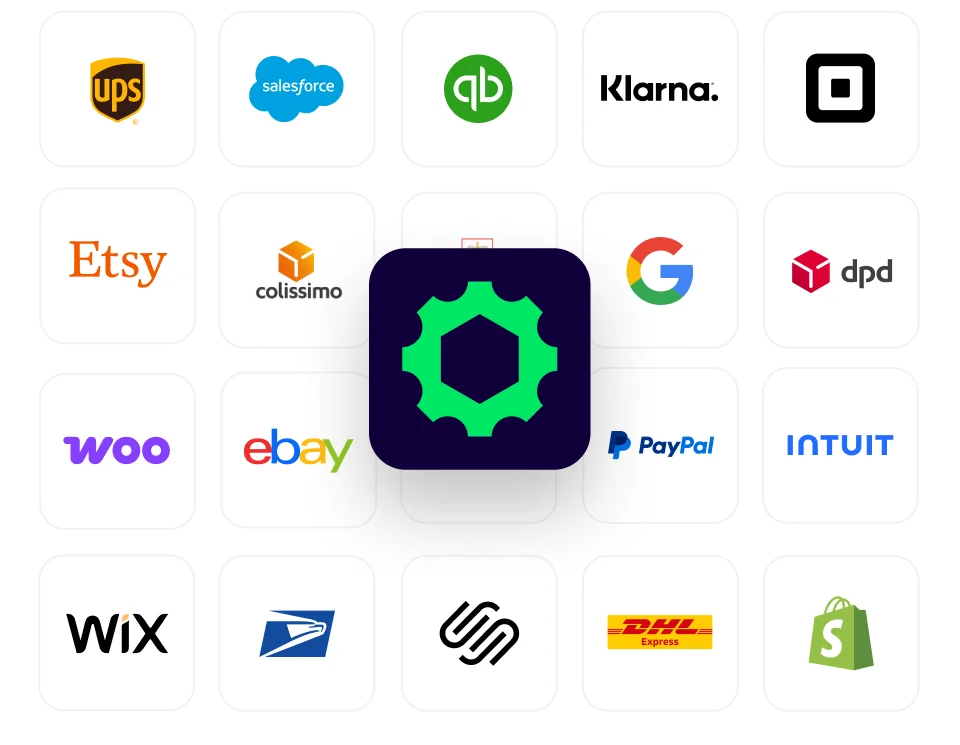
The most successful shipping businesses rarely use FedEx alone. It is typically used alongside UPS, USPS, DHL, and other providers based on each carrier’s strengths.
Companies that use a multi-carrier shipping approach rather than a single-carrier model gain flexibility, resilience, and control over costs and customer experience. Relying on a single carrier limits reach and performance to that carrier’s network and pricing structure.
In contrast, a multi-carrier system connects businesses with a range of international, regional, and specialty carriers and services, so each shipment can be matched to the option that best fits its destination, price point, and delivery expectation.
Instead of juggling accounts and interfaces manually, businesses can use a single platform like ShipStation to manage orders, compare shipping rates, generate labels, and automate carrier selection based on business rules. This reduces manual work and human error, scales with volume, and keeps operation costs down while retaining strategic choice.
When choosing carriers or creating rule-based selection, keep in mind that FedEx often excels in predictable international delivery, hybrid domestic-to-international flows, and scalable ecommerce fulfillment.
Certain signals indicate that your shipping strategy has become reactive. These include habitual overuse of Priority “just in case,” a lack of documented service-selection rules, rising shipping costs that do not correlate with order value, and frequent manual overrides during fulfillment.
When these patterns appear, shipping decisions are no longer designed. They are improvised.
When implemented with intent, FedEx services support governance. The cost breakdown aligns with order value. Delivery promises remain consistent. Risk is allocated deliberately rather than accidentally.
This consistency matters more than marginal per-label savings. Over time, it shapes customer trust and operational discipline.
FedEx international services are powerful when used with purpose. FedEx International Priority reduces exposure. FedEx International Economy protects margin. FedEx International Connect Plus enables scale. Automation turns these international shipping options into a system rather than a set of choices.
International shipping excellence is not about choosing the fastest option. It is about choosing the right option every time—without friction, debate, or surprises.