Back
Back







































 Shipping & Fulfillment


Running a successful ecommerce business in Britain today is a constant balancing act. The challenges are considerable: managing stock, dealing with rising costs, navigating the complex world of shipping, and juggling various applications and software, many of which have overlapping functionalities.
Let’s look at some of the most common hurdles UK ecommerce businesses encounter, and explore how a more unified approach to order management and fulfilment helps you overcome them.
The sale is made, and the order notification dings. Great news! But what happens next is often a story of painful manual workarounds for small businesses. For many, it’s a process held together by spreadsheets and sheer force of will: copy-pasting addresses, checking stock levels by hand, and hoping a typo doesn’t derail an order. This setup is often born out of necessity. When you’re also the CEO, Marketing Manager, and Head of Sales, you simply lack the time, knowledge, or budget to add more responsibilities like becoming your business’s own ‘software expert’.
For others, the problem is navigating a maze of software originally intended to streamline the process. Instead, you have an inventory tool that doesn’t quite sync with all your marketplaces, a warehouse app requiring manual CSV uploads, and a shipping platform that’s separate from everything else. The typical solution to bring it all together always seems to be ‘there’s just one more tool you need’—usually requiring an additional account with yet another login and bill.
Regardless of which story sounds more familiar to you, the result is an order management and fulfilment process that creates friction, costs you valuable time, and puts your bottom line at risk through costly shipping errors.
The businesses breaking free from this cycle share a common approach: platform consolidation. Rather than adding another point solution to the stack, they’re moving toward unified systems that bring inventory, warehouse operations, shipping, and analytics into a single view. The principle is simple—you shouldn’t need an IT department to manage your software or a dozen logins to get an order out the door.
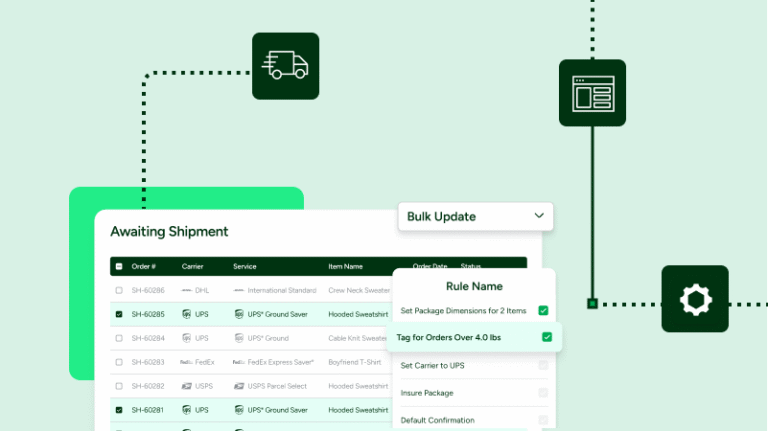
How ShipStation helps: ShipStation serves as that unified ecommerce shipping command centre, integrating your inventory management, warehouse tools, delivery, and analytics into one platform. Tens of thousands of UK businesses use it to eliminate the juggling act without needing technical expertise to set up or manage.
The checkout page is the final hurdle, where you balance what a customer is willing to pay for shipping against what it actually costs you to deliver. Every order feels like a negotiation with your own profit margin. You see what large businesses charge, but accessing those same rates is a real challenge. You are left to choose between the risk of losing the sale with higher shipping prices or absorbing the costs yourself.
Setting up and managing multiple carrier accounts takes time you likely don’t have, and securing great rates directly often requires a shipping volume that feels out of reach right now. It’s the classic chicken-and-egg problem: you need the sales to get the good rates, but you need the good rates to close the sales.
The SMEs gaining ground here aren’t necessarily shipping more volume—they’re shipping smarter. Multi-carrier rate comparison has shifted from a nice-to-have to a competitive necessity. The most effective approach combines three elements: access to pre-negotiated rates (eliminating the volume threshold barrier), the flexibility to use existing carrier accounts alongside new options, and real-time comparison across domestic and international services.
How ShipStation helps: ShipStation gives you instant access to pre-negotiated, discounted rates across 25+ domestic services from all major UK carriers—Royal Mail, DPD, DHL, Parcelforce, UPS, and more. Already have your own negotiated rates? Bring Your Own Account lets you connect existing carrier relationships and use them alongside ShipStation’s discounted services, all from one dashboard.
Every time you make a sale, you create data. It doesn’t matter if you ship five orders a day or five thousand—buried in your order history are the secrets to your success. The problem is that for too long, the tools needed to unlock those secrets have been complex, expensive, and beyond reach for most small businesses. You’re sitting on a goldmine of information but have no way to easily access and analyse it, leaving you to make gut decisions on stock, marketing, and shipping.
Every business, regardless of its size, deserves access to the powerful insights its own data holds. A true command centre shouldn’t just process your orders—it should help you understand them.
The most valuable shipping analytics for ecommerce businesses typically fall into three categories: inventory intelligence (what’s selling, what’s stagnant, and where you’re at risk of stockouts), carrier performance tracking (are your delivery partners actually meeting their SLAs?), and customer pattern recognition (seasonal trends, geographic clusters, repeat purchase behaviour). When these insights live inside your fulfilment workflow rather than a separate reporting tool, they become actionable.
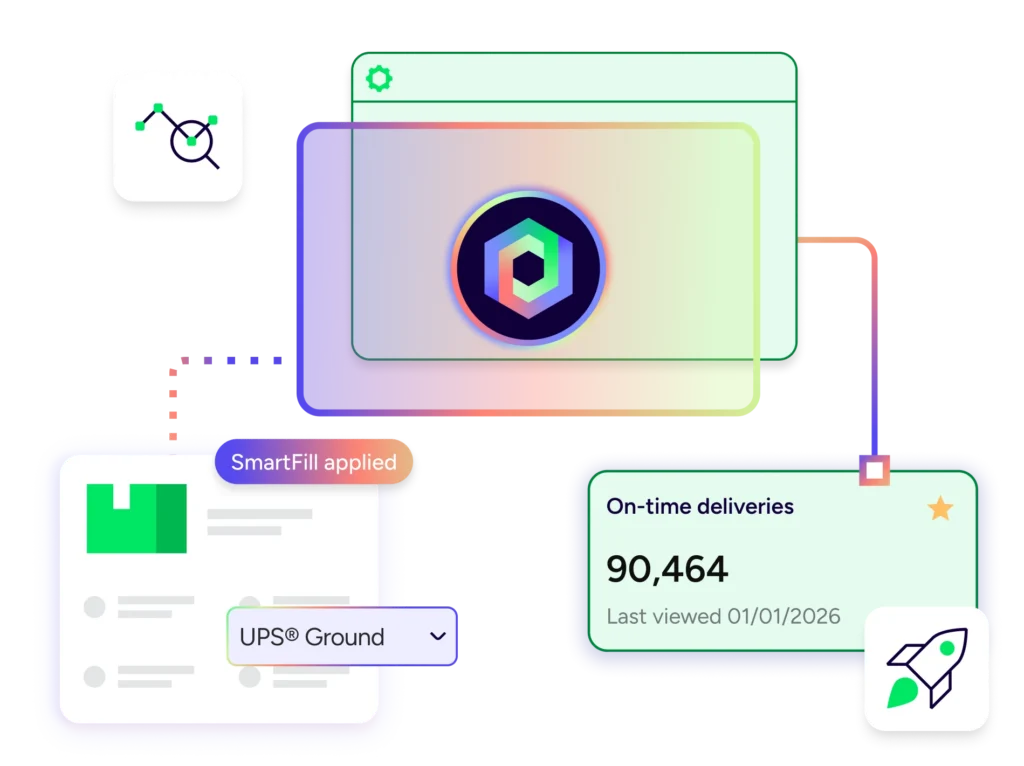
How ShipStation helps: ShipStation’s built-in shipping analytics and dashboards transform your order data into clear, actionable reports—no spreadsheet exports or separate BI tools required. Track carrier performance, spot inventory trends, and understand customer behaviour from the same platform where you fulfil orders.
Your first overseas order is a huge milestone. It’s proof that your business has appeal far beyond the UK. But that initial excitement can quickly be replaced by anxiety. The world of international shipping can feel like a minefield of customs declarations, tariffs, and trade rules, even within the UK itself. The constant fear of a package getting stuck somewhere is a major deterrent for many small businesses from starting to sell globally.
The UK businesses successfully scaling internationally tend to share a few common practices. First, they’ve systematised customs documentation—automating HS codes, declared values, and country-specific requirements rather than researching each shipment manually. Second, they understand the compliance landscape: Windsor Framework requirements for Northern Ireland, evolving EU import thresholds, and the growing importance of DDP (Delivered Duty Paid) options for markets where customs friction kills conversion.
The mindset shift matters too. Rather than treating international orders as edge cases requiring extra handling, growth-focused businesses build them into their standard workflow from the start.
How ShipStation helps: ShipStation simplifies international shipping with built-in support for Windsor Framework compliance, EU customs documentation, and access to carriers serving hundreds of global destinations. For US-bound shipments, GlobalPost DDP service handles duties and taxes upfront—removing the friction that often stops international orders at the border.
Committing to new software is a big step, especially when you’re worried about being locked into a rigid and expensive plan. Many business owners face a difficult choice: stick with manual processes that hold them back, or sign up for a contract that forces them to pay for features they don’t need.
When evaluating options, look for flexibility. Your needs at 50 orders a month are different from your needs at 500 or 5,000. The right platform should grow with you, not force you into an enterprise tier before you’re ready.
How ShipStation helps: ShipStation operates on a no-contract, no-commitment basis with feature-based plans—so you only pay for what you actually use. The Free Plan removes the cost barrier entirely for businesses just getting started, and every plan includes a 30-day free trial with full feature access, no credit card required.
Running a business is hard enough without fulfilment getting in the way.
Ready to see how ShipStation can simplify your shipping? Start your free 30-day trial today—no credit card, no commitment—and see what stress-free fulfilment looks like.