Back
Back








































 Shipping & Fulfillment



Peak season doesn’t create new problems. It just makes your existing ones expensive. Most sellers won’t look at their shipping setup until orders start piling up—and by then, fixing anything takes triple the time and causes triple the stress it would have today.
The problems that derail peak season aren’t surprising ones: a stale carrier connection, a misconfigured rule, or a printer nobody tested. None of these take long to fix. All of them hurt badly when you don’t.
This is your peak season shipping checklist. Run it before October 26—roughly four weeks before volume starts climbing—and the hardest part of peak season becomes the volume itself, not the operational fires underneath it.
Go into your shipping platform and verify that every carrier account you plan to use is still connected and pulling live rates. Carrier connections can break quietly—a password change on the carrier side, a credential update, or a new carrier account that was never fully tested. You won’t discover the problem until you’re printing labels at 3x your normal pace.
While you’re there, confirm your negotiated rates are actually showing up. If you have volume-based discounts or contract rates with UPS, FedEx, or USPS, verify they’re reflected in the quotes you’re seeing, not just default retail pricing. A 10-cent-per-label gap that’s invisible in August becomes significant across 10,000 holiday shipments.
We have negotiated rates right there and then. Also, our staff is saving a lot of time by being able to access the software and ship during peak hours.
Shipping Automation Rules are the backbone of a fast peak operation. They’re also the part of your setup most likely to be quietly out of date.
Pull up your full rule list and work through each one: Does every rule still match how you actually ship today? Do the conditions still hold? Are there conflicting rules that might fire in the wrong order, or rules that reference carrier services you’ve since paused?

Common issues: rules that reference package presets you’ve renamed, order tags you’ve stopped using, or carrier services that are no longer active on your account. A rule that was perfectly correct in March may silently misroute orders in November.
Getting Automation Rules right before peak is worth the time. Sellers with tight automation rules process labels up to 15 times faster with 40% fewer clicks per order. That efficiency holds during a surge—but only if the rules are correct going in.
Without ShipStation’s batch tools and Automation Rules, our team would spend hours each day manually configuring individual shipments. During peak season when we might process 10,000+ orders in a day, that would be physically impossible with our current team size.
If you’ve added products, changed packaging, or switched suppliers since last year, your package presets may not match what’s actually going out the door. Dimensional weight pricing means a misconfigured preset quietly inflates every carrier rate you’re comparing.
Update presets to reflect your current product weights and packaging. If you use a platform that learns from past shipments—like ShipStation’s SmartFill, which auto-fills weight and dimensions based on your shipping history—spot-check that the learned values still reflect what you’re shipping now, not what you shipped last fall.
Rate shopping is one of the highest-ROI items on any peak season shipping checklist. Carrier surcharges spike in November and December; your optimal carrier mix shifts. Automated rate comparison on every order protects you from locking into the wrong service at the wrong price when surcharges are at their peak.

If you’re not using automated rate comparison yet, this is the week to set it up. If you are, review your criteria: What does “best rate” mean for holiday orders specifically? Cost, delivery speed, reliability? Make sure your logic reflects what your customers expect—and what you’ve promised them in your holiday shipping policy.
We use Rate Shopper daily, to see who’s competitive and which carrier can get it there on time.
ShipStation validates addresses on every order automatically. But automatic address correction—where the platform standardizes and fixes a bad address before you print—is a per-store setting, and it can get missed when you add new selling channels.

Go into your store settings and confirm auto-correction is enabled for each one. It’s a small check that prevents a surprisingly costly problem: undeliverable address fees, reshipped packages, and carrier surcharges all spike when volume does. Make sure every channel is covered, not just your primary storefront.
During peak season the order volume is simply too high to manage the old way. Without ShipStation I would probably have to bring in extra help just to get the labels printed correctly and keep shipments moving out the door.
Many operations bring in temporary or seasonal staff for peak. Before that happens, audit who currently has access to what in your shipping platform, then set appropriate permission levels for new hires.
Seasonal workers should be able to do their jobs without touching billing information, carrier account credentials, or platform settings. Build a standard access template you can clone when onboarding each person. And make sure your team leads know how to reset or revoke access quickly when someone’s last day arrives—that step gets skipped more often than it should.
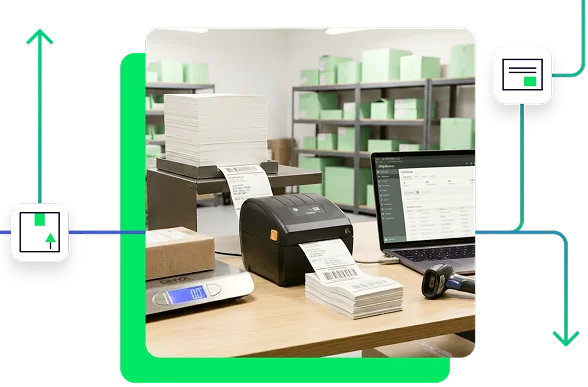
Label printers and shipping scales are easy to take for granted until they’re the reason a line stops moving. Test every device in your fulfillment workflow now, while you have time to source replacements or escalate a support ticket without pressure.
For printers: run a full label print at production speed and confirm nothing jams, skips, or goes out of alignment under load. For scales: calibrate against a known reference weight. When it comes to your network, make sure every workstation that needs to print a label can do so without a frantic IT call on the busiest morning of the year.
If you’re expanding your stations for peak volume, add them and test them now. A new setup that “should just work” has a way of not working at the worst possible moment.
Your returns policy probably exists. But does it reflect your peak season terms?
Many sellers extend return windows for holiday purchases. Some adjust their returns process between December 26 and mid-January. If your policy language, your shipping platform’s return label settings, and your customer service team’s understanding aren’t all in sync, customers will find the gap.

Update your policy copy and get it live before Thanksgiving. Configure your platform to generate return labels under the right conditions. Brief your customer service team so they’re answering return questions from the actual policy, not a remembered version of it. A clear, easy-to-find returns process is one of the most underrated conversion drivers for new holiday customers.
We’ve been able to convert refunds into exchanges. Keeping that money back in the business has been really important. ShipStation has really enabled us to keep the money in Guardian.
This peak season shipping checklist isn’t complicated. Each item takes less than an hour. But skip even one of them and you’re one volume surge away from a preventable crisis.
October 26 is your line in the sand. Not because it’s a magic date, but because it’s roughly four weeks before volume starts climbing—and that’s the runway you need to fix things calmly, not reactively.
Do this work now. When peak season hits, your only problem should be keeping up with the orders.
Start shipping smarter with ShipStation.