Back
Back










































 Shipping & Fulfillment


If you paid tariffs on goods you imported into the US over the last year, the government may owe you money. And as of last week, you can finally start asking for it back.
The window opened on April 20. Whether it stays open—and whether your claim makes it through—is another question entirely.
In February 2026, the Supreme Court struck down the sweeping import tariffs President Trump had imposed using the International Emergency Economic Powers Act (IEEPA). The Court ruled the tariffs exceeded presidential authority under a 1977 law regulating commerce in national emergencies. The government’s new CAPE refund portal opened the door for more than 330,000 importers to reclaim a share of the estimated $166 billion collected from those illegal tariffs. And roughly 1,800 companies have already filed lawsuits to recover what they’re owed.
For ecommerce sellers who sourced inventory internationally—electronics components, apparel, accessories, home goods—this isn’t an abstraction. It’s real money that went out the door.
“The Supreme Court’s tariff ruling may be historic in legal terms, but for merchants the real challenge is immediate and operational: how do we manage inventory, control costs, and keep goods moving to customers? The decision has shifted the landscape for tariffs, and businesses are navigating through unfamiliar terrain. With the right visibility and operational tools, merchants can chart a course through uncertainty and continue serving customers without disruption.”
Josh Steinitz, CSO, ShipStation
To manage that volume of refunds, US Customs and Border Protection (CBP) launched the Consolidated Administration and Processing of Entries program (CAPE) on April 20. Think of it as a centralized processing system. Instead of reviewing each customs entry one by one, CAPE lets eligible importers submit refund claims in bulk. CBP estimates approved refunds will be issued within 60 to 90 days.
But that clock doesn’t start until your claim is approved—and approval isn’t guaranteed.
A few critical things to understand before you file:
Only importers of record can apply. If you paid IEEPA tariffs on goods you brought into the US, you’re the importer of record. If a customs broker handled your entries, they may need to file on your behalf.
Not all payments qualify yet. CAPE currently covers about 63% of eligible import entries and is rolling out in phases. If your payments fall outside that initial scope, you’ll need to wait for later phases—with no confirmed timeline for when they open.
15% of claims are already being rejected. As of April 26, more than 75,000 submissions had been filed—but only about 47,000 were properly processed. Some businesses are seeking tariff refunds outside CAPE’s current scope. Others are encountering account errors that prevent them from filing entirely. Working with a licensed customs broker significantly improves your odds of a clean, approved submission.
If your business imported goods from countries subject to IEEPA tariffs—and paid those duties directly or through a broker—you likely have a valid claim. Small and mid-size ecommerce businesses are among those most affected. Many built their product lines around imported goods and absorbed tariff costs on margins that didn’t have much room to give.
Even if the refund isn’t massive, it’s working capital. For businesses that front-loaded inventory purchases ahead of rate increases, it could be a meaningful recovery.
That said, the uncertainty hasn’t really lifted. Replacement tariffs could still be introduced through other legal channels, and the White House hasn’t ruled out returning to court to block some or all of the refunds.
“Small and mid-sized businesses often face the biggest pressures from changing tariffs and shipping costs, but they also have the advantage of being nimble,” said Josh Steinitz, CSO at ShipStation. “With the right technology, these merchants can protect margins and the delivery experience, offering transparency to customers even when the rules shift.”
The CAPE program addresses the import side—what you paid to bring goods into the US. But the past year’s tariff chaos has also reshaped how sellers think about international ecommerce shipping in the other direction: getting products to customers abroad.
ShipStation’s own platform data clearly tells the story. International shipping volumes were up 20 to 30% year over year in the first half of 2025 as merchants raced to move inventory ahead of tariff implementation. Once the tariffs took full effect and that front-loaded inventory was exhausted, international volumes dropped in the back half of the year—while domestic shipment volumes stayed essentially flat.
“On ShipStation’s platform, we saw international shipping volumes surge 20–30% year over year through the first half of 2025 as merchants front-loaded inventory ahead of higher rates. They then dropped sharply once tariffs fully took effect and that inventory was exhausted. Meanwhile, domestic shipment volumes stayed essentially flat. That divergence points squarely at tariff policy.”
Josh Steinitz, CSO, ShipStation
Every cross-border order carries its own layer of complexity. Customs declarations. Duties and taxes that land at the buyer’s door. Carrier options that vary by country. The risk of packages held in customs limbo because documentation wasn’t complete. The same type of regulatory friction that made IEEPA tariffs so costly for importers exists on the outbound side—just spread across individual orders instead of bulk entry filings.
Most sellers don’t think about this until something goes wrong. A buyer in Canada charged unexpected delivery fees. A shipment to the UK missing the right customs code. A package stuck in transit with no visibility into why.
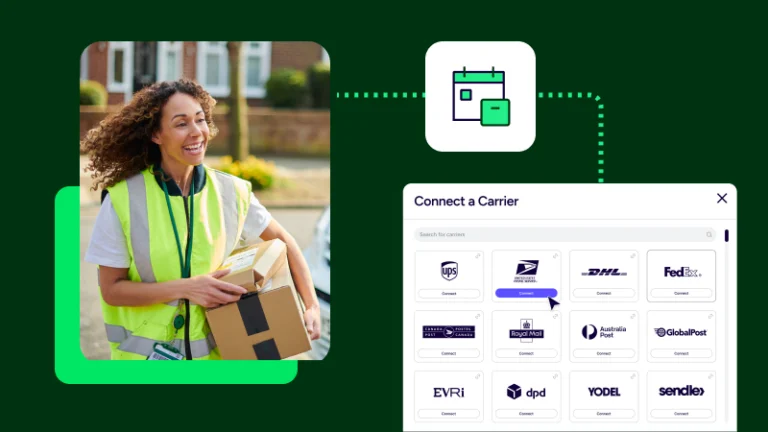
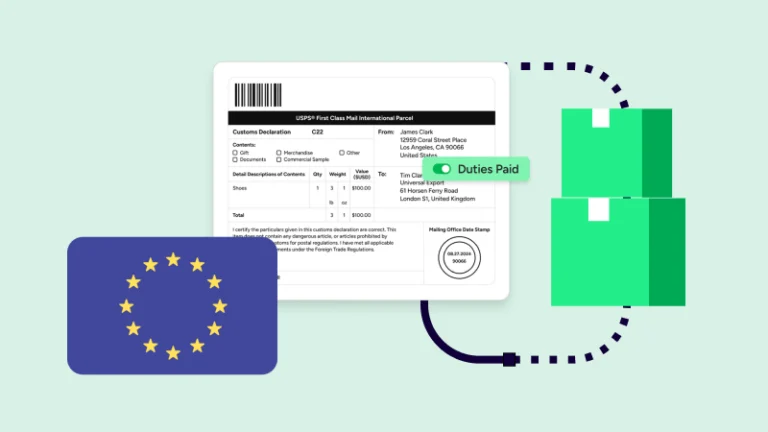
ShipStation’s international shipping capabilities are built to take that complexity off your plate. Options like Delivered Duty Paid let you pay duties upfront, so customers never get hit with surprise fees at delivery. Customs forms are generated automatically. And you get access to global carriers—DHL, GlobalPost, Canada Post, Australia Post, and more—from a single platform, so you’re not stitching together different tools for different markets.
The tariff era made one thing clear: the rules of international commerce can shift fast. The sellers who come out ahead are the ones who’ve built international ecommerce shipping into their standard workflow—not something they scramble to figure out order by order.
If you imported goods subject to IEEPA tariffs, check your eligibility and file through the CAPE portal at cbp.gov. Work with a licensed customs broker if you’re running into issues—many are actively helping clients through the process. Don’t assume it’ll sort itself out.
If you’re shipping internationally to customers, audit your cross-border workflow. Your customs forms: are they accurate? Are you shopping rates across the right carriers for each market? And are duties and taxes handled in a way that doesn’t blindside buyers at delivery?
And don’t overlook the customer communication piece. Consumers who paid higher prices because of tariffs are going to have questions about refunds—and what you do with them. Some businesses are already committing to passing savings back to customers. For smaller merchants, even a straightforward explanation of the situation goes a long way. As People’s Choice Beef Jerky, a ShipStation seller, put it: “Transparency is one way for customers to extend grace back to the small business.”
Keep watching the tariff landscape. The rules have changed before and could change again—the merchants with diversified sourcing, flexible shipping lanes, and data-driven tools in place will be the ones who adapt fastest.
“Supply chains today are like shifting sand, constantly changing under businesses’ feet,” Steinitz said. “The businesses that come out of this strongest will be the ones that used this period to build operational flexibility.”
International ecommerce shipping isn’t a side problem. It’s a core part of how you compete. Build it right, and it becomes an advantage.
Ready to simplify international shipping? Explore ShipStation’s international shipping capabilities and start shipping globally with confidence.