Back
Back






































 Shipping & Fulfillment


For growing ecommerce businesses, the systems behind every order can become almost as important as the products being sold.
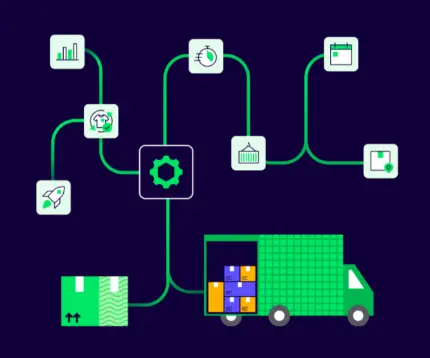
Your ERP manages critical business information. Your ecommerce platforms and marketplaces generate orders. Your warehouse handles picking, packing, and shipping. Your shipping operation needs the flexibility to choose the right carrier and service for every order.
When those systems don’t communicate efficiently, fulfillment can become unnecessarily complicated.
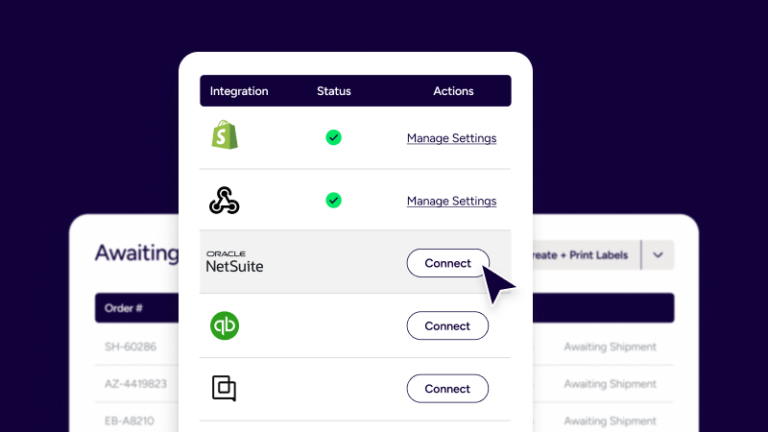
That’s why ShipStation introduced a new native integration with Oracle NetSuite. The integration provides NetSuite users with a direct connection to ShipStation, enabling orders and fulfillment data to flow between the two systems without middleware or a third-party connector.
The result is a simpler path from ERP to fulfillment—with self-serve setup, flexible workflows, and no additional integration cost on any ShipStation plan.
NetSuite serves as a central system for many growing businesses, bringing together functions such as financials, inventory, order management, and other core business operations.
But managing an order doesn’t end when it enters the ERP. At some point, that order needs to reach the warehouse, be assigned to a carrier and service, labeled, shipped, and tracked. Fulfillment information then needs to be routed back to the business systems.
That makes the connection between an ERP and shipping operation an important part of the fulfillment workflow.
For businesses using NetSuite, that connection has traditionally involved an additional integration layer. Middleware or a connector introduces yet another system to configure, maintain, troubleshoot, and pay for. It can also add another dependency between the business and the systems responsible for getting orders out the door.
ShipStation’s native NetSuite integration is designed to simplify that setup. Connecting the two platforms directly lets merchants manage their shipping operation through ShipStation without adding another piece of software to the technology stack.
That means merchants don’t need to introduce another platform simply to move order and fulfillment information between their ERP and shipping operation. Fewer systems can mean fewer things to configure and manage, while giving fulfillment teams a more direct connection between the information that lives in NetSuite and the work happening in ShipStation.
The integration supports automated order import and fulfillment syncing, helping information move in both directions as orders progress through the fulfillment process.
NetSuite remains an important source of business and order information, while ShipStation provides the shipping workflows and carrier flexibility that fulfillment teams need to get orders out the door. It’s a division of responsibilities made easier with a direct connection.
Traditional enterprise software integrations can require implementation projects, external developers, specialized configuration, and coordination between multiple teams or vendors.
The ShipStation and NetSuite integration takes a different approach. Merchants can connect their NetSuite account to ShipStation using OAuth 2.0 and their NetSuite Account ID, with a self-serve setup that takes minutes.
For businesses that already have NetSuite in place and want to add or improve their shipping operation, that can mean getting from configuration to first shipment faster and with less IT involvement along the way. And because the connection uses OAuth 2.0, merchants can use a modern authentication method aligned with NetSuite-approved standards.
The integration supports multiple fulfillment workflows, including:
This flexibility means businesses can configure the connection around their existing fulfillment process rather than fundamentally changing how their operations work. That’s particularly important for mid-market and enterprise businesses, where fulfillment workflows can vary by warehouse, order type, brand, or business unit.
The new integration allows merchants to map custom NetSuite body fields to ShipStation and apply order filters to control which orders sync to ShipStation and how information flows between the systems.
Instead of forcing your operation to conform to a rigid integration, you can configure the connection around your business.
The NetSuite integration also allows NetSuite orders to flow into ShipStation alongside orders from other sources. From there, fulfillment teams can batch, tag, route, and preset shipments while managing their broader shipping operation from one place.
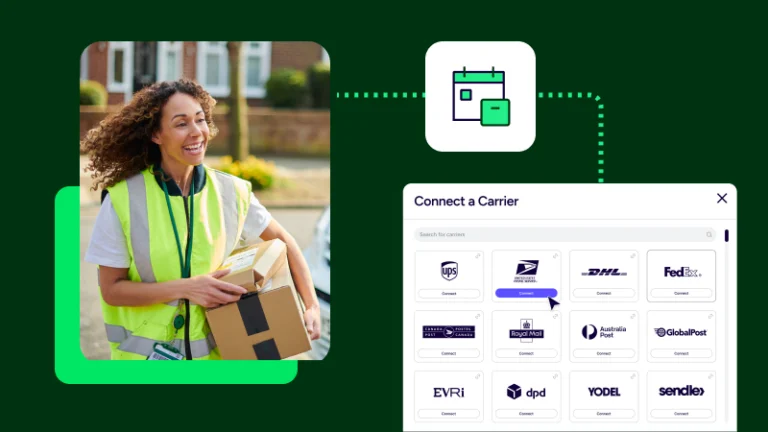
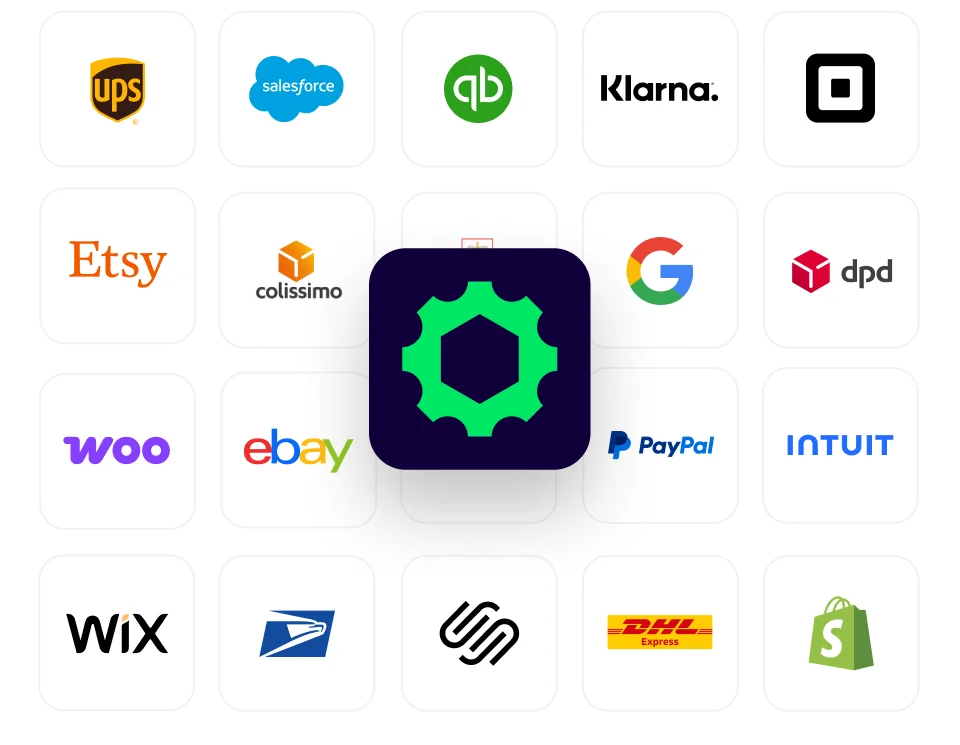
ShipStation also supports connections with 200+ carriers and 200+ order sources. Whether an order originates in NetSuite, an ecommerce platform, or a marketplace, teams can use ShipStation to manage how and where it ships.
The native NetSuite integration is included at no additional cost on every ShipStation plan through the end of 2026, giving businesses a way to connect their ERP and shipping operation without paying for a separate middleware or connector.
For businesses currently relying on a third-party NetSuite connector, the native integration also offers an opportunity to simplify the technology stack, reduce integration costs, and eliminate the need to manage an additional system.
With a direct connection, self-serve setup, flexible fulfillment workflows, and control over which orders and fields sync, ShipStation gives NetSuite users a simpler way to connect their ERP to fulfillment as their operation grows.
Ready to simplify your NetSuite shipping workflow? Connect NetSuite directly to ShipStation!