Back
Back






























 Shipping Basics


Selling direct-to-consumer (DTC) is one thing. Scaling into retail, wholesale, marketplaces, and international shipping is another.
For many growing brands, success creates a new challenge: fulfillment processes that worked when shipping a few hundred orders a month can quickly break down when managing retailer compliance, wholesale orders with dozens of SKUs, multiple sales channels, cross-border shipping, and seasonal spikes.
The brands featured below have very different products and audiences, but they all reached a similar turning point. As they expanded into Target, Walmart, Costco, boutique retailers, Amazon, and global markets, they needed fulfillment operations that could keep pace with growth without constantly adding people or manual work.
These six customer stories show how growing brands streamlined fulfillment, automated repetitive tasks, reduced shipping costs, improved order accuracy, simplified international shipping, and built the operational foundation needed to confidently expand beyond DTC. The result: the operational foundation to take on larger opportunities, serve more customers, and keep fulfillment from slowing growth.
Black Girl Sunscreen

Shontay Lundy founded Black Girl Sunscreen in 2016 with $33,000 and a mission to put better sunscreen in the hands of people with darker skin tones. A decade later, the brand is carried in more than 18,000 stores—including Target, CVS, Walgreens, and Walmart—across the U.S., Canada, Australia, and Nigeria. Despite that growth, a two-person team manages wholesale inventory across four continents.
The turning point, according to operations lead Vishvesh Soni, was treating wholesale and DTC as separate operations. Before ShipStation, wholesale labels arrived by email, customs forms were built by hand, and tracking an international shipment meant digging through message threads.
Now, everything flows through a single hub that automatically generates customs documentation, compares carrier rates in real time, and prints labels in bulk. Fulfillment lead Deasia Moore estimates ShipStation saves the team at least an hour a day.
Black Girl Sunscreen scaled from $33,000 to 18,000 stores worldwide without adding headcount, turning a gap in the market into a leading global brand.
Everything was manual before we switched to ShipStation. It’s night and day.

Spiceology
Spiceology started at a local farmers market. Today, its 450+ spice blends are sold at Target, Walmart, and Costco and distributed through food-service companies like US Foods to restaurants and celebrity chefs. DTC, big-box retail, and food-service wholesale all run through the same fulfillment operation.
Before ShipStation, the team spent an estimated 12 hours per week manually shopping rates across UPS, FedEx, and other carrier sites, printing labels, and updating records. As volume grew, especially during peak season, the process became too inefficient and error-prone to keep up.
Now, automation shops rates, selects the best carrier, pulls orders from Shopify, and handles custom shipping requirements for food-service and retail accounts. Since implementing the platform, the same-day shipping rate for high-volume orders has improved by 32%, while shipment volume has grown 15% year over year without adding staff.
The back-end operation finally caught up with the brand’s ambition, helping accelerate its expansion into retail.
There is nothing that has to do with shipping that ShipStation hasn’t improved for us.
ELK The Label
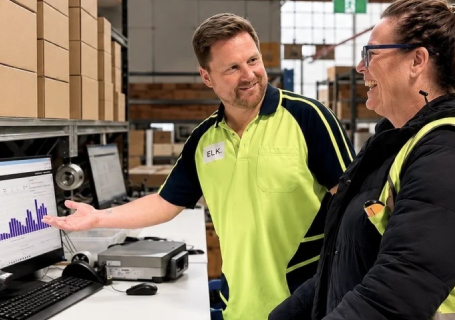
ELK The Label has designed ethically sourced women’s clothing and accessories for more than 20 years. As the business expanded across ecommerce, wholesale, international distribution, and retail stores, fulfillment became increasingly complex. A 35-item wholesale order required a very different workflow from a two-piece online purchase, and managing both manually created costly bottlenecks.
At its worst, orders took two to three weeks to leave the warehouse. ELK centralized shipping and fulfillment with ShipStation, using batch label printing, Scan to Verify, and a branded self-service returns and exchanges portal. Today, the same distribution center efficiently handles wholesale and DTC orders side by side.
The results have been dramatic. Order processing time dropped 70%, from nearly three weeks to 1.2 days. Scan to Verify cut wholesale picking errors by 98% by ensuring every item matched the packing list. And replacing manual returns with self-service exchanges improved customer retention by 30%, recovering approximately $55,000 in revenue that otherwise would have gone to unredeemed store credits.
A stronger fulfillment operation gave ELK the foundation to keep expanding across sales channels with confidence.
If you’re struggling with fulfillment and finding it’s becoming a bottleneck, sign up for ShipStation. The return on investment is well worth it.
Xena Workwear
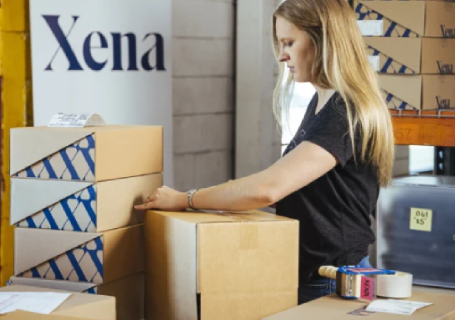
Xena Workwear was built on a simple premise: women in manufacturing and construction deserve safety footwear designed for their feet. Founded in 2018 and launched on Shopify in 2019, the brand quickly expanded into Amazon and retail chains nationwide through electronic data interchange (EDI), the standardized system retailers use to exchange orders and inventory. Unlike DTC orders, retail EDI shipments come with strict routing, compliance, and fulfillment requirements.
As the business grew, integration became the biggest challenge. Xena’s previous shipping solution didn’t integrate with its order management system, forcing the team to manually transfer information for every retail order. ShipStation eliminated those handoffs by automatically routing Shopify, Amazon, and retail EDI orders to the right warehouse and carrier.
Today, the team processes approximately 2,000 orders a month across every sales channel while saving more than 30 hours of manual work. As Xena expands into additional retail locations, its fulfillment infrastructure is already built to scale without added complexity.
The value of ShipStation and Shopify is a seamless ability to get cost-competitive shipping labels all within one integrated system.
Kyn You Believe It

Kyndra Bailey launched her Etsy shop in 2019, selling hand-lettered art centered on mental health and encouragement. In her first year, she shipped roughly 150 packages. By 2025, that number had grown to more than 22,700, fueled largely by TikTok, where a single viral video could generate 100+ orders in an hour.
Managing Shopify, Etsy, TikTok Shop, and other marketplaces without a centralized system would have meant jumping between dashboards and manually reconciling orders.
Instead, ShipStation became the team’s fulfillment hub, bringing every order into a single workflow where they could be organized by product type and processed together—from boutique wholesale reorders to sudden TikTok surges. Scan to Verify virtually eliminated picking errors for visually similar products, while reporting helped Bailey evaluate initiatives such as offering free shipping with a subscription box before putting them into practice.
With fulfillment no longer competing for attention, the team can focus on customers, its mission, and confidently growing across every sales channel.
ShipStation functions as a home base for us. We really don’t have to live on those other dashboards. It’s one of the platforms I truly could not run my business without. Shipping is such an important part of our business, and I always want to know it’s handled.
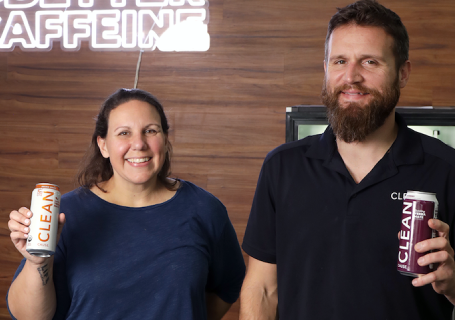
CLEAN Cause
CLEAN Cause makes sparkling yerba mate tea and donates a percentage of its net profits or revenue to support people recovering from drug and alcohol addiction. By fall 2022, that commitment had generated more than $1.8 million in recovery scholarships. For a mission-driven business, every unnecessary shipping cost or manual process puts pressure on the bottom line.
Shipping heavy 12-packs of canned beverages is expensive, and CLEAN Cause serves both DTC and wholesale customers. Before ShipStation, the team manually copied and pasted addresses between platforms—a slow, error-prone process that couldn’t scale.
After integrating its negotiated carrier rates into ShipStation, the cost to ship a box to New York fell from roughly $16 to $13.80. Automation now handles order tagging and routing, allowing a company of just 39 employees to manage fulfillment with only one or two dedicated team members.
Lower shipping costs and more efficient fulfillment helped protect margins as the business grew, contributing to a 311% increase in sales over three years, a 117% increase in total orders, and a 14% reduction in shipping cost per box. For CLEAN Cause, operational efficiency helps strengthen the business behind its mission.
When you’re able to save time in one area, you can focus your efforts on what’s important—like scaling your business, or in the case of CLEAN, giving back to those in need.
No two growth stories look exactly alike. Some brands expanded into big-box retail, while others scaled through wholesale, marketplaces, or international sales. But they all reached the same conclusion: sustainable growth depends on fulfillment operations that can scale alongside the business.
Whether automating manual work, improving order accuracy, reducing shipping costs, or unifying sales channels into a single workflow, the right shipping infrastructure frees teams to focus on growth rather than logistics. As these six brands show, better fulfillment isn’t just about getting packages out the door—it’s about building the foundation to confidently take on the next opportunity, wherever it comes from.
Start your free trial of ShipStation today to begin building the fulfillment foundation your next stage of growth requires.