










































Watch Innovation Delivered
Missed the live event? Catch 40+ speakers across 20+ sessions sharing practical insights, product previews, and strategies you can use now.
Effortless returns and exchanges
Turn returns into revenue with effortless exchanges, a branded customer portal, and centralized tools that cut manual work and unify returns across every channel.
New features that fuel growth
Power growth at every stage of fulfillment. Our enhanced tools for inventory, returns, and analytics help you scale smarter—from order to outcome.
Who We Help
use cases
Products
Core Features
Featured Integrations
Integrations
Resources
Help Center
Recent rule changes have reshaped how UK retailers ship to the United States. ShipStation continues to offer shipping options to keep your US orders moving across the Atlantic.
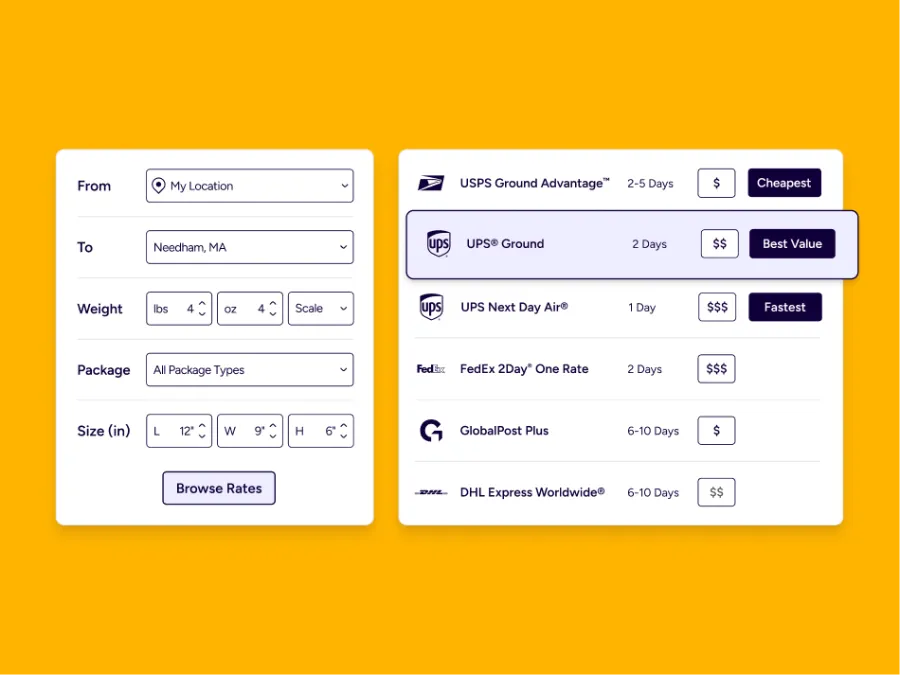
The following options are available to all ShipStation users in the UK:
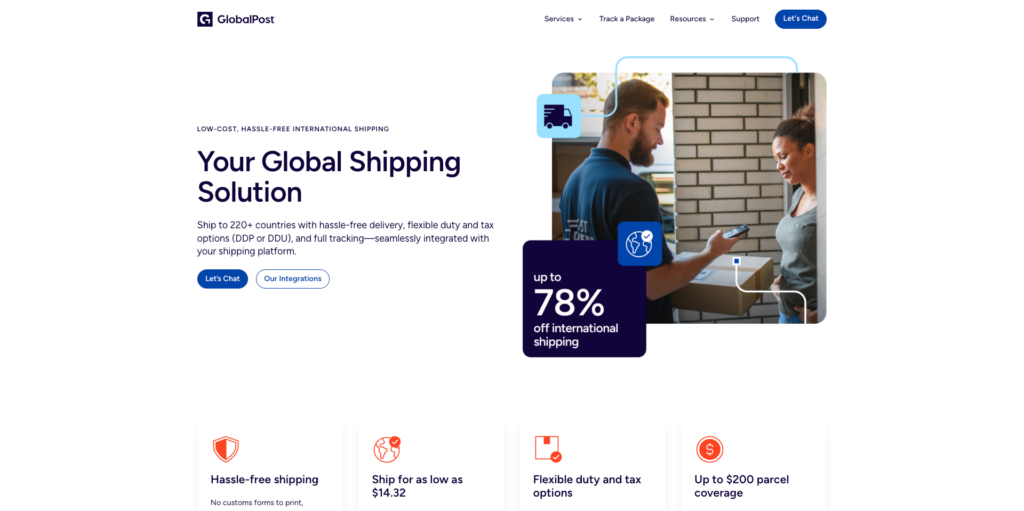
GlobalPost is part of the same group as ShipStation. ShipStation users can access GlobalPost Plus Intl, a full DDP (Delivery Duty Paid) service.
Find out more
ShipStation users can access UPS Expedited, UPS Express®, UPS Express Saver® and UPS Express Plus® services.
ShipStation users can access DPD’s Air Classic (4 to 7 day) drop off service.
On August 29, 2025, the US $800 De Minimus threshold was suspended by an Executive Order, permanently changing how UK businesses export to the United States.All shipments into the USA (including those from the UK) are now subject to US duties, taxes, and full customs clearance, regardless of value. If your U.S. customers have recently been surprised by customs fees or delivery delays, you’re not alone. A recent change to U.S. import rules now affects every shipment — no matter how small.
It’s a common point of confusion for sellers, but no — the de minimis change and tariff changes are not the same thing.
Let’s take a hypothetical shipment: a £150 pair of trainers. A tariff is essentially an import tax. For most UK goods entering the US, this tax is now currently 10%. This means when you send those trainers to a US buyer, US Customs will expect a payment of £15. The old $800 de minimis rule acted like a tax-free voucher for any package valued under $800. So previously, your £150 trainers were exempt from that 10% import tax.
The recent de minimis change simply removed that tax-free allowance. Now, all goods, regardless of value, are subject to the same 10% rate. By contrast, when talking about a tariff change, this refers to the raising or lowering of that 10% ‘import tax’.
Since the removal of the de minimis threshold, several carriers have restricted, suspended, or withdrawn their shipping services to the United States entirely. However, there are still a number of options available for ShipStation users in the UK:
If you have your own carrier account, we recommend contacting your carrier account manager to discuss available options. ShipStation supports thousands of “Bring Your Own Account” services, some of which are still shipping to the USA.
The main difference is who pays the import duties and taxes when the shipment reaches the destination country.
With DDP (Delivered Duty Paid), the seller covers all import duties, taxes, and fees upfront. The shipment is fully cleared through customs before it reaches the buyer, meaning the customer doesn’t have to pay anything extra on delivery. This usually results in a smoother delivery process and fewer delays, although it can be slightly more expensive for the seller.
With DAP (Delivered at Place) also known as DDU (Delivered Duty Unpaid), the buyer is responsible for paying import duties and taxes once the shipment arrives in their country. This option can reduce upfront costs for the seller, but it often leads to delays or confusion if the buyer isn’t aware that additional charges are due before delivery.
In short, DDP means the seller pays duties in advance, while DDU/DAP means the buyer pays on arrival.
There are advantages and disadvantages to each type of service. Here’s a table that spells out them out.
DDP (Delivered Duty Paid) — You pay all duties & taxes ✅ Smooth delivery — no surprise fees for customers ✅ Faster customs clearance ✅ Fewer refusals and better reviews ❌ Higher upfront cost — you cover duties and taxes ❌ Must calculate duties correctly ❌ Responsible for any customs errors
DAP / DDU (Delivered at Place / Unpaid) — Customer pays duties ✅ Lower advertised price at checkout ✅ Simpler — you don’t handle duties ❌ Poor experience — surprise fees for buyers ❌ High risk of refused packages and delays ❌ Can cause bad reviews and lost sales
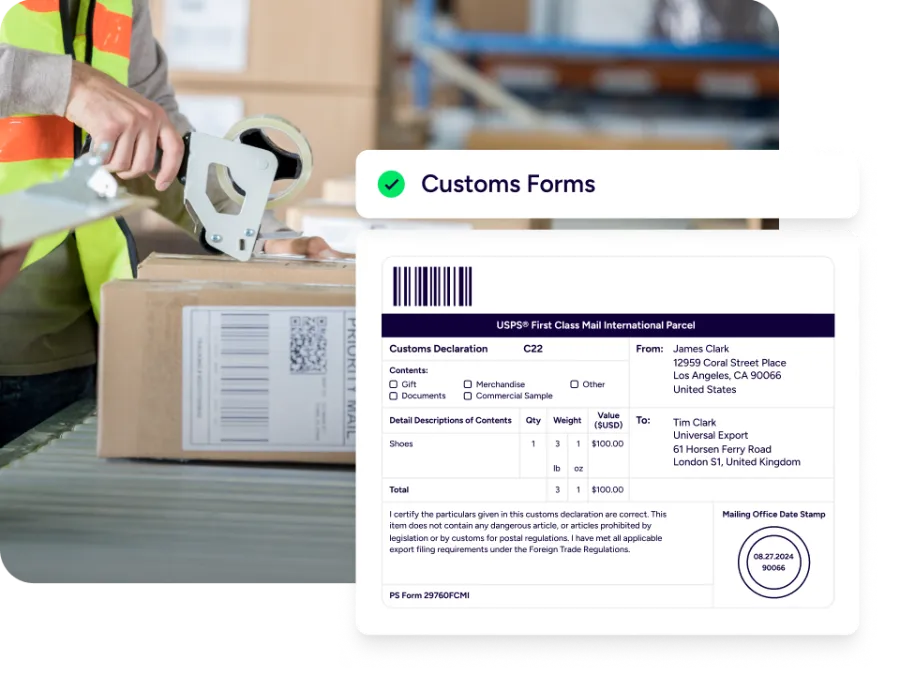
Getting your customs documentation right is one of the most important parts of shipping to the United States — and one of the most common sources of mistakes. Many shipping delays, returns, and clearance issues happen simply because key details were entered incorrectly, or not entered at all. To help you avoid these pitfalls, make sure your Commercial Invoice is complete and accurate, including shipper and consignee details, item descriptions, values, and country of origin. You’ll also need to complete the correct Customs Declaration, apply accurate HS (or HTS) Codes for every product, and include clear item descriptions that go beyond general categories. Certain goods also require a Manufacturer Identification (MID) Code, and some shipments need a designated Importer of Record (IOR) to ensure compliance with U.S. import laws.
For more detailed guidance on each of these requirements and how ShipStation can help automate and simplify your customs setup, visit our help centre Customs Documentation Help Page.
If you don’t follow the correct shipping or customs processes, things can get serious quite quickly. The U.S. Customs and Border Protection (CBP) can issue monetary fines and penalties depending on how severe the issue is. In cases of fraud—where false information is given intentionally, penalties can equal the full value of the shipment, and in extreme cases, lead to criminal charges.
U.S. Customs and Border Protection also has the right to seize or forfeit goods tied to false declarations, meaning your customer won’t receive the order and you’ll lose the products completely. Even if goods aren’t seized, shipments can be delayed or returned for inspection, often at your expense.
Beyond financial penalties, there’s also the risk to your customer relationship. The “importer of record” (usually your U.S. customer) is the one who receives official notices and penalty demands from U.S. Customs and Border Protection, something that can seriously damage trust in your business. Once a violation occurs, both you and your recipients may face increased scrutiny on future shipments, resulting in more inspections, delays, and complications down the line.
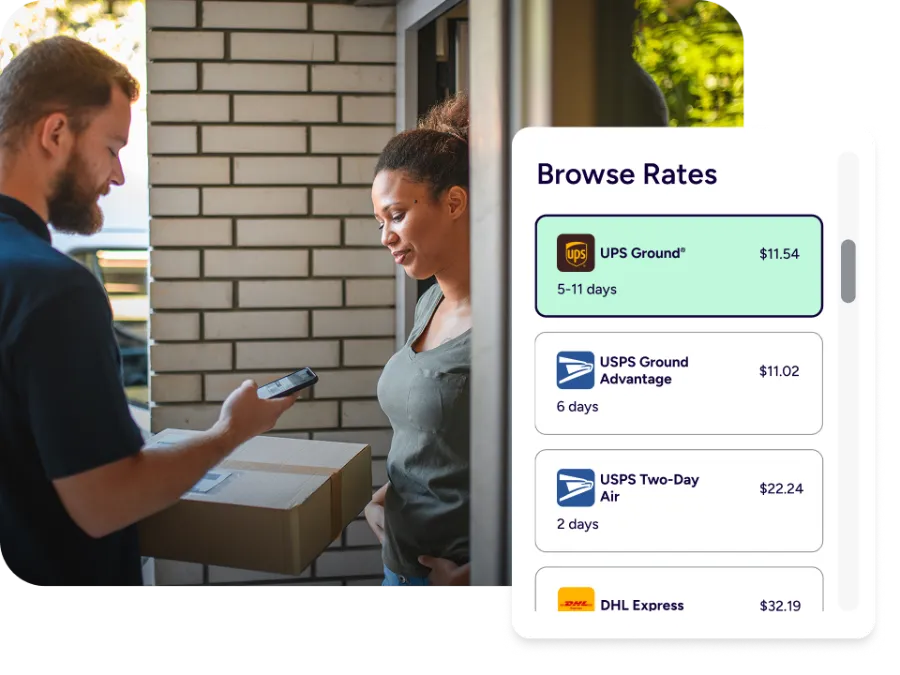
Shipping costs have risen and not just because of the 10% tariff now applied to all services. Many carriers have increased their rates or introduced additional administrative fees on shipments to the United States to offset the extra work required to process these deliveries.
Delivery times have also become longer and less predictable. Every package must now go through a full, individual customs clearance, which can create significant backlogs at the U.S. border. This new customs friction is often compounded by pre-existing global port congestion, making it important to extend your estimated delivery windows and communicate potential delays clearly to your customers.
Some items can’t be shipped to the USA at all, and others have strict restrictions. The rules can change from time to time, so it’s always best to check the latest information directly.While this adds a few extra steps, once your customs setup is in order, shipping to the U.S. remains straightforward. ShipStation’s support team is always available to answer your questions and help keep your sales running smoothly.
You can find the full list on the US Customs and Border Protection website here: Prohibited and Restricted Items
There are currently no exemptions for businesses. All commercial shipments from the UK to the US, regardless of size or value are now subject to US duties, taxes, and full customs clearance.Failing to follow the correct shipping or customs processes can lead to fines, seizure of goods, shipment delays and even criminal charges in serious cases.
A few exemptions exist for individuals only — commercial shipments don’t qualify. Travelers can still bring up to $200 in personal purchases or items for personal use into the US duty-free, and genuine gifts sent from abroad to private individuals valued at $100 or less remain exempt.
In our recent blog we detailed all the changes and how they impact international shipping to the USA.
Whether you are just starting with international shipping or are trying to improve your method, ShipStation makes sure you are prepped for success.