



























Small BusinessesStart small, think big. Elevate your small-business shipping today.
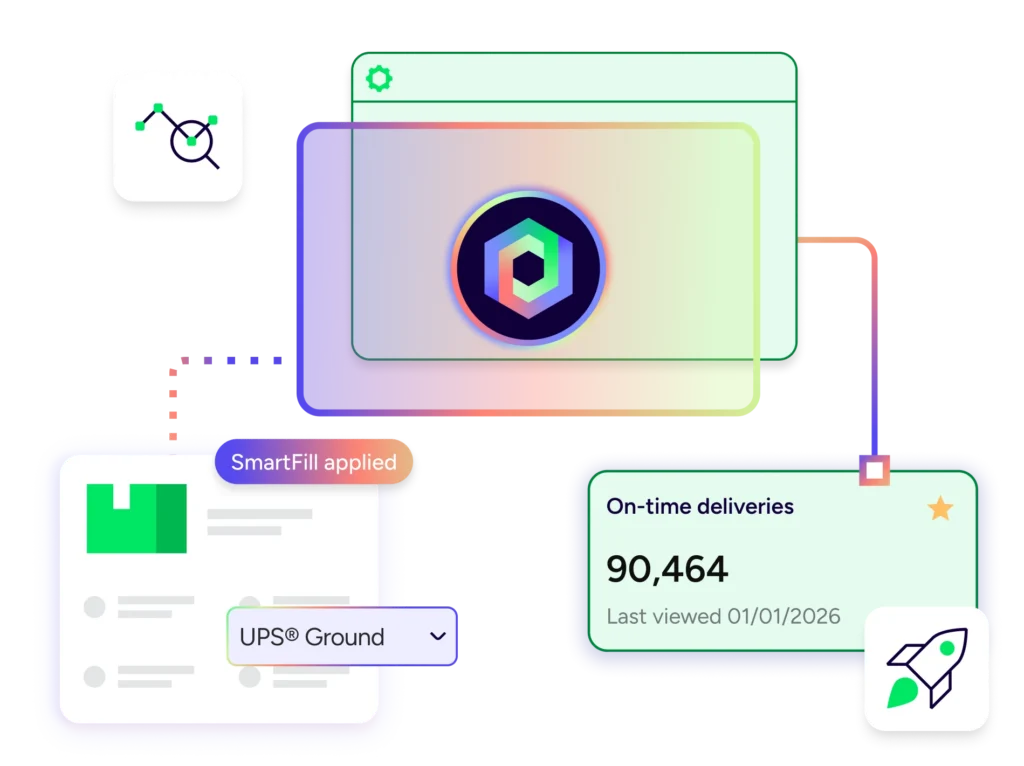
Start Shipping in MinutesStart shipping instantly with a simple setup. Buy and print labels in minutes with no training needed and no unnecessary steps.
Automate and ScaleSave time with rules that batch, route, and print labels automatically so your shipping keeps up as orders grow.
Save on Every ShipmentAccess exclusive 80% – 90% discounts from every major carrier and cut costs on every label, no matter where you ship.
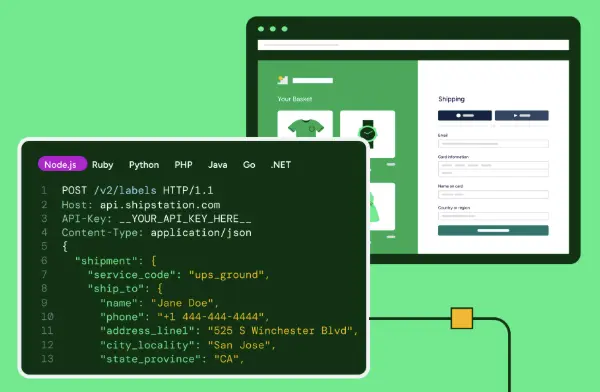
Connect and CustomizePlug into hundreds of stores, marketplaces, and carriers, or extend ShipStation with custom API integrations built for your business.
Manage Everything in One PlaceManage shipping, inventory, warehouse, tracking, and returns for all your stores and marketplaces in one simple platform.
Simplify ReturnsManage returns in one platform with prepaid labels and self-serve features that keep the process fast and frustration-free.
Mid-size and GrowingShip smarter, grow faster. Scale your fulfillment with ease.
Save on Shipping as you ScaleAutomate rate shopping across 200+ carriers, bring your own carrier accounts, and unlock deep volume discounts that grow with you.
Unlock Shipping InsightsAnalyze sales trends, shipping costs, and delivery times in one platform to identify savings, improve efficiency, and keep fulfillment running smoothly.
Centralize Omnichannel FulfillmentManage orders, shipping, inventory, warehouse operations, tracking, returns, and analytics across online stores and marketplaces with one platform.
Automate Order ManagementCombine AI intelligence with rule-based workflows to speed up fulfillment, streamline operations, and eliminate bottlenecks
Scale With our APIsExtend your setup using our developer-friendly API for custom automated workflows and insights.
Start with Guided OnboardingOur experts walk you through setup, training, and workflows so your team feels confident and ready to ship quickly.
EnterpriseGlobal scale, local precision. Master shipping at every level.
Lower Shipping Costs at Global ScaleReduce global shipping expenses with real-time rate shopping and discounted carrier rates, helping your enterprise control costs and ship efficiently at scale.
International Shipping Made SimpleEasily manage customs forms, duties, taxes, and tracking while accessing global carrier options from one platform built for cross-border shipping.
Fulfillment APIsCustomize workflows at scale with APIs for consolidating orders across channels, comparing shipping rates, validating addresses, tracking, analytics, and more.
Multi-Location FulfillmentManage inventory, orders, and shipping across multiple warehouses and stores with one platform built for multi-location fulfillment.
Advanced Shipping IntelligenceAccess powerful analytics that reveal trends, track spend, and measure performance to unlock global fulfillment efficiencies.
Dedicated Guidance and SupportCount on 24x7 support plus dedicated onboarding guidance so your enterprise shipping runs reliably from day one and beyond.
How Guardian Sports Used Automated Returns to Scale After Going Viral with the NFL
After the NFL adopted their concussion-reducing Guardian Cap, this Atlanta-based sports safety company saw orders explode to 400 per day—and the team’s manual processes couldn’t keep up.
The conclusion is clear: AI is already influencing demand, competition, and delivery performance—and retailers that fail to adapt risk being excluded from AI-led shopping journeys altogether.
This blog was contributed by our partner, BlueSwitch. BlueSwitch provides a suite of services for ecommerce merchants, including website development, marketing, and branding.

According to Borrell Associates, companies spent a combined $65 billion on search engine optimization (SEO) services and strategies in 2016. With this number only climbing in 2018 and beyond, your company must invest in an SEO plan as soon as possible.
It’s important to know where you stand with your knowledge of SEO. Especially since 70-80% of search engine users focus solely on organic search results.
To launch your organic SEO strategy, start with these four basics elements:
Keywords
Internal and External Links
Google My Business Local Listing
Citation Sites/Online Directories
Here’s how to started on your search engine optimization strategy today.
1. Keywords
Keywords are the core of your SEO strategy. These keywords represent search queries entered by users on search engines. Implement your chosen keywords throughout your website, blog content, and other forms of online content.
The keywords you target should be relevant to your industry, products, services, and local area. As tempting as it is to use all possible keywords, this is not a sustainable strategy. Instead, perform keyword research to identify the right keywords and competitive organic opportunities for your brand.
2. Link Building
When determining how to rank content, search engines crawl websites to evaluate their relevance and influence with regard to the search query. Part of this process includes examining a website’s links, both internal and external.
Internal links direct users to other pages and content on your website. Your company’s website should have an internal linking map to guide users to relevant content.
External links point users to your website from other sites on the internet. When search bots crawl various websites, they use external links as bridges between content. This helps bots understand your website’s context as well as level of authority. In other words, the number of quality links back to your site increases your online authority. This is why companies work diligently to build a strong portfolio of external links.
3. Google My Business Local Listing
Google provides businesses with a portal known as Google My Business. Here businesses can control how their company profile looks on Google Maps and other areas across the most used search engine.
Within this listing, brands can list everything about their business including:
Phone number
Address
Website
Hours of operation
Customer reviews
Photos
Directions
Questions and answers
Product/service categories
Industry
4. Citation Sites/Online Directories
As part of an online awareness and link-building effort, another important element of SEO is citation sites/online directories. Filling out listings on popular websites such as WhitePages, Facebook, and Yelp will help create backlinks to your website and spread awareness of your company.
Like a Google Maps listing, these websites list your company’s name, address, and phone number among other important information.
The Takeaway
→ Be sure you have a sound SEO strategy that uses keywords catered to your company and your target audience. As mentioned before, don’t just grab the top keywords around your site and hope it will work out.
→ Utilize internal links to map your website and support a positive customer experience. Don’t forget external links will help increase your online authority and drive traffic from places your ideal target market may be browsing.
→ Utilize Google and make sure everything is up to date.
→ Lastly, the easier it is for customer or shoppers to find what they’re looking for on your site, the better. So use those online citations.