Back
Back











































 Shipping Basics


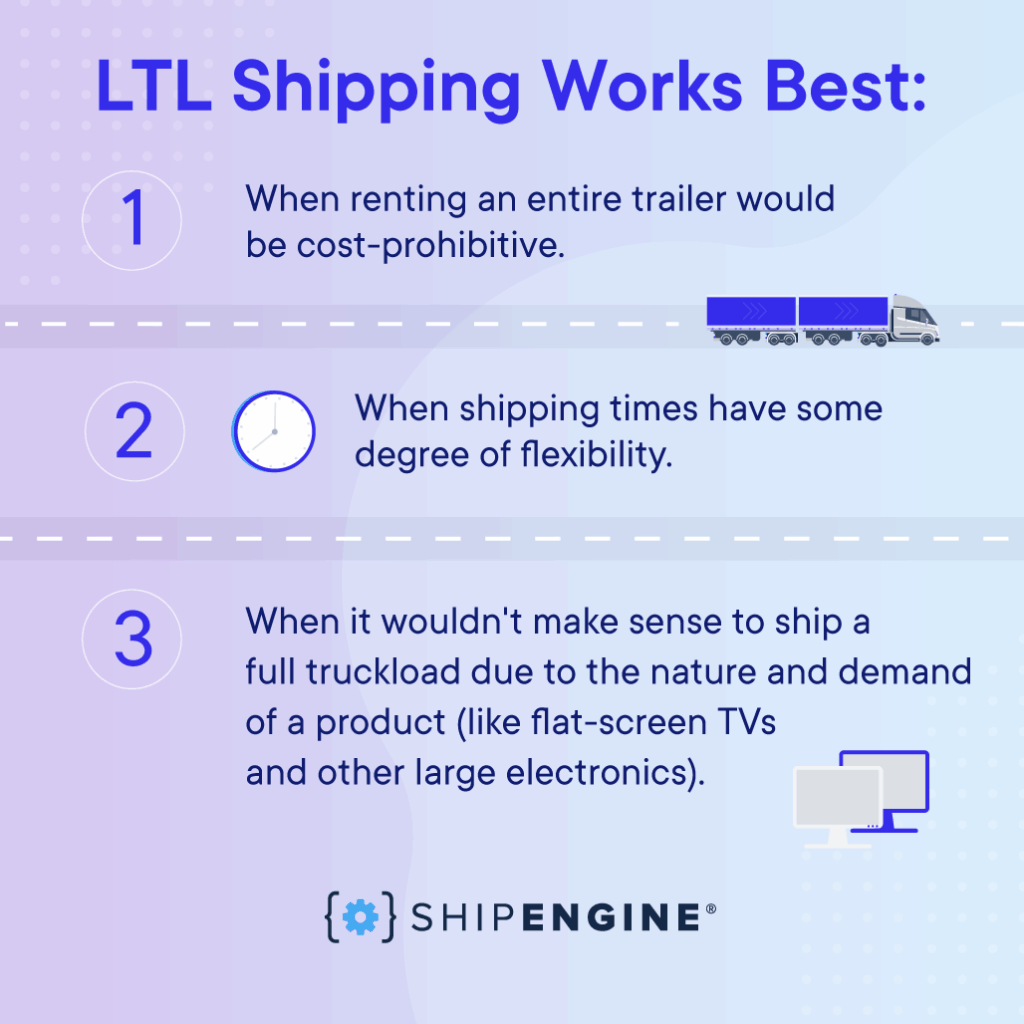
LTL shipping is an acronym for less-than-truckload shipping, and it’s just what the name sounds like — shipping loads of goods that don’t fill an entire truck. Sometimes referred to as less-than-load shipping, this method works well when renting an entire trailer would be cost-prohibitive, when shipping times have some degree of flexibility, and when it wouldn’t make sense to ship a full truckload due to the nature and demand of a product (for example, high-value items only needed in small quantities — like flat-screen TVs and other large electronics).
LTL is the alternative to FTL, or full truckload, which works better for businesses that are moving larger quantities of goods or that have strict and short point-A-to-point-B delivery deadlines.
The weight of LTL shipments usually ranges from 151 to 20,000 pounds. A single LTL shipment is stored on one to six pallets that can each handle 200 to 5,000 pounds.
To best understand how LTL shipping actually works, let’s start with the basic components. Here’s a look at everything involved in an LTL shipment.
As mentioned above, LTL shipments are usually divided into pallets for stability, for ease of loading and unloading, and for keeping like-products together. Pallets are traditionally made of wood, but they are increasingly being created from a variety of sustainable materials like steel and plastic.
Pallets are 2 feet by 2 feet up to 4 feet by 6 feet. They are slatted and constructed so that forklifts can easily pick them up and move them. The mobility of a pallet is crucial for successful LTL shipping because items are unloaded and reloaded, sometimes multiple times, so that they can arrive at the correct destination alongside other LTL shipments.
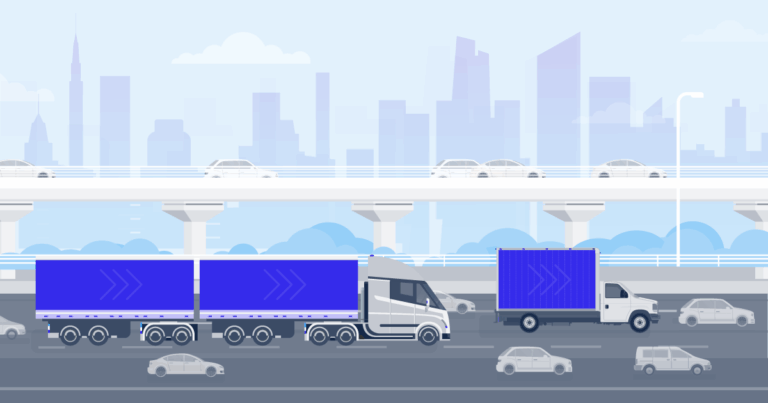
LTL shipments typically ride on two different types of truck:
Pup trucks, the smaller of the two, typically range from 26 to 28 feet long, and they are narrower and lighter than dry vans. These more nimble transport vehicles are used predominantly for local pickups and deliveries thanks to their maneuverability on city streets.
Dry vans, the larger of the two main types of truck used in LTL shipping hold notably more shipment volume, but they are notoriously hard to maneuver due to their size and weight. These trucks usually stretch 48 or 53 feet long and carry up to 45,000 pounds of cargo. They can often be seen on highways and interstates as they move goods from one terminal to another.
Terminals are critical pieces of infrastructure for LTL shipping. Terminals serve as drop-off points where freight can be unloaded and reloaded to the next truck in order to continue its journey in the most efficient way possible. Different LTL shipments heading in the same direction are combined onto the same truck at terminals.
Once the items reach a suitable delivery terminal, they are unloaded once more and reloaded onto trucks to complete local delivery.
Because of this loading-unloading-reloading cycle, LTL shipments often take longer than FTL shipments to reach their final destinations.
Freight pricing for LTL shipments derives from different factors, partially at the discretion of the company offering the LTL service. Here’s a look at those factors and how they influence LTL pricing.
Size and volume are the two main factors to consider when calculating costs for an LTL shipment. Companies generally have a list of tariffs, or fees, associated with different freight requirements. Others may choose per-pallet rates or another pricing structure. Still, weight and size are the most common cost-impacting factors.
All freight, whether shipped FTL or LTL, falls within a freight class defined by the National Motor Freight Traffic Association (NMFTA) which assigns it a classification number (NMFC #). The lower the class number, the less expensive it is to ship. The classification system takes into consideration how big and how valuable an item is, its density, and the level of difficulty required to successfully ship and deliver the item.
Fragile, high-value items (like consumer electronics) tend to fall into higher categories than easy-to-transport, low-cost, sturdy items like building materials.
Sometimes shippers negotiate a way to combine items falling into different classes within a single class. This agreement is called a Freight Of All Kinds (FAK) agreement.
If your company is doing lots of LTL shipping, don’t choose just one LTL carrier. Instead, using a shipping and logistics platform that empowers you to shop for the best LTL rate for any given shipment.
ShipEngine offers integrations to 20-plus LTL carriers that operate throughout the country. When you connect your account to these LTL carriers via the ShipEngine dashboard, you’re able to start shopping for the lowest rate and fastest delivery time. You can also use ShipEngine’s LTL integrations in tandem with our parcel carrier integrations to create a complete shipping solution for your business.
Are you ready to access the best LTL shipping rates? Sign up for a free ShipEngine trial, or contact our team to learn more about getting started with LTL shipping.