

































Small BusinessesStart small, think big. Elevate your small-business shipping today.
Start Shipping in MinutesStart shipping instantly with a simple setup. Buy and print labels in minutes with no training needed and no unnecessary steps.
Automate and ScaleSave time with rules that batch, route, and print labels automatically so your shipping keeps up as orders grow.
Save on Every ShipmentAccess exclusive 80% – 90% discounts from every major carrier and cut costs on every label, no matter where you ship.
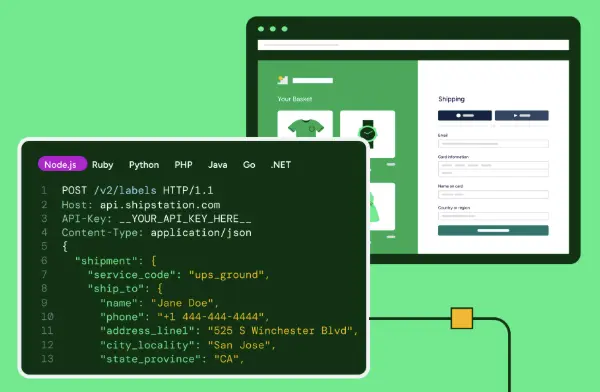
Connect and CustomizePlug into hundreds of stores, marketplaces, and carriers, or extend ShipStation with custom API integrations built for your business.
Manage Everything in One PlaceManage shipping, inventory, warehouse, tracking, and returns for all your stores and marketplaces in one simple platform.
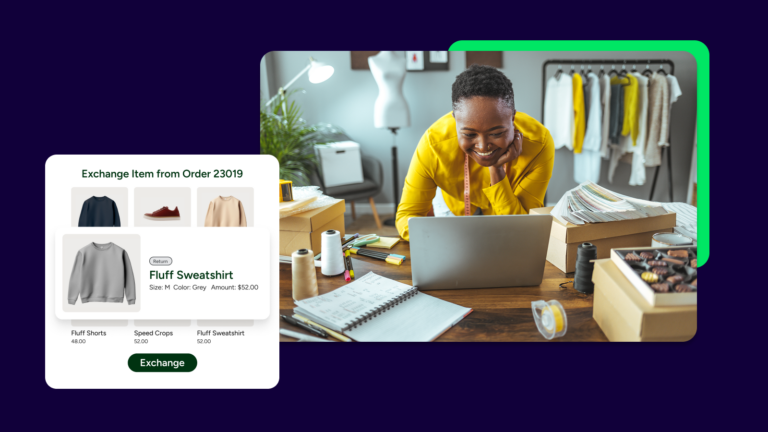
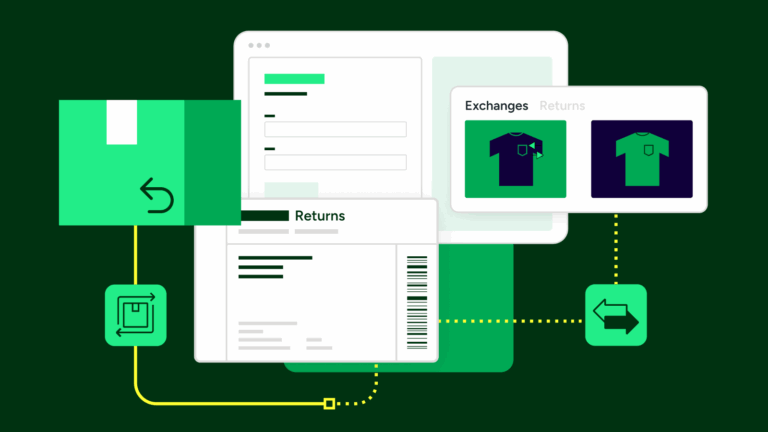
Simplify ReturnsManage returns in one platform with prepaid labels and self-serve features that keep the process fast and frustration-free.
Mid-size and GrowingShip smarter, grow faster. Scale your fulfillment with ease.
Save on Shipping as you ScaleAutomate rate shopping across 200+ carriers, bring your own carrier accounts, and unlock deep volume discounts that grow with you.
Unlock Shipping InsightsAnalyze sales trends, shipping costs, and delivery times in one platform to identify savings, improve efficiency, and keep fulfillment running smoothly.
Centralize Omnichannel FulfillmentManage orders, shipping, inventory, warehouse operations, tracking, returns, and analytics across online stores and marketplaces with one platform.
Automate Order ManagementCombine AI intelligence with rule-based workflows to speed up fulfillment, streamline operations, and eliminate bottlenecks
Scale With our APIsExtend your setup using our developer-friendly API for custom automated workflows and insights.
Start with Guided OnboardingOur experts walk you through setup, training, and workflows so your team feels confident and ready to ship quickly.
EnterpriseGlobal scale, local precision. Master shipping at every level.
Lower Shipping Costs at Global ScaleReduce global shipping expenses with real-time rate shopping and discounted carrier rates, helping your enterprise control costs and ship efficiently at scale.
International Shipping Made SimpleEasily manage customs forms, duties, taxes, and tracking while accessing global carrier options from one platform built for cross-border shipping.
Fulfillment APIsCustomize workflows at scale with APIs for consolidating orders across channels, comparing shipping rates, validating addresses, tracking, analytics, and more.
Multi-Location FulfillmentManage inventory, orders, and shipping across multiple warehouses and stores with one platform built for multi-location fulfillment.
Advanced Shipping IntelligenceAccess powerful analytics that reveal trends, track spend, and measure performance to unlock global fulfillment efficiencies.
Dedicated Guidance and SupportCount on 24x7 support plus dedicated onboarding guidance so your enterprise shipping runs reliably from day one and beyond.
How Guardian Sports Used Automated Returns to Scale After Going Viral with the NFL
After the NFL adopted their concussion-reducing Guardian Cap, this Atlanta-based sports safety company saw orders explode to 400 per day—and the team’s manual processes couldn’t keep up.
The conclusion is clear: AI is already influencing demand, competition, and delivery performance—and retailers that fail to adapt risk being excluded from AI-led shopping journeys altogether.
Social Commerce Strategies: How To Turn Engagement Into Conversions in 2025
As the global ecommerce market continues to evolve, you’re going to need new social commerce strategies to capitalize on the interests of younger consumers. Previously, the goal was to funnel prospects toward your website for a sale, but the future of online retail is more communal.
In our recent survey, 31% of consumers reported planning to increase their spending online. 74% of Gen Z and 64% of Millennials said they plan to shop on social media apps in 2025.
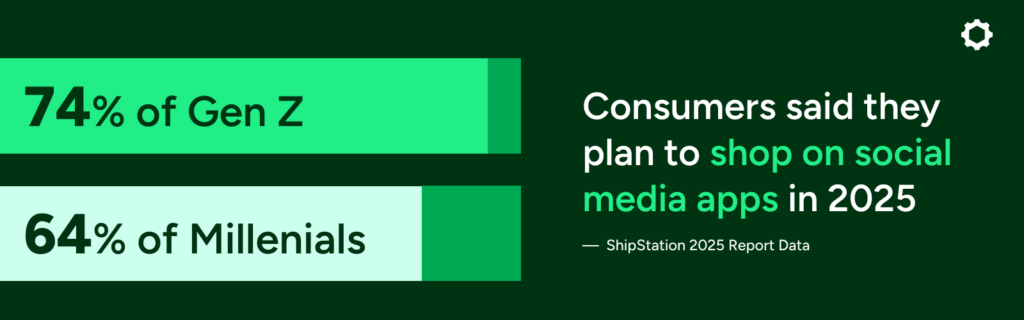
For the global market, 21% made purchases directly through Instagram or TikTok stores—climbing up to 25% for North American consumers. While this is far from the majority of consumers, it’s still a sizable slice of the market that you’ll need to strategize on how to capture. In this blog post, we’re going to cover the upcoming turning point in the ecommerce market and how you can make the best of it.
Social Commerce Has An Ever-Growing Focus on Convenience
Whether it’s Netflix, Uber, or DoorDash, convenience is the name of the game for consumers under the age of 35. The common factor between these services is consolidation, which gives users access to countless options within the same app.
Social commerce, however, takes things a step further. By combining the leisurely act of scrolling TikTok or Instagram with browsing for products, consumers don’t even have to seek out the sale; it comes straight to their screen.
Invest More in Social Media Marketing
Social commerce platforms function as search engines, allowing users to discover new, trendy brands and products. Furthermore, the results are often prioritized based on engagement and view counts. This adds to the social aspect of online shopping, which was previously reserved for in-person shopping trips.
In North America, 52% of consumers said they plan to shop more on social media platforms in the next 12 months. This is more than double the percentage of consumers who reported purchasing at least one item from a social media store in the past year. The numbers are just as promising for European youths, going from 18% in 2024 to a projected 47% this year.
Prioritize Adopting New Tech
While some of the businesses we surveyed reported doubling down on their tech investments, less than half (46%) of online retailers currently support social commerce shopping.
Many executives and decision-makers still view social media strictly as a marketing tool—a way to guide potential consumers to their websites. However, this is a far cry from the seamless, in-app experience younger consumers are looking for.
Follow Generation-Agnostic Trends
Despite social ecommerce being the most popular with Gen Z, the market’s latest boom has managed to include older generations as well.
Two-thirds of Gen Z plan to shop more on social media platforms, but so do 71% of Millennials in North America and 59% in Europe.
While the numbers are slightly less impressive for Gen X and Boomers, they’re still worth keeping an eye on. In North America, 48% of Gen Xers and 25% of Boomers expressed interest in shopping on social media. This data shouldn’t come as a shock, as the click-to-buy model on many social media ecommerce platforms is much more accessible and user-friendly than navigating to a website.
Adapt Your Marketing Material to Social Commerce
Now that the social media platform itself is your ecommerce store, you’ll need marketing material targeting single-click purchases. Invest in video-first marketing strategies, as this type of content thrives on TikTok and Instagram. This enables you to build an audience that contributes to both discovery and sales.
Social commerce platforms are particularly popular with apparel and fashion brands, with 52% of retailers reporting using social platforms. However, the numbers are similar for categories like health and beauty (48%), electronics (44%), and home-related items (43%).
Aim for the 3-Pillar Strategy
Younger shoppers can be broken down into three main categories:
Frequent Buyers: By integrating into social media, users are likely to shop online at least once every two weeks.
Price-Driven Decision Makers: Flash sales, discount codes, and competitive pricing are some of the best ways to drive sales during peak seasons.
Speed Enthusiasts: Quick fulfillment, like same-day and next-day delivery, is best suited for impatient shoppers looking to replicate the immediacy of in-person shopping.
Younger consumers have much higher standards compared to past generations, with 62% of those under 35 quick to switch if brands don’t meet their expectations. You’re going to need a holistic approach that seamlessly blends your social media presence with your storefront. This sets you apart from the competition and makes customers more likely to buy from you again and recommend you to friends and family.