Back
Back






















From Basement Startup to Pickleball’s #1 Brand: How Selkirk Scaled on ShipStation API


From a basement to 80,000 square feet
Before pickleball was cool—before most people had even heard of it—the Barnes family was already obsessed.
“My brother and I started our first company when I was 15, and he was 17,” said Mike Barnes, co-founder and co-CEO of Selkirk.
At the time, they ran an Airsoft business out of their dad’s basement. When that venture sold, the family needed a new direction. The answer was obvious: the sport they couldn’t stop playing.
“We saw an opportunity to create pickleball’s first lifestyle brand that focused on creating high-performance equipment,” Barnes explained.
“What we were able to do is make pickleball cool,” added Tom Barnes, Director of R&D and Mike’s brother. “Which, at the time, pickleball was not cool.”
Then COVID hit, and everything changed.
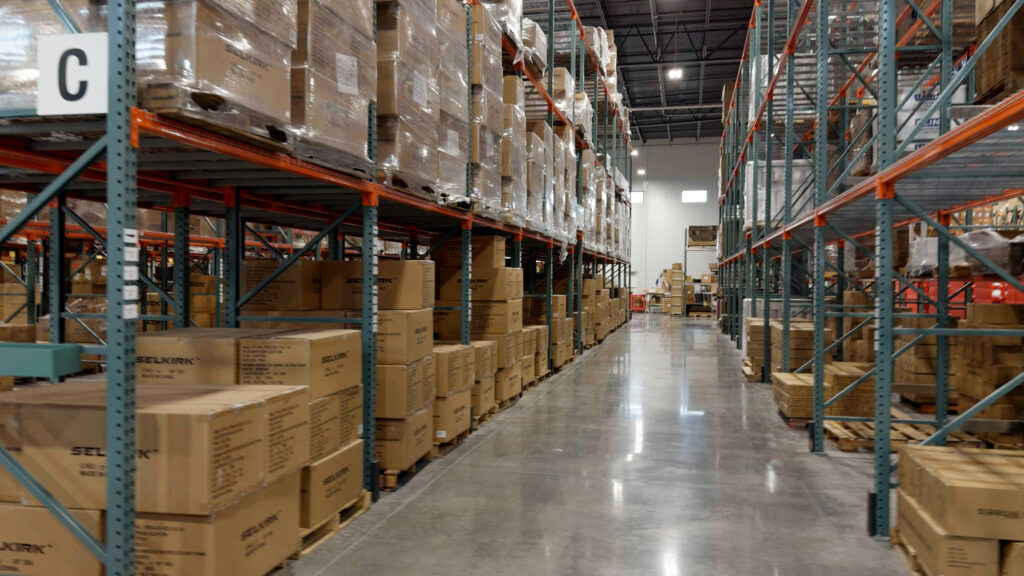
“We went from one employee to 200,” Tom explained. Today, Selkirk is the number one brand in pickleball, operating out of an 80,000-square-foot facility in Hayden, Idaho.

A foundation to build on
Through every stage of that growth, one system remained at the center of their shipping operations—but not just as an off-the-shelf tool.
“ShipStation really has been our partner from the very beginning. When we were a small brand, we had one shipper, all the way up to now, where we operate a much larger team, utilize the APIs, and build custom processes on it.”
Mike Barnes, Co-Founder & Co-CEO, Selkirk
That last part is key. Rather than outgrowing ShipStation and migrating to an enterprise system, Selkirk’s development team built on top of the API, creating custom infrastructure tailored to their specific needs.
“We build our own supporting services behind and around ShipStation,” Tom explained. “But we always have had ShipStation—that’s always been like the focal point for our shipping operations.”

Building custom infrastructure without starting from scratch
For a company experiencing explosive growth, the alternative to an API-first approach would have been painful: either cobbling together carrier integrations manually or ripping out their shipping infrastructure every time they hit a new scale milestone.
ShipStation API gave Selkirk’s team a different path.
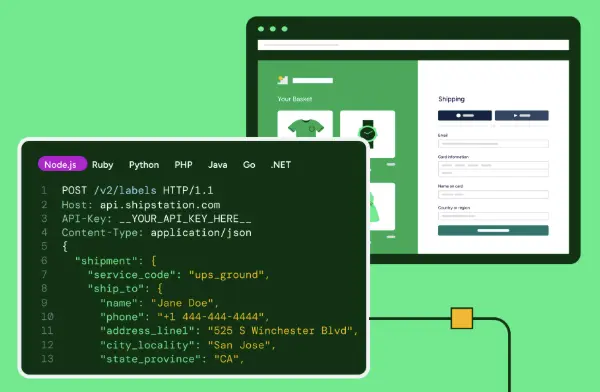
Selkirk ships through UPS, FedEx, USPS, and DHL. Building those four carrier integrations in-house would have been a massive undertaking—an estimated six months of work for four developers. ShipStation API gave them access to all four through a single integration.
“A great thing about ShipStation is not only does it have a great UI if you’re working directly with the platform, but they also have a very robust API. As we’ve grown, we’ve been able to do further automations and really tap into the API with our development team to further scale.”
Mike Barnes, Co-Founder & Co-CEO, Selkirk
Tom remembers the early days firsthand.
“I personally remember when we were shipping 20 paddles a day, 50 paddles a day,” he said. “Now we’re at 80,000 square feet, and we can ship thousands and thousands of paddles a day—and we’re using the same core system.”
Enterprise reliability, startup flexibility
The scalability wasn’t just theoretical. Selkirk proved it in real time.
“Scalability has been proven through us because we went from shipping basically nothing to shipping more paddles than we ever thought possible.”
Tom Barnes, Director of R&D, Selkirk
Hannah Farrell, Selkirk’s shipping department manager, sees the impact daily. Her team processes 900 to 1,000 orders per day across retail, wholesale, and direct-to-consumer channels.
“We have several different departments within shipping,” Farrell explained. “Retail, wholesale, programs—we’re all processing orders at the same time.”
The automation capabilities—accessible through both the UI and the API—keep operations running efficiently. Batch processing and presets reduce Selkirk’s label processing time by roughly half. During peak season, when order volume doubles, those efficiencies become even more critical.
“During peak season, the functions of ShipStation really double,” Farrell said. “Especially the presets, because we’ll be shipping out a lot of orders that are all paddles and that kind of thing with our sales.”
Mike emphasized the infrastructure reliability: “ShipStation has that infrastructure that keeps things running smoothly even during the toughest times.”
Custom solutions built on the API
Beyond carrier access, the API has enabled Selkirk to build workflows tailored to its specific operations.
One example: a custom returns tracking system that automatically identifies incoming return labels and matches them to the original order. Before, the receiving team had to manually research each return to determine whether it was tied to a claim. The API integration eliminated that step entirely.
Growing into the platform, not out of it
“Every year, it feels like we’re running a different company, and it changes a lot,” Mike said. “Being able to stay ahead of the game, stay competitive, not just rest on your laurels—that’s very important in this industry.”
For companies facing that kind of growth, the typical choice is between a tool you’ll outgrow or an enterprise system that’s overkill for where you are today. Selkirk found a third option: a platform with the API depth to grow with them.
“There’s a reason we’ve been partnered with them for over 10 years,” Mike said. “If you want someone that can handle shipping operations from a very small scale to a very high scale, ShipStation is that reliable partner.”
Selkirk built their shipping infrastructure on ShipStation API. What will you build?