Back
Back








































 Shipping & Fulfillment


Shipping has always been essential. But it hasn’t always been strategic. Today, that’s changing.
In this conversation, Kelly Vincent (Chief Product Officer at ShipStation and Auctane) shares how ShipStation Intelligence represents a shift—from delivery as an operational cost to a driver of business performance, from fragmented tools to connected systems, and from reactive shipping to proactive, intelligent delivery.
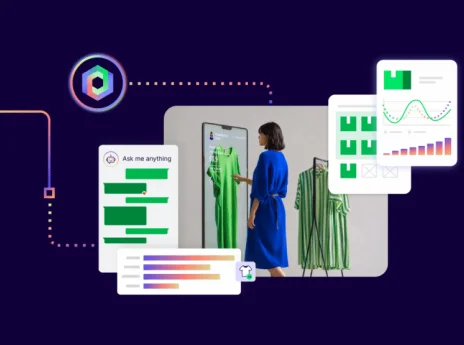
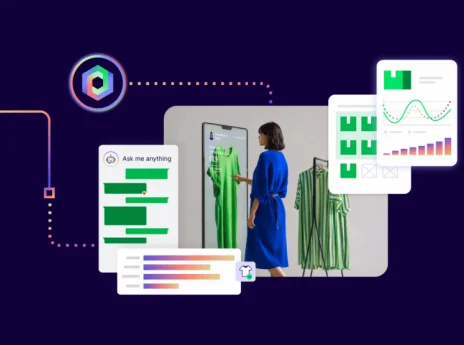
At its core, ShipStation Intelligence is the data and AI layer that powers smarter decisions across the entire shipping and fulfillment process. It’s not a standalone product—it’s embedded across the platform.
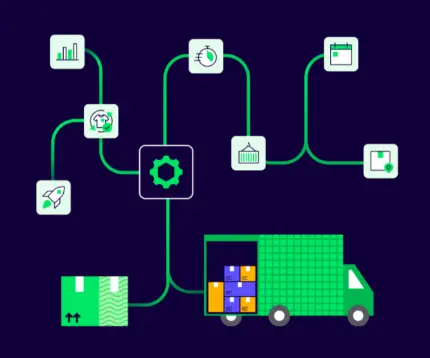
What makes it different is that it connects three things that have historically been separate: data, automation, and decision-making. It takes signals from billions of shipments and turns them into actions—automatically.
And timing matters here. Ecommerce has become more complex than ever. Growth has slowed, costs are rising, and customer expectations are higher across the board.
So businesses don’t just need tools anymore. They need systems that help them decide what to do—faster, and with more confidence.
The Intelligent Delivery Shift is really about moving beyond “set it and forget it” shipping.
For a long time, shipping was static. You picked a carrier, set some rules, and hoped it worked. But the environment today is dynamic—rates change, demand shifts, and delays happen constantly. So instead of static systems, you need intelligent systems.
That shift is defined by using data, automation, and AI to support smarter decisions and reduce effort.
It’s also about making shipping a visible part of the customer experience—not just a backend function. Delivery is no longer the end of the journey. It’s a key brand touchpoint.
A few forces are coming together.
First, complexity. Businesses are selling across more channels, managing more carriers, and handling more variability than ever before.
Second, cost pressure. Over half of businesses cite rising operational and fulfillment costs as a major constraint.
And third, expectations. Customers expect faster, cheaper, and more flexible delivery—and they expect it every time.
Traditional systems weren’t built for this level of complexity. They require too much manual effort, and they don’t adapt well to change. That’s really where intelligence comes in—it removes the need for constant human decision-making.
It’s built on scale. That’s the foundation. We’re talking about over $200 billion in global transactions, 3 billion orders processed annually, and millions of customers worldwide.
That scale matters because it allows the system to learn. Every shipment adds more data—on carriers, routes, delivery times, costs. Over time, that creates a feedback loop where decisions get smarter.
From a technical perspective, it combines data from across the ecosystem, machine learning models that analyze patterns, and automation that executes decisions in real time.
And importantly, it’s all connected. It’s one intelligence layer behind every shipment—not separate tools stitched together.
It shows up in a few key ways.
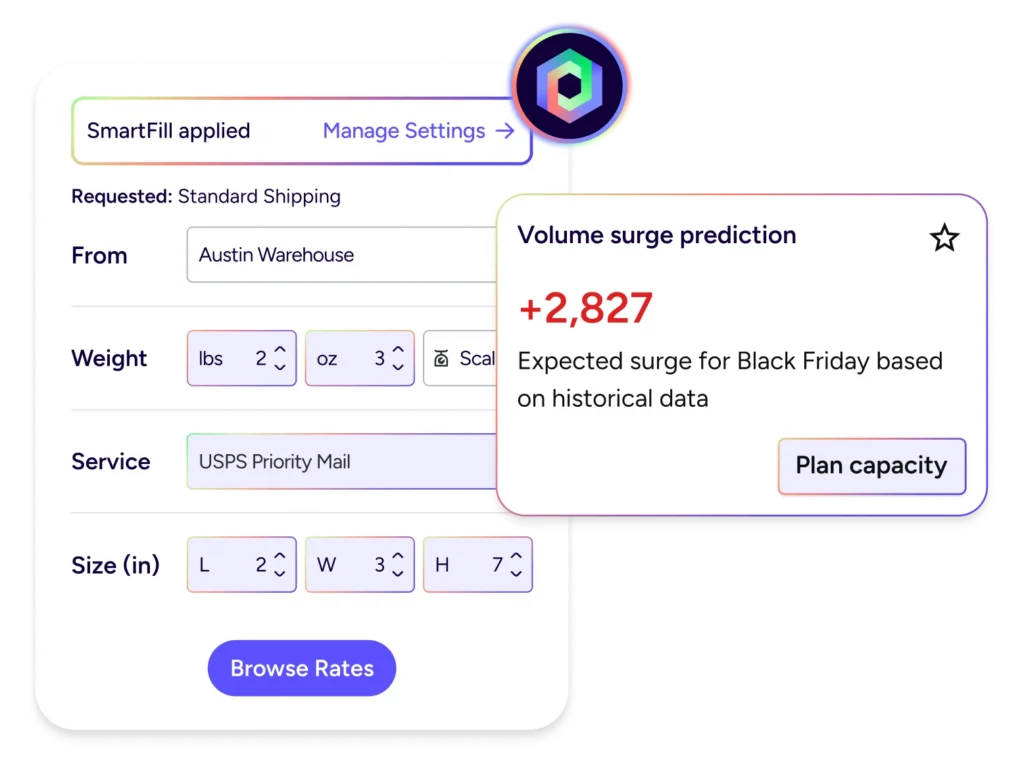
First, automation. Tasks that used to require manual input, like selecting carriers or entering package details, are handled automatically. The system can even learn from past shipments and autofill data.
Second, rate decisioning. Instead of manually comparing carriers, the platform evaluates options in real time and selects the best one based on cost, speed, or other criteria.
And third, analytics. Businesses get visibility into performance across carriers, channels, and orders—without needing separate systems or spreadsheets.
All of this happens within the workflow. It’s not something you stop to use—it’s something that works continuously in the background that simplifies work without requiring constant interaction.
The idea is simple: the system should handle the complexity so teams don’t have to.
It turns shipping into a strategic function.
Traditionally, shipping was about execution—getting packages out the door. But with intelligence, it becomes about optimization and growth.
You can reduce costs by selecting better rates. You can improve delivery performance by identifying issues early. You can scale operations without adding headcount by automating workflows.
And importantly, you can create better customer experiences—through faster delivery, better communication, and more reliability.
That’s a big shift. Shipping becomes a growth lever, not just a cost center.
Rate shopping is a good example. Without intelligence, someone has to check multiple carriers, compare rates, and make a decision for each shipment. That takes time, and it’s easy to make suboptimal choices.
With ShipStation Intelligence, that decision happens automatically. The system compares options in real time and selects the best one based on predefined logic.
At scale, that leads to meaningful savings and faster processing. Businesses can reduce clicks, eliminate guesswork, and ship more efficiently.
It’s a small change at the order level, but at volume, it adds up quickly.
It centralizes it.
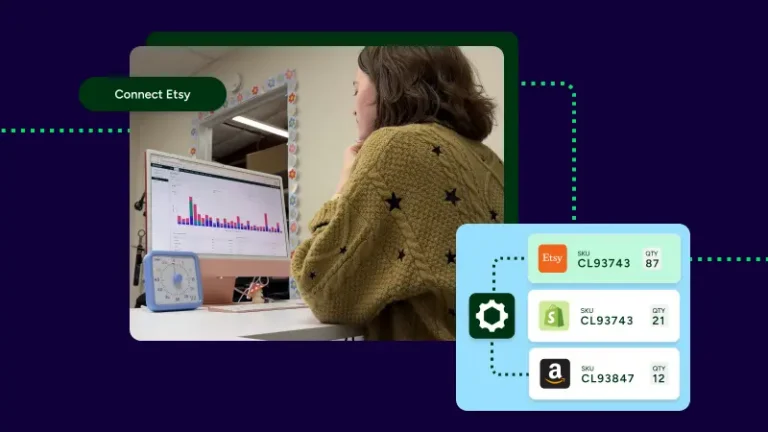
One of the biggest challenges businesses face is fragmented data. Orders are in one system, shipping data in another, and inventory somewhere else.
ShipStation Intelligence brings that together. It creates a single view of performance—across carriers, channels, and fulfillment operations. That means you can see what’s happening in real time, identify inefficiencies, and act on them quickly.
And with things like natural-language queries, you don’t need to be a data expert. You can just ask questions and get answers.
It removes the operational bottlenecks that limit growth.
As order volume increases, manual processes break down. Teams spend more time managing operations than growing the business. Intelligence changes that dynamic.
Automation allows businesses to handle more orders without increasing headcount.
Better insights help them make smarter decisions about inventory, carriers, and fulfillment strategies. And connected systems reduce the need for constant coordination across tools.
We’ve seen businesses scale operations dramatically—sometimes 40x—once those constraints are removed.
So growth becomes more predictable and more sustainable.
It simplifies complexity.
International shipping involves more variables—customs, duties, carrier options, and compliance requirements. That complexity can slow businesses down or introduce risk.
With intelligence, many of those steps are automated. Customs forms can be generated automatically. Rates and delivery timelines can be compared instantly. Decisions about carriers and services can be optimized in real time.
So businesses can expand globally without adding significant overhead.
It’s a shift in mindset more than anything.
You’re moving from managing processes to trusting systems. From making decisions manually to defining rules and letting the system execute them.
But it doesn’t require a complete overhaul. Because intelligence is embedded, businesses can adopt it gradually—through the capabilities they’re already using.
Over time, those capabilities become more connected, more automated, and more intelligent.
More connected. More predictive. More automated.
We’re moving toward a world where systems don’t just react—they anticipate. Where decisions are made in real time, based on live data and learned patterns.
And where shipping isn’t just something you manage—it’s something that continuously improves your business.
That’s the direction we’re heading. And ShipStation Intelligence is the foundation that makes it possible.